



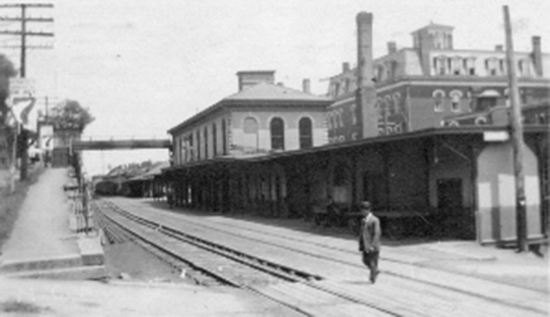
The Kennebec Historical Society’s September presentation, “Thomas Holt, Architect and Chief Engineer of the Maine Central Railroad,” will be given by Earle G. Shettleworth Jr. at 6:30 p.m. Wednesday, Sept. 18, at Home Baptist Church, 726 Western Ave., Manchester, according to a news release from the historical society.
Born in Bethel in 1835, Holt was active as an architect in Central and Western Maine from 1859 to 1870. In 1865, he designed the Portland and Kennebec Railroad Station in Augusta, which burned while under construction in the city’s Great Fire that year.
Between 1871 and 1876, He served as chief engineer of the Maine Central Railroad, designing railroad buildings and bridges as well as conducting surveys for new rail lines.
In 1876, he moved to California, where he pursued careers in architecture, railroading, mining and lumbering. He died in 1889 from pneumonia contracted during a blizzard in Nevada.
Shettleworth attended Deering High School, Colby College and Boston University and was the recipient of honorary doctorates from Bowdoin College and the Maine College of Art. At the age of 13, Shettleworth became interested in historic preservation through the destruction of Portland’s Union Station in 1961.
In 1971 he was appointed by Gov. Curtis to serve on the first board of the Maine Historic Preservation Commission, for which he became architectural historian in 1973 and director in 1976. He retired from that position in 2015. Shettleworth has lectured and written extensively on Maine history and architecture and served as state historian since 2004.
The presentation is free to the public, though donations will be accepted. The program will be preceded at 4:30 p.m. by a potluck supper and at 6 p.m. by the society’s annual meeting and election of officers and directors.
For more information, contact Anne Cough at acough60@aol.com or 582-2823.
Comments are not available on this story.
Send questions/comments to the editors.
