


One of Bobby Charles’ biggest criticisms of his opponent in the Maine governor’s race is that a vote for Hannah Pingree is a vote for four more years of the same.
“Hannah Pingree is Janet Mills 2.0,” Charles, a Republican, wrote in a recent Facebook post. “More needles on our streets. Higher costs. More taxes. More crime. Enough is enough.”
Pingree, a Democrat, spent six years working for Mills as the head of her policy office. She has been endorsed by Mills and, if elected, would be Maine’s second female governor.
Her opponents — Charles and independent Rick Bennett — say she’s already had the chance to work on key issues as part of the Mills administration and someone new is needed to bring about real change.
But Pingree says her leadership would look different. She wants to pass expansive tribal sovereignty legislation; supported the recently passed red flag law that Mills opposed; and has said she would have approved a moratorium on data centers that Mills vetoed earlier this year. And Pingree has promised bolder action on housing, healthcare, education and tax relief.
There may be some electoral peril in Pingree running too close to Mills. A New York Times/Portland Press Herald/Siena survey from June found that Mills had a negative net favorability rating. Just 15% of respondents said the economy here is excellent or good, compared to 85% who said fair or poor.
But that same poll and others since have shown Pingree to have a sizable lead over her opponents.
“I have a record of leadership that is about taking on tough fights and winning, but I probably have done it with a different style than Gov. Mills,” Pingree said in an interview. “We’re different. We’re different personalities. We’re of different generations. She’s somebody who gave me huge opportunity … but the next two years of the Trump administration is going to require another level of leadership.”
A Mills spokesperson said the governor expects Pingree would go her own way.
“The governor asked Hannah to serve in her administration because of her deep experience, sound judgment, and relentless optimism for Maine’s future,” said Ben Goodman. “She knows Hannah will draw on those same qualities if elected governor, leading in her own way and making her own decisions about what she believes is right for Maine.”
A quick survey of major issues shows us where Pingree and Mills align, and where they differ.
TRIBAL SOVEREIGNTY
Pingree has pledged to support full tribal sovereignty and said she believes in giving the Wabanaki Nations the same rights and opportunities as other federally recognized tribes.
Tribes in other states currently have more rights to self-government than tribes in Maine, which remain subject to state jurisdiction because of a unique law here. Mills has opposed sweeping efforts at reform in the past, instead backing incremental changes such as a 2024 law expanding the rights of tribal courts to prosecute certain crimes that occur on their lands.
Pingree said she plans to introduce a governor’s bill on tribal sovereignty and would push for its passage within her first 100 days in office.
“This would be giving our tribes the same rights and opportunities that other tribes across the country have and recognizing their sovereignty as independent governments,” she said.
GUN RIGHTS
Mills has a history of being more conservative on gun rights. In the wake of the Lewiston mass shooting in 2023, she proposed changes to the state’s yellow flag law and did not embrace calls from gun safety advocates for a stronger red flag law. Mills vetoed a bill to ban bump stocks and other rapid fire devices in 2024 and publicly opposed last year’s red flag referendum.
Pingree supported the red flag law, which expedites the ability of families and law enforcement to seek a weapons removal order for a person at risk of harming themselves or others. She also said she would support a ban on bump stocks and rapid fire devices.
If elected governor, Pingree said she believes more can be done to prevent gun-related domestic violence homicides.
“I think we need a specific focus to protect families and protect Maine people,” she said. “I think that’s an area where I would hope to be able to work across the aisle.”
EDUCATION
Charles has criticized Mills’ approach to education, pointing to falling outcomes in Maine schools. He says Maine needs a new approach.
Pingree also says schools are in need of a shakeup.
“I would take a much more aggressive approach to how we support kids and how we support teachers to ensure that kids are reading and doing math at grade level,” she said. “I’m a mom of teenage kids in public school and served on a school board for nine years. I feel very strongly that where we are right now isn’t acceptable.”
Pingree said last month that she wants to continue to have the state provide 55% of education funding to local school districts — a funding level first achieved by Mills in 2021.
She has spoken in support of legislation to raise Maine teacher salaries under Mills, but has said she would try to build on that work to raise salaries more quickly. Pingree has also said she wants to look at limiting screen time for students when she was endorsed recently by the Maine Education Association, the state teachers union. The union also backed Mills in 2022.
HEALTHCARE
Mills took a major step to improve healthcare access in 2019 when she implemented a Medicaid expansion approved by voters that expanded access for 100,000 people. Her administration has also touted the Made for Maine Health Coverage Act, which Mills proposed and signed into law and which covered certain medical visits at no cost to consumers, as a signature achievement.
Under Mills, the state established its own state-based health insurance marketplace, codified the Affordable Care Act’s protections for people with pre-existing conditions in state law, and implemented legislation that resulted in the first reduction in health premiums for small businesses in more than two decades, said Goodman, Mills’ spokesperson.
Pingree wants to go further to expand the state’s health program. Citing the rising cost of care, she is calling for a public health insurance option where the state would negotiate plans that individuals and businesses who are not eligible for MaineCare could opt into at affordable rates.
TAXES
Mills rejected a proposal in 2024 to provide tax relief to low-income families while shifting the burden to higher incomes, saying at the time that the bill didn’t get enough public attention. In 2025, she said she opposed changing income tax rates, though earlier this year, while running for U.S. Senate, she approved a 2% surcharge on taxable income above $1 million for single filers.
Pingree said she too supports the recently passed “millionaire’s tax” and that if elected she would look for ways to lessen the tax burden on middle and low-income families. (Charles, for his part, has made cutting taxes central to his campaign. He’s planning to eliminate the state income tax entirely, though his plan to do so remains unclear.)
Mills took steps to alleviate property tax burdens, including sending local governments the full share of state revenue they were owed under state law after years of cuts from Augusta. The state help gave municipalities more wiggle room, and less of a reason to raise property taxes.
But for some, property taxes have remained stubbornly high.
Pingree wants to double Maine’s homestead exemption, which allows residents to claim deductions on their primary homes, and also favors increasing property taxes on second-homes owned by non-Maine residents.
“I think middle and low-income Mainers are paying too much of their income in taxes, and I think we need to look at how we can export some of our tax burden,” she said.
HOUSING
Pingree’s opponents have been especially critical of her work on housing during the Mills administration, saying not enough progress has been made to stem Maine’s housing crisis. The office she led for six years, the Governor’s Office of Policy Innovation and the Future, has been key in leading the administration’s actions on housing.
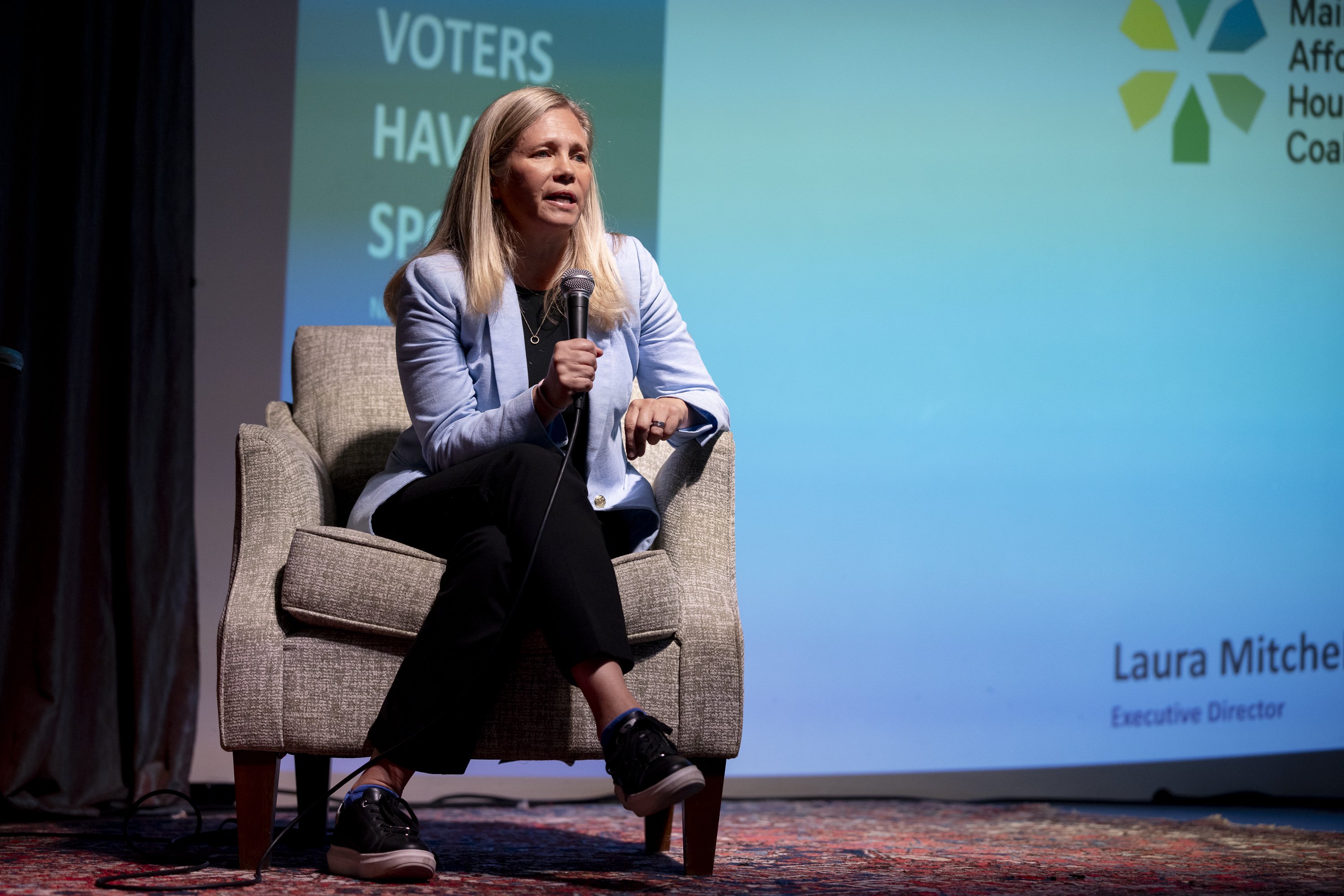
“I don’t have any confidence that Hannah Pingree as governor is going to do anything more than what we’ve already seen, which is really people taking credit for action when there is no action,” Bennett said. “The problem persists and people cannot find affordable housing near where their jobs are.”
Under Mills, the state authorized over $350 million to support the construction of more apartments and houses — which the administration has said is over five times the amount the state spent from 2000 to 2018 and which has resulted in more than 2,700 new homes and apartments that are now occupied, and more than 3,100 still being built.
News laws were established to help residents buy their mobile home parks, encourage construction of accessory dwelling units, or ADUs, and create a long-term housing funding source by increasing the tax rate on real estate sales over $1 million.
Mills also signed into law, and recently extended, the Maine Affordable Housing Tax Credit, which provides state income tax credits to investors who build or preserve affordable rentals.
A report released in June found the state exceeded its housing production goals in 2025, though several counties, including Cumberland and York, did not.
“I’m proud of the foundation we’re starting from, but I’ve certainly learned that we need to go much bigger,” Pingree said.
Her housing plans call for $100 million per year to finance new construction and housing preservation; streamlining of state permitting and approval processes and furthering work to promote home ownership by residents and Maine companies rather than out-of-state investors.
STANDING UP TO TRUMP
Mills hasn’t shied from standing up to President Donald Trump. She made national headlines last year when she defied Trump, saying, “See you in court,” during an exchange at the White House in which Trump told her that Maine needed to follow an executive order aimed at keeping transgender athletes out of women’s sports.
Pingree has also made pushing back on Trump administration policies a cornerstone of her campaign. She said she anticipates more efforts from the president to cut healthcare, undermine voting rights and attack immigrants.
“I think my leadership style of bringing people together and working across the aisle will be important, because I think things are going to be very challenging,” she said.

We invite you to add your comments. We encourage a thoughtful exchange of ideas and information on this website. By joining the conversation, you are agreeing to our commenting policy and terms of use. More information is found on our FAQs. You can update your screen name on the member's center.
Comments are managed by our staff during regular business hours Monday through Friday as well as limited hours on Saturday and Sunday. Comments held for moderation outside of those hours may take longer to approve.
Join the Conversation
Please sign into your CentralMaine.com account to participate in conversations below. If you do not have an account, you can subscribe here. Questions? Please see our FAQs.