

An Anson man is suing a Fairfield police officer and the town over a September 2024 incident that he claims left him with two broken vertebrae and other injuries.
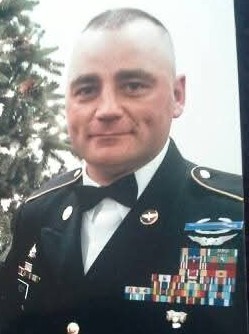
Frederick Moody claims that Officer Joseph Kibbie had taken him into protective custody and transported him to MaineGeneral Medical Center’s Thayer Center for Health in Waterville, where the officer slammed his cruiser door into Moody’s head.
Moody alleges that left him with a concussion, a head laceration and fractures of his C6 and C7 vertebrae, which are in the upper, or cervical spine, in the lower neck area.
Moody, represented by Matthew Bowen of Helper Bowen in Portland and Benjamin Hartwell of Hartwell Law in Portland, filed the lawsuit Friday in U.S. District Court in Bangor. It names the town of Fairfield and the officer as defendants. Moody is seeking compensatory and punitive damages.
Court records show the complaint had not been served as of Tuesday.
Fairfield Town Manager Michelle Flewelling, reached by telephone Tuesday, confirmed town officials had not yet received a copy of the lawsuit.
Flewelling otherwise declined to answer questions about the case, saying town officials generally do not comment on active litigation. The complaint indicates Moody’s lawyers sent a notice of claim, as required under Maine law, to the town in May 2025, and the town received it in June 2025.
Flewelling said that the officer remains an employee of the town. His last name appears on the town website and has appeared in past police department news releases as Kibbie, not Kibbe, as spelled in Moody’s lawsuit.
Flewelling said her records also indicate the accurate spelling is Kibbie. Hartwell, in an email, acknowledged the error and said court rules allow him to correct the filing.
Chief Thomas Gould of the Fairfield Police Department did not immediately respond to an email Tuesday.
According to the lawsuit, Moody, who Hartwell said is now 52, was walking along a road Sept. 12, 2024, when Kibbie started talking to him.
At one point during the conversation, Moody began to walk away, and Kibbie put him in handcuffs and placed him in the back of his cruiser in protective custody, the complaint says. It further alleges that the handcuffs were excessively tight, even after officers added a second set to provide additional room.
Kibbie then brought Moody to Thayer hospital in Waterville for a mental health evaluation, the lawsuit says. In the cruiser, parked in the ambulance bay, Moody was handcuffed with his hands behind his back and was lying face down across the rear seat.
Moody complained again about the handcuffs, and the officer declined to loosen, adjust or remove them, the complaint states. The officer then tried to close the cruiser door, but Moody placed a foot in the doorway to prevent it from closing, while continuing to ask “for relief from the painful restraints.”
The officer, assisted by hospital security staff, moved Moody back into the cruiser, the complaint says.
With Moody back in the cruiser, Kibbie drew his Taser and placed it against Moody’s chest, the complaint says. Moody told Kibbie to use the Taser because he believed it would hurt less than the handcuffs.
The officer, with Moody still handcuffed, then “used all of his weight and intentionally slammed the door of the cruiser into Fred’s head so hard that he broke two of Fred’s vertebrae, gave Fred a concussion, and cut his head,” the lawsuit alleges. Moody also claims to have suffered nerve damage from the tightness of the handcuffs.
Moody’s injuries required “substantial” treatment, including emergency transport to another hospital for surgical treatment of the cervical fractures, the complaint says.
The lawsuit further alleges that the town was aware of multiple prior complaints of excessive or inappropriate uses of force by Fairfield police officers, including multiple incidents involving Kibbie. It accuses the town of failing to respond adequately, which allowed such use of excessive force to be tolerated within the police department.
Moody served in the U.S. Marines and the Maine Army National Guard, said Hartwell, his attorney, who stated he served alongside him in the Guard in Iraq. Hartwell said Moody deployed several times to Iraq and Afghanistan.

Comments are not available on this story. Read more about why we allow commenting on some stories and not on others.
We believe it's important to offer commenting on certain stories as a benefit to our readers. At its best, our comments sections can be a productive platform for readers to engage with our journalism, offer thoughts on coverage and issues, and drive conversation in a respectful, solutions-based way. It's a form of open discourse that can be useful to our community, public officials, journalists and others.
We do not enable comments on everything — exceptions include most crime stories, and coverage involving personal tragedy or sensitive issues that invite personal attacks instead of thoughtful discussion.
You can read more here about our commenting policy and terms of use. More information is also found on our FAQs.
Show less