


MOTAHKOMIKUK — In his right hand, Lincoln Tomah twirled the buckskin fringes dangling from his left arm.
The first time he slid into the cocoa-brown leather outfit, he found it hot and sweaty. Eventually, he got used to it.
In a fluorescent-lit bingo hall in the heart of Motahkomikuk, the Passamaquoddy reservation also known as Indian Township, Tomah waited Sunday for community days to begin.
The 9-year-old is one of nearly two dozen people in Sipayik , the other Passamaquoddy reservation 40 miles southeast of Motahkomikuk, who recently received new tribal regalia as part of Dwayne Tomah’s efforts to get ceremonial clothing to everyone in the community.
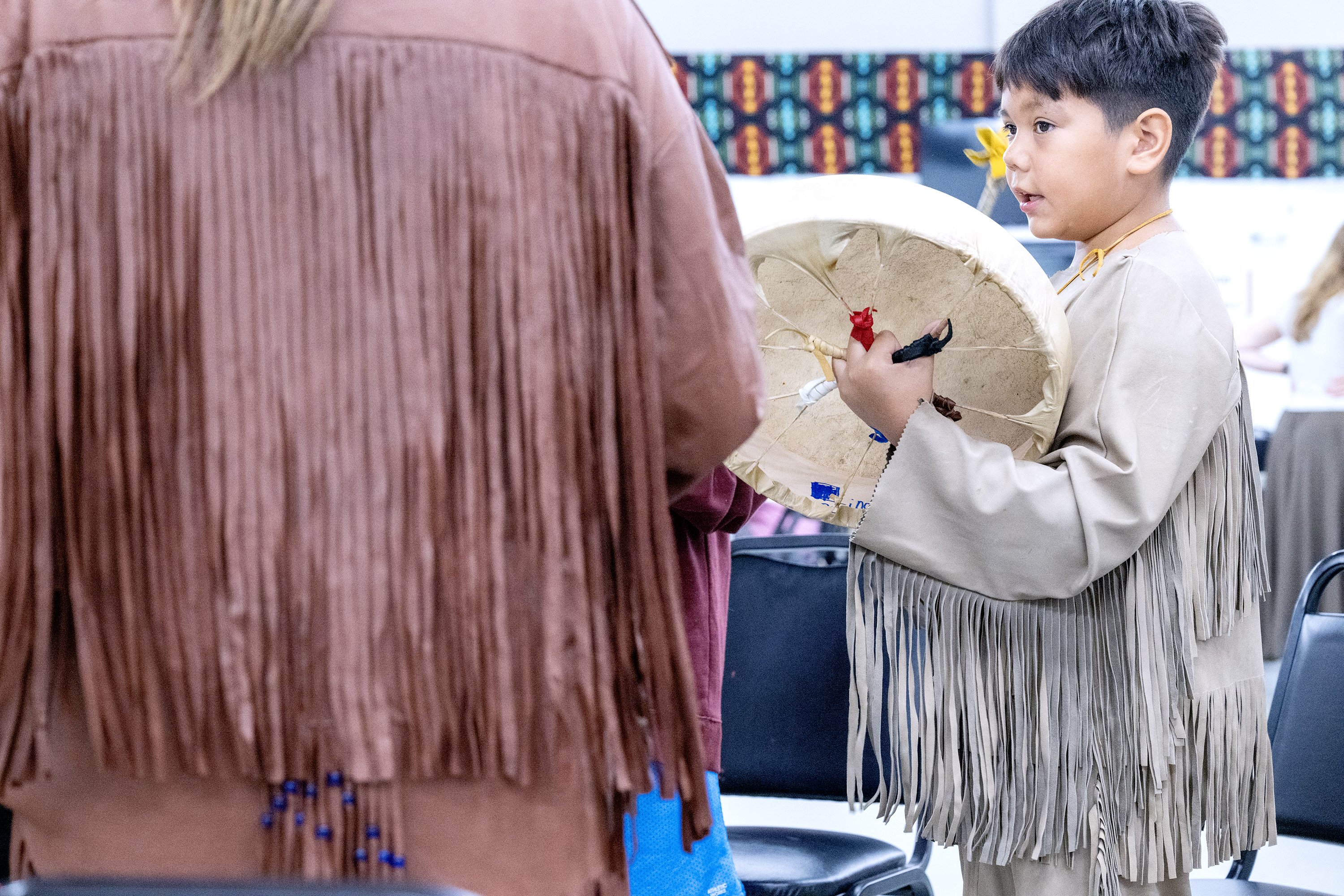
Passamaquoddy people often don regalia for events such as Community Days, an annual cultural celebration that involves dancing, drumming, art vendors and food.
These days, traditional regalia is increasingly difficult to find. After years of systemic cultural oppression, many people don’t own ceremonial clothing and few know how to make it. In some cases, intricate and culturally significant pieces of regalia have been stolen or gone missing.
More and more people at these celebrations wear shirts, skirts and dresses adorned with ribbons — a form of dress that evolved after European colonization — rather than the leather clothing their ancestors wore long before settlers arrived.
“They’re not from here,” said Mary Creighton, 83. “And it’s taking away from the traditions that I care so very much about.”
Creighton makes traditional buckskin regalia. She’s one of just a handful of people who still know how.
Dwayne Tomah, the animated director and curator for the Passamaquoddy Tribal Museum in Sipayik, undertook this project several years ago to ensure everyone in Sipayik, but especially kids, have regalia if they want it.
“I always wanted regalia as a child,” said Tomah, 60. “It was such a poor environment growing up that food was probably the priority.”
Tomah has secured $30,000 in grants from the Maine Community Foundation’s Belvedere Traditional Handcrafts Fund over the last three years, a spokeswoman said. The funding pays for materials and pays Creighton to make the outfits — at least 20 so far.
She’s had to stop doing beadwork as her eyesight has faded, but still makes buckskin regalias.
She sees it as doing her part to ensure her culture doesn’t disappear.
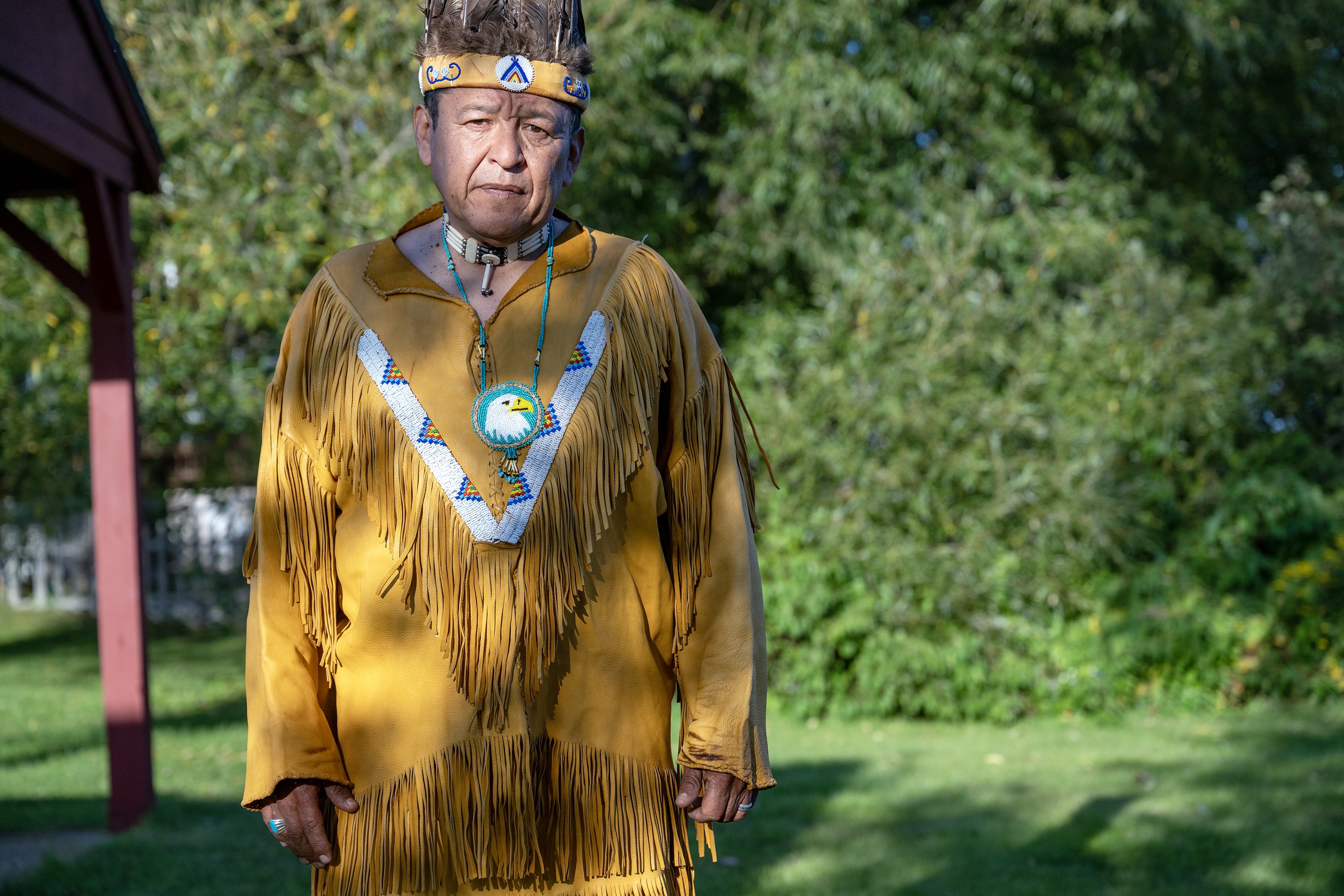
Before the sun disappeared below Lewey Lake on Saturday, Tomah found a reason to slide into his own regalia and step into a traditional birch-bark canoe for a impromptu photoshoot.
“It shows that we’re still here, and that we’re still continuing to carry on knowledge of our people, songs, stories and ways of knowing and being,” he said.
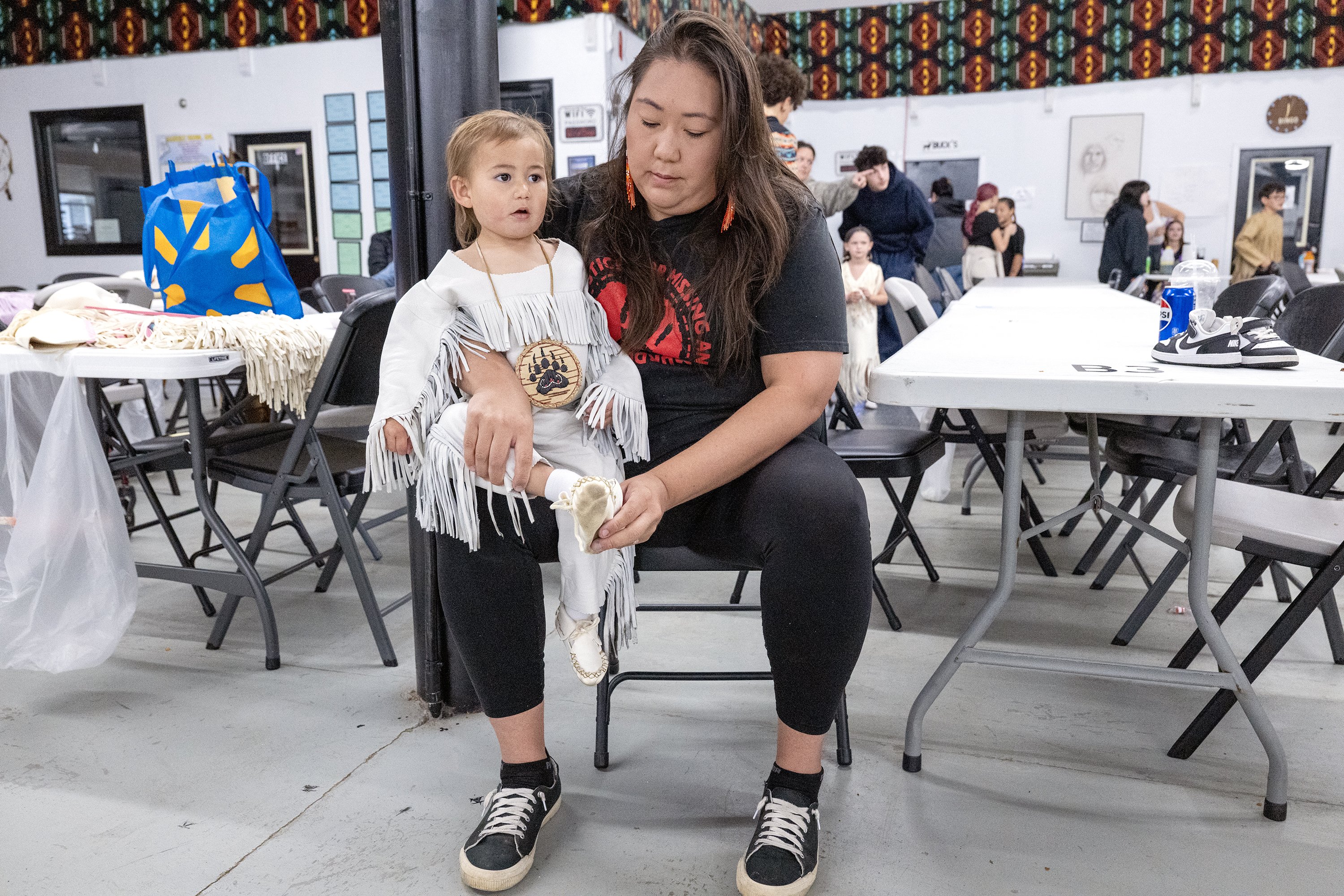
Before the grand entry Sunday, Alisia Morin, 34, stuffed her 22-month old son, Hudson McGinley, into his cream-colored buckskin outfit, which they received through Tomah’s program.
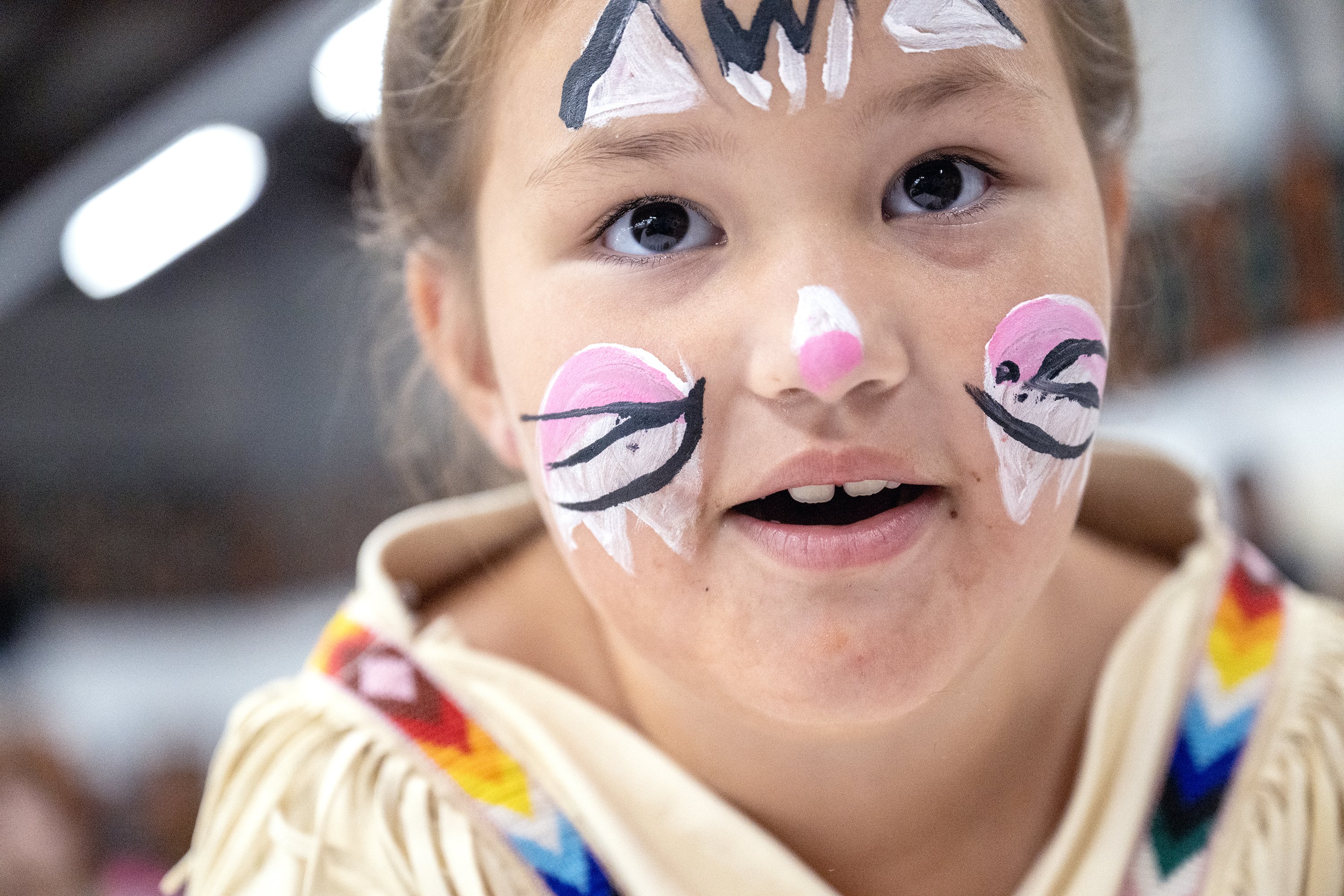
Morin’s daughter, 6-year-old Eliana McGinley, sported a new skirt from Creighton and fringed top with a colorful beaded collar made for her by Morin’s late grandmother — the last piece of her, Morin notes.
“I love it,” she said, looking at her kids. “It’s something I didn’t have.”
Lincoln Tomah learned traditional Wabanaki dances from his grandmother — “since I was that tall,” Tomah said, leveling his hand 10 inches off the floor.
He strutted and stepped in a circle on the dance floor, buckskin fringes jolting down his legs and across his back.
“I feel like everything, my culture, everything just comes together,” he said.
Reuben M. Schafir is a Report for America corps member who writes about Indigenous and rural communities for the Portland Press Herald.

We invite you to add your comments. We encourage a thoughtful exchange of ideas and information on this website. By joining the conversation, you are agreeing to our commenting policy and terms of use. More information is found on our FAQs. You can update your screen name on the member's center.
Comments are managed by our staff during regular business hours Monday through Friday as well as limited hours on Saturday and Sunday. Comments held for moderation outside of those hours may take longer to approve.
Join the Conversation
Please sign into your CentralMaine.com account to participate in conversations below. If you do not have an account, you can subscribe here. Questions? Please see our FAQs.