


For more than a year, affordable housing developers in Maine have been wrestling with the requirements of a federal rule that they say is burying them in paperwork and making construction impossible.
Sen. Angus King thinks he can help.
On Wednesday, Maine’s independent senator introduced the Build American Efficiency Act, a bill encouraging the federal government to work with manufacturers on a publicly available database of certified American-made products that would meet the requirements of the Build America Buy America Act.
Also known as BABA, the program requires all building projects using certain government funds to source 95% of their construction materials from the United States.
Developers have said the administrative burden of simply tracking down domestic materials has been extreme and adds as much as $150,000 per project – and that’s not including the premium costs for American-made materials.
“It’s a perfect example of a well-meaning policy that turned out to have negative consequences,” King said in an interview Thursday. “You’ve got hundreds, if not thousands, of builders, each individually trying to sort through this maze, and now what our bill would do (is) create a simple, easy-to-access database so that they don’t have to do that.”
‘EXTENSIVE’ CHANGES NEEDED
The proposal, co-sponsored by Sen. John Curtis, R-Utah, is a step in the right direction, but Laura Mitchell, executive director of the Maine Affordable Housing Coalition, said developers need more than a database to help projects move forward.
“BABA is really clogging the affordable housing development pipeline,” she said. “We’re really grateful for Sen. King being creative, and trying to find shortcut pathways to make it easier to comply with BABA, (but) this bill doesn’t offer the extensive level of changes that are needed.”
The National Electrical Manufacturer’s Association, identified in the bill as a possible standard to use, has the “Make It American BABA Registry,” which has a list of 68 manufacturing facilities spread across 15 companies that are certified to make 50-or-so products.
But compared to the roughly 1,600 parts that go into an affordable housing project, the few dozen products that are on that registry don’t carry much impact.
Mitchell said the Make it American system simply hasn’t certified enough products.
“There’s still going to be a lot of work put on these nonprofit affordable housing developers,” she said.
King, however, believes they can get certifications for all the hundreds, if not thousands of pieces.
“I think AI might help us on this,” he added.
THE WAIVER WAIT
For materials unavailable from American manufacturers, like HVAC systems or their components, developers can request a waiver from the Department of Housing and Urban Development.
And then they wait. And wait.
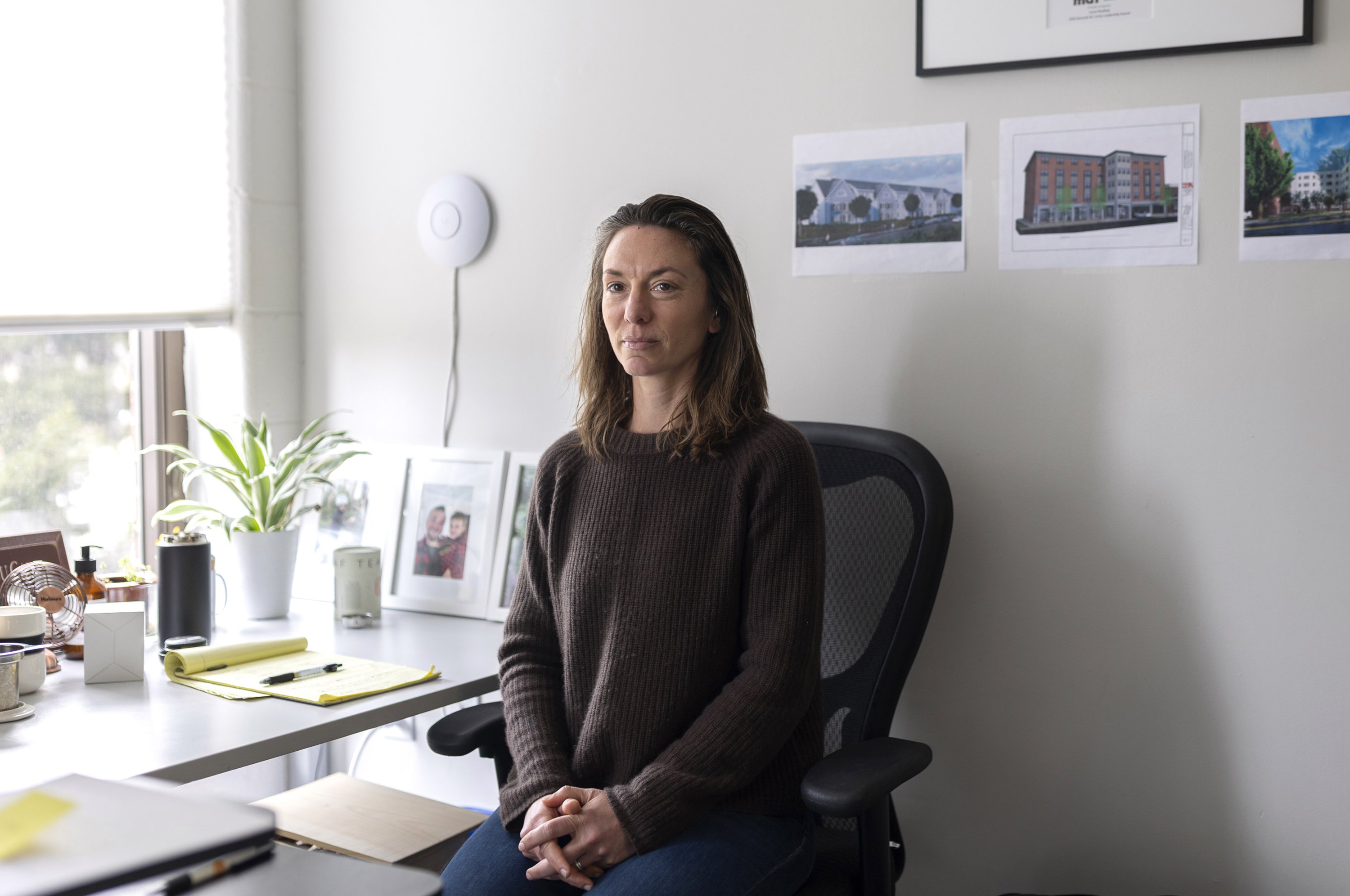
Laura Reading, director of affordable housing for Portland-based Developers Collaborative, waited for more than seven months for waivers for her two projects in Portland and Windham.
Both projects are set to close this month, but Reading found out last week that the waiver for her Portland project, a 110-spot childcare center for Youth and Family Outreach and 60 units of housing, needs to be resubmitted because it only covers funding from MaineHousing, not additional money from the city.
She’s hopeful it will be fast-tracked but noted that HUD has not given her a timeline.
A database wouldn’t help Reading’s current projects, but she said she could see one being useful in the future.
“The documentation for all of this has been a bit insane because all of these vendors want to use their own form and their own letter (of certification),” she said. “Some of them are not as clear as we need them to be.”
King said the list could also help speed up the waiver process, allowing HUD to more easily check whether something is available domestically and quickly approve or deny the request.
Reading added that it could potentially help HUD identify what products aren’t yet made in the U.S. (like an HVAC) system and create a universal waiver so developers aren’t forced to wait months for an approval on the same item for every project.
‘THE SILVER BULLET’
A general waiver is one of a handful of “administrative” changes that Mitchell, at the Maine Affordable Housing Coalition, said would be the most consequential. She’s hopeful to see HUD come out with one for HVAC by the end of the year.
Alternatively (or additionally), HUD could increase the allowable percentage of foreign materials from 5% to 10% or 15%. Or it could exempt affordable housing from BABA altogether.
“That would be the silver bullet addressing all of this,” Mitchell said.
The “Build Housing Affordably Act,” proposed in the House, would do so temporarily, while also instituting a 90-day window for waiver approvals.
Maine is one of the first states to come up against the BABA requirements, and affordable housing developers that have had their projects halted indefinitely are pushing to get the issue fixed before it spreads across the country.
Housing has recently become a bipartisan issue and King is optimistic that the bill can make it through Congress without any major setbacks and be enacted by the end of the year.

We invite you to add your comments. We encourage a thoughtful exchange of ideas and information on this website. By joining the conversation, you are agreeing to our commenting policy and terms of use. More information is found on our FAQs. You can update your screen name on the member's center.
Comments are managed by our staff during regular business hours Monday through Friday as well as limited hours on Saturday and Sunday. Comments held for moderation outside of those hours may take longer to approve.
Join the Conversation
Please sign into your CentralMaine.com account to participate in conversations below. If you do not have an account, you can subscribe here. Questions? Please see our FAQs.