
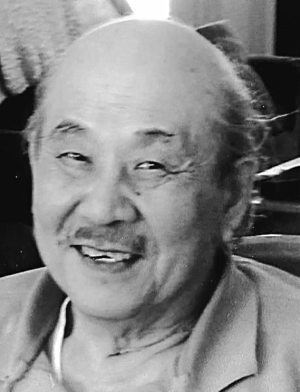
Tsun-Kong Lee
AUGUSTA – Tsun-Kong Lee, 86, Doctor of Public Health Laboratory Practice, of Augusta, passed away peacefully on May 30, 2022 in Honolulu, Hawaii.
He was born Sept. 15, 1935 in Hilo, Hawaii to parents Tai-Hu and Laura Chang Lee. The third of four Lee sons, he grew up in early boyhood on the island of Maui where his father was a cowboy for a cattle ranch in the Kula uplands. By the 1940s his family had moved to Honolulu. He graduated from McKinley High School in 1953 as captain of its tennis team and an ROTC cadet. In his senior year, he joined Olivet Baptist Church’s youth choir, where he met the piano accompanist who was to become his future wife, Amy Senaga, during a rehearsal of Faure’s “Requiem”. That music remained his favorite classical choral work for the rest of his life.
He went on to the University of Hawaii in Honolulu, studying biological sciences, continuing ROTC training and taking Bible classes at the Baptist Student Union to bolster his church duties as a junior deacon. In June 1957 he received a B.A. in Bacteriology and was commissioned a lieutenant in the U.S. Army.
After he was assigned to the Chemical Corps unit at Ft. Detrick in Frederick, Md., he married Amy on Oct. 4, 1958 at the Post Chapel, Arlington National Cemetery grounds in Virginia. He played for the Ft. Detrick tennis team in Washington, D.C. area military service matches. The hard-fought games against formidable Navy and Marine opponents made him a lifelong TV follower of world champion tennis matches. Daughter Robin was born the following October 1959 in Frederick.
On completing active duty and viral research as a civilian at Ft. Detrick, he moved to Ann Arbor for graduate studies at the University of Michigan School of Public Health, where he got his M.A. in Public Health Laboratory Practice in 1964. Son Edwin was born in March 1965. After a year at the Epidemiology Department University of Michigan, he moved to East Lansing, where he worked three years on a senior researcher’s team at the Michigan State University School of Public Health.
During winter 1968-1969, he commuted to Lansing for a six-months job as a bacteriologist with the Biologics Products Division in the state’s Public Health department to bridge hard times. Providentially, a vacancy opened for a virologist in the Rabies Section of the same Public Health department to start June 1969. This was also the long-awaited key to re-open his long deferred research interest in rabies.
At that time, the state of Michigan had been receiving about 2,000 rabies-testing samples yearly of brain tissues from domestic and wildlife animals. Detailed records kept from 1962-1972 by the standard lab procedure using brain tissues had never been evaluated. A small but significant number of test samples brought to the state lab yearly were decomposed or too traumatically damaged to be usable, leaving physicians with exposed individuals without guides for follow-up treatment. He discovered that the spinal cord of rabies-suspect animals was a valid alternative to using brain tissues as a faster, equally accurate substitute in finding rabies antigen for positive results. His findings were reported in professional journals in 1972, followed by evaluations of the decades’ trove on rabies testing data, published in 1974.
These reports landed him a full-time U.S. Government grant for rabies testing methods research at the Center for Disease Control at Atlanta, Ga., with a joint full fellowship towards his doctoral studies at the University of North Carolina School of Public Health in Chapel Hill. He received his Ph.D. in Public Health Lab Practice at UNC in August 1975 and completed his CDC research project early 1976, with results summary published in the Journal of Clinical Microbiology, March 1977.
By October 1976, he moved to Augusta, Maine to begin his supervisory duties as head microbiologist in the Health and Environmental Testing Laboratory of
the state’s Department of Health and Human Services. On Sept. 1, 2006, he received Governor Baldacci’s Longevity Award for 30 years of service to citizens of Maine. He continued work in public health for four more years. After his genial lab colleagues gave a fond farewell party at Margarita’s, he retired on Oct. 31, 2010. He considered those 34 years as the happiest of his professional career.
“TK” –as Maine friends called him, spent his peaceful retirement in reading biographies of scientists and spy novels. His sole extravagance had been buying too many books. His favorite writer was naturalist Henry David Thoreau, whose mantra in life to “simplify, simplify, simplify” became his career guide. With his love of all creatures great and small, his favorite TV programs were about veterinarians: James Herriot’s Yorkshire practitioners and Dr. Pol. He didn’t hunt animals for sports, saying, “If they don’t come after me, I won’t go after them.” His canine companions loved to go on auto rides with him; he made stops for ice-cream during hot summer days. TK waited every spring for TV coverage of world cup tennis opens. When he thought he had a captive audience at family gatherings, he would spring on them his “Dad jokes”. Being nonjudgmental, he was at ease in the company of people with diverse backgrounds.
COVID pandemic surges with rapidly mutating strains arriving in his final years eroded his peace of mind by heartbreaking statistical data daily from TV and major newspapers that he followed continuously from professional habits of monitoring epidemics and “flus”. On noting his mood changes and declining health, his family persuaded him to go with them on their family trip to Hawaii, as Covid surges had receded in Hawaii. He found the return to Hawaii a welcomed respite. He enjoyed old and new vistas in city and country tours with his family on Oahu and the largest island of Hawaii, his birthplace. Relatives in Honolulu hosted luncheons and dinner parties in true Hawaiian hospitality. On the very eve of the Lee family’s return to the mainland, he had a cardiac event at their resort on the big island. He was airlifted to the Queen’s Medical Center Cardiac Care Unit in Honolulu. The staff quietly modified for his family the hospital’s total ban on visitors due to a new covid surge, not knowing when his condition would flatline.
On May 30, 2022, TK went to sleep peacefully, relieved of pain while his family surrounded him. The Hospital Chaplain gave a closing prayer in their midst, not forgetting to say thanks for TK’s mission in life.
Dr. Lee is survived by his sister Mei Quinn Lee of Bakersfield, Calif., his wife Amy of Waterville; his daughter Robin and husband Stephen C. Baker of Medford, Mass., son Edwin and wife Lisa Lee of Sidney, Maine; and grandchildren, Lyndsey Lee Gifford and husband Justin, Kyle Lee and Kylie Baker; and a great-grandchild. He was predeceased by his parents and all his brothers.
A private Christian interment service for Dr. Lee was held August 27, 2022 at the Lewis Cemetery in Oakland, Maine.
The Lee family is grateful to all their relatives, friends and associates who generously gave them their support, time and prayers in wondrous ways to “keep the faith” through difficult times. May you and your families be blessed abundantly in return!
Donations in memory of TK will be gratefully received by the Kennebec Valley Humane Society for construction of its expanded facilities off
Leighton Road in Augusta, which will include a vaccination clinic. Please make checks payable to:
KVHS
10 Pet Haven Lane
Augusta, ME 04330
On the memo line, please write: For the Nancy Shuman Shelter/in memory of Dr. T.K. Lee
Comments are no longer available on this story