

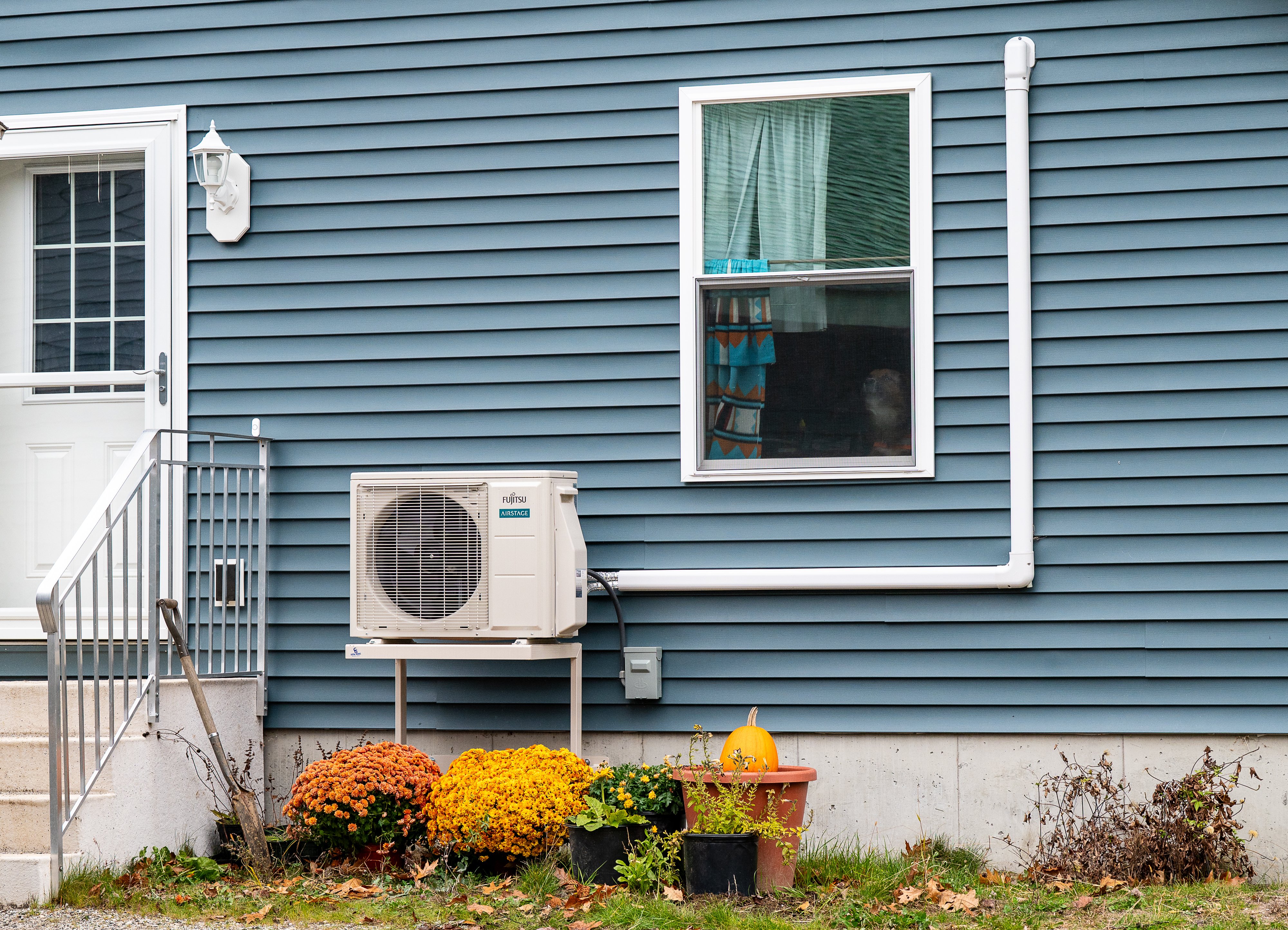
AUGUSTA — In her new all-electric modular home, Joanne D’Unger, of Leeds, said her heat pump cut her electricity bills by nearly 40%.
“Reducing the cost of heating and cooling by more than a third was worth the investment,” she said. Her household also added solar panels at the same time, which now provide about more than three-quarters of the family’s electricity.
D’Unger could be a poster child for Gov. Janet Mills’ goals for reducing climate change, which call for lowering greenhouse-gas emissions 45% by 2030 and 80% by 2050. Heat pumps are a central tool in reaching those goals, both for cutting fossil-fuel use in homes and shifting more heating demand onto an increasingly renewable electric grid in Maine.
But while experts agree heat pump systems can sharply cut fossil fuel use, in some cases they don’t always deliver the savings or comfort homeowners expect. A number of Maine homeowners who have added heat pumps back that up.
A 2024 Efficiency Maine impact evaluation found that average heat pump performance in Maine homes fell short of program models, delivering about 40% less heating energy than expected. The report also found that “about half of all heat pumps are shut off by homeowners when temperatures drop to 15°F. … 70% shut off by 1°F.”
Efficiency Maine experts said such homeowner behavior not only indicates dissatisfaction with heat production at those temperatures, but contributes to the 40% difference in experts’ expectations.
Even so, the report said annual statewide savings equaled over 2.3 million gallons of heating oil and nearly 500,000 gallons of propane, which not only reduced greenhouse gas emissions but saved money for many homeowners.
One Buckfield resident who responded to a query by the Sun Journal said they converted their home to heat pumps “to do (their) part to mitigate climate change,” but said they eventually reverted to fossil fuels.
“The pumps themselves performed well, they hung in all the way to -21°,” the reader said. “I wish I could use them solely, but I literally cannot afford the electric bills.”
Others agreed, saying they were pleased with performance, less so with payback.
Beth Bisson said her household “probably saved some money,” but by the time she added in the cost of yearly heat pump cleaning, repairs and technician travel, “I probably haven’t saved that much.”
However, Penny Whitney, of Scarborough, and Kim Jordan, who uses a Mitsubishi inverter system, both described their experiences as positive.
“We had a great experience with the installation, and have been very satisfied with the performance and cost of operating them,” Whitney said.
Jordan said her system “heats great and saves money, too.”
‘Set it and forget it’
That mix of satisfaction and discontent matches what installers and policymakers describe. Advancements are one factor, with more recent models generally offering the greatest efficiency.
“Today’s heat pumps have no problem with Maine’s cold winters,” said Scott Libby, owner of Royal River Heat Pumps in Freeport. “The newest models provide 100% of their rated capacity at minus-10 degrees Fahrenheit and have guaranteed output at minus-22 degrees.”
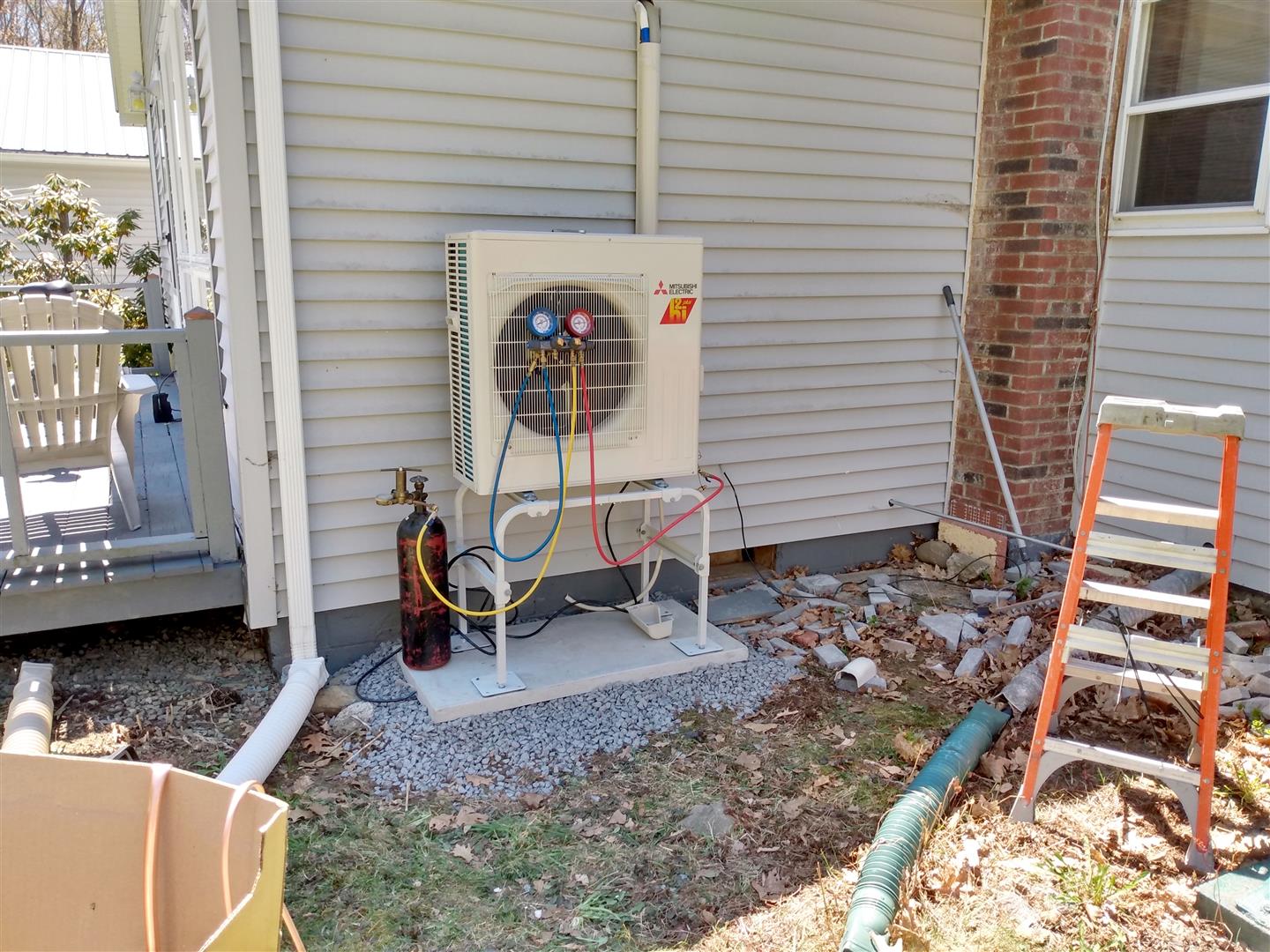
Libby said performance losses usually come down to installation or operation. Aside from inefficient homeowner operation, he said units installed near snowdrifts or under rooflines that shed ice can lose capacity, as can systems not properly charged or sized for their space.
He advises customers to “set it and forget it” when temperatures drop, instead of turning down the thermostat at night as homeowners have been taught to do. “They are not designed to go from 60 degrees back up to 70 degrees when it is zero degrees,” he said. “This is asking too much for any properly sized heating system.”
One Maine homeowner who added two heat pumps said they are performing well overall, but can struggle when the thermometer reaches single digits. That’s when he switches over to his oil-fired system.
“They’re quiet, dependable and overall excellent,” said the homeowner, who declined to give his name, “but they have difficulty keeping up with heating when temperatures drop below 10 degrees.”
Installed in 2022 as part of a $60,000 solar and battery package, his heat pumps have cut the home’s annual oil use by more than half, from about 1,000 gallons to under 400.
“We rarely have an electric bill beyond paying for delivery,” the homeowner said. “Our low solar months are December through March, at which point we generally use up our credits.”
Libby and other contractors have another suggestion that’s caused a bit of contention in the world of Maine home heating: Button up your house before considering a new heating system, all things being equal.
“Weatherize first, then design the system based upon the new heat load of the home,” he said. “Rebates and incentives can cause a system to be designed to maximize (the benefits of the rebates and incentives) … and not do what is best for the home or the homeowner (in the long run).”
State Rep. Chris Kessler, D-South Portland, who formerly worked at Evergreen Home Performance, said confusion over rebates and sequencing has led some homeowners to “put the cart before the horse.”
He recalled one case where a woman installed three heat pumps before having her home fully weatherized.

“We reduced her heating load so much (with weatherization) that one of her heat pumps was completely obsolete,” Kessler said. “It doesn’t get used.”
Kessler said that’s one reason Efficiency Maine introduced a whole-house system initiative in 2023 and, more recently, began promoting energy audits after he sponsored legislation expanding their use. He said the agency initially avoided requiring audits because it “wanted to meet homeowners where they’re at.”
Efficiency Maine leaders say they still leave the order of heat pump installation and weatherization to homeowners.
“Because these are market-based programs, it is the consumer’s choice which is their priority after consultation with their contractors,” said Michael Stoddard, executive director of Efficiency Maine. “We recognize that both weatherization and heat pumps can provide value.”
Stoddard said roughly a quarter of installations go to low-income households, another quarter to moderate-income, and the remainder to any-income customers. Rebates, he said, can “effectively cut the payback time in half” for some low-income households, but Efficiency Maine does not require weatherization first.
“As a general rule, it is not necessary to weatherize first,” he said.
Echoing Libby’s observations, Stoddard said many homeowners unintentionally reduce efficiency by running both systems at once.
“The biggest problem seems to be running both the central boiler and the heat pumps concurrently,” Stoddard said. “The central boiler interferes with the heat pumps, causing the boiler to run more and the heat pumps to run less. … Heat pumps perform best when you set the thermostat at a comfortable temperature and leave it; it is not necessary or helpful to turn it down at night and then back up during the day.”
Despite his organization not pushing a weatherize-first approach, Stoddard emphasized that a home’s overall energy performance depends less on the age of the home and more on the home’s size and level of insulation and sealing. Smaller, well-insulated homes typically perform best, while larger or draftier homes see reduced efficiency.
“If all of the elements are optimal, then the heat pump will be used throughout the winter. If any of the elements is lacking, usage will be reduced, sometimes substantially,” states Efficiency Maine’s impact evaluation.
From the retrofit field, Mikaela Heming, director of retrofitMAINE, a program of passivehausMAINE, said her organization’s initiative to use science and technology to make Maine homes more energy efficient aligns with both sides of the debate.
“Heat pumps are such a focus for us here in Maine because they’re increasingly feeling like a ‘no-brainer,’” she said. “The best practice is to complete weatherization and insulation upgrades prior to heat pump installation.”
Heming said, however, that situations and priorities vary. Sometimes, homeowners cannot take on the cost of both projects. In other instances, aging and failed heating systems that will not make it through another winter must be the priority.
Maine leads the nation
Whether heat pumps are installed before or after weatherization, state officials are betting big on the technology to meet ambitious climate goals.
Mills has set a target of installing 175,000 heat pumps by 2027, the most ambitious per-capita goal in the nation, according to a 2024 press release from the Governor’s Energy Office, now the Department of Energy Resources. State officials say Maine is on track, with over 140,000 already rebated statewide.
Maine already leads the nation in total number of rebated heat pumps, according to Efficiency Maine. Its 140,000 is far greater than second-highest, Vermont’s nearly 79,000, according to October numbers from Efficiency Vermont.
It appears Maine is second to Vermont in per-capita installations, however. In 2023, Vermont reported it had the highest per-capita installation rate, about 97 heat pumps for every 1,000 residents, compared with Maine’s 94 per 1,000.
Bragging rights aside, the push for heat pumps appears, in general, to be serving both the state’s climate goals and Maine residents’ pocketbooks. And as the number of installations grows, Maine contractors say success comes down to individual choices, from how systems are implemented and who installs them.
“The biggest challenges we hear from homeowners are too many choices in contractors, too many different types of heat pumps and differing opinions and system designs,” Libby said. “My recommendation is to find a contractor that you trust. The best way to do that is to ask people you know that have had heat pumps installed and see if they have had a good experience and if their contractor provides good customer service. Your friends will tell you truthfully.”

We invite you to add your comments. We encourage a thoughtful exchange of ideas and information on this website. By joining the conversation, you are agreeing to our commenting policy and terms of use. More information is found on our FAQs. You can modify your screen name here.
Comments are managed by our staff during regular business hours Monday through Friday as well as limited hours on Saturday and Sunday. Comments held for moderation outside of those hours may take longer to approve.
Join the Conversation
Please sign into your CentralMaine.com account to participate in conversations below. If you do not have an account, you can register or subscribe. Questions? Please see our FAQs.