

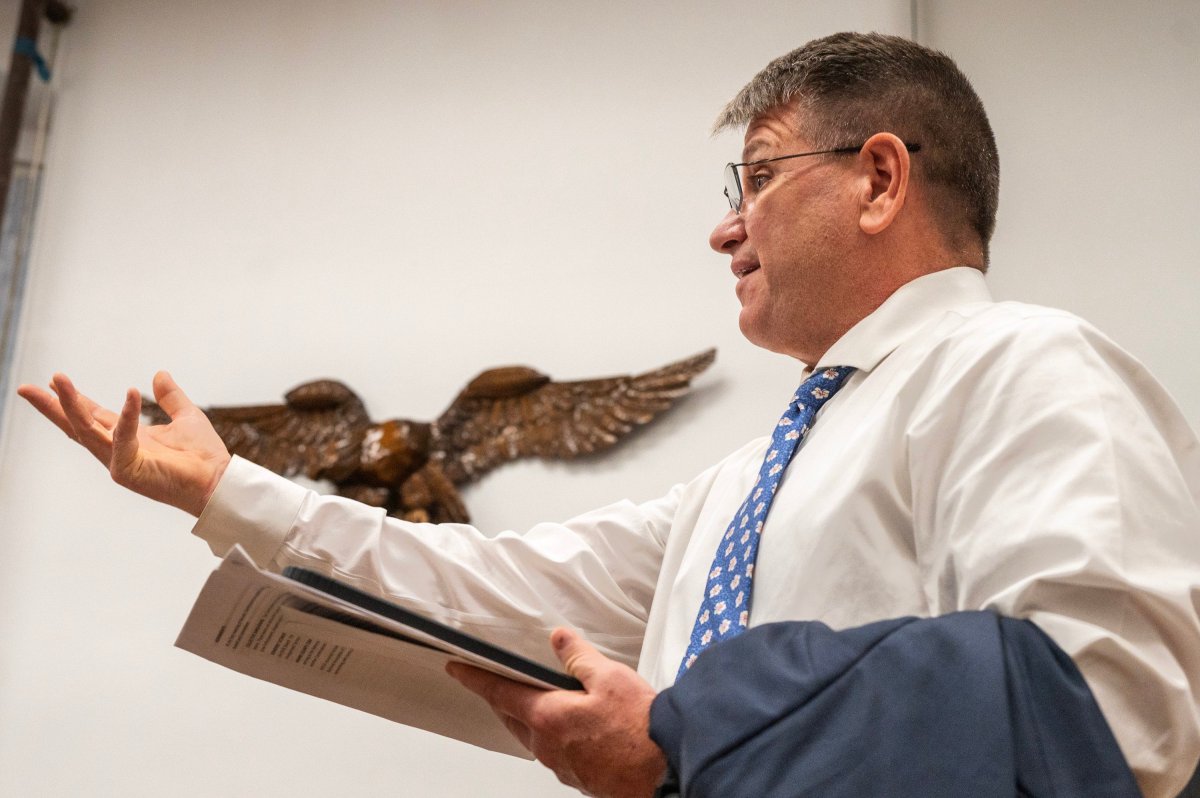
SKOWHEGAN — A familiar face in local government was chosen Wednesday to fill the open seat on the Somerset County Board of Commissioners.
Donald “Don” Skillings of Madison emerged victorious in the four-way race to represent District 2 following a caucus of municipal officials at the Somerset County Courthouse.
Skillings, 56, will serve one year, through the end of 2026. The position will then be on the ballot in a special election to complete the remaining two years of former Commissioner Cyprien Johnson’s term. Three other county commissioner positions will also be on the ballot at that time for full, four-year terms.
Johnson, who held the position for about a decade and was most recently elected in 2024, stepped down from the post in October, as he moved out of District 2, from Madison to Skowhegan.
“I believe the role of local government is simple: Ask the right questions and make the best decisions for the community as a whole — period,” Skillings told the caucus before he was chosen. “In Somerset County, one of the poorest counties in Maine, I absolutely believe it’s essential to be fiscally prudent with the taxpayers’ money.”
Skillings, who owns an insurance agency in Skowhegan, currently chairs the Madison Planning Board and serves as vice president of Somerset Economic Development Corp. He was previously chair of the Skowhegan Board of Selectmen, chair of the Skowhegan Planning Board and president of the Skowhegan Economic Development Corp.
“My passion has always been bringing business development to our county, to strengthen our workforce and grow our tax base,” Skillings said.
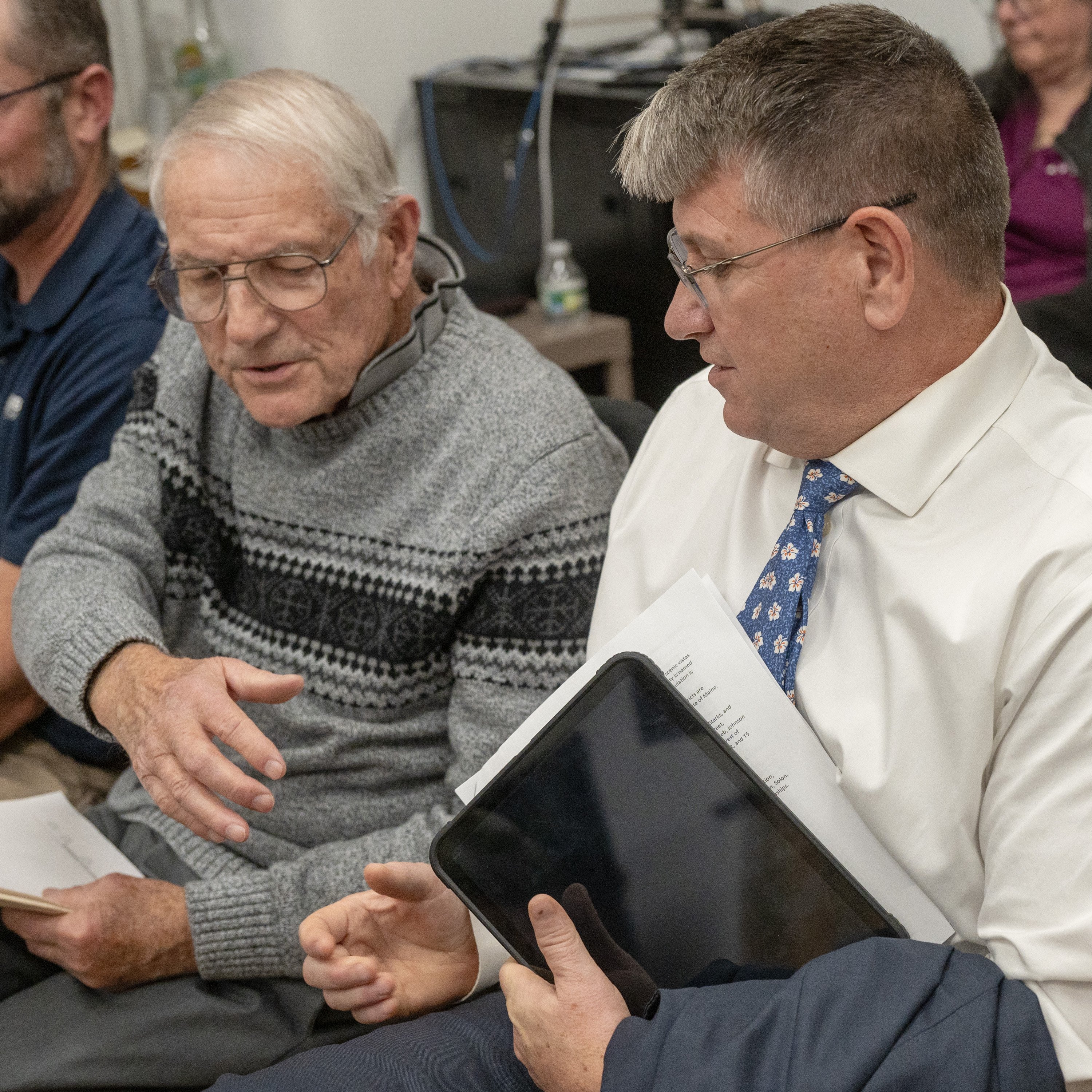
The other three candidates also brought experience serving on government boards: Paul Frederick, a former Starks selectman; Janet White, chair of the New Portland select board; and Daniel Frey, of Smithfield, a member of the Skowhegan-based Maine School Administrative District 54 board of directors.
District 2 is made up of Anson, Madison, Mercer, New Portland, Smithfield, Starks, Highland Plantation, and a portion of the county’s unorganized territories.
Each municipality participating in the caucus had one vote, per agreement of caucus members.
After sorting out some procedural issues — such as agreeing to call for a public vote instead of using secret ballots and to decide the winner based on plurality instead of majority of votes — representatives from each municipality heard two-minute elevator pitches from each of the four people interested.
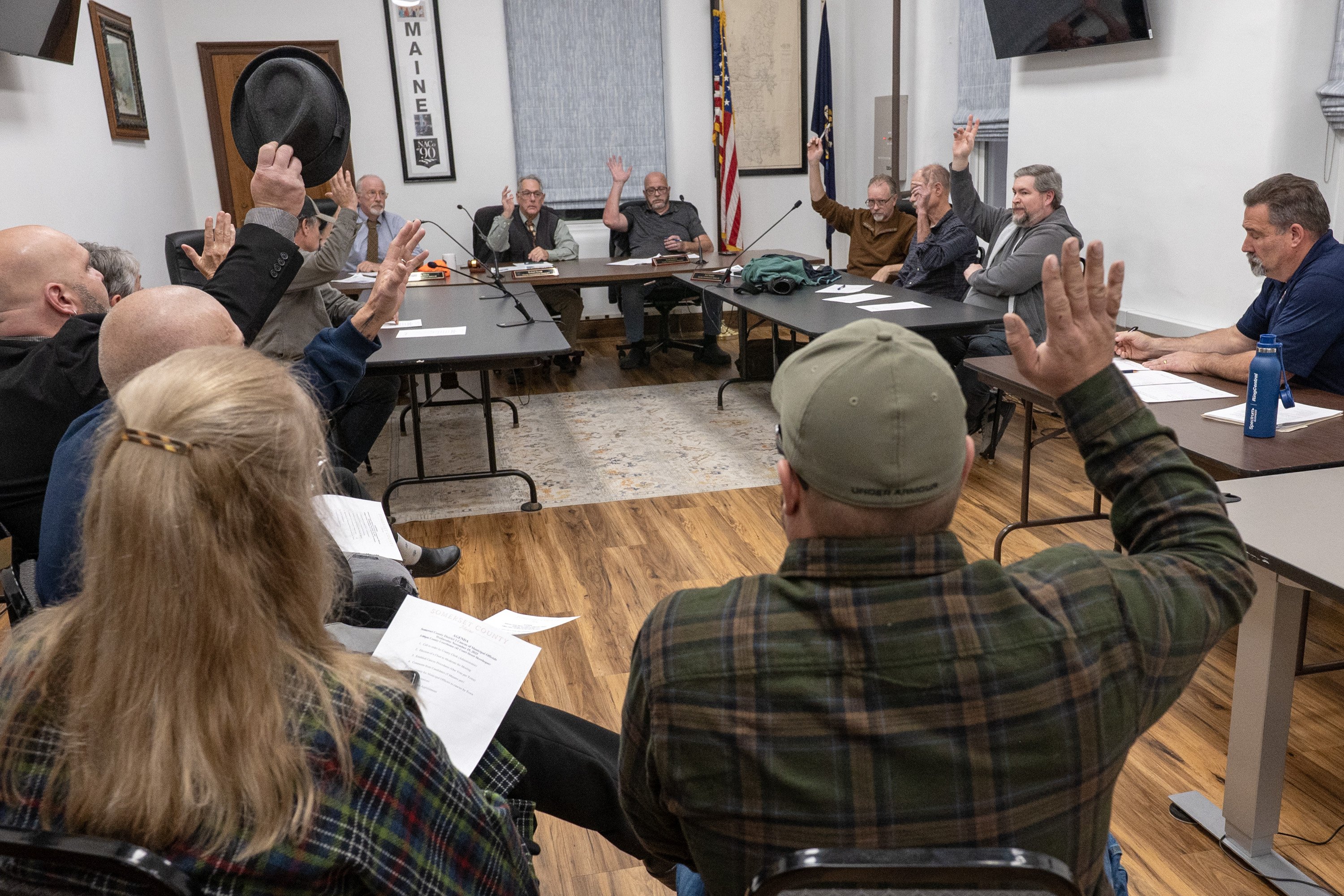
Then, those municipalities with multiple representatives attending split off briefly to hold their own internal discussions on how to vote.
Representatives from Anson, Mercer, Smithfield and the unorganized territories voted for Skillings. Representatives from Madison and Starks voted for Frederick, and New Portland’s representative voted for White.
The four current county commissioners represented the unorganized territories, which lack municipal government. No representatives from Highland Plantation attended, so that municipality did not get a vote.
The caucus of municipal officials is a process unique to Somerset County. And its rules are largely determined by its members.
State law dictates that the governor has the power to appoint a commissioner in the case of a vacancy.
But for Maine counties with charters, the process varies. Aroostook and Knox counties leave it to the governor to make an appointment, with language similar to state statute; Cumberland County lets the Board of Commissioners appoint someone until the next November election; and Androscoggin County has a process by which the resigning commissioner’s political party caucuses to nominate a candidate.

Per the Somerset County charter, when a commissioner resigns, dies or otherwise leaves office, the Board of Commissioners shall call for a caucus of the municipal officers — select board members or their equivalent — of that district to appoint a person eligible to fill the vacancy.
The same process can be used in Somerset County to fill vacancies for other elected positions, except for district attorney, which is the county’s only partisan office and shared with Kennebec County. Somerset is the only Maine county to have nonpartisan offices.
Somerset County’s caucus process was used most recently in 2023 to appoint a register of deeds.
The county charter says the person chosen to fill the commissioner vacancy serves until Dec. 31 following the next November election, when a special election can be held. Given Johnson’s resignation was in October, there was question about whether the caucus was necessary.
But County Administrator Tim Curtis told the commissioners that given how close the November 2025 election was to Johnson’s resignation, the Department of the Secretary of State advised it would be acceptable to fill the position by caucus until the end of 2026.
County commissioners are responsible for policy making, according to the Somerset County charter. The five-member board, which typically meets twice per month, also hires and oversees the county administrator and plays a key role in the yearly budget process, alongside the Budget Committee.
County departments include the sheriff’s office, district attorney’s office, communications center, emergency management agency, registry of deeds and probate court.
Commissioners are paid $9,000 per year, according to Curtis, who served as the clerk at Wednesday’s caucus. The chair is paid an additional $1,000.

Comments are not available on this story. Read more about why we allow commenting on some stories and not on others.
We believe it's important to offer commenting on certain stories as a benefit to our readers. At its best, our comments sections can be a productive platform for readers to engage with our journalism, offer thoughts on coverage and issues, and drive conversation in a respectful, solutions-based way. It's a form of open discourse that can be useful to our community, public officials, journalists and others.
We do not enable comments on everything — exceptions include most crime stories, and coverage involving personal tragedy or sensitive issues that invite personal attacks instead of thoughtful discussion.
You can read more here about our commenting policy and terms of use. More information is also found on our FAQs.
Show less