

FREEDOM — Rene Ouellet moved to Freedom because his town of 3,000 felt too big.
He and his wife bought a home by a remote pond and settled into a community that cheers trail maintenance over rapid development. When an official was recalled from Freedom’s Select Board this spring over claims she had overstepped her municipal authority, Ouellet went for the position.
On Dec. 2, he could be voted out for the same reasons.
Freedom’s officials have twice been accused of using their positions to interfere with personal matters. Residents have looked to recall elections as an instrument of justice. But some say the door-to-door petitions make it more difficult for the town of 700 to come to a public understanding of where municipal obligations begin and individual interests end.
Others face those questions alone. Ouellet, whose recall petition alleges he misused his municipal authority to interfere with a $1.5 million property sale — on the road where he lives — isn’t sure where the line is.
“Maybe I needed to be even more careful about stating I’m acting as an individual,” Ouellet said.
‘IT PROBABLY ISN’T RIGHT’
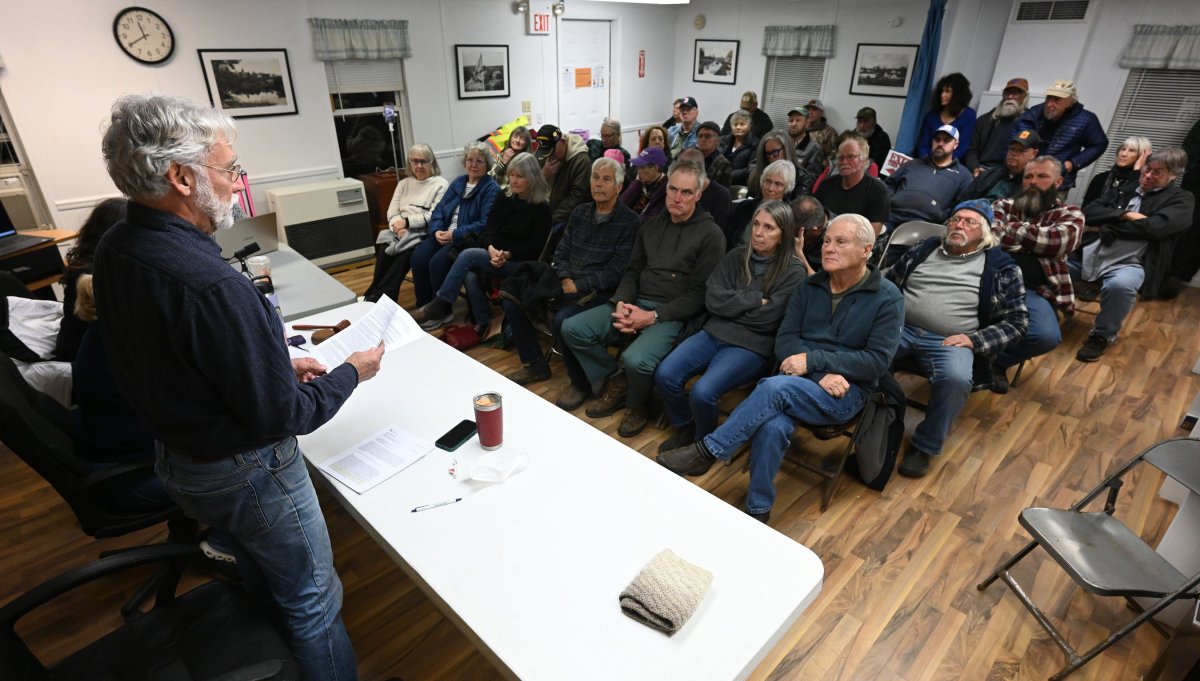
Around 50 people packed into Freedom’s town office Nov. 20 for a hearing on Ouellet’s recall petition, which claims he “abused the public trust” to keep buyers off his road, Carey Lane. A moderator quelled spats among residents debating whether Ouellet’s communications with the buyers constituted a conflict of interest.
Several residents said they exposed the town to legal liability.

Carey Lane curves around Sandy Pond and ends on an island jutting into the water. Ouellet discovered that a couple was interested in purchasing the island property — a 12-acre lot and log home listed on Zillow for $1,570,000 — when the Select Board was copied on an email exchange between the Planning Board and potential buyers in August.
Ouellet reached out to the buyers as “a town official and a potential neighbor,” according to the email sent from his municipal address. He shared concerns that the project, a wedding venue, might not meet town ordinances and could impact wildlife “as well as the other people who live on Carey Lane.”
A month later, the buyers, Ratesha and Keith Rosell of Oakland, dropped out.
Ratesha Rosell said conversations with Ouellet over email and coffee had signaled they were not welcome in Freedom.
“I know he thinks there wasn’t really a connection between him talking to us as a neighbor and as a board member,” she said. “But he actually made a statement at one point, saying: ‘Well, if this comes across the board, as it stands, I’m going to end up saying no.'”
Ouellet contends he was speaking as an individual, not a Select Board member.
Freedom’s Planning Board is in charge of drafting ordinances and approving permits, which are also enforced by the board of appeals and code enforcement officer. The Select Board does not have sway over commercial development, but the Rosells didn’t know that.

“Rene overstepped his bounds by telling a person that they’re not allowed in town,” said Robert Kanzler, the resident who took out the recall petition. “That’s not his call, to tell people whether or not they can buy property in this town.”
Maine law says municipal votes and contracts can be voided if an official is found to have a direct or indirect financial interest in the matter, or if they appear to have a conflict of interest because they didn’t disclose their position ahead of time. Legal experts say it’s difficult to prove whether abutting a potential development constitutes financial interest.
“There are things that you can’t do because the law says you can’t,” said Cathy Conlow, executive director of the Maine Municipal Association. “But there are things maybe you shouldn’t do, either because (of) your ordinance, charter or some other authority.”
“Or, you go to the ultimate test,” she added. “If it doesn’t feel right, it probably isn’t right.”
When Select Board member Laura Greeley reached out to the Rosells, urging them to continue pursuing what some say could have been the largest real estate transaction in Freedom’s history, they declined. They’ve put an offer down on a venue in Oakland instead.
The owner of the island property has requested the town provide all emails regarding the property, bylaws relating to conflicts of interest and a copy of the town’s insurance liability policies.
‘PROTECTING THEIR OWN’
Freedom’s charter states that officials with a conflict of interest should voluntarily or involuntarily recuse themselves from votes and discussions. The town also requires new Select Board members to attend a general training from the Maine Municipal Association.
Ouellet said he forgot to register for the training because the town was backlogged with work after his predecessor, Heather Donahue, was recalled the same week another Select Board member resigned, leaving the government without a quorum for months until an election was held.

Residents in favor of recalling Donahue claimed she overstepped her authority by researching — and walking on — a section of the road she lives on, which is the subject of an ongoing lawsuit against the town that alleges the road is private property.
She recused herself from hearings and determinations on the road, but was still voted out.
Ahead of both recalls, most residents received knocks on their doors or letters in the mail urging them one way or the other. Kanzler said he had people on his front step almost daily after he took out his petition.
The Rosells say it’s a relief to not be stirring up any more town drama.
“I actually got the impression that they just want to be a small town,” Keith Rosell said. “They do not want outsiders there, or too many people.”
“Or more business coming in,” his wife added. “They’re very much protecting their own personal interest of the town, is what I was gathering.”
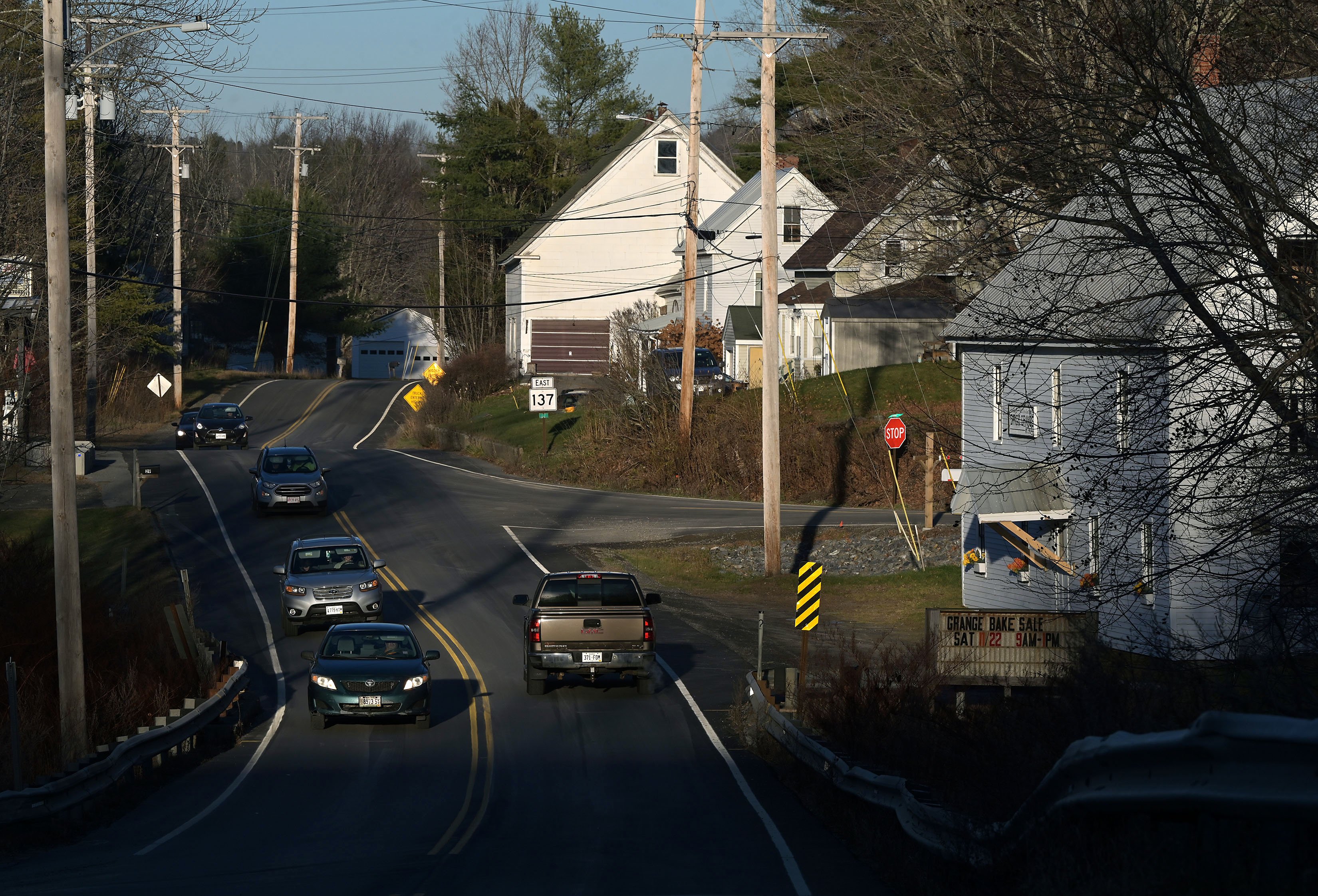
But residents say Freedom is a good place to live. The community is engaged. People choose to spend their time researching roads, debating the impact of new development and showing up to hourslong hearings because they want to make their town better.
At Ouellet’s hearing, a resident reminded attendees that a recall election is not a legal determination. It won’t decide if a person is guilty or acted with a conflict of interest. It will, however, give the town a chance to decide what they want in a representative, and it brings those conversations out in public.
More than an hour into the hearing, the same arguments were cropping back up. Allegiances were unchanged, perspectives had been picked apart and put back together and still some questions didn’t have answers. A resident raised his hand and suggested they adjourn.
Everyone agreed, then laughed that they were able to agree on something.
Chairs scraped, phones and recall papers were stowed. Boots crunched in the gravel lot. People clapped their neighbors on the back and wished them a nice night.

Comments are not available on this story. Read more about why we allow commenting on some stories and not on others.
We believe it's important to offer commenting on certain stories as a benefit to our readers. At its best, our comments sections can be a productive platform for readers to engage with our journalism, offer thoughts on coverage and issues, and drive conversation in a respectful, solutions-based way. It's a form of open discourse that can be useful to our community, public officials, journalists and others.
We do not enable comments on everything — exceptions include most crime stories, and coverage involving personal tragedy or sensitive issues that invite personal attacks instead of thoughtful discussion.
You can read more here about our commenting policy and terms of use. More information is also found on our FAQs.
Show less