


As Maine secretary of state, Democrat Shenna Bellows made a controversial decision to keep Donald Trump off 2024 ballots in the presidential election. More recently, she told his administration to “jump in the Gulf of Maine” in response to requests for voter information.
Republican Jonathan Bush, the cousin of former President George W. Bush, comes from a family that has publicly clashed with Trump and hasn’t embraced his presidential runs.
And independent Rick Bennett, a former Maine Republican party chairman, cast the state’s one electoral college vote for Trump in 2016, but hasn’t supported him since.
These candidates and others in the Maine governor’s race have each taken a different approach to Trump and his administration. The way they’ve embraced — or pushed back on — the president will factor into their campaigns to succeed Gov. Janet Mills next year.
And their stances on Trump and his agenda foreshadow what their own administrations and Maine’s future relationship with the White House will look like.
“Trump is kind of the political sun in the United States at this moment in time, so every election has something to do with Trump,” said Mark Brewer, a professor and chair of the political science department at the University of Maine. “A state election in Maine? Probably not as much as a congressional election, but the governor’s race will still have a certain Trump factor to it.”
BELLOWS SAYS SHE WON’T BACK DOWN AFTER CLASHES
Mills said a year ago she would take a wait-and-see approach to Trump as he embarked on his second four-year term. Soon after, she became embroiled in a standoff with Trump over Maine’s policy on transgender athletes, now the subject of a federal lawsuit. She has also pushed back on other Trump actions, including tariffs and funding cuts.
The top Democrats vying to succeed her have been uniformly critical of Trump, though Bellows is the only one who has had high-profile public clashes with the president and his administration.
In 2023, Bellows, as secretary of state, issued a decision to keep Trump off the presidential ballot citing his role in the Jan. 6, 2021, riots at the Capitol and a constitutional amendment that prohibits insurrectionists from holding office.
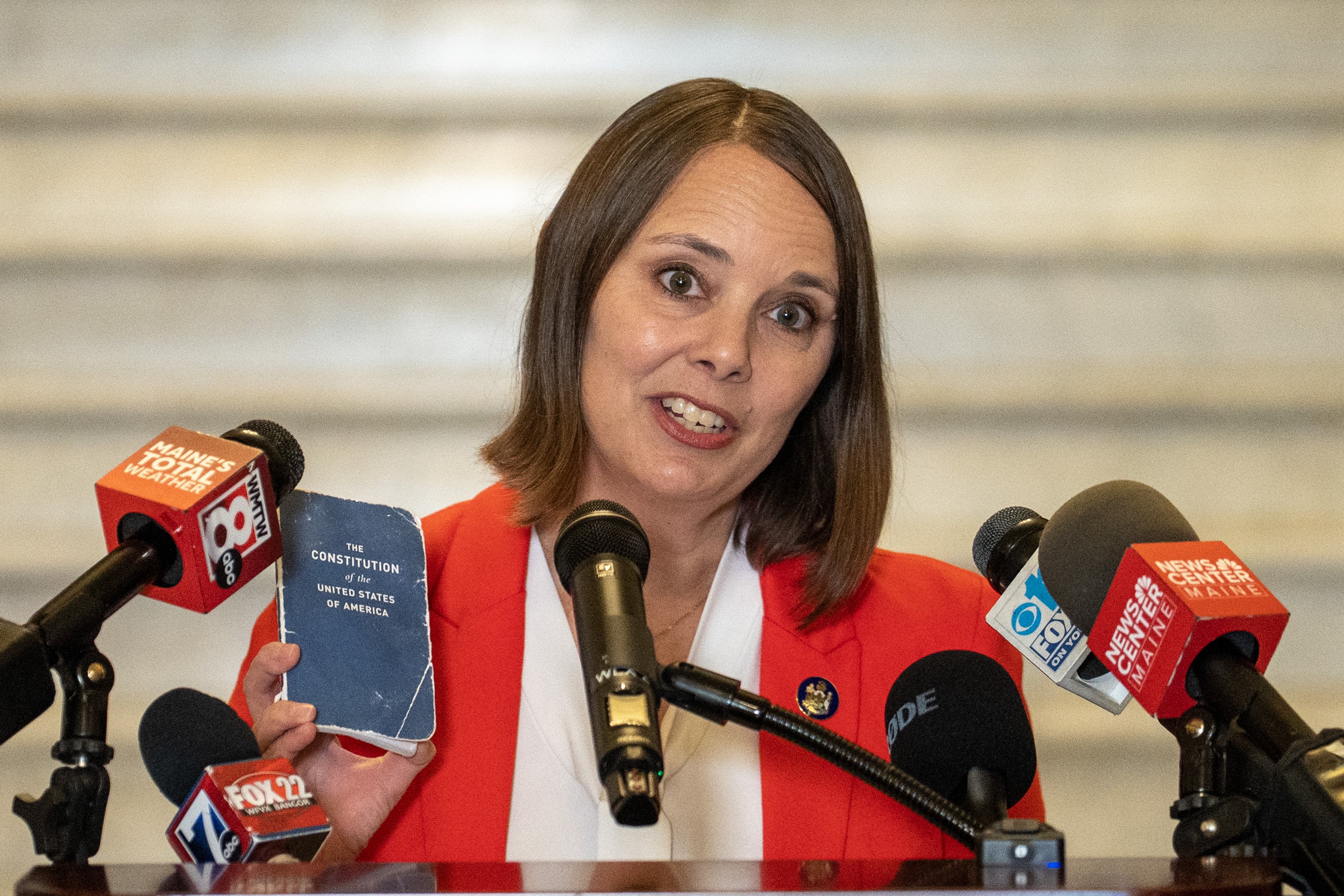
She later withdrew her decision after the U.S. Supreme Court ruled in a case out of Colorado that only Congress, and not individual states, could enforce the amendment in question.
Maine is also being sued by the U.S. Department of Justice after Bellows denied requests for voter registration lists, the release of which she has said would violate federal privacy law.
“I’m the only candidate in this race that has experience standing up to Trump,” Bellows said. “I’ve been doxed, swatted, attacked and I’ve never, and will never, back down.”
At the same time, Bellows said that like Mills she would work with Trump if it would benefit Maine. “The philosophy that has governed my entire career is, ‘No permanent friends and no permanent enemies,'” she said. “I’m willing to work with anyone who will deliver for Maine.”
FOR BENNETT, BUSH MORE COMPLICATED QUESTIONS
While other top Democrats in the race are also not shying away from criticizing Trump, his presidency raises trickier questions for Republicans and Bennett, a former Republican who served as the state’s party chair from 2012 to 2017.
In 2016, Bennett cast one of Maine’s four electoral votes for Trump despite public pressure to reject the will of the voters in the 2nd District. Bennett also said he voted for Trump in 2016. He did not cast a vote for president in 2020, and in 2024 he wrote in former Republican South Carolina Gov. Nikki Haley.
Bennett said he also agrees with Mills’ approach.
“I’m going to look out for Maine people first,” Bennett said. “I’m not interested in supporting one party. … The only people I’ll listen to and respond to, are Maine people.”
Republicans, meanwhile, are expected to embrace Trump and his agenda in the primary. Things could get more complicated in the general election, said Brewer, from the University of Maine.
“It might be good to put some daylight between you and Trump as a Republican running in a general election in Maine,” he said. “But you have to get through the primary first.”
Bobby Charles, who was leading the field of Republican candidates in fundraising as of the latest numbers at the end of June, has made social media posts and issued news releases in support of Trump and his agenda, including his downsizing of the federal government, deployment of National Guard troops to U.S. cities and ramped up deportation efforts.
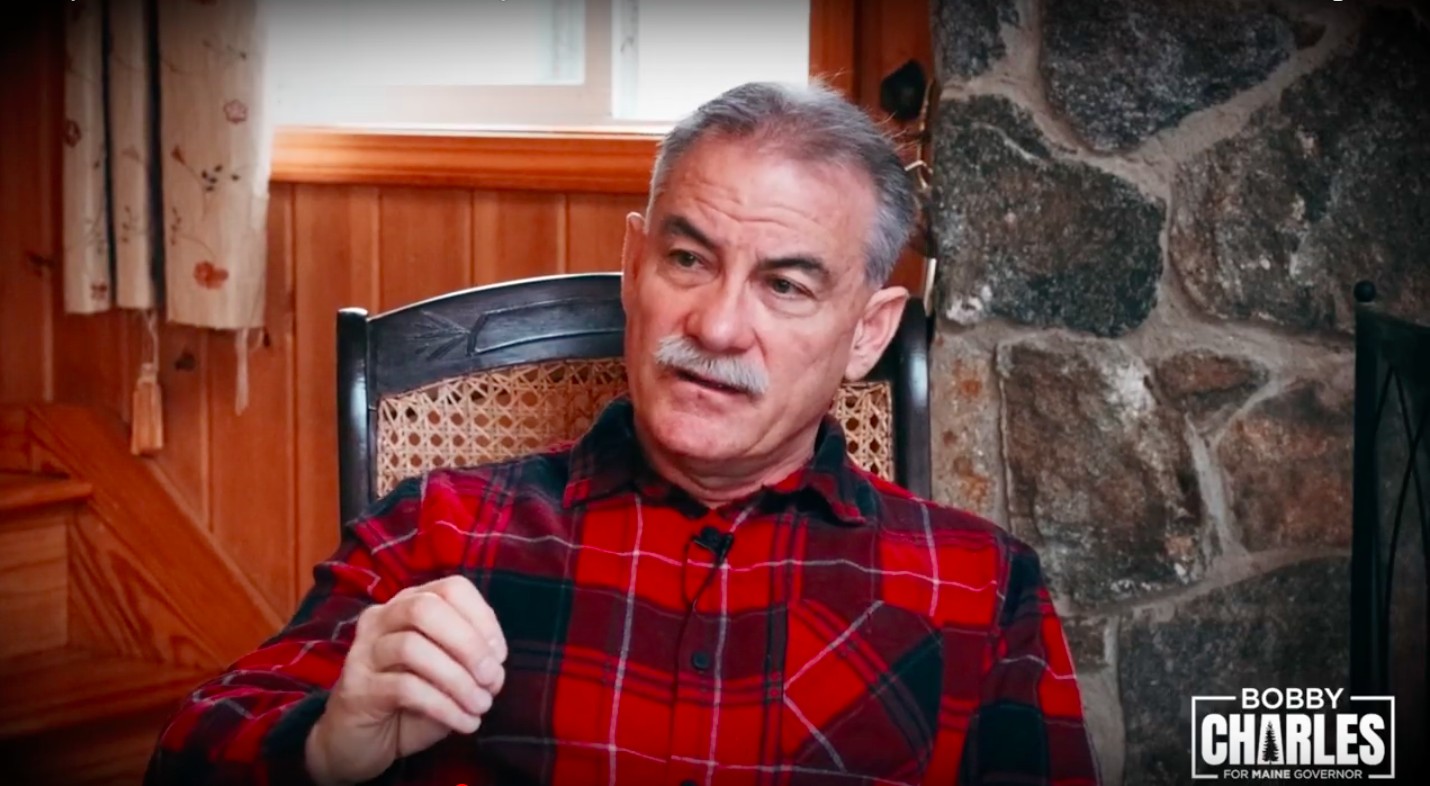
Charles’ campaign did not respond to a request for an interview.
Bush, who could also be a front-runner in the Republican field, referred to Trump in a 2016 interview with the Boston Globe as a “hateful guy” and said he is “clinically narcissistic.” Later that year he told CNBC he planned to vote for Libertarian Gary Johnson.
Other members of the Bush family have also been openly critical of Trump. Former President George H.W. Bush, Bush’s uncle, called Trump a “blowhard” and voted for Hillary Clinton in 2016. His son, George W. Bush, has said little publicly about Trump and did not endorse him in any of his presidential bids. In 2016, he stumped for his brother, Jeb Bush, for president.
The two families have also been at odds more recently. Late last month, Donald Trump Jr. responded to a post from a conservative organization on the social media site X that said the Bush family “is planning to reclaim control of the Republican Party when the Trump presidency comes to an end.”

“We will never let this happen,” Trump Jr. wrote.
A media contact for Jonathan Bush’s campaign did not respond to requests for an interview.
Bush acknowledged when he entered the race in October that he’d made some “colorful comments” about Trump in the past. “But at the same time, there are changes to our society that were needed and that I cannot say I would have imagined a mainstream politician accomplishing,” he said.
DEMOCRATS SEE CHANCE TO FIGHT BACK
Democrats Hannah Pingree, Angus King III, Nirav Shah and Troy Jackson all said they see pushing back on the administration as an important obligation of the next governor while also noting their willingness to work with the administration if it would benefit Maine.
“We’re living in unprecedented times of federal overreach and completely inappropriate actions from the Trump administration, and as I travel Maine, people are asking for leaders who are tough and strong,” said Pingree, a former Maine House speaker and state official.
“Being governor, you work with whoever you have to to make the state a better place,” Jackson said. “At the same time, I think what President Trump has done has been some of the worst things that could ever happen to this country as far as health care, the economy and things like that. … I’m certainly going to stand up for the people of Maine whenever that is needed.”
It will also be important for Maine’s next leader to work with other Democratic governors on national and regional efforts to counter the administration, said King, an entrepreneur and businessman whose father, U.S. Sen. Angus King, served two terms as Maine’s governor. Maine has already done that to some extent — joining a coalition of eight northeastern states that are organizing to expand COVID-19 vaccine access amid new federal restrictions, for example.
“I think there’s a lot of opportunity for Democratic governors to band together and push back where you need to, cooperate where we can with each other and then ultimately, if the administration wants to help the state of Maine, I’m right there with them,” King said.
Shah, who was named principal deputy director of the U.S. Centers for Disease Control and Prevention in Atlanta under the Biden administration, overlapped briefly with the Trump administration before departing the agency and taking a job at Colby College this year.

He said his months under the current administration informed his view that their approach to government is “bad for Mainers,” saying for example that the administration was “generally unconcerned” about bird flu and pertussis − diseases that Shah said have been issues in Maine.
However, the first Trump administration did make inroads in tackling the opioid crisis, Shah said. “If the second Trump administration continues to embrace those values, then it behooves and benefits all Mainers to work with them,” he said.
DEMOCRATS COULD BREAK FROM MILLS ON IMMIGRATION ENFORCEMENT BILL
Top Democrats in the race expressed support for legislation lawmakers passed this year limiting the ability of local police to work with federal immigration authorities, though some said they were not familiar enough with the bill to weigh in or note reservations.
LD 1971 was brought forward in response to the Trump administration’s aggressive efforts to reduce illegal immigration. It is currently on Mills’ desk, and it’s unclear if she will allow it to become law. The governor expressed concerns in July about a lack of clarity in the bill and said it is “overly broad and confusing.”
Pingree, Shah and Bellows all said they support the bill.
King agrees with Mills that it’s important to make sure the bill is not confusing while noting that he does not agree with how Trump has utilized ICE. “I think we have to make sure we get to clarity,” he said. “We need to support local law enforcement doing their jobs, and the weaponization of ICE is really, I think, fundamentally un-American and no way to make our streets safer.”
Jackson said he could not speak specifically to the bill. He said law enforcement agencies need to be able to work together, but that shouldn’t come with violations of due process.
“If local police are helping ICE trample people’s rights, then I would certainly put a limit on that,” he said. “If they’re actually doing law enforcement as far as border patrol or (drug) trafficking or anything like that, that is something I think law enforcement should work together on.”
Bennett, who voted for the bill in the Senate, also believes that border security is an important issue and reforms are needed across the immigration system as a whole.
“That focus, if it’s about making sure our borders are secure, is very important,” he said. “At the same time, I’m very concerned about the politicization of law enforcement at the federal level. … I think it’s totally appropriate to put some guidelines in that will tell local and state law enforcement how to work with federal authorities.”

We invite you to add your comments. We encourage a thoughtful exchange of ideas and information on this website. By joining the conversation, you are agreeing to our commenting policy and terms of use. More information is found on our FAQs. You can update your screen name on the member's center.
Comments are managed by our staff during regular business hours Monday through Friday as well as limited hours on Saturday and Sunday. Comments held for moderation outside of those hours may take longer to approve.
Join the Conversation
Please sign into your CentralMaine.com account to participate in conversations below. If you do not have an account, you can register or subscribe. Questions? Please see our FAQs.