


MACHIAS — When somebody breaks into your home and you call 911, you probably want a dispatcher to answer and send an officer. And when the officer arrives, you probably want the burglar arrested and taken to jail. Then prosecuted by a district attorney.
How do you get all of those services? If you live in Washington County, odds are it’s the county that provides them. But they’re not all mandatory. So with an $11 million hole in its budget caused by five years of catastrophic financial mismanagement, the county could decide to pare some of them down.
Residents say they are bewildered by the mistakes of their elected officials, angered by the prospect of rising property taxes and stubborn in their refusal to bail the county out.
Given an apparent allergy to paying off the debt voluntarily, voters have rejected efforts so far and left the county but one road map to follow: over a cliff. Voters are watching from the backseat.
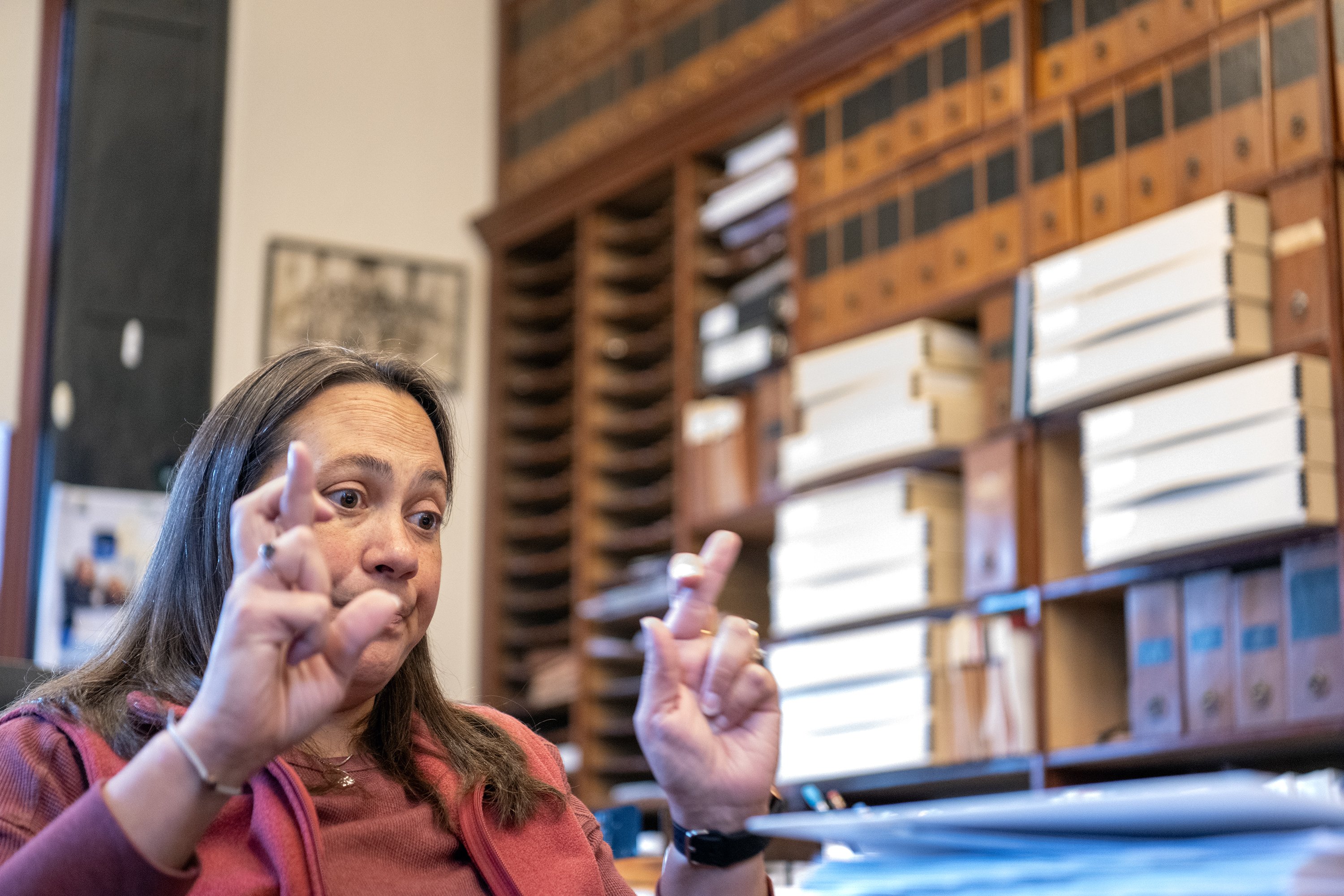
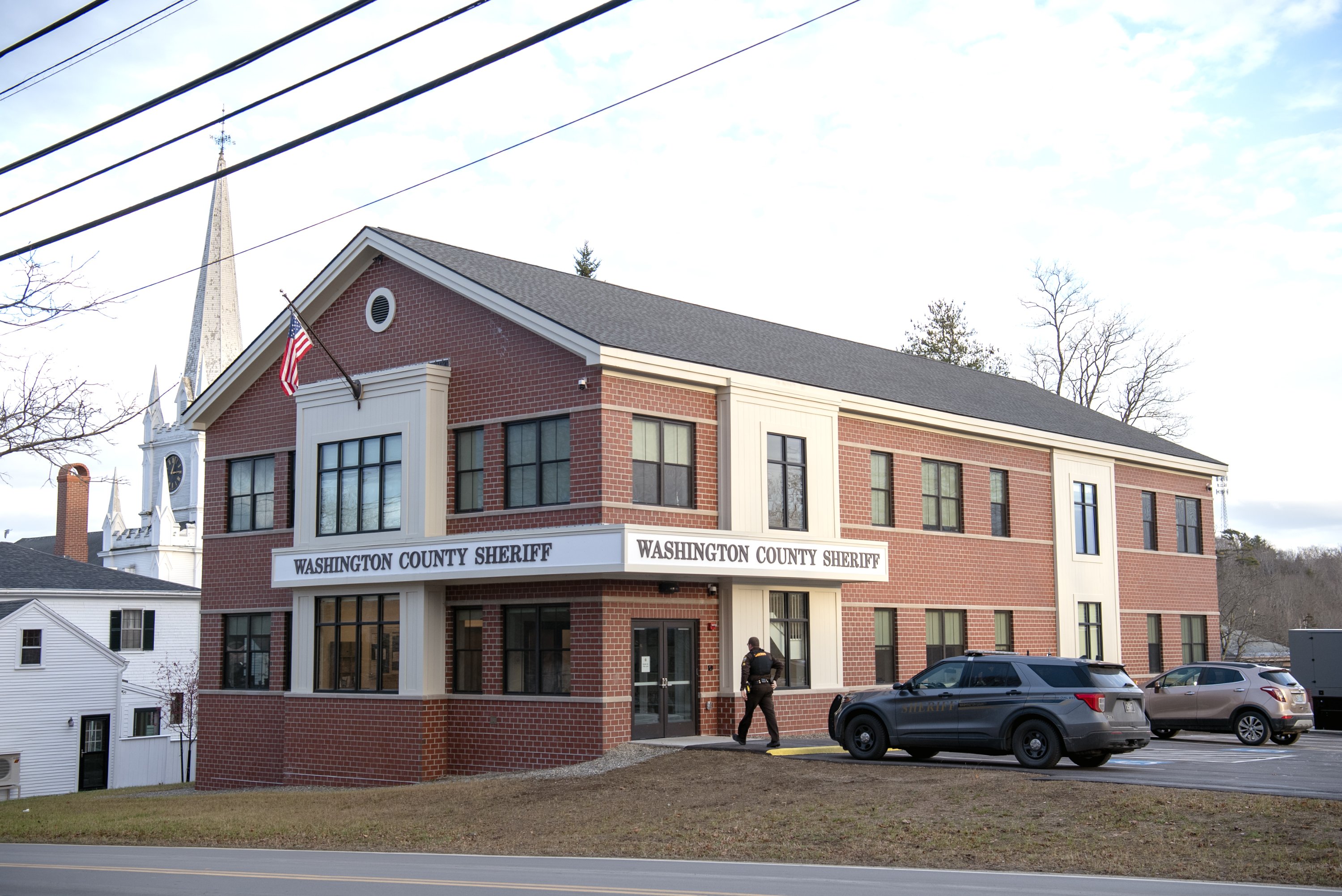
Already, just three or four sheriff’s deputies are on duty to cover a county two-and-a-half times the size of Rhode Island. With no help from state police, the sheriff’s office responds to all emergencies, except in the four municipalities and two reservations that maintain police departments.
“It’s hit or miss — an officer might be minutes away, or they might be 30 minutes away,” said Joshua Rolfe, the deputy director of the county-run dispatch center.
He doesn’t even maintain statistics on law enforcement response times.
The county is weighing whether to cut dispatcher positions, and officials said they may fill only two of the three vacant deputy positions. That’s more than the county legally has to provide.
“There has to be a sheriff, and he appoints a deputy. Maybe that’s who does everything,” said County Manager Renée Gray, at least partly in jest. “It would be back to Andy Griffith and Barney and the bullet in his pocket,” a reference to the bumbling ways of the sole deputy on the 1960s TV series “The Andy Griffith Show.”
But, Gray warned, Washington County is no Mayberry, the fictional bastion of civility and moral clarity where the show was set.
At one point last year, 13 people accused of murder were held in the county jail in Machias.
To think about cutting law enforcement unsettles residents, even those skeptical of the county’s past financial management.
“That makes me nervous,” Emily Fitzsimmons, a teacher and owner of a wine and cheese shop in Machias, said in late November. “Actually this week, two people who work in the jail have come to get substitute teaching applications.”
SAVE A BUCK IN TAXES
Washington County ranks among the poorest in the state.
It has nearly an 18% poverty rate, according to the U.S. Census Bureau, and the median household income is just over $52,000, compared with about $76,500 statewide.
“When I grew up, you had 18 sardine factories, all kinds of hardware stores,” said an Eastport local as he bellied up to the Old Sow Grill bar, where the barkeep cracked him a beer the moment he walked in. “But my opinion is the new people coming in don’t want it.” The man refused to provide his name.
The sentiment — even if it’s not entirely true — informs a general sensibility that locals say has, until recently, colored the county’s approach to its finances.

“If you can save a buck in taxes, no one asks how or why, and you get patted on the head for doing a good job,” said Brian Schuth, Eastport city manager and chair of the county budget committee.
Schuth joined the committee in September 2024, six months after he took the helm in Eastport. Washington County’s auditor had just completed an examination of the 2020 books.
Like many small governments in Maine, the county remains behind on audits. Seven of the state’s 16 counties have yet to report audits of 2024 finances, and five have yet to complete audits for 2023, according to a state database.
The auditor was adamant that the county had to stop using the previous year’s leftover funds to pay for ongoing expenses without verifying how much was in the account. Officials had done this since 2019.
When Schuth dived into the current books, he made a disconcerting realization: The county was out of money. It hadn’t been collecting enough in taxes.
The treasurer eliminated reserve accounts from the budget, assuming they were not necessary, only to learn later that some of them funded mandatory expenditures such as liability insurance.
She had saved a buck in taxes; no one asked how or why.
“If you can save a buck in taxes, no one asks how or why, and you get patted on the head for doing a good job.”
Brian Schuth, Eastport city manager and chair of the county budget committee
“Last year’s budget was a total fiction,” Schuth said.
Things got worse this September.
Not only was the county out of money, but its insufficient revenue collection also had been masked by more than $6 million in American Rescue Plan Act funds dedicated to the construction of a new building for the sheriff’s office.
The county operates on a short-term loan, or tax anticipation note, every year to cover the nine-month gap between when the county’s fiscal year starts and municipal taxes are due. And suddenly, Washington County had no way to pay the bill.
It needed $11 million by the year’s end.
‘BECAUSE TAXES NEVER GO DOWN’
One way or another, property owners in Washington County are going to foot the bill — that much is clear to Gray, the county manager.
To cover that gap, there were three options: borrow money with voter approval, allowing taxpayers to dull the pain and pay their way out of the hole over a decade; ask municipalities with extra cash to pay their share of the debt before the year’s end; or recoup the revenue all at once through a big tax increase next year.
The county asked voters in November to approve the first option, an $11 million bond.
“Bond is a bad word around this county,” Gray said.
The measure failed, and it wasn’t close.

At a meeting in Machias in late November, the town Select Board considered the second option.
During the public comment period, resident William O’Leary wondered whether there has “been any effort at all to raise funds, rather than just take them from everyone.”
It was a misunderstanding — Machias was considering using surplus cash it has to cover its $314,000 share of the hole, not collecting more. But the comment reflected O’Leary’s frustration.
“I definitely feel like I’m not being represented, and that is due to that I am … essentially a perpetual wage slave, a tax slave,” he said in an interview following the meeting. “That’s what the trend is for my children, apparently, because taxes never go down.”
Steve McClellan, who also lives in Machias and attended the meeting, wants to see tighter control over county spending.

“Relying on a tax increase every year is not sustainable,” he said in an interview.
But in the short term, it’s more or less the only option.
Machias voters decided to cough up an early payment for the town’s share at a meeting on Wednesday. At least two towns, Milbridge and Baileyville, are refusing to do so. Their shares total about $1 million.
Whatever municipalities don’t pay before the year’s end gets tacked onto their share of the 2026 loan.
That means that next year, those towns pay their share of the usual property tax revenue needed — currently estimated at $11.8 million — plus their share of the $11 million debt.
One way or another, the hole has to be filled.
Gray sounds exasperated when she explains that people who use county services, which is pretty much everyone, don’t realize how they benefit from them. It’s only the costs she hears about.
The way she sees it, municipalities got a discount on their taxes over the last five years because the county under-collected. Now, they have to pay up to cover the services residents have used.
And if they don’t, taxes will spike next year as the full specter of debt, equivalent to nearly two years’ worth of revenue, is realized in a single year.
“They’re all going to pay,” Gray said.
Reuben M. Schafir is a Report for America corps member who writes about Indigenous communities for the Portland Press Herald.

We invite you to add your comments. We encourage a thoughtful exchange of ideas and information on this website. By joining the conversation, you are agreeing to our commenting policy and terms of use. More information is found on our FAQs. You can modify your screen name here.
Comments are managed by our staff during regular business hours Monday through Friday as well as limited hours on Saturday and Sunday. Comments held for moderation outside of those hours may take longer to approve.
Join the Conversation
Please sign into your CentralMaine.com account to participate in conversations below. If you do not have an account, you can register or subscribe. Questions? Please see our FAQs.