

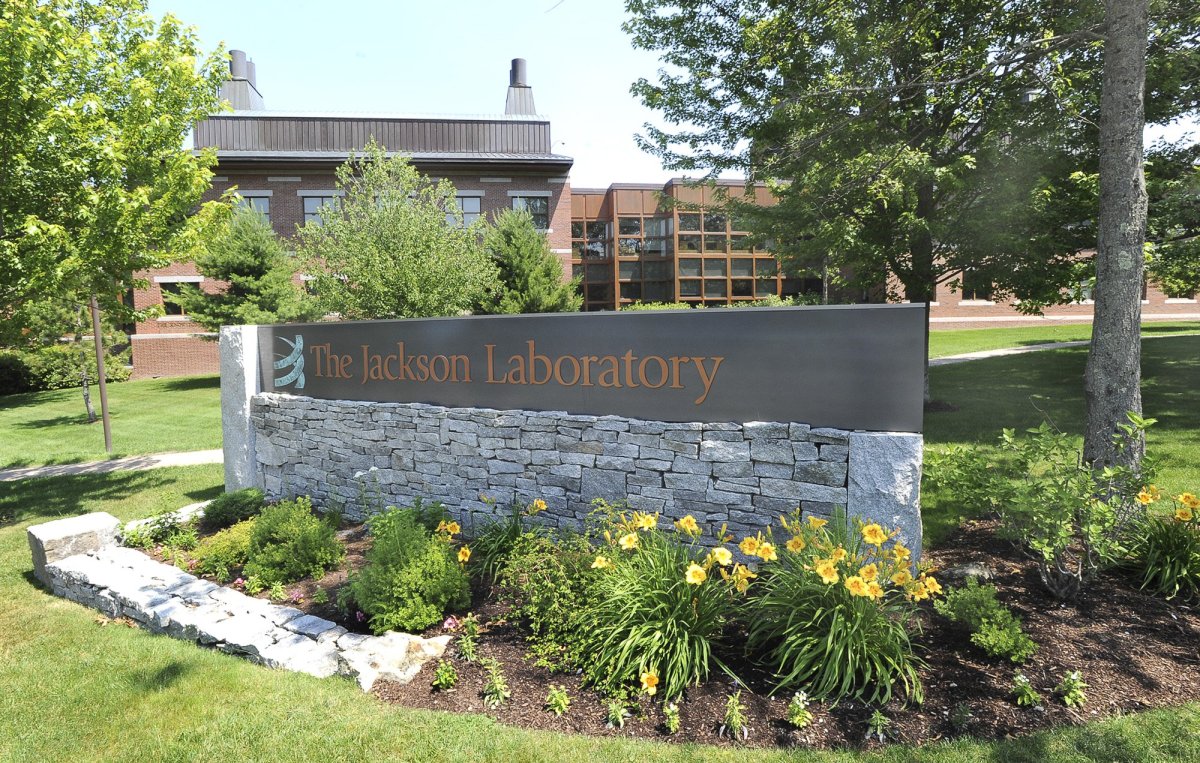
The Jackson Laboratory in Bar Harbor on Thursday became the first research institution in Maine to receive a specialized federal grant focused on biomedical breakthroughs.
The funding of up to $30.6 million over three years will be used to build digital heart models for drug testing, according to an announcement from the Advanced Research Projects Agency for Health, which is part of the U.S. Department of Health and Human Services.
The models would be used to evaluate drugs against a wide range of genetic profiles and physiological differences based on patient populations.
“Too many promising medicines fail late, after years of work and enormous cost, because our best tools still don’t reliably predict how a drug will behave in people,” Alicia Jackson, director of the research projects agency, said in a written statement.
The agency announced grant funding for eight projects nationwide on Thursday, all focusing on the development of computer models that mimic real human biology to predict safety and effectiveness in new drugs.
“With today’s awards, ARPA-H is backing cutting-edge teams to build human-based, AI-enabled models that can forecast drug safety and efficacy long before the first clinical trial,” Jackson said.
Matt Mahoney, principal computational scientist at Jackson Lab and principal investigator on the project, said the scale of the project is not something that could be done without the grant funding. He said the lab, which employs over 1,000 people at its Bar Harbor campus, will be adding a handful of positions but he did not have an exact number.
“We’re tremendously excited,” Mahoney said in an interview. “ARPA-H… wants big, ambitious projects. The idea of taking animal models out of pre-clinical safety evaluations and doing better with artificial intelligence and simulation is a tremendous opportunity. It’s really exciting.”
A leading cause of clinical trial failures is cardiotoxicity, where the drug hurts the function of the heart, Mahoney said. Animal models, which drug developers have relied on for decades to predict how medicines will work in people, are often incomplete predictors.
“Our project is using a combination of AI methods and human cellular models and physical simulation to design virtual human populations that we can use as a replacement for animal models to test for toxicity,” Mahoney said.
Sen. Susan Collins, R-Maine, lauded the award in a news release, and said it is the first of its kind for the state.
“This more than $30 million grant is a testament to the incredible work happening at The Jackson Laboratory that has the potential to dramatically reduce the time and cost of drug development,” Collins said.

We invite you to add your comments. We encourage a thoughtful exchange of ideas and information on this website. By joining the conversation, you are agreeing to our commenting policy and terms of use. More information is found on our FAQs. You can update your screen name on the member's center.
Comments are managed by our staff during regular business hours Monday through Friday as well as limited hours on Saturday and Sunday. Comments held for moderation outside of those hours may take longer to approve.
Join the Conversation
Please sign into your CentralMaine.com account to participate in conversations below. If you do not have an account, you can register or subscribe. Questions? Please see our FAQs.