

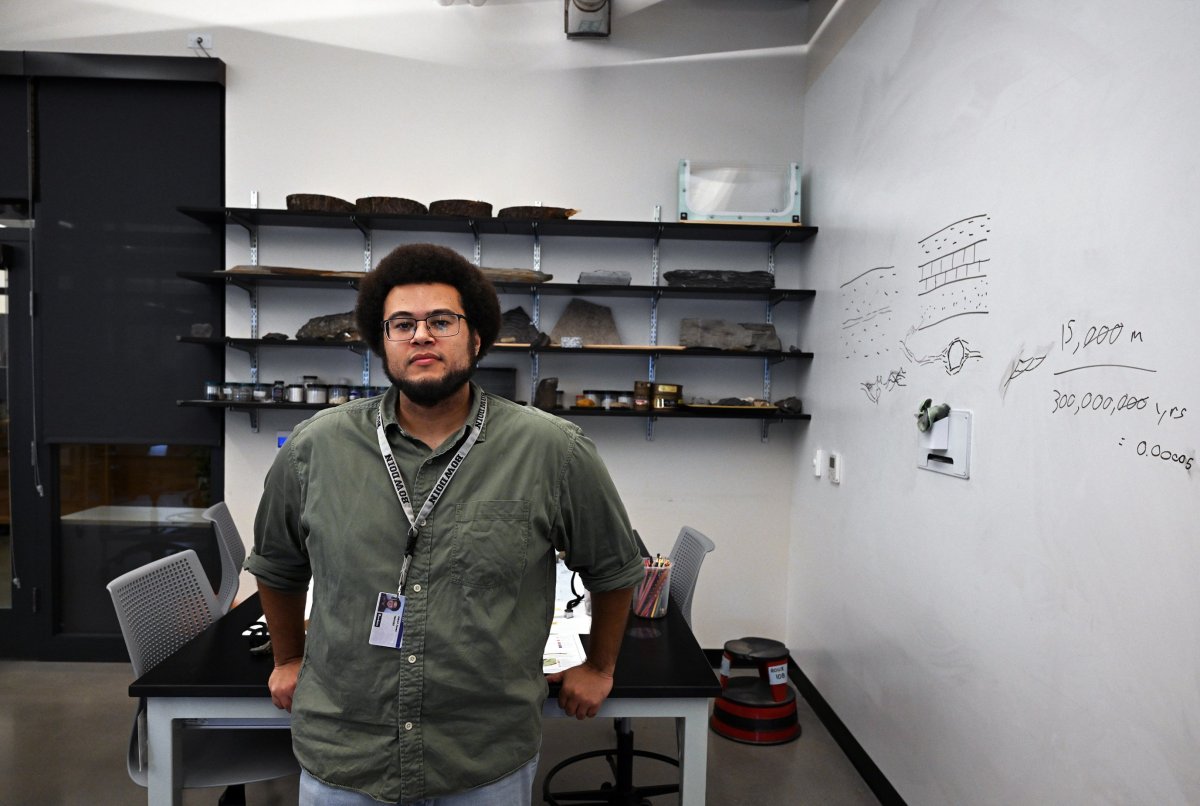
Jabari Jones was disappointed but hardly surprised when he read the boilerplate letter in April telling him his research grant had been terminated.
Jones, an assistant professor of earth and oceanographic science at Bowdoin College in Brunswick, was part of a team studying how to improve the culture and diversity within geosciences, the least racially diverse discipline within STEM (science, technology, engineering and math).
When Donald Trump took office again, he knew the project’s days were numbered.
“We sort of figured, ‘OK, any day now this is going to happen,”‘ Jones said. “(It’s) frustrating and annoying to have work that you know will be impactful be terminated for a reason that doesn’t have to do with the quality of the ideas.”
His grant was one of more than 400 National Science Foundation awards abruptly discontinued in the spring. Across the country, more than $3 billion supporting 3,800 grants from that agency as well as the National Institutes of Health that had been given to colleges and universities has been terminated, including more than two dozen in Maine. Billions more were cut from other agencies, like the Department of Energy and the National Endowment for the Humanities.
Some projects, like the one Jones was involved in, tackled topics of diversity that the Trump administration has vowed to scour from the federal payroll. Others were more ambiguous, including research on zooplankton in the Gulf of Maine whose support from the Bureau of Ocean Energy Management was paused, then terminated earlier this year.
In some cases, research has continued as institutions find new sources of funding, federal or otherwise. In others, projects have been delayed, paused or shelved altogether. While some researchers in Maine have reported retooling their grant proposals to align with the new administration’s priorities, others like Jones have been unsuccessful in appealing their terminations.
Within the University of Maine System, about $5.8 million that was supporting more than 30 projects has been terminated, while another $1.6 million for awards remains paused.
There are also more than 90 grants, totaling over $21 million in funding, that were paused or terminated by the federal government — including many impacted by the government shutdown — but later restored.
Maine has been one of the less-impacted states, while nearby Massachusetts and New York had NIH and NSF research grants slashed at a much higher rate, according to a tracker run by the Center for American Progress, a liberal public policy organization.
Still, the cuts that did happen here have stalled ongoing research and had ripple effects outside of academia.
CANCELED GRANTS
While many private colleges have faced Trump’s ire, public research universities have borne the brunt of his financial cuts.
In Maine, the impacted projects spanned renewable energy to public art and were supported by a dozen different federal agencies, according to information the Portland Press Herald/Maine Sunday Telegram obtained through a public records request.
Many of these grants paid for research and investments in social services and public safety. They included: a school psychology training program focused on addressing mental health in rural schools; a study of rural hate crime reporting and prevention among immigrant populations; and a targeted violence and terrorism prevention program through the Department of Homeland Security.
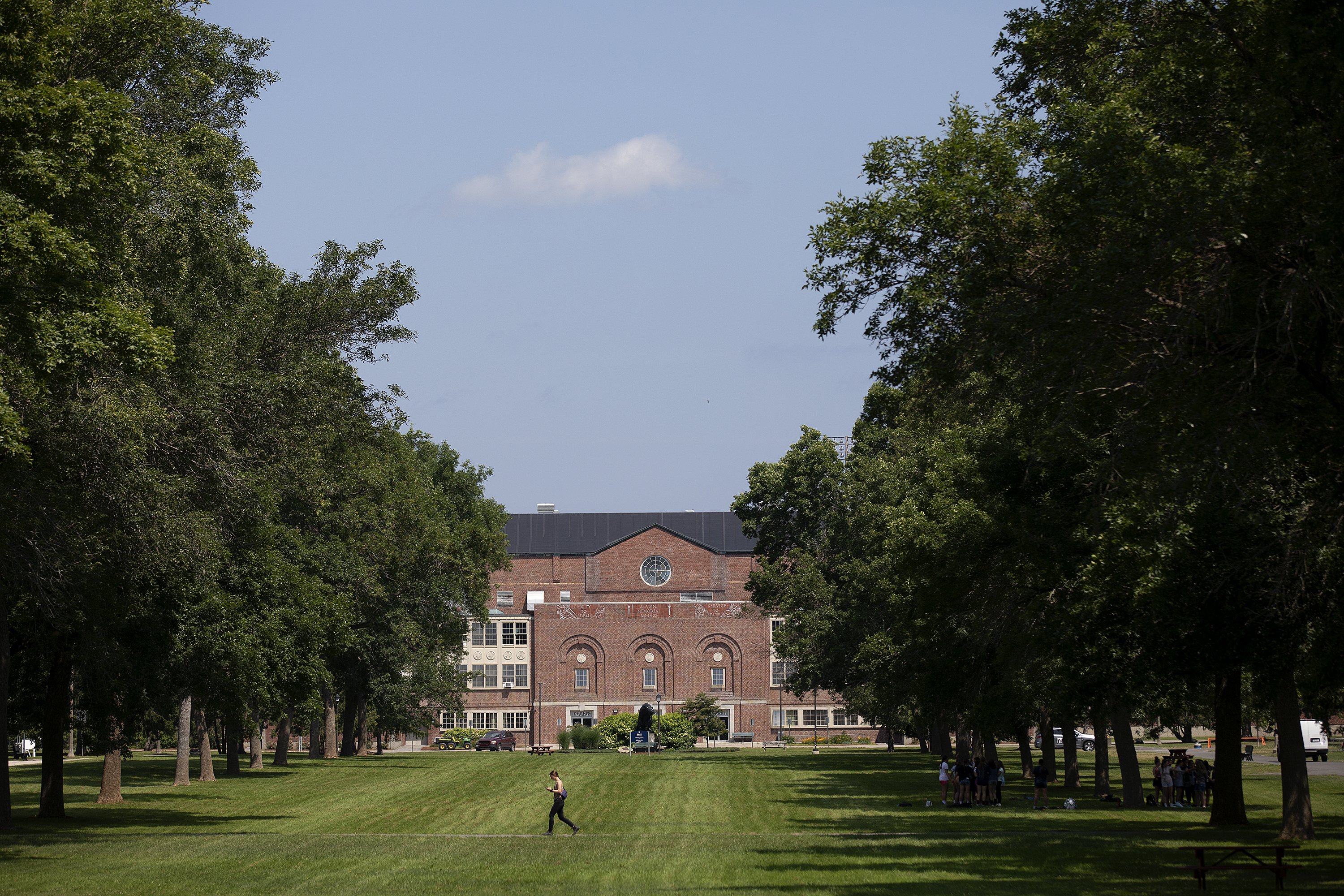
Several fell within the energy and resources sector, such as research about climate-smart forestry practices in rural Maine, a study of renewable energy adoption in underserved communities and five different Department of Energy-supported offshore wind projects.
The terminated awards also include several NEH projects about Wabanaki history, Indigenous basketry, Franco-American history, Maine maritime cartography and the state’s Shaker community.
All of the projects were in progress, and some had already used up the majority of their budget at the time of cancellation. Most were housed at the flagship University of Maine campus in Orono, but a few were based at other system schools, mostly the University of Southern Maine.
A system spokesperson would not facilitate the Press Herald’s requests to interview faculty members about the grant terminations, and said the university would not participate in interviews about the terminated awards.
Colby College in Waterville had $78,000 of a grant terminated this spring, according to a tracker run by the Center for American Progress. Bates College in Lewiston was recommended for a $35,000 National Endowment for the Arts grant for the 2025 season of its annual Bates Dance Festival, but that was later withdrawn, a spokesperson said, leading the festival to shift to fundraising from private donors.
‘THINGS WE LIKE TO CATCH AND EAT’
One affected UMaine-based project is a decades-long study of the health of plankton in the Gulf.
The research tracks trends in the tiny organisms that provide food for creatures big and small, from endangered right whales to lobster larvae, according to Jake Kritzer, executive director of the Northeastern Regional Association of Coastal Ocean Observing Systems, one of UMaine’s partners on the project. Knowing how the zooplankton are doing is important to both conservation and commercial fishery management.
“These tiny critters we’re monitoring are eaten by things that we like to catch and eat, and enable people to make a living off of what’s one of the most important economic drivers right along the New England coast,” he said.
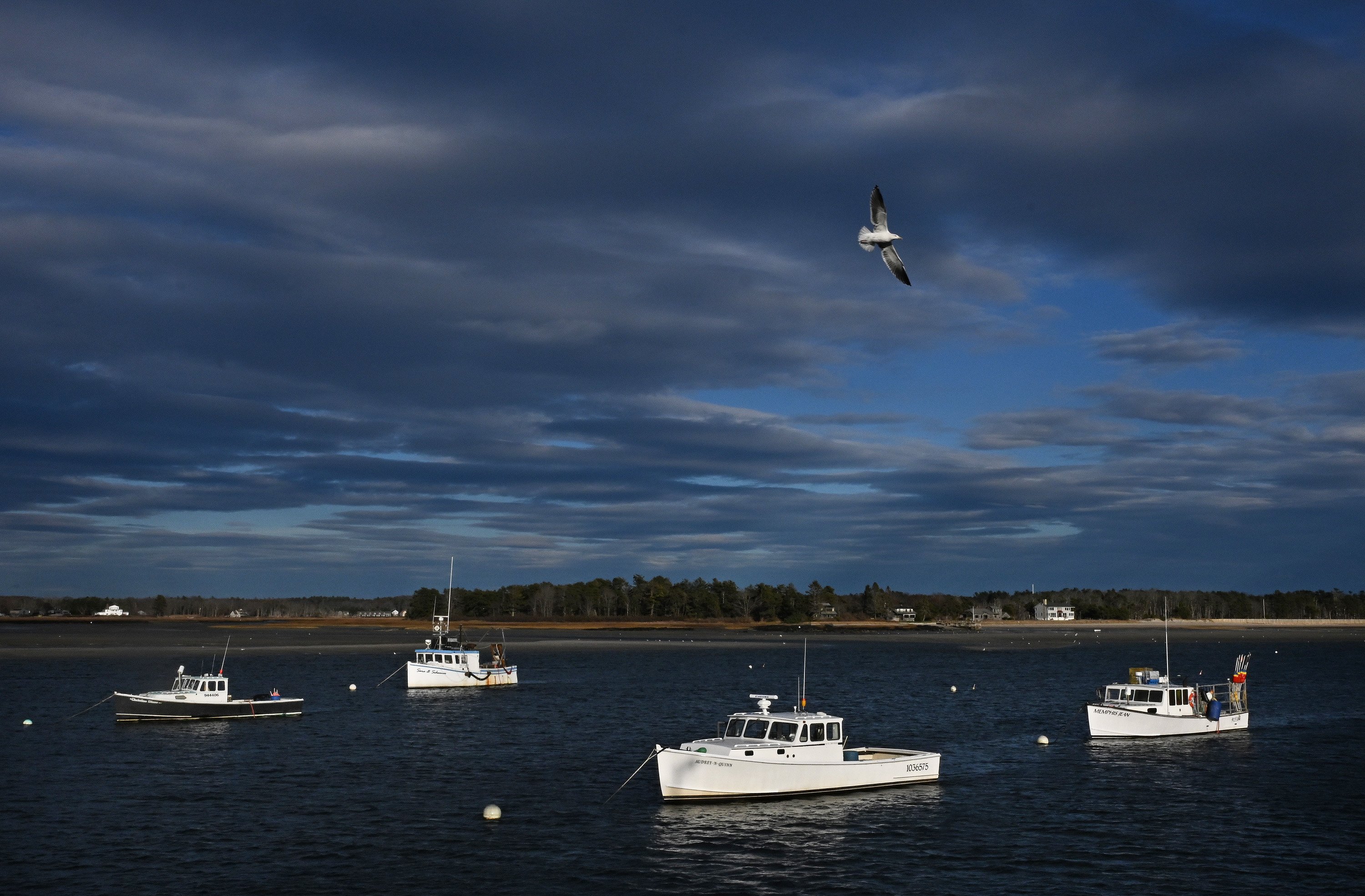
Because the program involves collecting data at the same location year after year, the research becomes more valuable with time, according to Cameron Thompson, the pelagic ecologist at the association who oversees lab work on the program. In the warming Gulf, the population of zooplankton is an important indicator in the overall health of the ecosystem.
A grant from the Bureau of Ocean Energy Management — which was paused from February to April and officially terminated in September — was meant to support 20 months of work.
In recent years the project has been primarily supported by the National Oceanic and Atmospheric Administration, but during a gap in funding, Kritzer said, the other federal bureau stepped in. He said that agency thought data already being collected would be helpful for its efforts related to offshore wind development.
But not long before the end of the grant period — after all of the field work had been conducted and samples collected — federal officials canceled it.
Kritzer said the timing was unfortunate because it resulted in minimal cost savings while cutting off useful information.
The amount remaining at the time of the $199,920 award’s cancellation was $44,841, although some expenses were still being reconciled. A copy of the termination letter does not contain a specific reason for the cancellation, but suggests the project “no longer effectuates the program goals or agency priorities.”
Offshore wind, an energy priority of the Biden administration, has been one of Trump’s frequent targets.
But Kritzer said one of the project’s most important applications has long been the lobster industry.
“While (the Bureau of Ocean Energy Management’s) interest may have been — in previous plans anyway — to develop offshore wind in the Gulf of Maine, the utility of the data are much more than that,” Kritzer said.
He said the next block of NOAA funding has already come in, so new monitoring is ongoing. But Samantha Warren, spokesperson for the university system, said the termination “delayed key analysis and reporting” important to policymakers and the state’s seafood industry.
“Even if offshore wind isn’t a policy priority, there were other really good reasons to keep this work going, and I think we’ve compromised this time series by terminating this grant prematurely,” Kritzer said.
CULTURAL CHANGE IN GEOSCIENCE
Jones, the Bowdoin geoscientist, said his project about diversity in the field came about after 2020, when people around the country were thinking about racial justice and the federal government was explicitly seeking projects that promoted inclusion and access.
It was inspired by a 2018 paper that reported diversity among geoscience doctorate earners had not improved in 40 years, along with other studies that showed the culture in geosciences can be hostile to people of color and women, as well as LGBTQ+, disabled and first-generation students.
The research had two components: professional development with cohorts of faculty across eight schools, and a database of all the collected resources. The cohorts had just finished 15 weeks of work and were gearing up for an in-person meeting when the grant was terminated.
Jones’ own research is mostly focused on river geology, but he also teaches courses on environmental justice. He said the intersection of land and people has a growing acknowledgement in the discipline, and he wants to find space in his academic life to pursue that emergent research.
“Prior to this, I’d already been thinking about, ‘How is it that science comes about? What are the political and economic processes that allow somebody to be able to study a particular thing?”‘ he said. “I think to see it wielded in a way to shut down particular lines of inquiry is obviously annoying, frustrating, maddening.”
While some in the state have edited grant proposals to align with Trump’s priorities, Jones said he didn’t see that as a path forward because of the nature of the project. The termination letter didn’t even provide an option for appeal. They did so anyway, only to receive confirmation that the termination was final.

One of his biggest concerns about the grant termination is the undoing of process. To win the award, Jones said, the group submitted a competitive application that was reviewed by a panel of academic experts.
“Experts who had spent their whole career in a subject area said, ‘Yes, these ideas will provide intellectual value to the broader community and will provide impacts beyond just the work that they are doing,”‘ he said. “The process of terminating them undercuts all of that expertise and evaluation.”

We invite you to add your comments. We encourage a thoughtful exchange of ideas and information on this website. By joining the conversation, you are agreeing to our commenting policy and terms of use. More information is found on our FAQs. You can update your screen name on the member's center.
Comments are managed by our staff during regular business hours Monday through Friday as well as limited hours on Saturday and Sunday. Comments held for moderation outside of those hours may take longer to approve.
Join the Conversation
Please sign into your CentralMaine.com account to participate in conversations below. If you do not have an account, you can register or subscribe. Questions? Please see our FAQs.