

Dozens across central Maine who benefit from permanent housing support could be at risk of losing their shelter next year if federal grant funding changes at the U.S. Department of Housing and Urban Development continue as planned.
The federal agency announced on Nov. 13 that it would be redirecting homelessness prevention funding that had long been committed to long-term housing support toward transitional housing and other services. Under the new plan for the Continuum of Care grant program, Maine could lose $13.5 million for housing support.
In Kennebec and Somerset counties, about 70 people who benefit from the Permanent Supportive Housing Program — Maine’s largest initiative funded by the HUD grant — could stand to lose that support, putting them at risk of becoming homeless.
Permanent Supportive Housing vouchers fund housing assistance and extensive support services for people with disabilities, including mental health support and life skills training. Kennebec Behavioral Health administers those 70 vouchers as the designated hub in Kennebec and Somerset counties.
Brandi Farrington, Kennebec Behavioral Health’s chief operating officer for mental health services, said the loss of the vouchers could have serious impacts on some of central Maine’s most vulnerable people. The vouchers specifically benefit people with disabilities — many of whom may not be able to find stable housing another way.
“There’s no real option if there’s no transition plan and (the vouchers) go away,” Farrington said. “Those folks — most of them would not be able to maintain their own housing without a voucher. That’s why this current outcry is, ‘Are we really going to take those vouchers away and make people who have been stably housed homeless again? That defeats the purpose.'”
Central Maine’s homelessness services are already strained.
In Waterville, shelter space remains extremely limited as the city continues to enforce a camping ban. In Augusta, proposals to build the city’s only homeless shelter have faced pushback from officials and residents alike — and law enforcement struggles to manage competing concerns from business owners and homeless people themselves.

Even Kennebec Behavioral Health’s allotted number of Permanent Supportive Housing vouchers has dwindled in recent years, from about 120 down to 70, Farrington said.
For years, HUD has awarded almost 90% of its grant funding to programs taking a “housing first” approach to preventing homelessness — that is, programs that prioritize stable housing as a foundation for providing other services.
The new directive from HUD would allocate a maximum of 30% of the total $3.9 billion in Continuum of Care grant funding for programs that prioritize permanent housing support. Two-thirds of Mainers currently served by Permanent Supportive Housing vouchers could lose that support.
HUD said prioritizing long-term housing has “failed to address the root causes of homelessness, including illicit drugs and mental illness.”
Farrington said that approach is backward. Without housing, people often can’t access most other services, she said.
“When people are in that place of worrying about where they’re going to get their next meal, where they’re going to be able to lay their head at night when it’s getting colder, they’re not able to attend to their mental health,” she said. “They can’t attend to their basic hygiene needs, much less their mental health and substance use needs.”
In all, Maine could lose $13.5 million in federal homelessness prevention funding, and 1,200 Mainers could be at risk of losing their housing because of HUD’s changes. Gov. Janet Mills and other state officials decried the grant changes in a November press conference, saying the redirection was cruel and unnecessary.
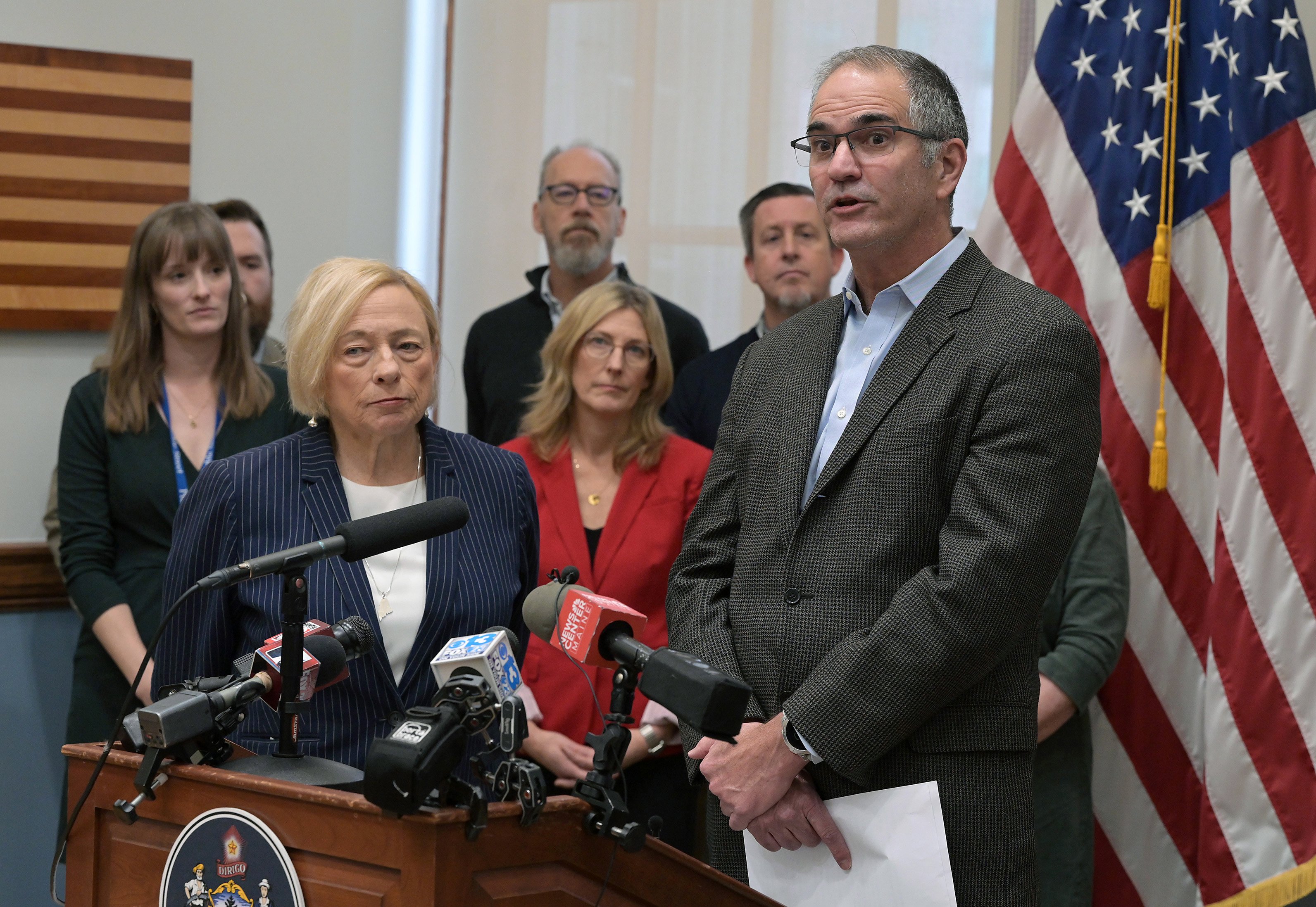
Dean Klein, the executive director of Maine Continuum of Care, said the loss of federal funding could put even more stress on the state’s shelters, many of which are already full.
Maine Continuum of Care applies for the HUD funding on behalf of regional organizations across the state. More than 100 Maine communities benefit from Continuum of Care programs.
“Permanent Supportive Housing and Rapid Re-housing are proven strategies that we’ve invested in in the state of Maine and around the country, and those are proven strategies,” Klein said. “And now these individuals will be greatly impacted, and will most likely become homeless.”
The changes are approaching quickly. Grant applications are due Jan. 14, and Kennebec Behavioral Health and its partners are scrambling to find strategies to sustain services for vulnerable Mainers who benefit from the funding.
Several states have since challenged the funding changes in federal court, but that adds to the uncertainty, Farrington said.
Mainers benefitting from Permanent Supportive Housing vouchers, she said, may not even know yet about the impending changes. That complicates how the organization communicates with voucher recipients.
“We, as a system, are having these meetings trying to get our arms wrapped around — what does this mean for people, and how do we respond?” Farrington said. “I don’t know that the general population understands (the impact of funding changes). Because we’re trying to mobilize and get a plan in place, we don’t want to create an atmosphere of fear and worry in people either, until we know what this is going to look like.”
Klein said the Maine Continuum of Care will still apply for funding and put its best foot forward with a competitive application.
“Even though we’re really seriously concerned about the impacts of these changes, we’ll move forward in good faith and submit the strongest possible application for federal funding,” he said. “We’ll do our best.”

We invite you to add your comments. We encourage a thoughtful exchange of ideas and information on this website. By joining the conversation, you are agreeing to our commenting policy and terms of use. More information is found on our FAQs. You can update your screen name on the member's center.
Comments are managed by our staff during regular business hours Monday through Friday as well as limited hours on Saturday and Sunday. Comments held for moderation outside of those hours may take longer to approve.
Join the Conversation
Please sign into your CentralMaine.com account to participate in conversations below. If you do not have an account, you can register or subscribe. Questions? Please see our FAQs.