

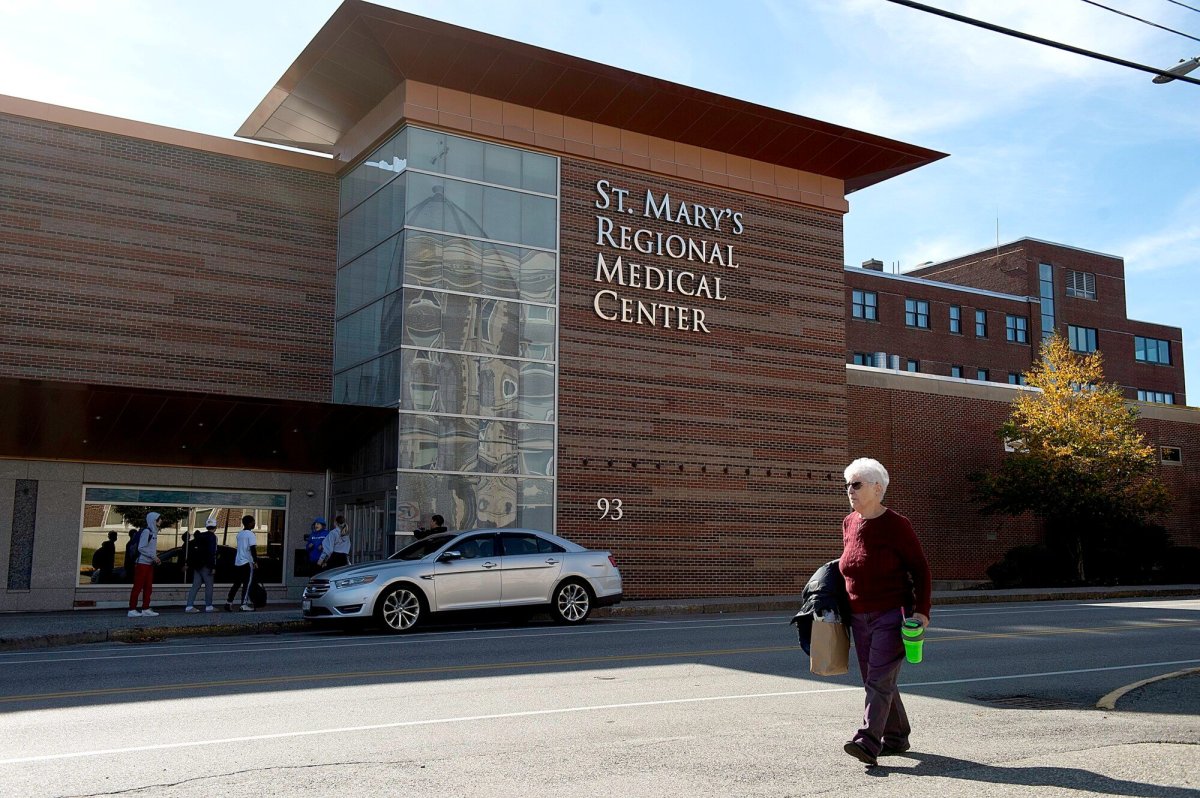
St. Mary’s Regional Medical Center in Lewiston is one of several hospitals suing the federal government over changes to a program that provides low-cost prescription drugs to rural hospitals.
The changes would cause “irreparable harm” to many hospitals that serve low-income residents, the suit says.
Under the changes proposed by the U.S. Department of Health and Human Services, starting Jan. 1, hospitals that participate in the 340B Drug Pricing Program would have to pay drug manufacturers the full market price upfront and could only be reimbursed after the drugs have been administered to patients.
In a statement in July, the Trump administration said the changes are part of a pilot program to test the rebate model.
According to Tom Engels, administrator of the Health Resources and Services Administration within HHS, the pilot “addresses concerns we have received from both covered entities and manufacturers, while creating a measured approach to the process of approving manufacturer rebate models under the 340B Program.
“We look forward to receiving comments and working with everyone to ensure that the program operates with accountability, transparency and adherence to the 340B statute, allowing covered entities to stretch scarce resources as far as possible.”
However, switching to the rebate model program would cost Maine’s hospitals millions of dollars, said Jeff Austin, spokesperson for the Maine Hospital Association, which joined the American Hospital Association, St. Mary’s and other rural hospitals in the suit.
“We’re going to spend a whole lot of administrative time chasing money that we should just get at the point of sale,” Austin said. “So at best-case scenario, it’s a waste of administrative money. Worst case, it could grow to be a significant hit to our members.”
The lawsuit alleges that the rebate program would cause irreparable harm to 340B hospitals serving rural and underserved communities. Plaintiffs motioned for a temporary restraining order before the changes go into effect, supported by testimony from Winfield Brown, president of St. Mary’s.
The 340B program provides discounted drugs to rural hospitals and those that treat a significant number of low-income patients, which then distribute the drugs to pharmacies and grocery stores. But where they previously purchased the drugs at a discount, hospitals would now have to pay full price and submit rebate requests to manufacturers.
If those requests are delayed or denied, Austin said, it would be cheaper for many hospitals to take the loss than to pursue the money.
“At some point it’s not worth it to us, and we just take the loss, because the administrative cost isn’t worth it,” Austin said. “So that’s what we’re afraid of, is the gamesmanship, the playing around, the delay in payment, all the stuff we see with carriers: We’re going to start to see with manufacturers.”
Nearly 30 hospitals in Maine are eligible to participate in 340B, and Austin said they saved a total of $246 million through the program in 2024. However, those hospitals operate on slim or nonexistent profit margins. St. Mary’s lost about $4 million last year, Brown said, and “does not have the funds to pay exorbitant upfront costs of medications and wait for drug companies to reimburse us.”
The Health Resources and Services Administration has approved 10 drugs to be discounted through the rebate pilot program in 2026. If that list gets bigger, hospitals may struggle to pay full-price for less common drugs, leading to access issues, Austin said.
Brown said many of St. Mary’s patients lack access to transportation and can’t visit multiple pharmacies to pick up prescriptions. It will get worse during the winter months.
“The 340B rebate program will undermine the very mission of St. Mary’s, to provide health care to the underserved in our region,” Brown said.
