

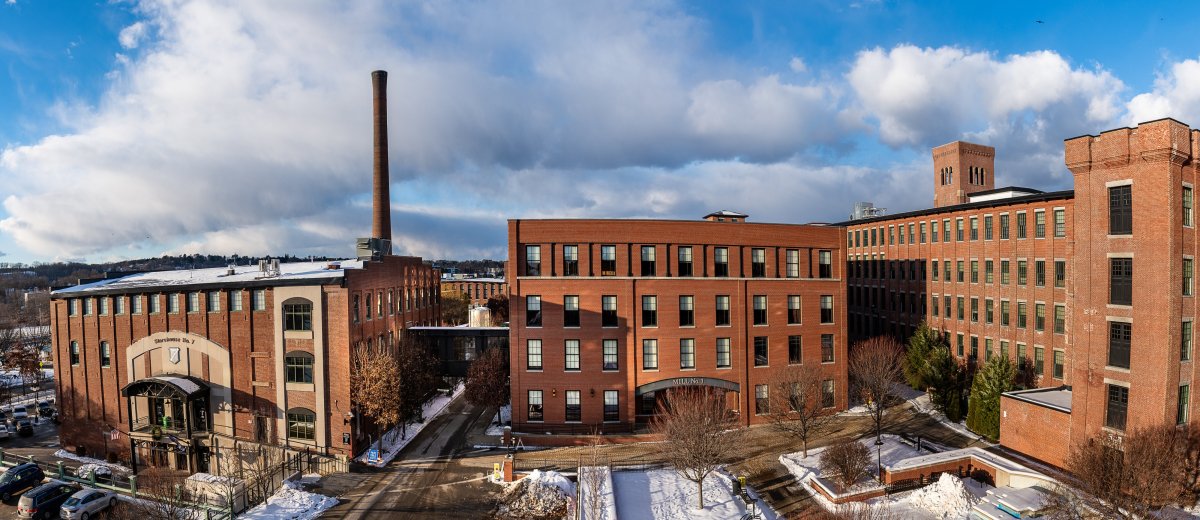
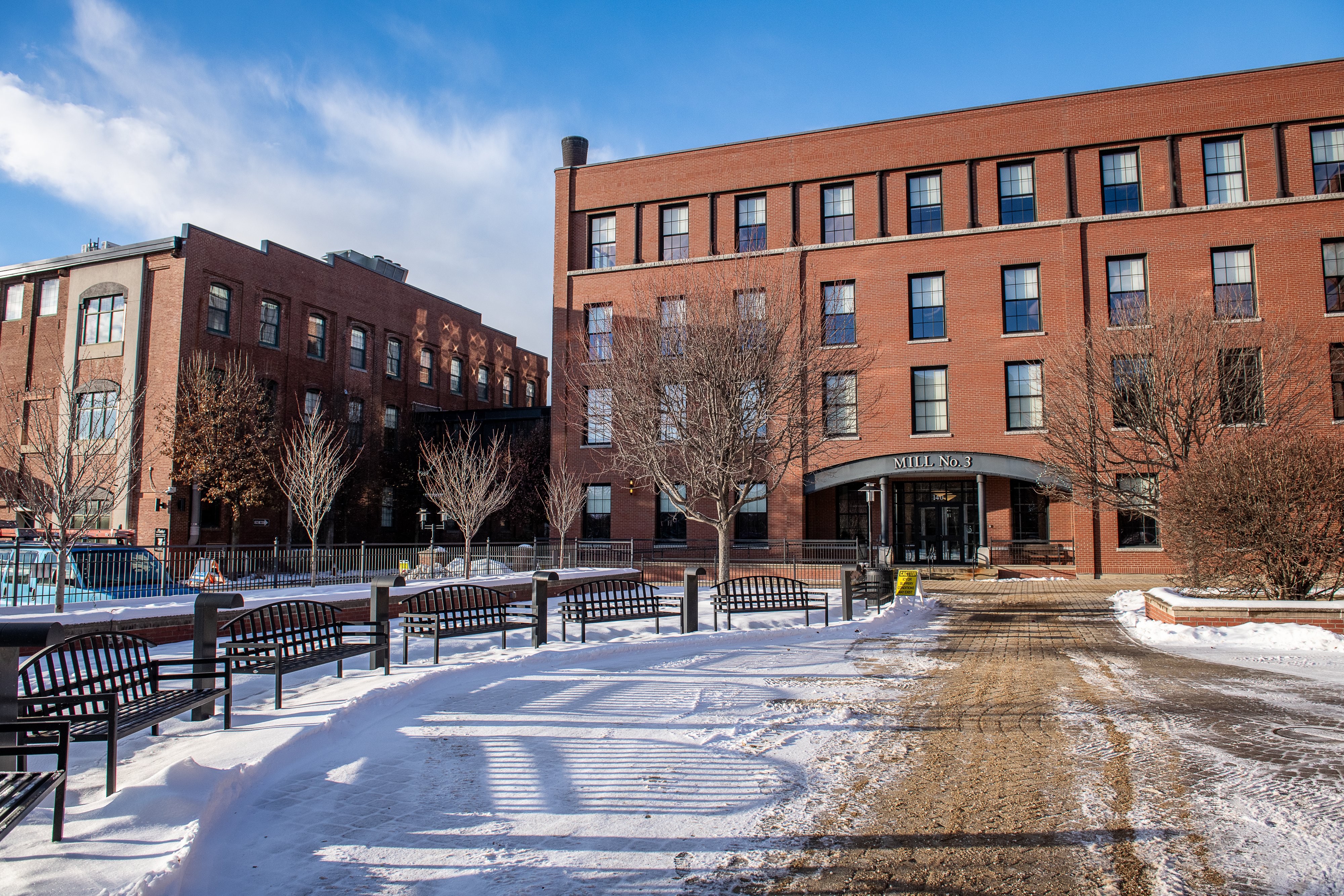
Lewiston officials will be asked next week to green light a $300 million artificial intelligence data center at Bates Mill No. 3, which has been vacant for several years.
Bill Johnson, the building’s owner, has worked with the city on potential redevelopments following the departure of TD Bank in 2020, eventually settling on a partnership with MillCompute LLC in hopes of capitalizing on surging demand for AI data capacity.
According to city staff, the project would place a “Tier III” AI data center at the mill in at least two phases, with developers hoping to expand capacity by bringing new infrastructure to the Bates Mill campus.
Greg Mitchell, a spokesman for the project, said MillCompute aims “to re-establish Lewiston as an industrial powerhouse, this time for AI across all New England.”
City Administrator Bryan Kaenrath said Thursday the project is a win for the city given the tax revenue, job generation and potential for the project to put the city “on the map” in the technology and AI sectors.
“It’s great for the city,” he said, adding that it will provide an estimated 20 to 30 jobs.
Mayor Carl Sheline said that as Lewiston looks to encourage uses for the mills other than office space, “this data center represents out-of-the-box thinking.”
“This is a substantial investment in our downtown,” he said.
According to Mitchell, the mill’s first two floors, at roughly 85,000 square feet, will host the data center, with the mill’s upper two floors becoming “modern office/innovation space for technology companies, researchers, and health care (technology).”
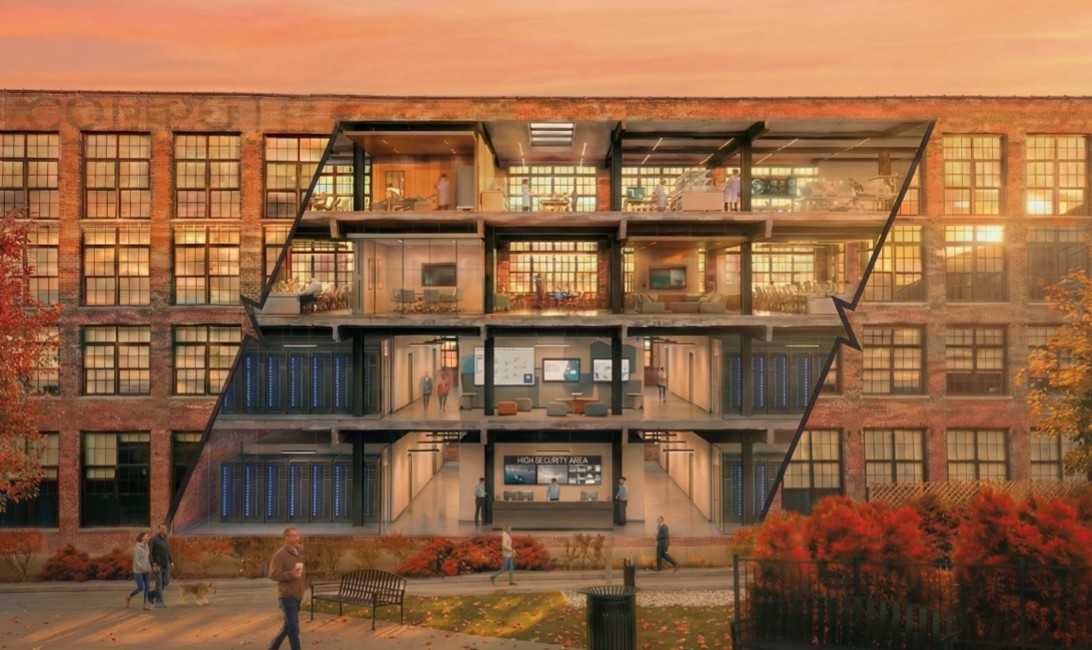
The tier system for data centers, created by the Uptime Institute, classifies centers into four levels based on infrastructure. According to the institute, Tier III “offers 99.982% availability and is ideal for businesses needing 24/7 operations with minimal interruptions.”
Large data centers needed for generative artificial intelligence systems like ChatGPT typically require enormous amounts of electricity, potentially straining power grids. As the demand for such centers has grown, so have public concerns over water usage needed to cool the system and the overall impact to electricity ratepayers.
A council memo said staff and the development team agreed that a potential data center use in the heart of the Bates Mill district “must not adversely impact water quality, water supply, or environmental conditions; (must not) create local or regional power shortages; nor generate excessive noise or other nuisances.”
Nate Libby, director of economic and community development for Lewiston, said Mill No. 3 provides “ideal and robust fiber optic connectivity, ample natural gas supplies” and that Central Maine Power reports “more than adequate excess electricity supply in the grid that services this part of the region for the near- and medium-term.”
The memo says the city will work with MillCompute to establish a 20-24 megawatt natural gas co-generation system in the “Boiler House” at the Bates Mill complex as part of phase two of the project — utilizing natural gas-fired turbines to supply electricity to the data center.
Mitchell said the center would contain “efficient cooling systems in a closed loop” to keep water usage to a minimum, and that Maine’s climate “reduces cooling load further.”
The council will be asked to sign off on a joint development agreement Tuesday that will put the project in motion, including a 20-year tax increment financing and credit enhancement agreement “to support extraordinary energy costs” that would return 90% of taxes on the property to the developer for the first 10 years, and 85% for years 11-20.
Under the agreement, Lewiston would receive $798,250 in property taxes annually for the first 10 years.
If the project were to move forward, it would be at least the second large-scale data center under development in Maine. A data center is also destined for a warehouse at the former Loring Air Force Base in Limestone.

We invite you to add your comments. We encourage a thoughtful exchange of ideas and information on this website. By joining the conversation, you are agreeing to our commenting policy and terms of use. More information is found on our FAQs. You can update your screen name on the member's center.
Comments are managed by our staff during regular business hours Monday through Friday as well as limited hours on Saturday and Sunday. Comments held for moderation outside of those hours may take longer to approve.
Join the Conversation
Please sign into your CentralMaine.com account to participate in conversations below. If you do not have an account, you can register or subscribe. Questions? Please see our FAQs.