


HALLOWELL — Mark Keith swung open the exterior door of the Hallowell City Council chambers Thursday evening to find a busy room.
On the right sat the Lord family — one of Hallowell’s oldest and proudest — and their friends. Members of the appeals board had gathered at the front, joking about nominating each other as chair.
Code Enforcement Officer Sarah Moore was on the left. Keith grabbed a seat behind her.
“When was the last time this happened?” Keith asked Moore.
“Four years ago,” Moore said with a chuckle. “It doesn’t happen very often.”
The two-hour Board of Appeals debate and decision that followed, over a disputed section of unpaved trail, opens the door for legal action against the city of Hallowell.
Disputed roads are nothing new in Maine. And those disputes almost never resolve easily.
WHAT’S IN A ROAD?
Keith and his wife bought 419 Central St. in September. It’s a 40-plus-acre property with open pastures and a small, old house Keith has begun renovating.
It’s a dream property for the young family, who wanted space for their children to roam and explore.
The paved section of Central Street ends just at his property, and a rocky trail winds along the southern edge of his lot about 300 feet to the Manchester town line. That’s the disputed portion.
Keith happened to be at his new lot in early November when he saw a meeting between Moore, Public Works Director Tom Goraj, surveyor Dan Laflin and Steve McGee of McGee Construction at the end of the paved section.
Anne and Freeman Lord, who own wooded land across the Manchester line just to the west of Keith’s property, want to use the path as an access point to commercially log their lot. To do so, Outer Central Street would need to be substantially improved.
Moore, Keith learned, planned to issue a driveway permit to that effect, including the cutting of some trees and installation of gravel so logging trucks could pass through.
“The conversation seemed pretty matter-of-fact,” Keith said. “McGee Construction was under the strong understanding that the city essentially didn’t have a choice in the matter — that by legal statute, they have to grant a permit for use of this road.”
Keith, though, believes otherwise.
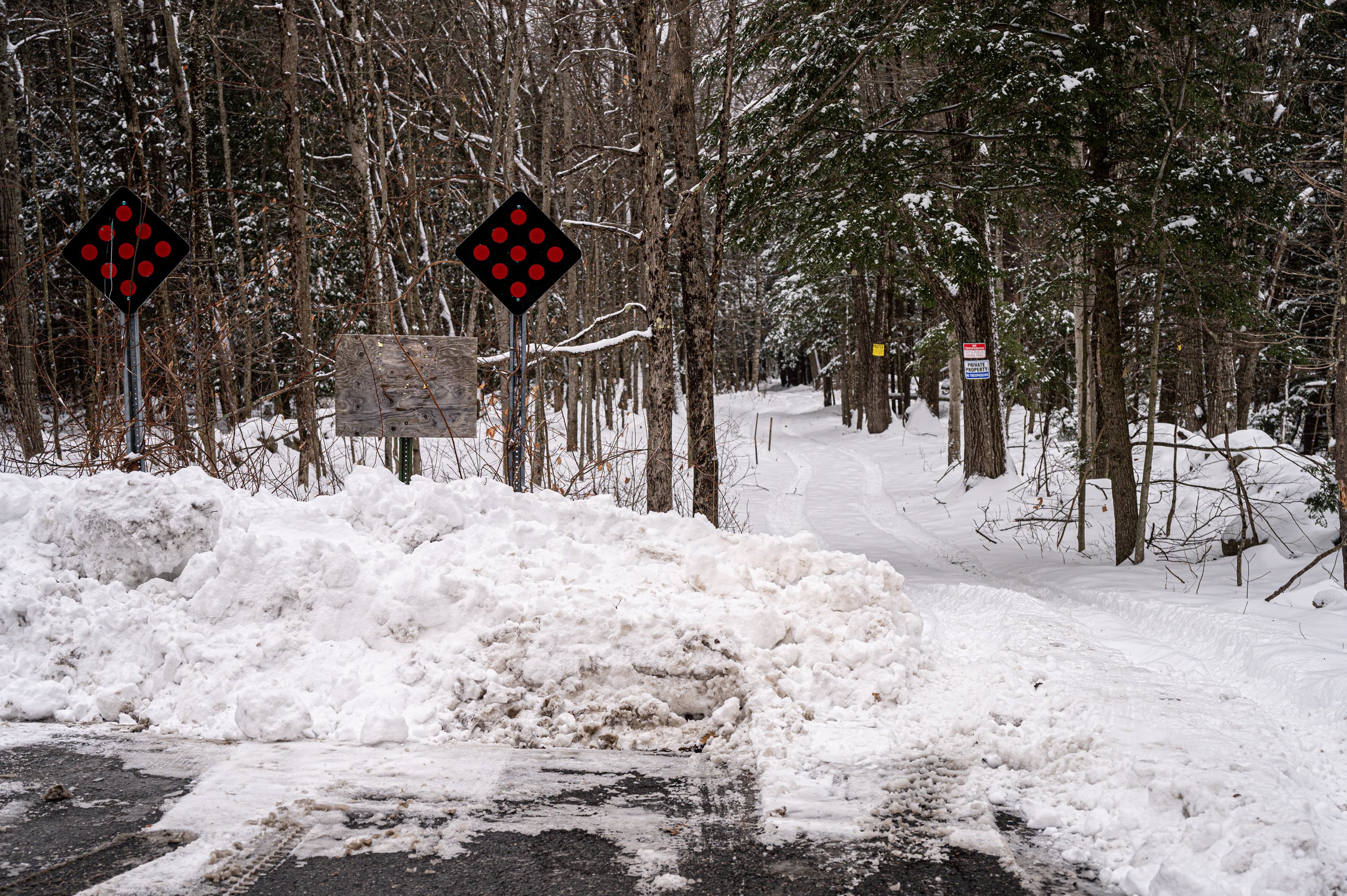
Records about the road are scarce. Hand-written meeting minutes from March 1810 show Hallowell established a road to run from the middle of the settlement to the westerly edge of two rural properties. Little other official record of the road exists until the 1980s, when the city concluded it still owned a stretch of land extending to the line with Manchester.
Under long-standing Maine law, the trail could qualify for common law abandonment. When a road is not used by the public for a period of at least 20 years, it reverts automatically to the private property of abutters to the center of the road. Deeds for the abutting properties still mention the road, but abandonment trumps the deeds.
As far as Keith is concerned, the northern half of Outer Central Street is his private property.
Keith brought this issue to the Hallowell City Council during its Nov. 10 meeting, after providing a large packet of information on the status of the road to City Manager Ross McLellan.
He told the council that he’d appealed the driveway permit issued by Moore a week prior, and he hoped to have a discussion with city leaders. He’d just bought the property, he said, and he wanted to understand the city’s position.
Walt McKee, an at-large city councilor and well-known attorney in the Augusta area, dismissed Keith’s comments. McKee said he disagreed the road had been abandoned, and the City Council had already determined it was a city-owned road.
“It sounds like the council’s official recommendation is that I bring suit against the city and present the packet that I gave to the city manager and the code enforcement officer,” Keith said. “Is that the official recommendation of the council? Or is that the next step?”
“I can’t give you any legal advice about that,” McKee responded. “My view, and maybe the council’s view, is: You do what you feel you need to do.”
He said he wished city officials would have sat down to speak with him. Instead, Mayor George Lapointe stood by the council’s decision and declined to meet.
“It’s not my intention to be obstructionist,” Keith said. “My intent’s to figure out the legality of the unimproved section there. To my mind, if a logging trail is not being developed, I have less pressing interest in the whole matter — certainly not enough interest to file a lawsuit. I definitely am a bit confused at the city’s posture, that they’d be willing to engage in a lawsuit without ever (talking).
“It just seems like their position is combative, rather than collaborative.”
THE APPEAL
Thursday’s Board of Appeals meeting, then, was the last step before legal action for Keith. If the Board of Appeals denied his appeal, allowing work to be done on the unpaved stretch, his only recourse would be a challenge in court.
His argument, he thought, was solid: Even if Hallowell claimed this stretch was a city-owned road, Moore couldn’t issue a driveway permit. A driveway can only connect to a public way; it doesn’t allow for private improvement of a public road, he argued.
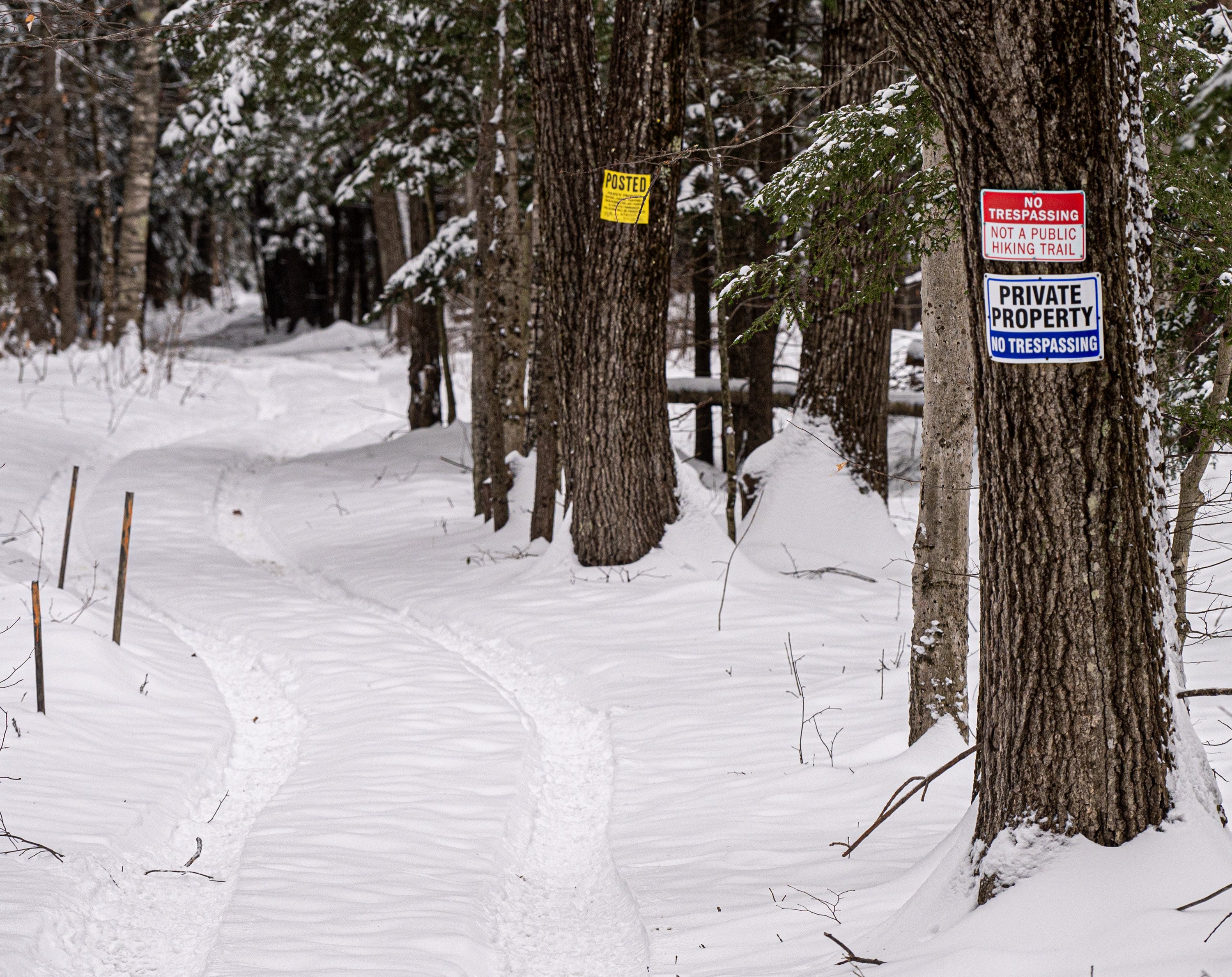
Plus, Keith pointed out, the Lords’ permit application didn’t include all the required documentation, such as a detailed drawing of the proposed driveway.
Moore said the driveway permit was the “closest box” for the project, and the limitations for the road improvement were decided in an in-person meeting — the one Keith stumbled upon in early November.
The Lords’ representatives, Laflin, the surveyor, and Darryl Brown Jr., their nephew, said the alterations would be minimal and the road would be returned close to its original state by April.
“Obviously, the trees (along the road) aren’t going to go back the way they have by spring,” Brown said. “For whatever reason, my aunt and uncle have decided now’s the time to cut the wood. They’re obviously elderly, they want the money for whatever reason. It’s their land, and I think they should be able to have it.”
After a spiraling two-hour conversation, the Board of Appeals unanimously consented to the project. Keith’s appeal was denied, and as long as the Lords could supply the information that should have been in the initial permit, the project could move forward as planned.
The meeting adjourned, and Keith was soon surrounded by members of the Lord family. He maintained his position to them: It’s not a city road, and even if it is, this permit shouldn’t have been issued.
“The idea that part of my children’s inheritance and part of what will be attached forever to this property is Keith v. City of Hallowell — that is so antithetical to what I’m trying to do for my family and for the city,” Keith said. “I don’t want to do that.”
Now, he said it’s his only choice if he wants to defend what he believes is his private property.
Keith plans to represent himself in court.

We invite you to add your comments. We encourage a thoughtful exchange of ideas and information on this website. By joining the conversation, you are agreeing to our commenting policy and terms of use. More information is found on our FAQs. You can modify your screen name here.
Comments are managed by our staff during regular business hours Monday through Friday as well as limited hours on Saturday and Sunday. Comments held for moderation outside of those hours may take longer to approve.
Join the Conversation
Please sign into your CentralMaine.com account to participate in conversations below. If you do not have an account, you can register or subscribe. Questions? Please see our FAQs.