
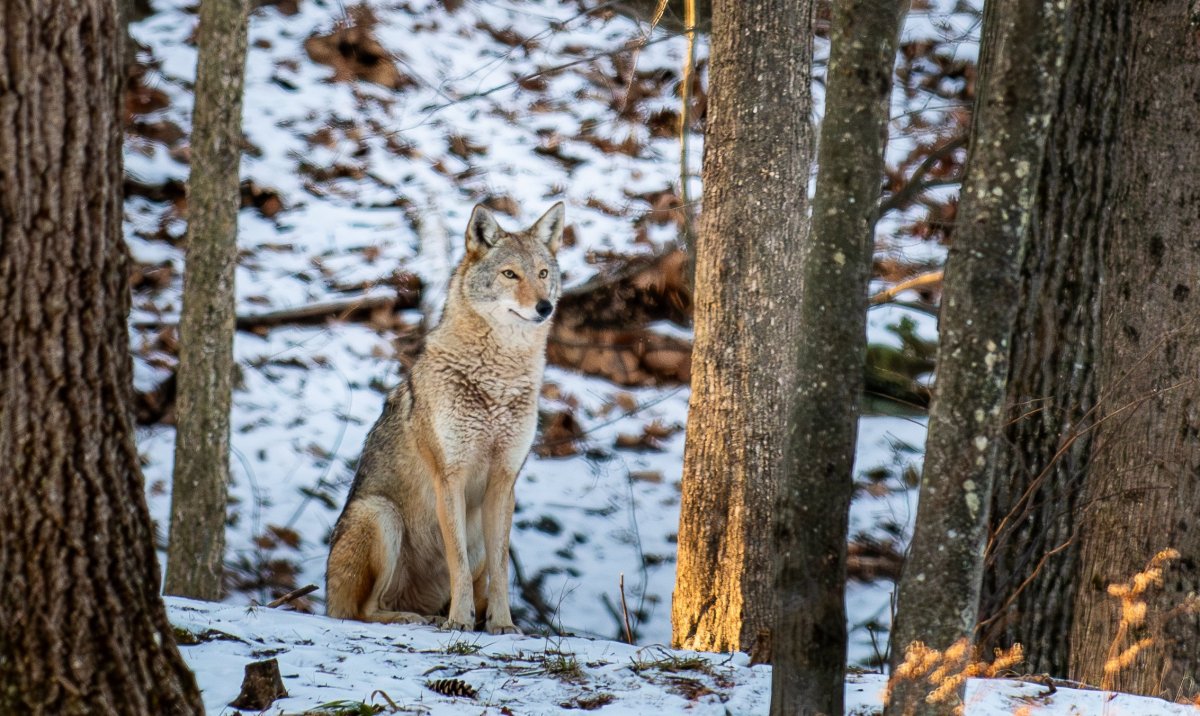
Another winter is upon us. Snow is piling up and the air stays cold, even during the height of day. Herbaceous vegetation has long died off and acorns are far scarcer than just a few weeks ago. Survival becomes more challenging for deer, and though the two-legged hunters have yielded the field, four-legged ones are keeping the deer on their cloven-hoofed toes.
With the end of expanded archery and muzzleloader seasons, most deer hunters will hang up their gear and call it a year. A few, however, will simply shift gear(s) and set their sights on another species. Coyote season is open year-round, but night hunting season begins as soon as the two-legged deer hunters are done. Day or night, it’s a challenging endeavor.
Like deer, coyotes come equipped with keen senses of sight, smell and hearing, and craftier wit. They learn very quickly how to avoid human interaction, at least the unintentional kind. They are fewer and farther between than deer, making even a chance encounter unlikely. It takes stealth, scent control and sometimes a bit of trickery to tip the odds ever so slightly toward the hunter of the hunters.
One popular method of coaxing a coyote into the open is calling, and there are several techniques. Hunters lure coyotes into the open by imitating one of their kind, or one of their prey. Coyotes may howl and yodel as a means of gathering for a hunt, and calling could signal something’s afoot. Later in winter, the call of a coyote could represent a challenge to a territorial male. Alternately, the call of a wounded rabbit signals a potentially easy meal.
There are different schools of thought on the cadence and frequency of calling. It’s probably safe to say that over-calling is a more common mistake than not calling enough. The goal is to pique their curiosity without giving away too much (for example, your precise location), or sounding unrealistic. Coyotes are well acquainted with the calling of their cohorts, and a few sour notes might rapidly ruin the ruse.
Patience is also important. There’s a saying among turkey hunters that if you think you’ve waited long enough after calling, you haven’t; and if you’re certain you have, wait at least another 15 minutes before moving on. That goes double for calling coyotes. They may run to the call but more often will approach on a stealthy, circuitous course, often circling downwind. That’s why scent control is also important. One whiff of human scent and Ol’ Wile E. will be gone with the wind.
Another popular tactic is establishing a bait site, which may consist of a road-killed deer, parts of a deer leftover from processing or some other meat scraps. Some hunters sit baits during the day, but this technique is far more effective at night because coyotes are more nocturnal than deer. The prospect of sitting in the dark on a bone-chilling night may not seem too appealing, which is why many night hunters use blinds or shacks, where they can keep warmer, and conceal their scent, sound and movement.
Motivations for hunting coyotes are many. Some merely seek a means to extend their time in the woods and on the hunt. Others see it as a way of increasing winter survival for deer. A study done several decades ago suggested that coyotes take as many deer each year as hunters. That was done when there were far fewer coyotes, so it’s reasonable to assume their impact is now greater. Whatever the reason, now is the season.
Bob Humphrey is a freelance writer and Registered Maine Guide who lives in Pownal. He can be reached at: [email protected]
We invite you to add your comments. We encourage a thoughtful exchange of ideas and information on this website. By joining the conversation, you are agreeing to our commenting policy and terms of use. More information is found on our FAQs. You can update your screen name on the member's center.
Comments are managed by our staff during regular business hours Monday through Friday as well as limited hours on Saturday and Sunday. Comments held for moderation outside of those hours may take longer to approve.
Join the Conversation
Please sign into your CentralMaine.com account to participate in conversations below. If you do not have an account, you can register or subscribe. Questions? Please see our FAQs.