

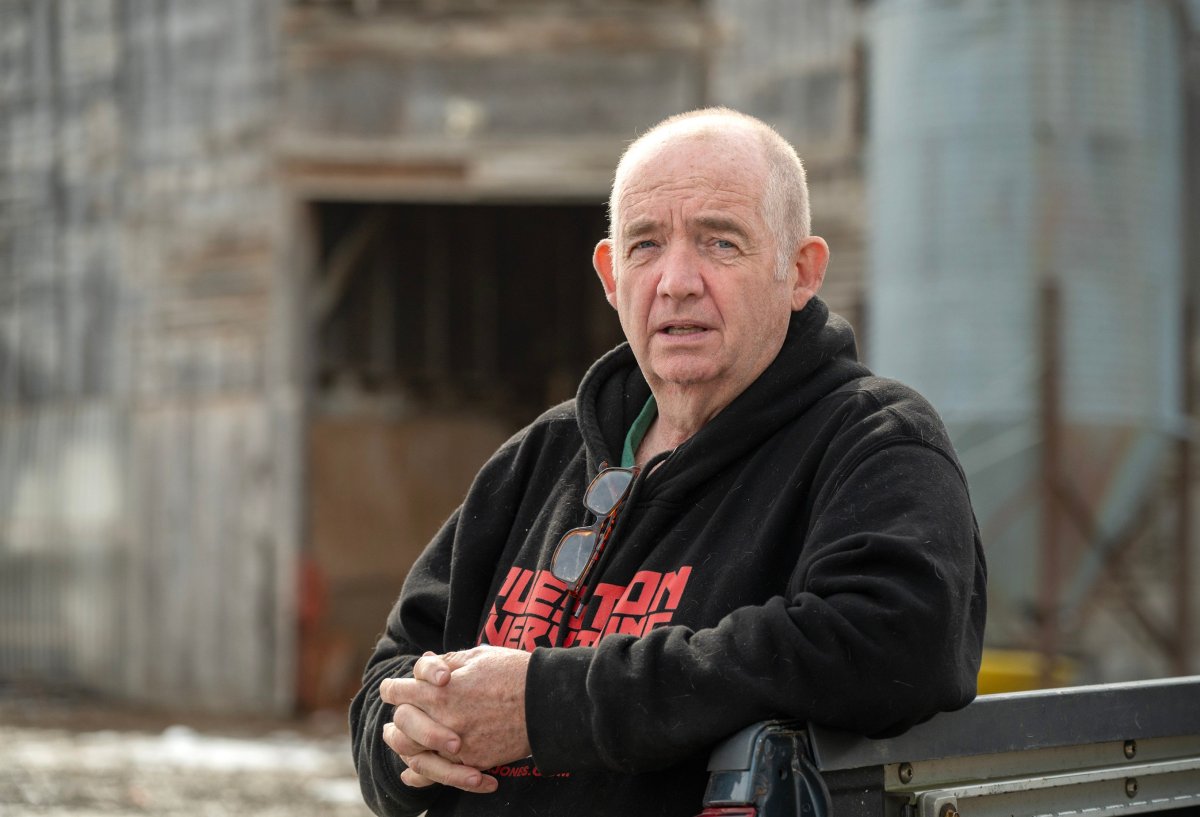
The lawyers who called Scott Greaney this fall seemed to him to make a good point.
The women, the 61-year-old turkey farmer from Mercer said, told him that two seats on a state committee overseeing funds meant to support Maine farmers, loggers and others were reserved by statute for people representing “historically underserved racial populations.”
“At face value,” Greaney said in an interview via telephone Monday, “the whole thing about reserving two seats for specific types of people — that ain’t right.”
So he agreed to help the lawyers, who wanted to challenge whether that was constitutional.
But what Greaney did not realize was that he was signing on to be the sole plaintiff in a federal lawsuit filed Friday against two state officials — and that the national, libertarian-leaning Pacific Legal Foundation would issue a Friday evening press release that Greaney says was misleading.
“I have no use for liars and no use for thieves,” Greaney said. “I don’t know what this is all about. I was planning on calling (the lawyers) today and saying, ‘What the hell is this?’ I’m trying to run a business in the state of Maine, and it has me looking like a punk.”
Greaney’s lawsuit, filed in U.S. District Court in Bangor, takes aim at the constitutionality of the composition of the Maine Agriculture, Food System and Forest Products Infrastructure Investment Fund Advisory Board.
It asks the court to rule that the state law establishing the board violates the 14th Amendment of the U.S. Constitution because of the racial requirements for two of the seats on the board.
The complaint names as defendants Amanda Beal, commissioner of the Department of Agriculture, Conservation and Forestry, and Michael Duguay, commissioner of the Department of Economic and Community Development.
Scott Greaney v. Amanda Beal and Michael Duguay by Maine Trust For Local News
The advisory board is tasked with overseeing the investment fund, which was created under state law in 2021. The fund is intended to strengthen Maine’s agricultural, food and forest products industries, prioritizing historically marginalized, underrepresented, and underserved communities; address barriers to capital access for businesses in those communities; expand investments in infrastructure; and establish technical assistance programs.
Per state statute, the 17-member board consists of the commissioner of agriculture, conservation and forestry; the commissioner of economic and community development, and 15 people they appoint from various backgrounds, many representing industry groups.
Greaney’s lawsuit questions the legality of two seats specifically designated for people “who represent historically underserved racial populations in nondairy farming.”
Those seats are both currently filled, according to the complaint and the investment fund’s webpage. Greaney expressed his interest in serving on the board last week, which he said he did at his lawyers’ request.
Aside from those two seats, the complaint points out, a conventional or organic nondairy farmer like Greaney would only otherwise qualify for seats designated for representatives of industry groups representing such farmers, which he is not.
The Department of Agriculture, Conservation and Forestry had not been served the lawsuit as of Monday morning and otherwise had no comment, spokesperson Jim Britt said Monday via email.
A spokesperson for the the Department of Economic and Community Development, Maureen Terry, declined to comment Monday evening.
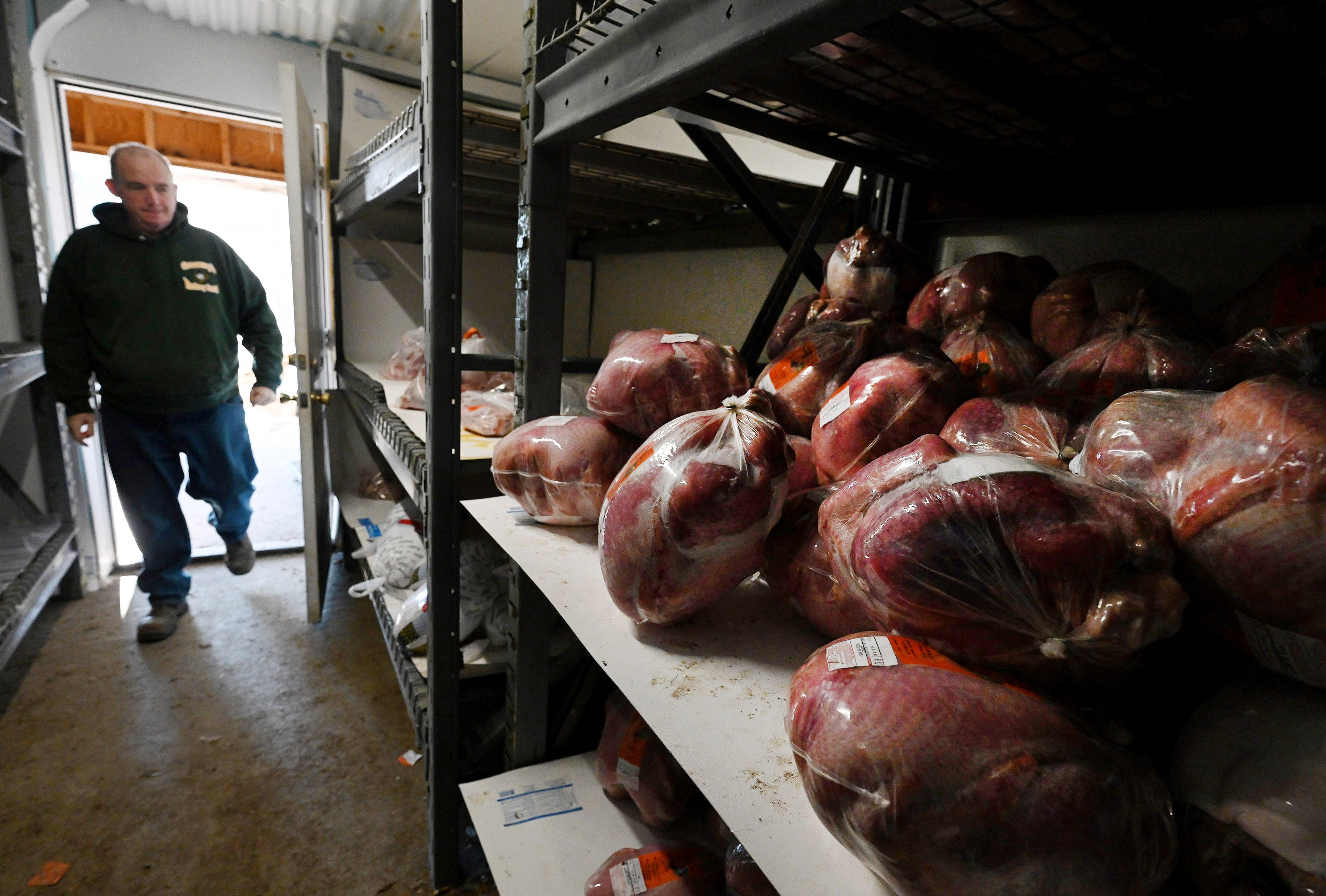
Greaney, a former mental health nurse who has been in the turkey business for 44 years, is represented by two attorneys from the Pacific Legal Foundation, Samantha Romero-Drew and Laura D’Agostino.
The nonprofit, founded in 1973 and with offices in California, Virginia and Florida, said it is representing Greaney at no cost.
According to court records, Greaney also is represented by Benjamin Hartwell, who has a Gorham law office — but Greaney said he had no idea who Hartwell is.
Hartwell confirmed in a phone call Monday morning that he has never met Greaney but explained it is common practice for national legal organizations taking the lead on cases to seek assistance from local counsel. Romero-Drew said Pacific Legal Foundation has its own lawyers across the country but does work with other firms in states where it does not have anyone on staff.
Greaney said Romero-Drew’s organization first contacted him in October, explaining to him that they got his contact information from somebody and were seeking farmers looking to challenge the constitutionality of the two board seats in question.
Romero-Drew said the firm had been discussing the idea with Maine farmers since this summer. The Pacific Legal Foundation monitors and challenges what it sees as unconstitutional requirements, such as race, to serve on boards and commissions nationwide, she said.
“He was on our radar and this was on our radar,” Romero-Drew said in a phone call Monday, noting that Greaney had clashed with the agriculture department in the past.
Romero-Drew said her firm obtained a signed, written agreement to represent him before filing the complaint.
Greaney said he initially agreed with the lawyers’ idea about arguing the requirement was unconstitutional, but told the lawyers on the phone that he was very busy with his farm until after Thanksgiving and they would need to contact him again then.
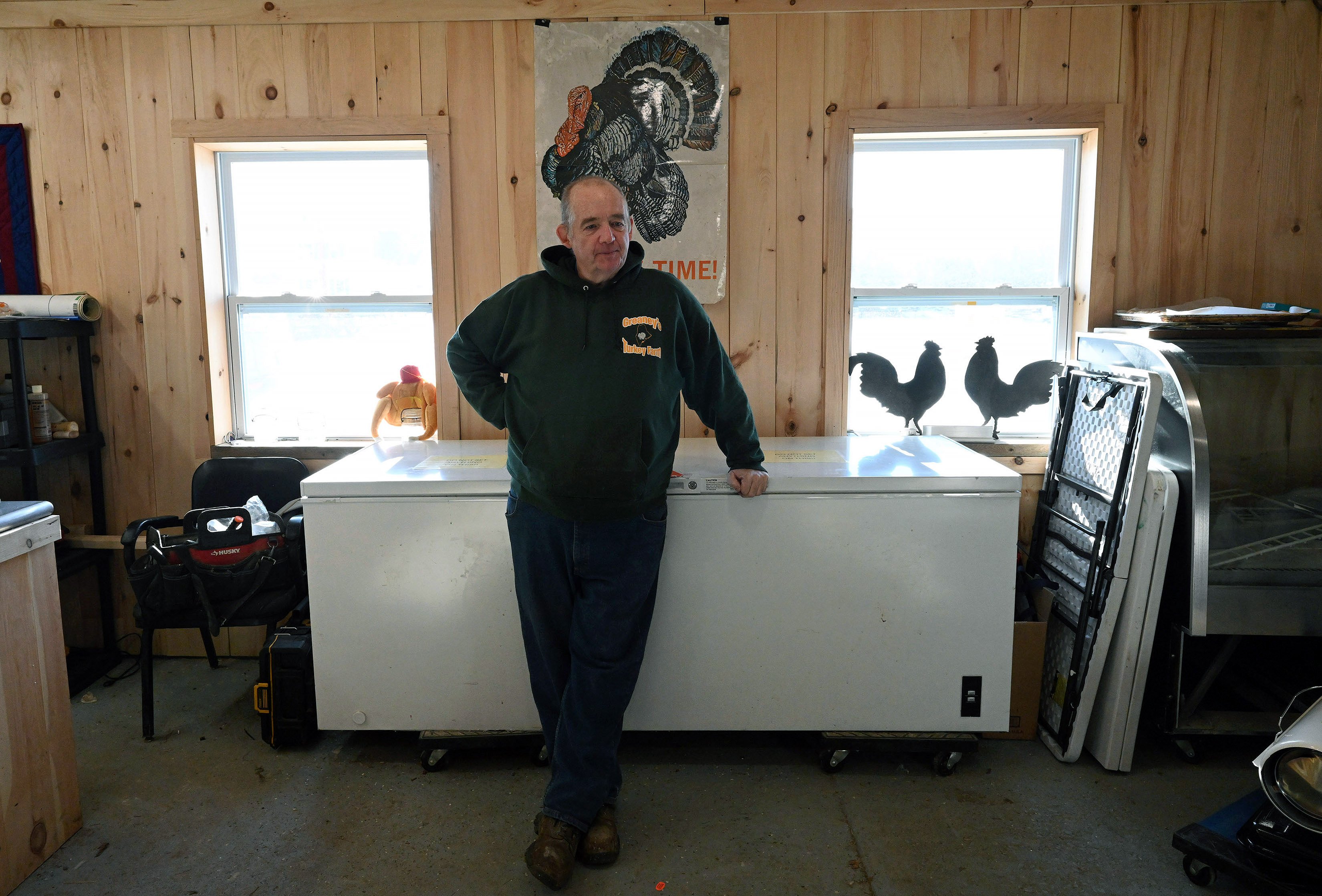
“They were, like, relentless at contacting me,” Greaney said. “I’m like, ‘Jesus Christ, you guys are like the people trying to sell me car insurance,’ you know? Don’t you have something better to do?”
He thought maybe what they were talking about had to do with a conversation he had with a state agriculture official, Craig Lapine, during a meeting at the Windsor Fair. Greaney said he had discussed with Lapine his concerns about state grants going to people who hire professional grant writers, then pocket the money and eventually sell their businesses.
“They’re as full of crap as a Christmas goose,” Greaney said of those grantees. “That’s where I was heading with it.”
After Thanksgiving, the Pacific Legal Foundation lawyers contacted Greaney again and he said he told them he could help and signed some paperwork. He said he figured other farmers were joining in for something akin to class-action lawsuit.
Greaney admitted he may have not fully understood what they were telling him.
Last week, Greaney sent a letter to Lapine expressing his interest in serving on the advisory board. He said he sent it Friday, while the lawsuit says he sent it Thursday.
“Greaney contacted the (board), expressing interest in an appointment,” the Pacific Legal Foundation said in its statement Friday. “But because Greaney is not from a historically underserved racial community, he is categorically excluded from public service on this board. This is a blatant violation of the Constitution.”
Greaney said, although he agrees there may be a constitutional issue to challenge, he took issue with the characterization that he was denied a seat on the committee.
“I’m was awake in the middle of the night thinking about this, and I’m thinking, they’re making me look like an a-hole,” Greaney said. “And I’m no victim. What is this? But it’s lawyers, you know what I’m saying?”
Moreover, Greaney said he had worked in the last year to build better relationships with state agriculture officials after a public clash over hundreds of turkeys he was told he could not sell.
“It feels like that this is a double-cross to the people that we worked very hard with to resolve our issues,” he said. “I don’t want anybody to think that this is some kind of revenge.”

Comments are not available on this story. Read more about why we allow commenting on some stories and not on others.
We believe it's important to offer commenting on certain stories as a benefit to our readers. At its best, our comments sections can be a productive platform for readers to engage with our journalism, offer thoughts on coverage and issues, and drive conversation in a respectful, solutions-based way. It's a form of open discourse that can be useful to our community, public officials, journalists and others.
We do not enable comments on everything — exceptions include most crime stories, and coverage involving personal tragedy or sensitive issues that invite personal attacks instead of thoughtful discussion.
You can read more here about our commenting policy and terms of use. More information is also found on our FAQs.
Show less