

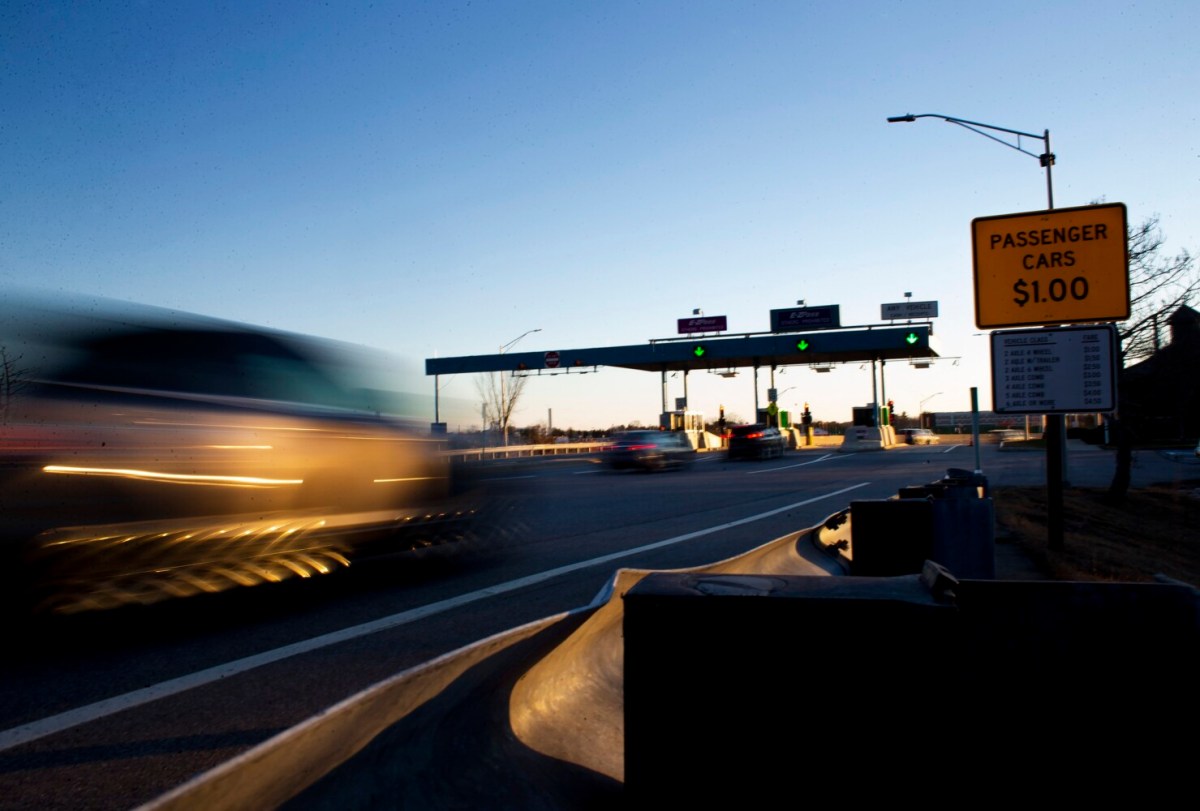
Nearly nine out of 10 of drivers on the Maine Turnpike sped through active work zones this summer, according to newly released data from the Maine Turnpike Authority.
In surveys of 13 work zones from July to September, roughly 88% of vehicles exceeded the posted limit, with about 44% moving past active crews at speeds at least 21 miles per hour higher than the posted limit, according to the authority. Just under a third of drivers sped between 11 and 20 miles per hour over the limit and about 12% were between 1 and 10 miles per hour over.
Only 12% of vehicles were clocked at or below the posted limit, according to the report, which collected data while workers were present at the sites.
“These findings make it clear that we need more effective tools to help prevent future tragedies,” Andre Briere, the authority’s executive director, said in a written statement. “Maine’s workers deserve to go home safely at the end of every shift.”
Statewide, 16 people were killed in work zone crashes between 2020 and 2024, Briere said. The last work zone death on the turnpike was in 2017, said spokesperson Rebecca Grover.
Vehicles were tracked this summer with roadside radar devices, which recorded only their speed, Grover said. That means it’s not clear whether there were any patterns in the types of vehicles that were most prone to speeding. Turnpike work zones are generally posted at 55 to 60 mph, though that varies based on specific site conditions.
Earlier this year, the turnpike authority supported a bill that would allow the state to pilot using traffic cameras to identify and ticket speeders in highway work zones. The move would mark a change for Maine, which banned most automatic traffic enforcement systems in 2009.
That bill was carried over and will likely be revisited in the next legislative session that convenes in January.
Jeff Stevens, a maintenance supervisor overseeing the turnpike’s northern half, said many workers develop a “sixth sense” for potential danger — keeping their heads on swivels and listening for the throttle of accelerating tractor trailers.
Motorists are generally better behaved on the busiest sections of the turnpike, but as the traffic dwindles, so too can drivers’ attention to the landscape around them, Stevens said. He pointed to the less-traveled stretch of road north of Auburn as an example.
“We find that a lot of accidents happen because people relax, they’re not really paying attention so much,” Stevens said. “If you’re in three lanes of heavy traffic going down through Portland, Scarborough, you tend to pay attention a little better.”
Stevens added that work zone speed limits are designed to protect crews and motorists, as construction can bring lane changes and closures, new distractions, and leave unexpected obstacles on the road.
“We truly do care about the safety of our patrons,” he said. “I’d like to know that they care about our safety as well.”
The turnpike, which turned 78 years old over the weekend, runs along Maine’s southernmost 109 miles of Interstate 95, from Kittery to Augusta. Officials surveyed worksites from York and Hallowell. Though the work continued into October, Grover said the final month’s data was not yet available Monday.

We invite you to add your comments. We encourage a thoughtful exchange of ideas and information on this website. By joining the conversation, you are agreeing to our commenting policy and terms of use. More information is found on our FAQs. You can modify your screen name here.
Comments are managed by our staff during regular business hours Monday through Friday as well as limited hours on Saturday and Sunday. Comments held for moderation outside of those hours may take longer to approve.
Join the Conversation
Please sign into your CentralMaine.com account to participate in conversations below. If you do not have an account, you can register or subscribe. Questions? Please see our FAQs.