

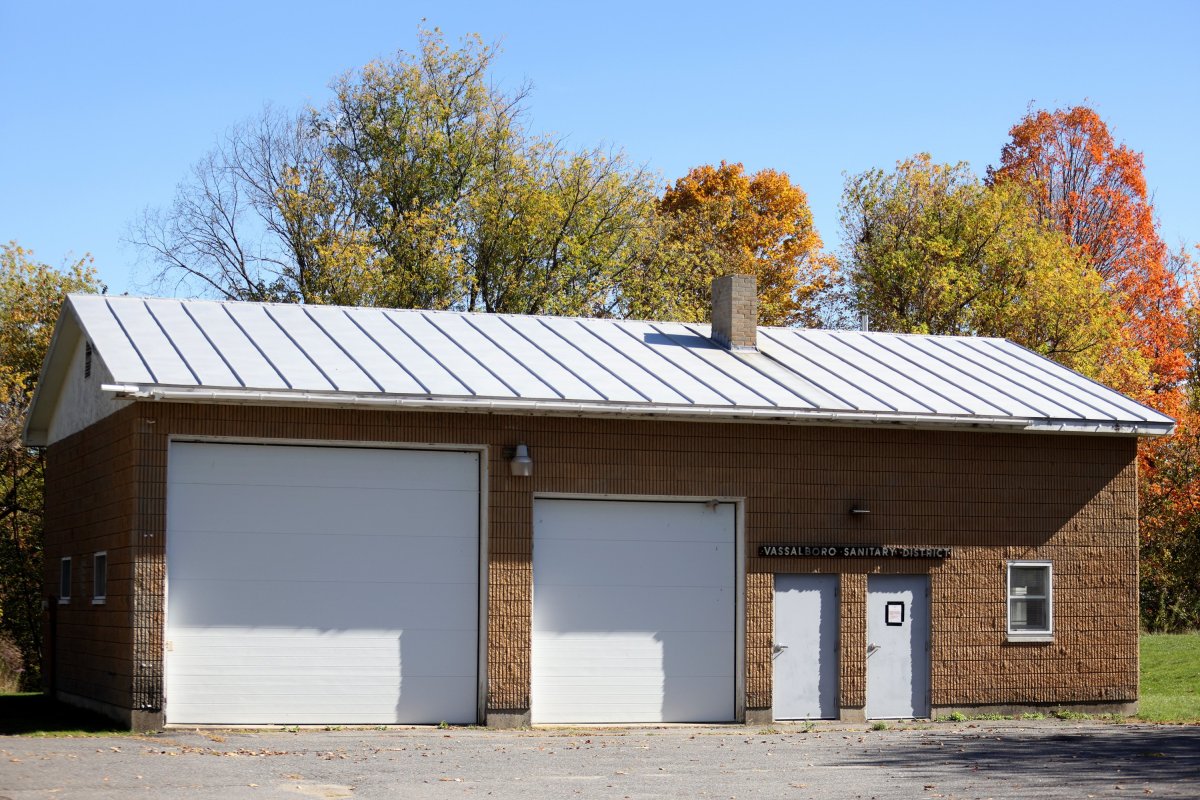
Ahead of a crucial meeting of the Vassalboro Sanitary District’s board of trustees, district leadership responded to dozens of questions posed by residents about the utility’s ongoing financial crisis.
The district has been in financial crisis since it completed the construction of a state-mandated $8 million sewer line upgrade, forcing several of the 200 customers along the line into foreclosure. Several more now have liens on their homes for past-due bills.
Improvement of the district’s financial situation, though, has been limited by persistent vacancies on the district’s board of trustees. For three of the past four months, the board has been unable hold a meeting because of a lack of members — a situation that has frustrated residents and led to a formal complaint about the district’s failure to maintain public access.
A group of concerned customers, led by Jennifer Reed, submitted 33 questions to the district following the board’s November meeting, which was canceled last-minute because of the sudden resignation of board treasurer Jenna Davies.

And days before the December meeting — which, for now, is scheduled for 1 p.m. Thursday — those residents received answers from board chair Lauchlin Titus.
Here are the highlights.
∙The district got a $5,000 anonymous donation, intended for past-due bills of elderly women customers. Are there legal ramifications in using the money in that way?
Titus said the district has sought a legal opinion on the legality of distributing the donation to elderly women only, and the process for doing so.
The district notified customers of the anonymous donation in a Nov. 25 letter, saying the donor requested the funds be applied toward “past-due, randomly selected accounts of female customers. If practical and easily identifiable, elderly female customers.”
Such a scheme could run afoul of state human rights law for favoring one sex over another.
The board is expected to discuss the donation at Thursday’s meeting.
∙Can the district restructure any of its $3 million in loans? Are there any avenues for loan forgiveness?
Yes, Titus wrote to residents. The Maine Clean Water State Revolving Fund — the issuing agency for one of the the district’s two loans — can offer $133,000 in principal forgiveness. That forgiveness could then be leveraged to restructure the loan, lowering interest costs by about $45,000 over the next several years.
But that principal forgiveness comes with strings attached, Titus said.
“Key condition is the requirement of a fully functioning Board of Trustees with FIVE elected members,” Titus wrote. “Selectboard appointments are not an acceptable substitute for this requirement.”
Every member of the current board was appointed by the Vassalboro Select Board, not elected by residents, as the district’s charter requires. The district has struggled for years to retain members on its board, and changed the charter last year to elect trustees directly.
∙What about federal money? Was the sanitary district selected?
The district doesn’t yet know, Titus said.
While U.S. Sen. Susan Collins announced earlier this year that the district could be in for about $386,000 in federal money, that appropriation has not yet been approved, Titus said. And even if they were awarded, the money would not be able to be used for debt service — only operational costs.
State-level funding is not currently viable. State Sen. Richard Bradstreet, a Republican who represents Vassalboro, introduced a bill this spring to bail out the district using state money, but the bill was shot down because it did not provide opportunity for other struggling sewer districts to receive funds.
Titus said Bradstreet is now working with the Maine Rural Water Association to conduct a study of sewer rates across the state, which could then be used to craft a bill to help a wider breadth of districts.
∙How is the district addressing administrative shortfalls? Are there plans to contract with an outside agency to conduct administrative business?
RCAP Solutions, a consulting firm, has signed a contract with the district for free, Titus said. They’ll work on recruiting members to the board and training them, preparing budgets, conducting a rate study and educating the public. That contract includes the services of Laurie Stevens, an RCAP regional director who has worked with the district previously.
The district has also received a proposal from Watershed Maine, an affiliate of the Maine Rural Water Association, to provide administrative services to the district. Titus said the district still plans to “explore if there are possible other options.”
