

There are several Maine cities and towns named after foreign countries or their capitals. There are many more whose complex spelling and varied pronunciations vex those “from away.”
But there’s only one community named for a hoofed mammal that’s now extinct in the state.
The Aroostook County city of Caribou — the northeastern most city in the country and hometown of U.S. Sen. Susan Collins — wasn’t always called that. Its name has changed several times since it was settled nearly two centuries ago. Yet no one is quite sure where the name actually came from or why it stuck.
Local historian Stella King White, whose 1945 book “Early History of Caribou, Maine” is generally regarded as the most accurate telling of the city’s history, wrote of a legend that the name “came from the shooting on that stream of a caribou — then, as now, a rather rare animal.”
No primary sources corroborate that, though.
“It’s sort of remarkable,” longtime Maine State Historian Earle Shettleworth said.
FIRST, LYNDON
The area was first established in the 1830s when several families built farms in the rolling hills near where a small stream, now known as the Caribou Stream, flows into the Aroostook River.

The nameless settlement adopted its first formal name in 1848 when it became part of the Letter H Plantation. Eleven years later, it incorporated as the town of Lyndon, though the genesis of that name is not clear, either.
Neither the Caribou Historical Society nor Maine State Archives have any record of its origin and White’s book makes no mention of a Lyndon family who may have been among the first settlers. There is a small village named Lyndon in England, but it doesn’t appear to have any connection to the township or its inhabitants.
Shettleworth rifled through a number of centuries-old Maine Gazetteers and atlases looking for any indication of where Lyndon may have come from. He found none. None make any mention of its origin.
A book titled “A History and Description of New England, General and Local,” published in 1859 — the same year the plantation was originally founded — has no entry for Lyndon, Caribou, or Letter H Plantation.
Regardless, Lyndon continued growing as word spread about the bountiful potato harvests in Aroostook County. In the town center, they opened shops, hotels and other businesses to accommodate settlers and trade their crops. Over time, many began calling the town center Caribou Village, likely after the stream it was located on.
By the late 1860s, Lyndon’s population grew to 1,400 people, absorbing the nearby Letter I Plantation and the towns of Sheridan and Eaton Grant.
But abruptly, in February 1869, the Legislature enacted a law titled “An Act to Change the Name of the Town of Lyndon” and formally dubbed the settlement Caribou for the first time.
It’s not clear why. The bill was not brought about by Lyndon’s representative of the time, Rep. Judah Dana Teague, but by Rep. William Dickey of Fort Kent, according to the 1869 House Journal.
Neither the Maine State Archives nor the state’s Law and Legislative Library has any documents pertaining to the name change other than the bill that formalized it.
The name Caribou didn’t last long. In March 1869, just eight days after the bill’s passage, residents of the newly renamed town overruled the Legislature and reverted the name to Lyndon through a citizens’ petition, according to the Caribou Historical Society.
“It’s exceptional,” Shettleworth said. “It was such a battle.”
CARIBOU, FOR GOOD
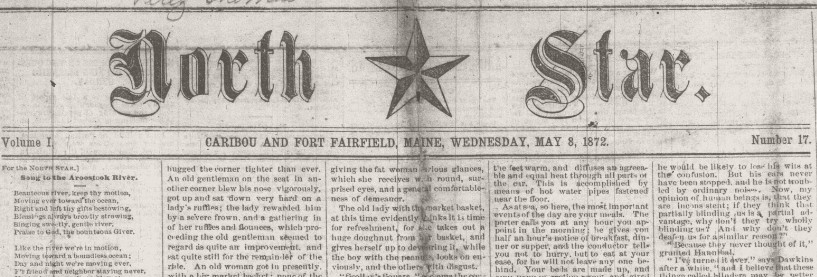
For much of the 1800s, what people called the city depended on where they came from. Farmers in the surrounding hills, many descended from original settlers, still called it Lyndon. Newer residents began referring to it as Caribou. The town’s local newspaper, The North Star, also referred to the settlement as Caribou in its masthead.
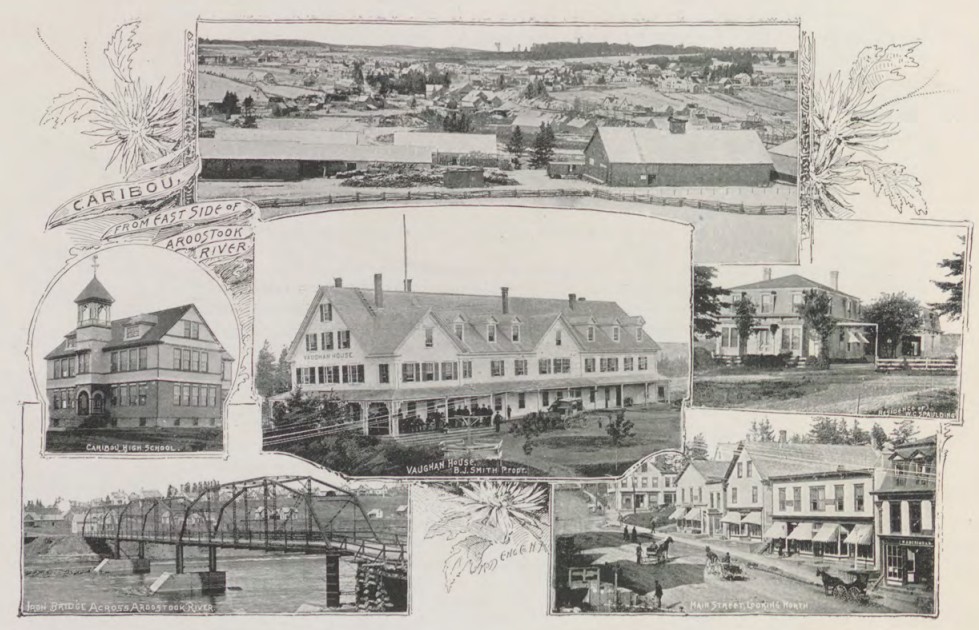
The town’s formal name would remain Lyndon for the next several years, a period of rapid growth. A schoolhouse was built in town. A physician and lawyer set up shop in the village. A railroad line was completed to connect the town to other cities in Maine and Canada. By the 1870s, Lyndon’s population was more than 2,500 people.

The town’s name was changed again in February 1877 when the Legislature passed another law. The bill’s text is one sentence long, reading “The name of the town of Lyndon, in Aroostook county, is hereby changed to Caribou.”
The sponsor of that bill has seemingly been lost to time. Neither the House nor Senate journal from the time mentions who proposed the bill.
“There isn’t much legislative history information on bills that far back,” Legislative library archivist Alex Burnett wrote in an email.
Despite its brevity, that act would cement the town’s name for decades to come.
Still, it appears that people both in Caribou and elsewhere continued to refer to the town as Lyndon for decades to come.
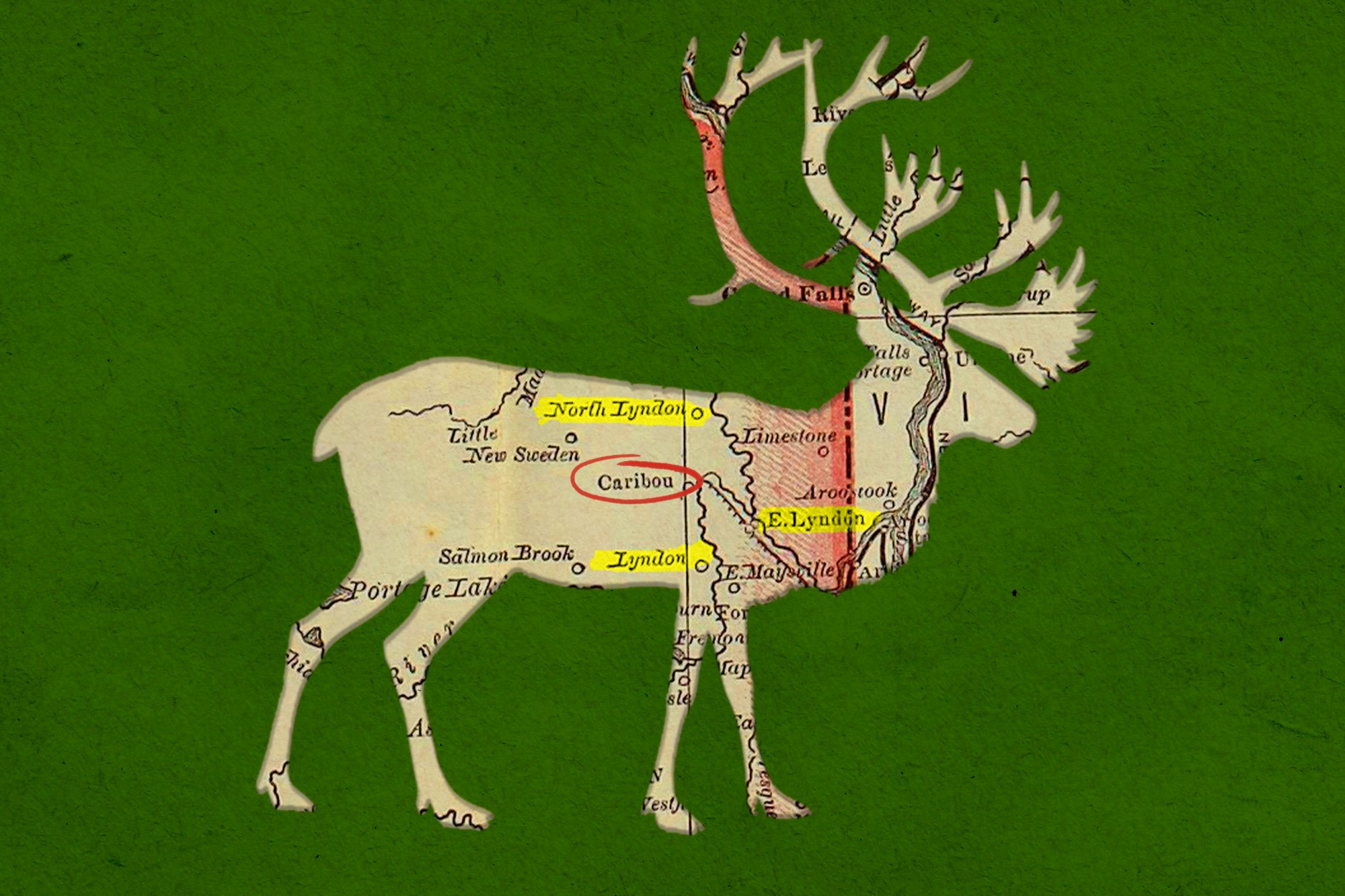
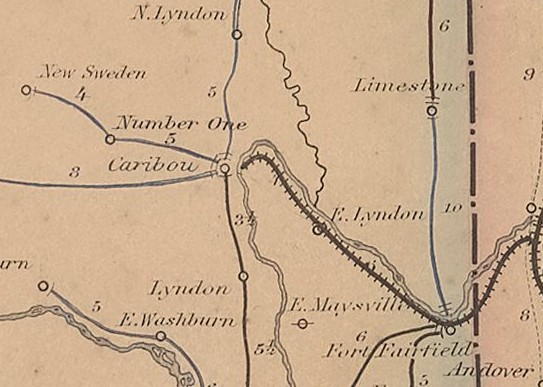
Several maps, including some made more than 20 years after the final name change, include both Caribou and Lyndon as settlements — along with North and East Lyndon. Those communities would gradually fade away and become part of Caribou.
Aside from the legend cited in White’s book, many believe the name Caribou likely just came from the animal’s presence in the area. Northern Maine once was home to large herds of thousands of woodland caribou — though they have since been driven to extinction in the state by logging, hunting and climate change.
But the back-and-forth between Lyndon and Caribou suggests the name fight had more to do with the burgeoning town’s identity. Shettleworth said it was plausible that even if the original settlers of Lyndon wanted to keep the town’s name, it was the businessmen in Caribou Village who had the money and connections to lobby state legislators to change it.
“I mean, people made fortunes off potatoes in Aroostook County,” he said.
Today, there are only a few remnants of Lyndon Township: The East and North Lyndon neighborhoods, the singular street sign marking the intersection of Main Street and Lyndon Street and the memories of a dwindling number of descendants of the original Letter H settlers — some of whom have recalled their ancestors remarking “Lyndon was a much prettier name than Caribou.”

We invite you to add your comments. We encourage a thoughtful exchange of ideas and information on this website. By joining the conversation, you are agreeing to our commenting policy and terms of use. More information is found on our FAQs. You can update your screen name on the member's center.
Comments are managed by our staff during regular business hours Monday through Friday as well as limited hours on Saturday and Sunday. Comments held for moderation outside of those hours may take longer to approve.
Join the Conversation
Please sign into your CentralMaine.com account to participate in conversations below. If you do not have an account, you can register or subscribe. Questions? Please see our FAQs.