

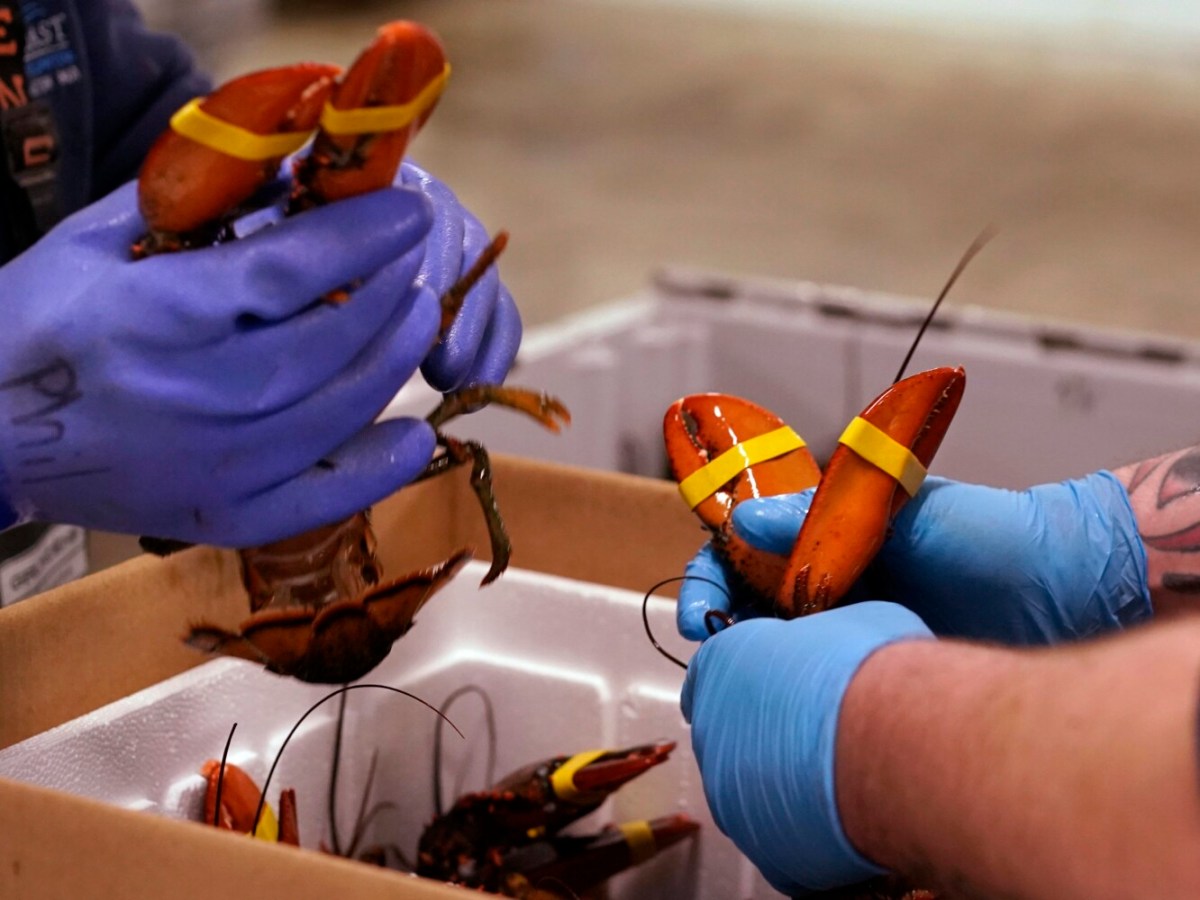
Maine is hoping Europeans will once again find a place for its lobster on their Christmas tables to offset dismal sales, with the value of year-over-year exports to the European Union down about 42% through September.
Maine dealers had sold 1.2 million pounds of lobster valued at about $10.5 million to the EU in the first nine months of the year — down from about 1.9 million pounds worth $18 million sold by that time in 2024, according to the latest U.S. Census Bureau trade data.
Dealers blame the lackluster sales on a combination of factors: a declining catch, the rising price of getting the lobster to market and international trade volatility, despite a deal struck over the summer to extend favorable tariff conditions for those exporting Maine lobster into Europe.
Only 12% of the 86 million pounds of lobster landed in Maine last year was sold overseas, but these sales remain important to the industry because they fetch high prices. A live hard-shell Maine lobster is now selling for up to $29 a pound in the Netherlands and southern Europe on the wholesale market, compared to about $11.75 within the U.S., according to market analysts.
Greenhead Lobster, based in Stonington, has sold 150,000 to 250,000 pounds of lobster to Europe over Christmas week in recent years, but owner Hugh Reynolds said his family-run operation will be lucky if it sells even 10,000 pounds this holiday.
Wade Merritt, the president of the Maine International Trade Center, is more optimistic.
“There remains a huge demand for seafood in Europe in countries like Spain, Italy, France and Portugal, especially around the holidays,” Merritt said. “We had strong sales last December, and I can’t see why we won’t have that again.”
Even the United Nations cited the popularity of this “festive delicacy” in Europe last Christmas.

“The demand for premium seafood, including lobsters, has remained high due to the increasing appreciation by consumers for fine-dining and gourmet experiences,” according to the organization’s European Price Report in January.
Despite past volatility, and threats of retaliatory duties on seafood and lobster in particular, the U.S. and Europe agreed to a trade deal in July that will continue to allow live lobsters from the U.S. to be sold into the 27-nation trade bloc without tariffs, as has been the case since 2020.
The deal also says processed U.S. lobster products can be sold into Europe without import taxes.
Without that agreement, Maine’s live lobster exports to Europe would have been hit with an 8% duty fee, while frozen lobster would have been taxed at up to 20%, according to Janine Bisaillon-Cary, who is Merritt’s predecessor at the state trade center and now runs Montserrat Group, an international trade consultancy.
This puts Maine lobster exporters on equal footing with their Canadian rivals, who have made tariff-free exports to Europe since 2017 and are the world’s biggest lobster producer. According to the United Nations, Canada provides the bulk of Europe’s lobster imports.
But federal export data shows Maine — which lands the vast majority of U.S. lobster — has been regaining European market share since it achieved tariff parity with Canada in 2020.
In 2017, the first year the U.S. lobster industry was hobbled by the Canadian trade differential, 19% of Maine’s Christmas exports went to Europe; last December, without that tariff handicap, 62% went to Europe.
If Christmas sales align with past years, much of Maine’s exported lobster will fly to Italy, Spain, France and Sweden. Dealers traditionally send their Christmas lobster in the bellies of passenger planes departing Boston, New York and Newark, New Jersey, but this year some dealers have told Merritt they have enough holiday sales to charter flights.

Some dealers like Curt Brown, co-owner of Bold Coast Seafood in Prospect Harbor, said they worry this could be the last good European holiday season for a while because the EU is enacting burdensome boat-to-market traceability requirements for all seafood products on Jan. 10.
One upside, however, is that the new requirements will apply to all seafood dealers, including those in Canada and Europe, he said.

We invite you to add your comments. We encourage a thoughtful exchange of ideas and information on this website. By joining the conversation, you are agreeing to our commenting policy and terms of use. More information is found on our FAQs. You can update your screen name on the member's center.
Comments are managed by our staff during regular business hours Monday through Friday as well as limited hours on Saturday and Sunday. Comments held for moderation outside of those hours may take longer to approve.
Join the Conversation
Please sign into your CentralMaine.com account to participate in conversations below. If you do not have an account, you can register or subscribe. Questions? Please see our FAQs.