
The 126th annual Christmas Bird Counts got underway on Dec. 14, with teams of birders attempting to count all the birds within a predetermined circle in a day. There are hundreds of these circles, a few dozen of which are just in Maine.
The count runs through Jan. 5, and different counts are run on different days. As I write this, only about half of the counts in Maine have taken place, but we are getting some preliminary numbers that give us some insights around what is happening with our birds this winter.
I need to start by acknowledging the question that comes up almost every fall and winter: “Where are the birds?” Every year, to varying degrees, we get an uptick in the number of questions coming in to Maine Audubon as people notice fewer birds and ask where they are, or what has happened to them. In most cases, this “absence” can be explained as seasonal variations. Many of our birds migrate, some change the food sources they are using, and some just become harder to detect. There is no need to be singing for a mate or territory in the winter, so birds become much quieter.
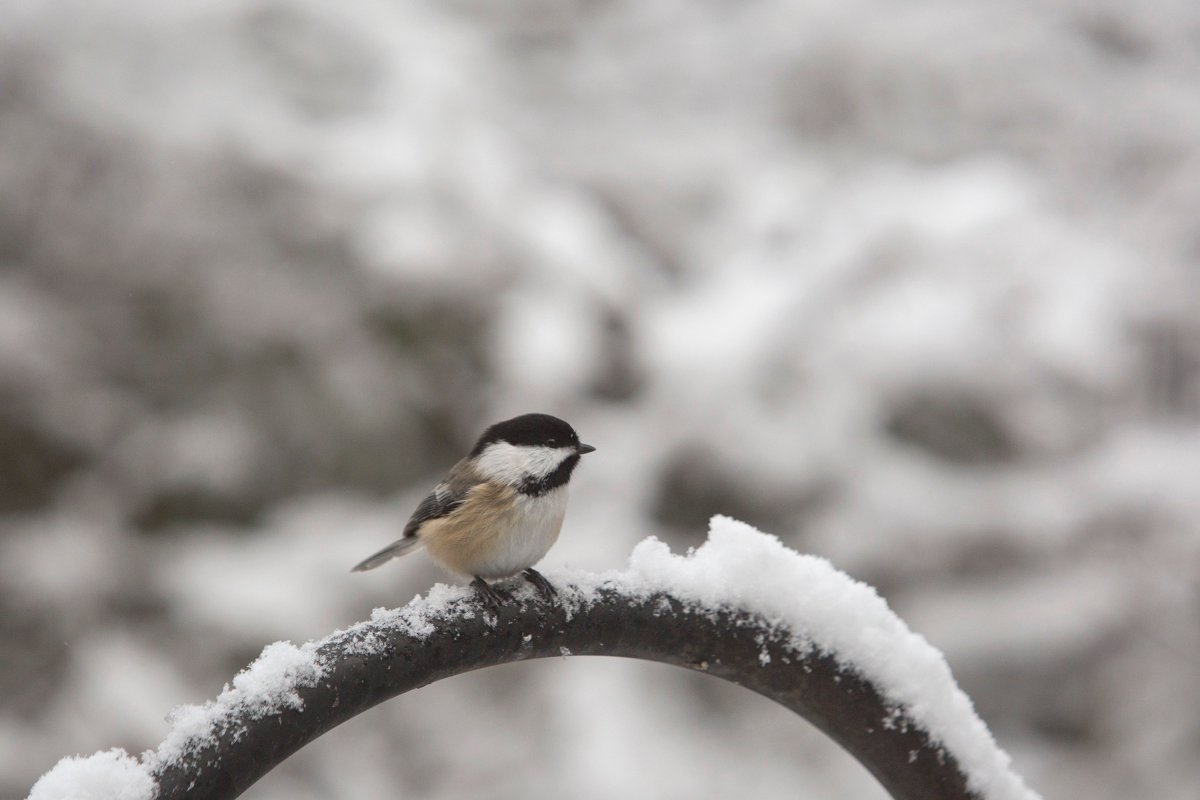
The common species people are asking about this year is the black-capped chickadee, one of our most common birds in the state. It seems people aren’t seeing as many of them as usual. There is no denying that one or a few people may notice a local decrease in the detection of a bird, but that can be biased by something like a new outdoor cat in the neighborhood or an abundance of natural food keeping birds from visiting your feeders. (Quick reminder: cats are the No. 1 anthropogenic cause of mortality in birds, killing over 2 billion birds in the U.S. annually, and we— as responsible cat parents — should keep them indoors.)
To remove those localized biases, we can look at chickadees on a larger scale using community science projects like Cornell’s eBird or Audubon’s CBC. On the Greater Portland count this year, there was a slightly lower count of chickadees than last year, but I bet that was mostly due to the unexpected snowstorm limiting our effort. Looking at statewide data from eBird to remove that single-day bias, chickadees are being reported on just as many lists as usual: around 55% of lists submitted during early December, compared to 52% in 2024, 50% in 2023, 46% in 2021, and only down from 2022s 59%. So they’re here.
We were expecting this to be a good year for many irruptive species, like redpoll, pine grosbeak, and other finches that come south (to Maine) from the boreal forest in years when their food, like cone crops and mountain ash berries, is in low supply. The annual Winter Finch Forecast, which looks at those food resources, predicted a large flight, so in November we were getting excited by some early reports. However, that excitement seems to have fizzled. There were none of the classic “winter finches” reported during the Greater Portland count.
Snowy owls were another species we thought were making a larger flight this winter, with a handful of November reports across the state, but that hasn’t materialized either; one snowy was reported during the Rockland CBC, and one was seen in Brunswick (not during the CBC), but it’s certainly not the irruption we were hoping for.
One last noteworthy observation is the lack of gulls around Portland. The three common species we have are the smaller ring-billed gulls, the ubiquitous American herring gull (the classic “seagull”), and the larger appropriately named great black-backed gull. Ring-billed gulls seem to be doing all right, with an uptick since last year (461 in 2025 compared to 367 in 2024), but they mostly breed north of Portland, typically on islands in rivers and lakes, then larger numbers winter around Portland. Herring and black-backed numbers have been steadily decreasing from the highs of when there were exposed landfills and more fish processing done in Portland, but in the last few years, their numbers have been plummeting. We know avian influenza has been hitting our nesting gulls pretty hard in the summers, ever since it was detected in Maine in 2022, and these numbers seem to be a haunting measure of that: American herring gull numbers on the Greater Portland count have dropped. In 2023, there were 1,320; in 2024 there were 1,055, and only 784 were counted in 2025. Great black-backed gulls, which have always been less abundant, have dropped from 178 in 2023, to 78 in 2024, and now 40 in 2025.
If there is one important takeaway from this, I think it is the importance of these various community science projects in monitoring all birds. While trained biologists and scientists can focus on the threatened and endangered species, we can all play an important role in helping monitor our backyard birds and commonly encountered species through efforts like the CBCs and submitting sightings to eBird. Consider downloading the eBird app and reporting the birds you see in your backyard on a snowy day. Spend just five or 10 minutes and remember that every bird counts.
Have you got a nature or wildlife question of your own? It doesn’t have to be about birds! Email questions to [email protected] and visitwww.maineaudubon.org to learn more about birding, native plants, and programs and events focusing on Maine wildlife and habitat. Maine Audubon Staff Naturalist Doug Hitchcox and other naturalists lead free bird walks on Thursday mornings starting at 8 am, at Maine Audubon’s Gilsland Farm Audubon Sanctuary in Falmouth.
Comments are not available on this story. Read more about why we allow commenting on some stories and not on others.
We believe it's important to offer commenting on certain stories as a benefit to our readers. At its best, our comments sections can be a productive platform for readers to engage with our journalism, offer thoughts on coverage and issues, and drive conversation in a respectful, solutions-based way. It's a form of open discourse that can be useful to our community, public officials, journalists and others.
We do not enable comments on everything — exceptions include most crime stories, and coverage involving personal tragedy or sensitive issues that invite personal attacks instead of thoughtful discussion.
You can read more here about our commenting policy and terms of use. More information is also found on our FAQs.
Show less