

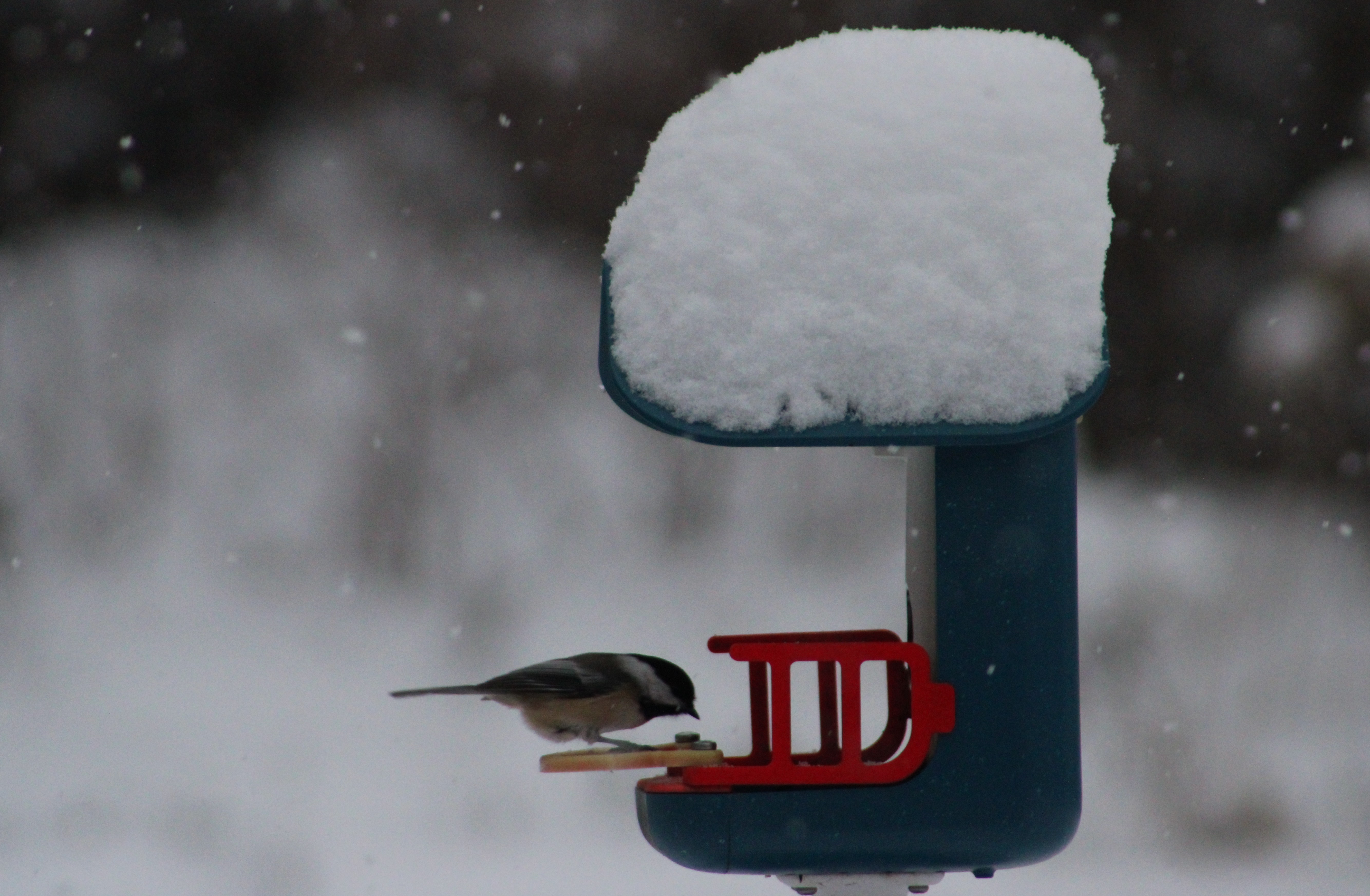
Winter in Maine may be long, dark and cold, but it is also one of the most rewarding seasons for birdwatching.
Across the state, from coastal towns like Portland and Boothbay to interior communities such as Farmington and Jay, cold-weather species arrive, behaviors shift and familiar birds become easier to observe in the quiet of the season. For many residents, getting outside to look for birds is both a mental-health boost and a way to stay connected with the natural world when the days are shortest.
Maine Audubon notes that “birds are active year-round in Maine, and winter offers some of the most exciting opportunities to observe them,” a reminder that the season brings its own highlights even as many species head south. Experts from both Maine Audubon and the Maine Department of Inland Fisheries & Wildlife describe a reliable mix of winter birds across the state, including black-capped chickadees, red-breasted nuthatches and blue jays.
Fewer species, but special ones
“Winter does have its benefits for spotting birds, like the lack of leaves in trees, but that usually comes at the cost of having fewer species around,” Maine Audubon staff naturalist Doug Hitchcox said. “Many of our breeding birds, like the showy warblers, tanagers and vireos, all migrate south (to Central and South America) for the winter.”
At the same time, he said, Maine gains a different cast of winter visitors.
“We do get a bunch of new species for the winter, especially beautiful sea ducks like long-tailed and harlequin ducks,” Hitchcox said.
Birds also become more visible in backyards and neighborhoods.
“Birds are more active at feeders, since there is less natural food available on the landscape, so that helps increase detections compared to summer when they are mostly eating insects,” he said.
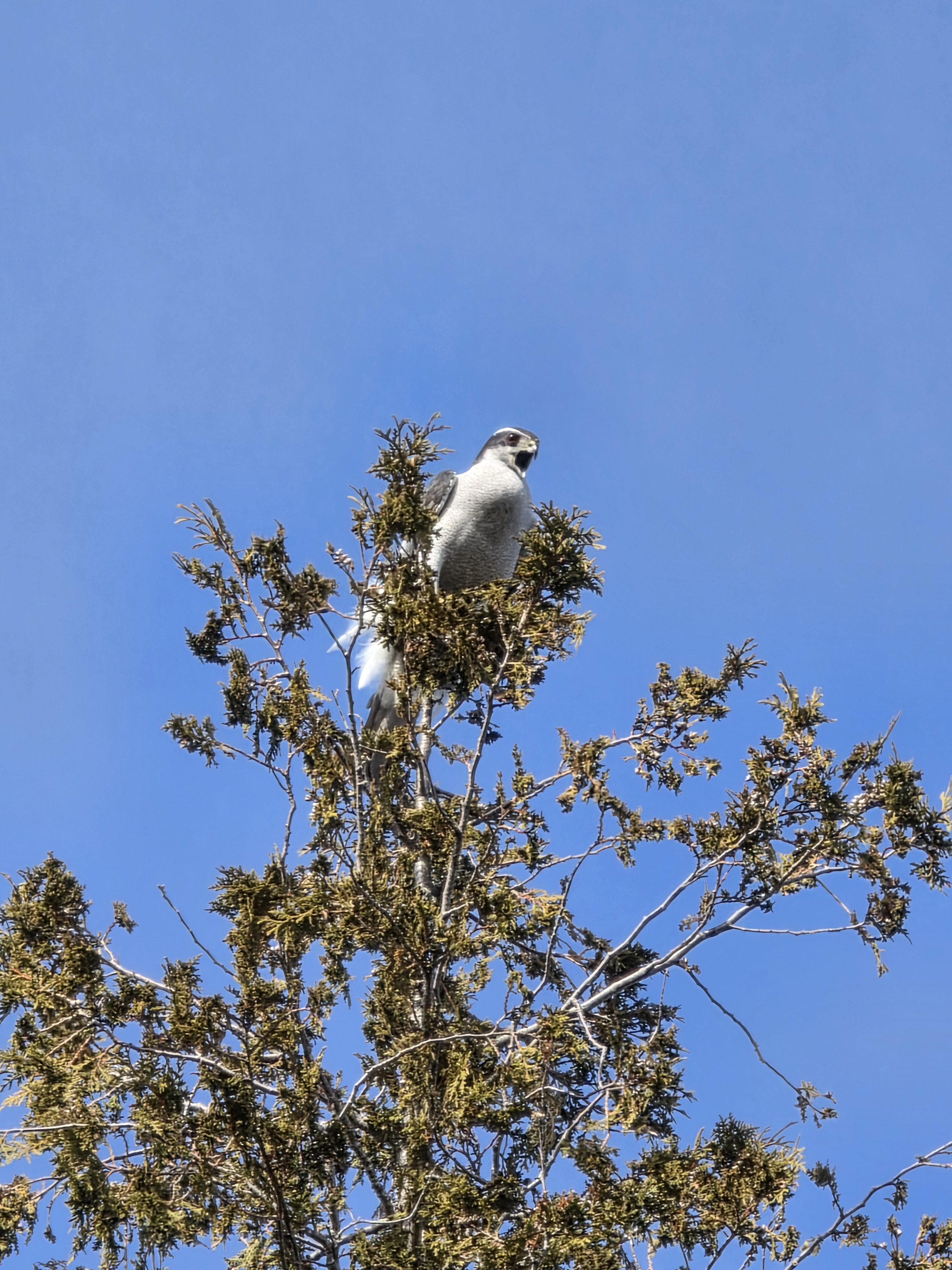
Between forests, fields and wetlands, Maine Coast Heritage Trust preserves important wintering habitat for hardy songbirds, woodpeckers and raptors such as northern goshawks and barred owls, Kirk Gentalen, regional stewardship manager for Maine Coast Heritage Trust, said.
“Some of the birds we see in winter are year-round residents, such as golden-crowned kinglets, black-capped chickadees, eastern bluebirds and hairy woodpeckers,” Gentalen said. “Hardy birds.”
Loons leave inland lakes as soon as ice begins forming. According to MDIFW, common loons migrate to Maine’s coastal waters for the winter, where they remain until spring. They also molt into their nonbreeding plumage — gray, muted and harder for casual observers to recognize than the bold black-and-white pattern seen on summer lakes.
Gentalen noted that while many birds “fly south for the winter,” Maine is actually “south enough” for certain northern specialists.
“For some species, such as black-backed woodpeckers, snow buntings, and waterfowl species such as long-tailed duck and red-breasted merganse, the Maine coast is comfortable enough to be ‘south,’” he said. “They head no further.”
In the Katahdin region, some high-elevation species pass through during fall migration but do not overwinter on the summit. The American pipit, for example, can be seen during migration seasons, but MDIFW notes they do not remain on Mount Katahdin year-round due to extreme weather and limited food.
Some species appear in fluctuating numbers. Maine Audubon reports that red-breasted nuthatches sometimes “irrupt,” moving into Maine in greater numbers when cone crops fail farther north, and feeder activity spikes during those years. Irruption years can also bring dramatic numbers of finches into the state. An irruption is a sudden, unpredictable movement of northern birds into new regions, often driven by limited food supplies farther north.
“This winter is forecast to be an ‘irruption’ year for finches, typically found much further north,” Jason Latham of Rangeley Lakes Heritage Trust said. “Birders should keep an eye out for large flocks of red polls, red- and white-winged crossbills, evening grosbeaks and pine grosbeaks. These finches add to the winter birding opportunities all across Maine. Enjoy them this year because these ‘irruption’ years are intermittent.”
Gentalen said irruptive species such as Bohemian waxwing, pine grosbeak and snowy owl sometimes appear on Maine Coast Heritage Trust preserves during winters when food supplies collapse farther north.
“These species are referred to as irruptive and are not regular visitors,” he said. “Sometimes, several years may pass between irruptive events that force the birds to come south in search of food species.”
Inland woods to western mountains
On Rangeley Lakes Heritage Trust preserves, Latham said winter birders can count on familiar species and a few northern specialties.
“Birders can expect to see more common species such as red-breasted nuthatches, black-capped chickadees, pine siskins, dark-eyed juncos, purple finches, blue jays, ravens, downy and hairy woodpeckers, pileated woodpeckers and more,” he said. “In the Rangeley Lakes Region, there is also a good chance that birders can catch a glimpse of less common species like boreal chickadees, Canada jays, black-backed woodpeckers, spruce grouse, etc.”
“The most interesting bird for me is the Canada jay,” he added. “They are curious, friendly and have amazing adaptations to survive in the boreal forests.”
Many wintering birds loosen territorial behavior and instead travel in mixed-species flocks, Gentalen said.
“Several species of birds roam together in search of food while tapping into the safety in numbers,” he said. “Listening for chickadee contact calls is a great way to locate a mixed flock and then distinguish the other species within it.”
Gentalen also encouraged winter birders to dress appropriately, read the weather and seek sheltered locations when winds are harsh.
“Winter winds and conditions can limit your comfort, and thus your time spent outside,” he said. “Take advantage of sunny, warm, sheltered spots, and your time outside increases and so do your observations.”
He recommended practicing with binoculars at home to build comfort before heading outdoors and familiarizing yourself with field guides or local reporting apps such as iNaturalist.
“Going with a small group or by yourself increases listening, a key winter skill,” he said.
Many of Maine’s breeding songbirds, especially “our neotropical warblers,” complete “long, arduous migrations to Central and South America for food and to escape harsh winter conditions,” Latham said. The birds that stay remain active all season.
“Winter birders can take advantage of the bare, deciduous tree species during winter and snow cover, making birds easier to spot,” he said. Birders can look for mature red spruce, white spruce and balsam fir, where finches such as red- and white-winged crossbills feed on conifer seeds. He also recommends watching snags, standing dead trees that birds use for perching and foraging, as well as open grassy areas, fruiting shrubs and roadsides, “where birds can be easily seen collecting grit for their crops.”
Gentalen agreed that food drives much of winter bird movement.
“American robins and cedar waxwings can overwinter in Maine if winterberry shrubs are brimming,” he said. “Bayberry fruit allows yellow-rumped warblers to overwinter as well. It’s the food, not so much the weather.”
Latham said Mingo Springs Birding Trail and Hunter Cove Uplands are “two good places to start” for winter birding in the Rangeley region.
“They contain both softwood and hardwood trees and are easily accessible,” he said.
Along the coast and Midcoast, Gentalen recommends Woodward Point Preserve in Brunswick, Cousins River and Marsh Preserve in Yarmouth, Erickson Fields Preserve in Rockport, and Witherle Woods Preserve in Castine. He said the Maine Land Trust Network is a useful statewide resource for locating winter-accessible land trust properties close to home.
Across other interior towns, including Farmington, Jay, Livermore and Wilton, winter residents such as chickadees, nuthatches, juncos and woodpeckers remain active in woods, neighborhoods and at backyard feeders.
Sea ducks, loons and coastal coves
Along the coast, winter brings a different landscape. Waterfowl such as common eiders, long-tailed ducks, scoters and red-breasted mergansers concentrate in places such as Harpswell, Portland Harbor, Acadia’s coves and Down East bays. Some of the most sought-after winter species can be found on the Schoodic Peninsula.
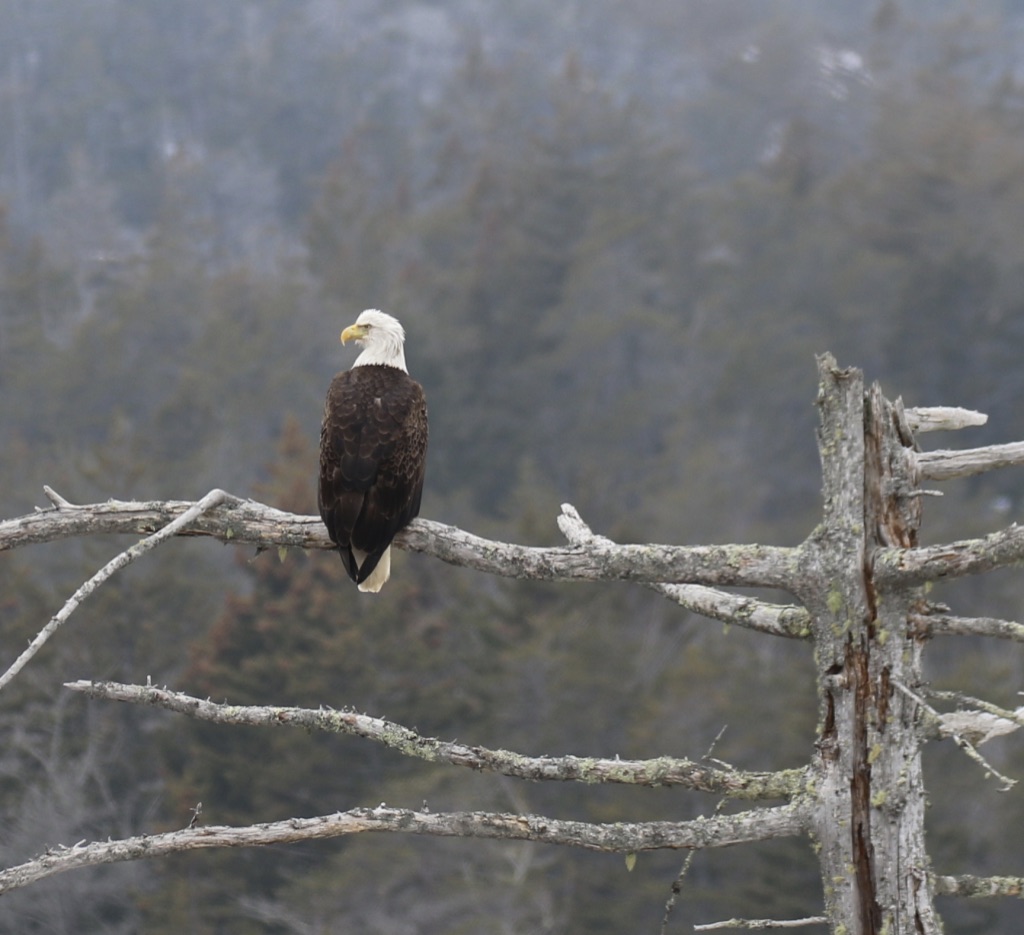
“Noteworthy species, along the Schoodic Auto Loop, include harlequin duck, purple sandpiper, great cormorant and rough-legged hawk,” said Seth Benz, senior bird engagement specialist with Schoodic Institute at Acadia National Park. “Along the entire coast of Maine, bald eagles are fairly common, and in irruption years, snowy owls have been seen. Alcids such as dovekie and thick-billed murre are possible. Many birders search for king eider.
“And all three species of loons — common, red-throated and pacific (rarest of the three) — are usually seen somewhere. Sea ducks, such as Barrow’s goldeneye, are highly sought.”
Benz said the coast’s shape helps explain why so many winter birds concentrate there.
“The irregular shape of the immediate coastline with its coves, bays and headlands makes for a variety of water-depth habitats and out-of-the-way secluded spots,” he said.
Town harbor areas also support a variety of gulls in winter.
“Access to nearshore coastal waters and beaches is relatively good,” he said. “Birdwatchers don’t have to stray too far from the warmth of their autos. Compared to inland birding in winter, the waters within eyeshot of the coast offer greater variety.”
For people looking for specific locations, he called the Schoodic Auto Loop “an outstanding destination.”
“It offers a number of wayside pull-offs from which to scan the ocean,” Benz said. “Schoodic Point, Arey Cove and Blueberry Hill Overlook along the eastern half of the auto loop are must-stop locations.”
10 birds that define the season
Black-capped chickadee – Common statewide in every habitat from Portland to Aroostook County.
Red-breasted nuthatch – Slate-blue wings, rusty chest, bold eye stripe, notable in irruption years.
White-breasted nuthatch – More common in central and southern Maine hardwood forests and neighborhoods.
Blue jay – Bright blue feathers, loud calls, mimics hawks at feeders.
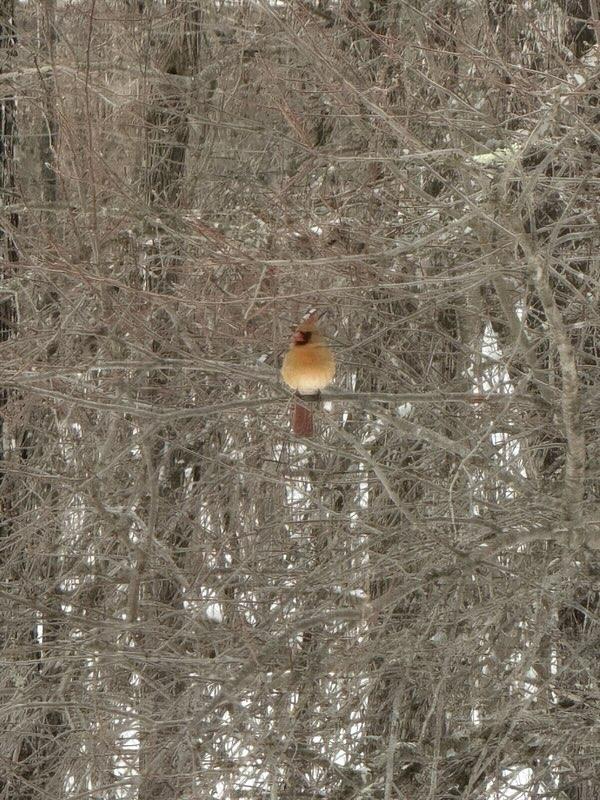
Northern cardinal – Brilliant red males, warm tan females with red accents.
American goldfinch – Winter plumage turns olive-gray while retaining black-and-white wings.
Dark-eyed junco – “Snowbirds” that arrive in fall and remain at feeders and forest edges.
Downy and hairy woodpeckers – Black-and-white patterns, red head patch on males.
Common loon (winter plumage) – Smooth, gray-and-white appearance along the Maine coast.
Ruffed grouse – Mottled plumage, dramatic wing prints, snow-roosting behavior.
Reading tracks in the snow
Snow reveals clues from many of Maine’s common winter birds. Chickadees leave delicate paired tracks close together, while nuthatches create zigzag trails between trunks and the ground. Juncos leave tidy, straight patterns around ground feeding spots. Woodpeckers sometimes leave landing marks from their stiff tail feathers. Cardinals produce larger, heart-shaped prints near shrubs. Blue jays leave deeper, wider-set tracks with wing impressions. Grouse footprints are heavy and triangular, with wing patterns where they launched from a hidden snow roost.
These patterns turn Maine’s winter landscape into a daily diary for birders, revealing who visited even when the birds are already gone.

Feeders come with responsibility
For homeowners who want to support birds through the cold months, organizations recommend a few simple steps. Maine Audubon says, “Black oil sunflower seeds are one of the best all-around foods for attracting a variety of species,” and encourages using suet, nyjer and peanuts as well. Both Maine Audubon and MDIFW caution against offering bread or processed foods, which provide little nutrition and can contribute to health problems.
“Yes, we often say that bird feeding comes with more responsibility than most people realize, primarily in the need to keep the feeders clean,” Hitchcox said. “Any place where birds congregate increases the chances of disease transmission, and feeders can bring many species in high numbers together.
“Tube feeders, which have many small ports for extracting seeds, are especially troublesome for finches in spreading avian conjunctivitis. We recommend making a regular habit of cleaning feeders with a diluted bleach solution (vinegar is an OK substitute), probably every couple of weeks but more frequently if they are getting wet or warm (in summer) when bacteria can grow faster. If it looks gross to you, then it is gross for them.”
Because warm spells can wake bears in parts of the state, wildlife officials advise placing feeders only during the coldest months, cleaning up spilled seed and bringing feeders indoors at night. Homeowners who want a lower-risk option can support birds with native shrubs, brush piles and open water during safe temperature windows.
“We really encourage Mainers to think of bird feeders as seasonal tools,” Hitchcox said. “Deep winter is safest, when bears are fully asleep, but during shoulder seasons it’s better to rely on native plantings, brush piles, heated water and clean ground feeding rather than leaving seed out overnight.”
Drawing tips for keeping a winter bird journal
Keeping a winter bird journal doesn’t require artistic skill, only attention. Start by noting the date, time, weather and location of each sighting, then add a few words about behavior. Many birders sketch simple outlines rather than detailed feathers; focusing on overall shape, tail length, wing bars, and just two or three colors captures most species accurately. Observers can also record feeder activity, unusual calls or notable changes before or after storms. Some Mainers keep yearly journals and compare patterns, creating a personal record of irruptions, migration timing and memorable winter observations.
Sketching trains the eye to slow down and observe posture, shape and motion. A pencil outline, a few color notes and a quick observation about behavior can turn a five-minute pause into a memorable winter study.
The Handbook of Nature Study
A timeless winter birding companion is The Handbook of Nature Study, written by Anna Botsford Comstock, an early leader in nature education at Cornell University. First published in 1911 and still widely used across New England, the book encourages slow, thoughtful outdoor observation rather than textbook memorization. Its detailed entries on winter birds, tracks, feathers, trees and seasonal behavior match New England’s rhythm of snow and short daylight.
Many Maine homeschoolers, naturalists and field educators still use the book because its gentle structure fits winter birding so naturally: short walks, quick sketches, curiosity-driven questions and notes about what is happening right outside the door. A journal paired with Handbook of Nature Study turns even a modest winter walk into an outdoor class, a meditation and a wildlife record all at once.
Where to go — from neighborhoods to land trusts
Maine offers a wide range of accessible winter birding locations, from quiet forests to lively coastal hotspots. Along the coast, places like Portland Head Light, Biddeford Pool, Owls Head, Lubec and Acadia’s shoreline provide reliable views of loons, eiders, scoters and long-tailed ducks.
Inland birders can explore forested trails and quiet neighborhoods in Farmington, Jay, Livermore and Wilton, where chickadees, nuthatches, woodpeckers and juncos stay active all season. Farmington is one of many Maine towns to host a Christmas Bird Count circle coordinated through Maine Audubon, part of a century-long community science effort that draws thousands of volunteers across the hemisphere each year to track winter bird populations and long-term trends.
This year, Farmington’s CBC began on Dec. 14. During each one, volunteer teams survey a designated 15-mile-wide circle, identifying and counting every bird they see or hear to create a long-term, comparable dataset used by researchers across North America.
Across western Maine, winter birding thrives in the foothills and small towns that anchor the region. Neighborhoods, river corridors and community trails offer especially reliable sightings of chickadees, nuthatches, woodpeckers, cardinals and winter finches, making places like Farmington, Wilton, Livermore and Jay dependable stop-ins for cold-season bird activity. The mix of hardwood forests, spruce–fir stands and open wetland edges create accessible habitat for birders of all ages, whether they’re walking local paths, exploring nearby land trust preserves or simply watching feeders from home.
The Perham Stream Birding Trail near Rangeley offers a mix of habitats and easy year-round access, while the broader Rangeley Lakes Region is known for boreal forest birding, including occasional sightings of northern specialists. Grafton Notch in Newry and Mt. Blue State Park in Weld also provide good winter habitat for songbirds and mixed-forest species.
Trails around Titcomb Mountain, the Whistle Stop Rail Trail, French Falls Park in Jay and snowshoe routes in the western foothills offer opportunities to spot grouse tracks, woodpeckers, mixed feeding flocks and occasional irruptive finches moving through evergreen forest. Land trust preserves across Maine, including those in Freeport, Falmouth, Bethel, Jay, Farmington, Rangeley and the Maine Highlands, maintain winter-accessible trails that make cold-weather birding safe, easy and family-friendly.
Lewiston’s Thorncrag Sanctuary, maintained by the Stanton Bird Club, offers more than 3 miles of winter-accessible trails where birders can enjoy woodpeckers, chickadees, finches and quiet forest habitat.
“Maine’s land trusts offer safe, easy winter access, so birding becomes something families can enjoy together without needing expensive gear,” Latham said.
The Audubon’s 126th annual Christmas Bird Count is another way Mainers stay connected to winter wildlife. Running this season from Dec. 14 through Jan. 5, 2026, it enlists thousands of volunteers across the Western Hemisphere to count every bird they see or hear, a community science tradition more than a century old. The data provides insight into shifting bird populations and habitat health, helping conservation groups guide their work. Farmington’s count begins Dec. 14, and local chapters such as Western Maine Audubon encourage new participants. Historical species data, local count circles, and ways to get involved can be found through the National Audubon Christmas Bird Count website.
Why winter birding matters
Across Maine, wildlife officials and conservation groups encourage residents to get outside even briefly during winter. Maine Audubon stresses that time outdoors supports mental health and strengthens people’s connection to the natural world, benefits that become especially important during the darkest part of the year.
“It is easy to get cooped up inside next to the wood stove when the mercury drops,” Latham said. “Our trails offer the community the opportunity to get outside … and bird.”
“Even 10 minutes watching chickadees or juncos on a quiet trail can lift your mood during the darkest part of winter,” Hitchcox said. “Winter birding gives people a reason to bundle up, step outside and stay connected to the rhythms of the season.”
From scanning for sea ducks along the Portland waterfront, to listening for chickadees in a Wilton backyard, to watching finches and crossbills move through western conifers, winter birding remains one of Maine’s most accessible outdoor activities.

Comments are not available on this story. Read more about why we allow commenting on some stories and not on others.
We believe it's important to offer commenting on certain stories as a benefit to our readers. At its best, our comments sections can be a productive platform for readers to engage with our journalism, offer thoughts on coverage and issues, and drive conversation in a respectful, solutions-based way. It's a form of open discourse that can be useful to our community, public officials, journalists and others.
We do not enable comments on everything — exceptions include most crime stories, and coverage involving personal tragedy or sensitive issues that invite personal attacks instead of thoughtful discussion.
You can read more here about our commenting policy and terms of use. More information is also found on our FAQs.
Show less