

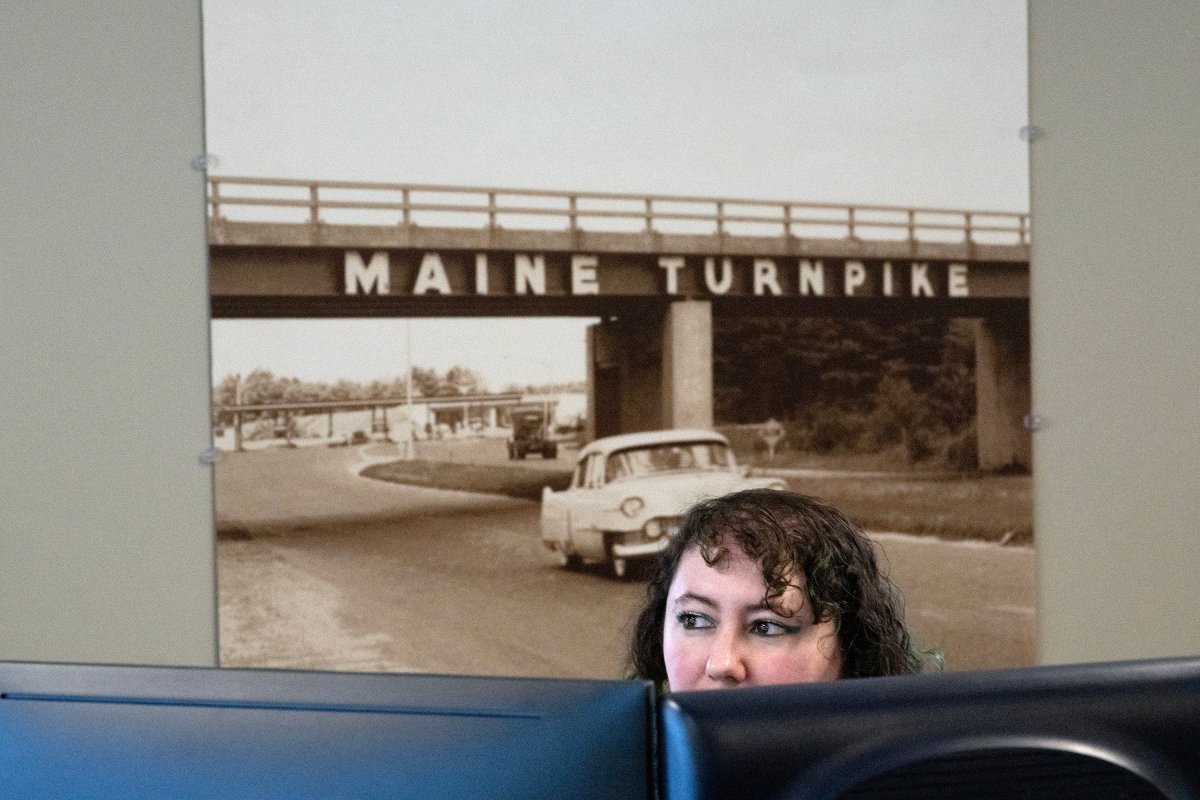
PORTLAND — Snow had been falling for about an hour by the time the first speed reductions hit the Maine Turnpike Tuesday afternoon.
The request came in a couple minutes after 4 p.m., and turnpike dispatcher Cheslee Duval was among the first to know. In an instant, Duval — who had come in on what should have been her day off — pressed a button at her desk, sending a series of tones to radios from Augusta to Kittery, signaling to workers that they should listen closely.
“Hi, headquarters to all toll and maintenance personnel,” she spoke into the radio at about 4:05 p.m. “Be advised: speeds have been reduced to 45 miles per hour from the New Hampshire state line to exit 19 in Wells due to snow. No over-limits are permitted in that area.”
She repeated the message over a second channel, this one shared with the Maine State Police.
Across the roughly 400 square-foot room, Shawn Jones, another dispatcher, prepared a written warning, which he would beam, via dozens of screens, to the thousands of drivers making their way home during the afternoon rush.
“And, done,” Jones announced at 4:08 p.m. By then, Nick Meehan, the third dispatcher on duty, had already sent out an email alert — timestamped one minute earlier.
Their night was just getting started. So was the storm.
From a little room in the back of the Maine Turnpike Authority’s central office, a handful of dispatchers and supervisors manage traffic along the road’s entire 109-mile stretch. They field calls from drivers, track pavement temperatures, and when instructed to by maintenance staff or the state police, reduce speeds to 45 mph on some or all of the road.
It’s their job to make sure everyone is on the same page when poor conditions hit.
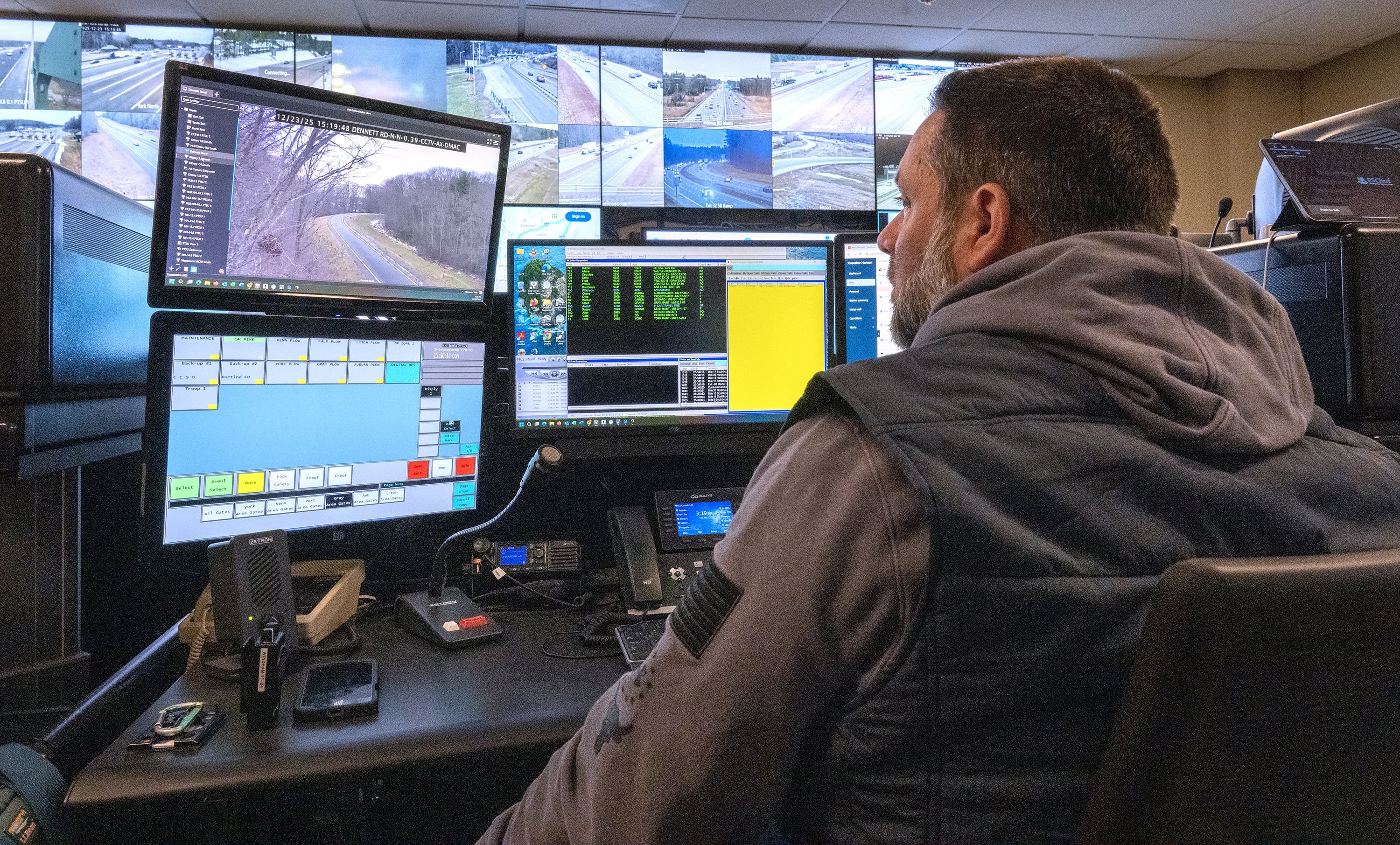
“Anything that’s signage, blinky lights, alerts: we control all that from here,” said Jaime Tishim, the traffic management center’s supervisor. She spoke over ringing phones and beeping radios. “We are here, and we wait for whatever else they need. … There’s always someone in this room.”
On the office’s back wall, a massive array of screens displayed traffic feeds from more than three dozen cameras along the turnpike. Another pair of monitors flickered with traffic data from Waze and Google Maps. By 4:30 p.m., things still seemed to moving normally, with no major slowdowns reported.
Tuesday’s system was expected to drop between 3 and 6 inches of snow onto most of Maine, with as much as 9 inches of snowfall anticipated along the Midcoast, according to the National Weather Service. Several cities and towns along the turnpike were forecast to see more than 6 inches as the flurries continued into Wednesday morning — just in time for a Christmas Eve rush.
To cope with winter weather, the turnpike authority relies on a steady flow of plow trucks, salt and radio messages.
Generally speaking, the agency plans to produce and use about 160,000 gallons of salt brine each winter, but the exact amount that crews spread during a given storm depends on the temperature, type of precipitation and the level of traffic, said spokesperson Rebecca Grover.
Meanwhile, a team of about 90 maintenance employees prowl the pavement, following one of more than 80 plow truck routes. On average, each plow route, covering about 13 miles, takes about 45 minutes to complete, according to the turnpike authority. All that equipment lives at one of seven maintenance yards up and down the turnpike, Grover said.
In contrast to holidays like Thanksgiving and the Fourth of July, which tend to bring consistent traffic to the turnpike on the days before and after, Christmas and New Year’s Day can be difficult to predict, since travelers generally have more time off and more freedom to choose their travel days, Grover said. That can leave more room, and need, for dispatchers to improvise and triage as issues come up.
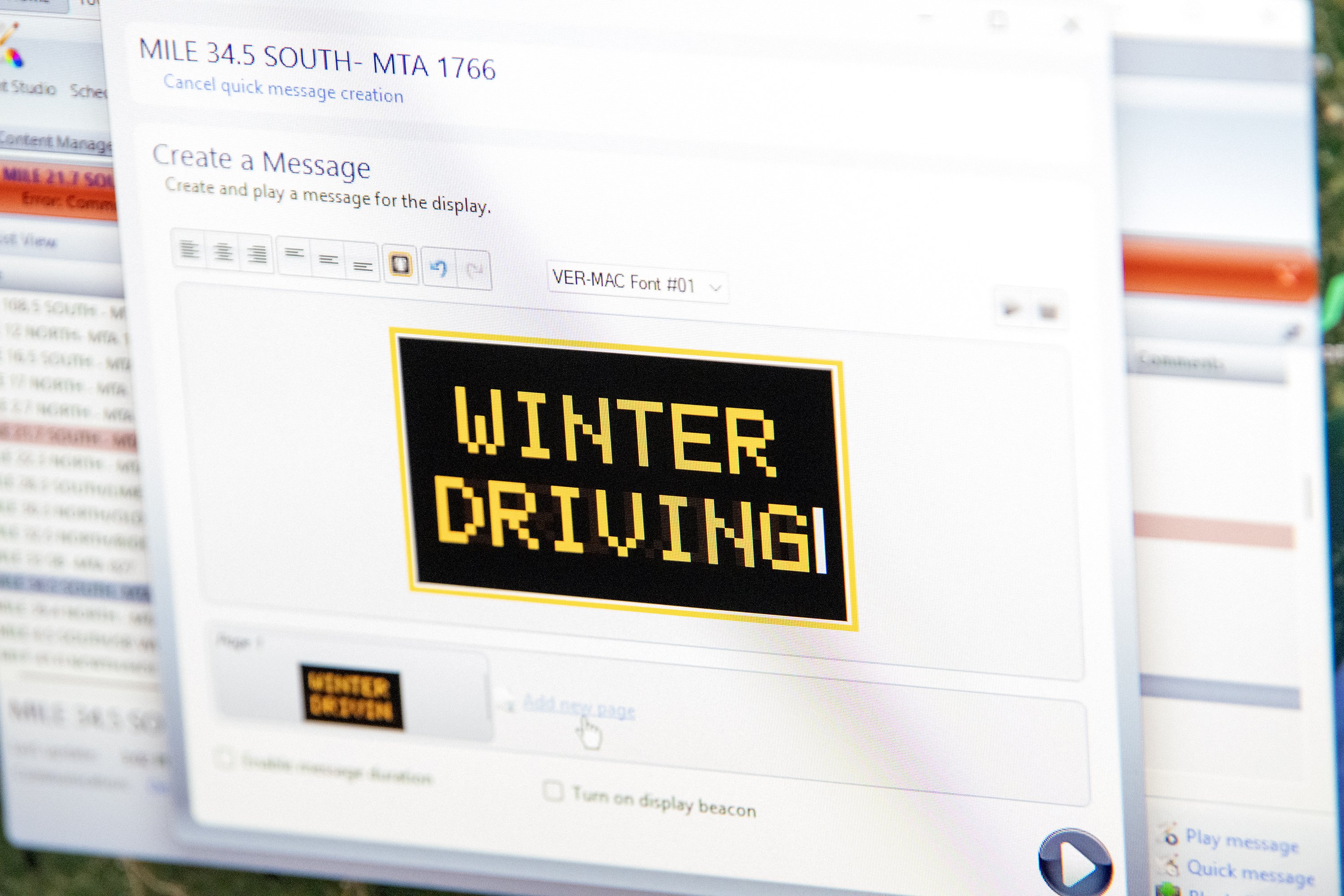
As he watched cars rush past the traffic cameras, Jones said it’s easier to reduce speeds on the entire turnpike than any single section.
“Then it’s just a button we press,” he said.
They hit that button sometime before 5:50 p.m.
