

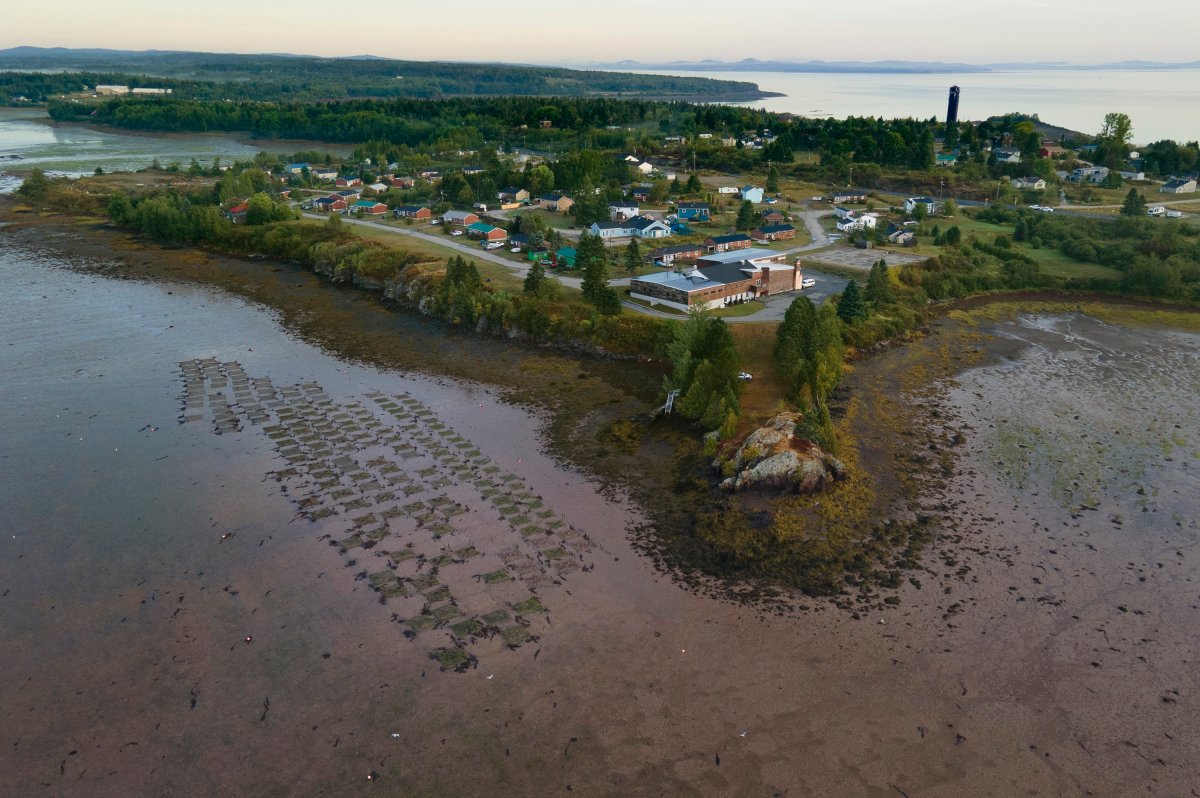
At first blush, the Passamaquoddy Tribe’s sports betting enterprise seems likely to deliver life changing money. The partnership between the tribe and DraftKings has brought in more than $100 million in gross revenue since the beginning of 2024.
In Sipayik, one of two Passamaquoddy reservations in Maine, some are demanding to know where that money is. In the absence of clarity, they are turning on Chief Amkuwiposohehs “Pos” Bassett.
“He doesn’t want to distribute it, and he hasn’t,” said Amanda Newell, who submitted a petition in early November to recall Bassett from office. “He’s kept that money that’s actually ours.”
There’s little evidence available to support that claim. Several factors unrelated to the chief’s governing could explain the lack of a rapturous windfall for individual tribal members in Sipayik (Pleasant Point).
But it is the sports-betting venture that has sparked the latest flashpoint in a yearslong political saga for this rural Down East community.
Sipayik is led by a tribal governor, typically referred to as the chief, and six councilors under a constitution adopted after a fraught deliberation in 1990. Of the roughly 2,200 enrolled tribal members on the Sipayik census, 620 live on the reservation.
The tribe has had seven chiefs in 10 years. Four were successfully recalled from office. Bassett seemed at risk of becoming the fifth, though he’s headed off a recall effort for now.
“This is a situation that resembles Groundhog Day politics,” said Fred Moore, who was chief from 2014 until 2016, when he was recalled.
Some see the swirling allegations around gambling revenue as little more than political fodder tossed out by ambitious opponents with scores to settle.
Maine lawmakers in 2022 legalized sports betting as an exclusively tribal right. The business launched the next year, and the Passamaquoddy Tribe partnered with the gambling giant DraftKings to operate it.
The partnership raked in $49 million in gross revenue last year and generated $51.6 million through November of 2025.
The state collects 10% of that. DraftKings keeps 40% of the revenue, according to an internal letter penned by Bassett, circulated to tribal members and reviewed by the Press Herald. This is the maximum share the operator may retain, per state regulations.
That leaves nearly $26 million this year for the Passamaquoddy Tribe and its 3,400 members, over half of whom live outside the two Maine communities.

Where that money is going, how much is spent on advertising and promotions, and how much is reinvested into tribal enterprises is unclear. When tribal members have requested clarity, they say they are rebuffed — further fueling the suspicion of wrongdoing by their leaders.
Bassett did not respond to requests for comment, but has assured the community in letters reviewed by the Press Herald that “we are not hiding money” and “the majority of our dollars are spent on the people.”
Other political tensions are simmering beneath the surface, too.
In April, Vice Chief Ernie Neptune was stripped of his administrative duties by the council after an attorney hired by the tribe concluded he had sexually harassed several community members and co-workers. The matter was referred to the Washington County Sheriff’s Office for investigation, which is ongoing.
Neptune has become a leader in the effort to recall Bassett. Were Bassett to lose his job, Neptune could be appointed by the council to his office. (Neptune said his work to recall Bassett is unrelated to that fact.)
Council Member Melissa Francis said she ruffled the feathers of Bassett’s administration when she challenged the distribution of emergency rental assistance funds to the chief’s aunt. Francis also supports Bassett’s recall.
The division is hard to watch for Stephen Bassett, a tribal member who lives in Virginia.
“I’m a Passamaquoddy without a tribe,” he said.
Moore, the former tribal chief, said the discord can be attributed to a weak and ineffective tribal constitution.
“We have a constitution that is not worth the paper it’s written on,” he said.
Tribal members seeking to make their leaders more transparent have few ways to do so, Moore noted.
“They see no recourse but to kick everyone out and start all over again,” he said.
And that’s bad for business. Turmoil in the chief’s office can slow the tribe’s work, much of which is directed toward existential issues such as climate change resiliency, language revitalization and marine species restoration.
Even the recall process isn’t clear to some.
The constitution states that a valid petition must bear the signatures of “at least fifty percent of the number of persons voting at the last Pleasant Point Gubernatorial Election.”
However, attorney Craig Francis told tribal members at a meeting in late November that the recall petition needed to contain the signatures of half of the specific individuals who had voted in the previous election, rather than half of the number of voters. (Francis did not respond to a request for comment.)
Under Francis’ ruling, the number of valid signatures on Amanda Newell’s petition dropped from 191 to 85.
The recall vote was never held.
Reuben M. Schafir is a Report for America corps member who writes about Indigenous communities for the Portland Press Herald.

We invite you to add your comments. We encourage a thoughtful exchange of ideas and information on this website. By joining the conversation, you are agreeing to our commenting policy and terms of use. More information is found on our FAQs. You can update your screen name on the member's center.
Comments are managed by our staff during regular business hours Monday through Friday as well as limited hours on Saturday and Sunday. Comments held for moderation outside of those hours may take longer to approve.
Join the Conversation
Please sign into your CentralMaine.com account to participate in conversations below. If you do not have an account, you can register or subscribe. Questions? Please see our FAQs.