
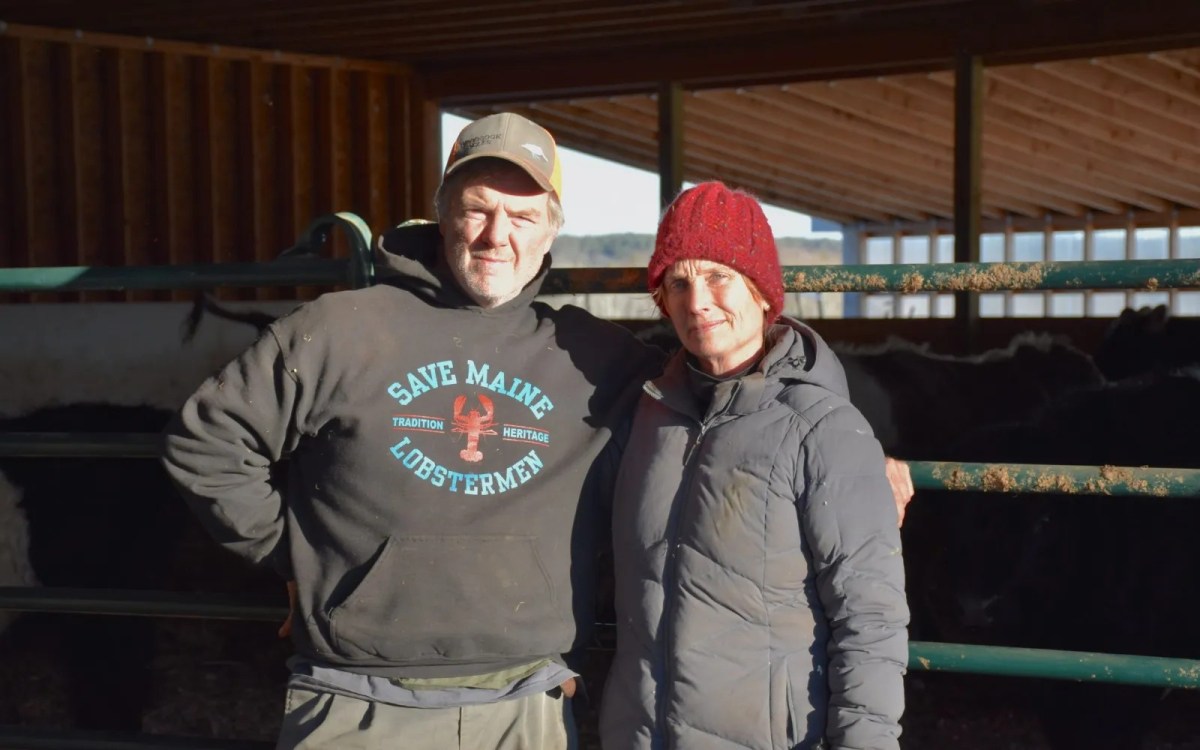
A dispute about rent, productivity and other issues has led to an arbitration ruling ordering the longtime operators of Two Coves Farm on Harpswell Neck to vacate the property.
Joe and Laura Grady, who have lived and farmed at the 110-acre coastal property for 16 years, were ordered to leave by the end of 2025 after an arbitrator found they had violated the terms of their lease.
The Gradys said they strongly disagree with the ruling and plan to appeal it, although it is unlikely any appeal would be resolved before the Dec. 31 deadline to vacate the farm. No appeal had been filed as of mid-December.
Perhaps the largest working farm in a community where commercial-scale agriculture has largely disappeared, Two Coves recently suspended operations because of the legal dispute.
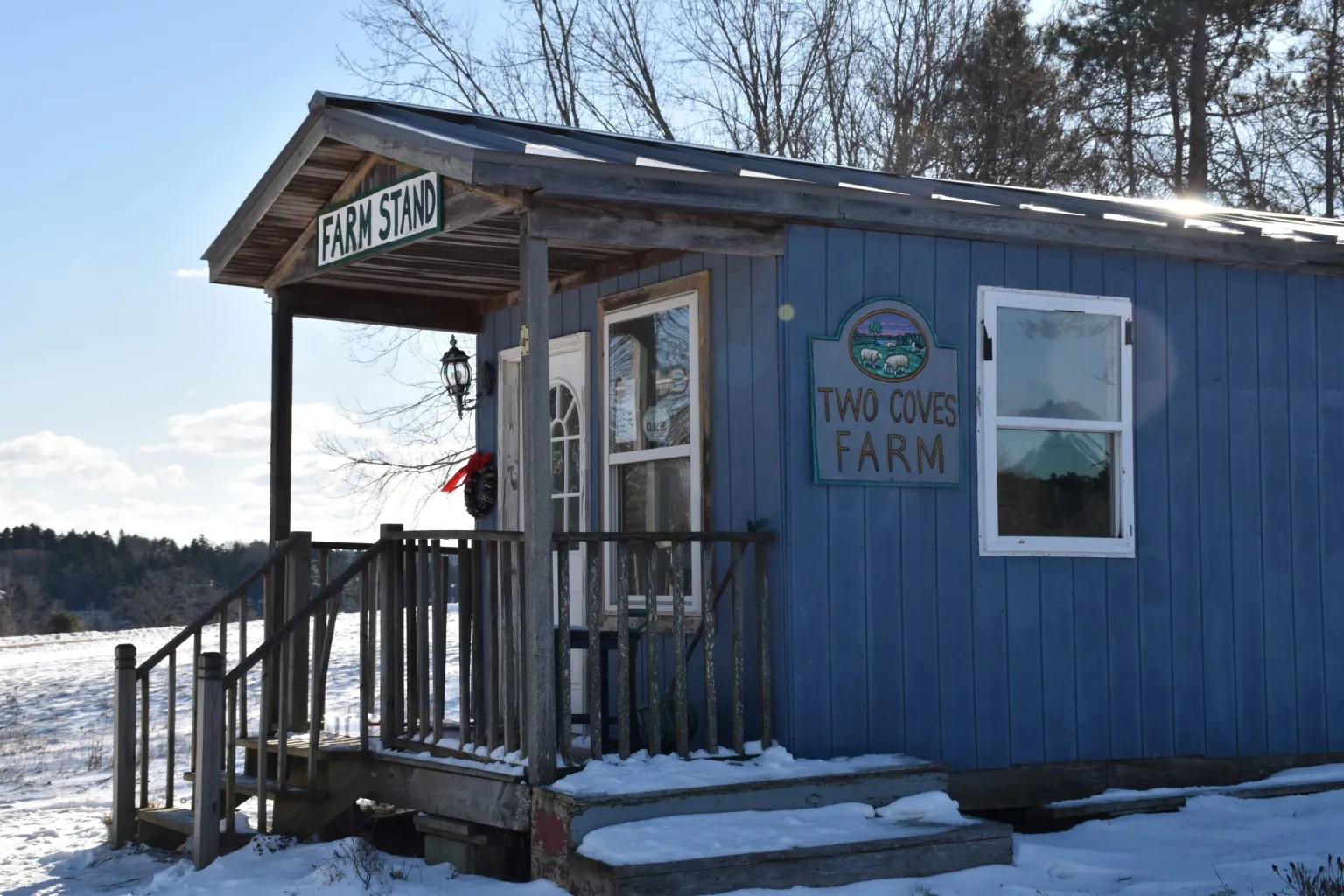
The farm is the property of Neils Point LLC, owned by Helen Norton, a Harpswell Neck philanthropist who also owns the Harpswell Schoolhouse restaurant. She and her late husband, Walter, bought the property, formerly known as Dunning Farm, in 2006 to protect it from development and ensure it would remain a farm. The farm, on Neils Point Road, takes its name from its shorefront on both Widgeon Cove and Mill Cove.
The property is protected by permanent agricultural conservation easements held by the Maine Farmland Trust and the Harpswell Heritage Land Trust, which restrict non-farm development and require the land to remain available for agriculture.
The Grady family has leased and farmed the land since soon after the sale. But in a ruling dated Oct. 24, 2025, arbitrator Timothy J. Bryant found that the Gradys underpaid rent and failed to meet lease requirements related to active farming. The ruling requires the Gradys to pay over $124,000 in back rent. Another $33,500 in arbitration fees was split equally between Neils Point LLC and the Gradys.
Norton has since asked the Maine Superior Court to confirm the arbitration award. If confirmed, it would become enforceable as a court judgment. Such awards are typically confirmed unless procedural irregularities are found.
The Gradys argue that the conflict with Norton arose from a breakdown in communication, a dispute about the role of a property manager employed by Norton and a disagreement about how rent should be calculated. The couple said they never neglected the land or acted in bad faith.
“We think [the arbitrator] got it wrong,” Joe Grady said in an email. “This arrangement was always about the land, being good stewards to the land, and taking care of the land and the farm in a sustainable way.”
Norton, through her attorney, pointed to the arbitrator’s findings and said she plans to work with Maine Farmland Trust to identify new tenants who will operate the farm in line with its conservation easement and long-term vision.
ARBITRATOR’S FINDINGS
Norton and the Gradys agreed to settle the dispute through binding arbitration, in which a neutral expert hears evidence and makes a final decision both sides must honor.
The arbitrator’s decision centered on his interpretation of a 25-year lease signed in 2017.
Under that lease, the Gradys were required to pay rent equal to 10% of the farm’s annual “net proceeds” and to actively use the land for productive agriculture.
Bryant found that the Gradys miscalculated rent by deducting expenses in a way that was inconsistent with the lease. He said they “knowingly inflated their operational expenses by treating household and personal expenses as business expenses.”
That approach, Bryant said, sharply reduced rent payments and resulted in several years in which the Gradys paid no rent at all. Norton said it was the Gradys’ nonpayment of rent in 2023 and 2024 that prompted her to take action.
To resolve the dispute, the arbitrator calculated rent using an average of the farm’s total income over several years and ordered the Gradys to repay the resulting $124,175.10 in a lump sum, or over time with an annual interest rate of 8%.
The ruling also found that the Gradys failed to meet the lease’s requirement to actively plant and grow productive crops. Bryant said they “have not materially tried to actively plant and grow crops for commercial sale … for many years.”
At the same time, Bryant denied Norton’s claims that the couple committed fraud or intentionally deceived her. He declined to award punitive damages and rejected Norton’s argument that the Gradys had trespassed by staying on the farm while the arbitration proceeded.
In effect, the arbitrator concluded that the Gradys’ interpretation of the lease did not hold up legally but did not amount to intentional wrongdoing.
‘THIS WAS NEVER ABOUT RENT’
The Gradys reject Bryant’s conclusions and say the dispute cannot be understood solely through accounting formulas or lease language.
They say the meaning of “net proceeds” was never clearly defined in the lease and that they calculated rent the same way for years without objection from the landowner.
“We are not accountants, we are farmers,” Joe Grady said, adding that the couple believed the way they deducted expenses before calculating rent was a reasonable interpretation of the lease.
Two experts testified during arbitration with different interpretations of what “net proceeds” means, the Gradys said. They were surprised when the arbitrator instead relied on an income-averaging approach that resulted in a rent figure higher than what Norton had initially claimed was owed.
More broadly, the Gradys argue the conflict was never really about money. They say the dispute began after they raised concerns about the growing involvement of a property manager employed by Norton, whose presence at the farm increased over time. After they objected, they said, the relationship deteriorated rapidly.
“This was never about the rent we were paying,” Joe Grady said. “It was about kicking us out of the property because of the dispute with the landowner’s employee.”
The Gradys described their years at Two Coves as defined by stewardship and productivity. They pointed to extensive livestock rotations, pasture-based egg and meat production, haymaking, perennial plantings, garlic crops, and the establishment of dozens of blueberry bushes.
They said Maine Farmland Trust’s annual monitoring visits consistently praised their management of the land, and that soil tests showed improving fertility.
“This is our home and our livelihood,” Joe Grady said. “We relied on the agreement we made in good faith and never imagined it would end like this.”
LONG-TERM UNCERTAINTY
Through her attorney — Alfred C. Frawley IV, of the Portland law firm McCloskey, Mina, Cunniff & Frawley LLC — Norton has framed the dispute as a matter of enforcing the lease and protecting the farm’s long-term purpose.
Norton said she and her late husband purchased the property with the goal of permanent conservation. The farm’s agricultural conservation easements require the land to remain productive cropland, protect nearby marine habitats and allow low-impact public access.
Norton said her property manager has been essential in overseeing the farm, particularly after her husband’s death, and will continue to play a role as new tenants are identified.
She said she is consulting with the Maine Farmland Trust to find future farmers who can meet the easement’s requirements and operate the farm responsibly.
In an email, a Maine Farmland Trust representative declined to comment on the dispute itself but emphasized the broader stakes.
According to the organization, Maine lost 564 farms and more than 82,000 acres of farmland between 2017 and 2022. Once farmland falls out of production, it can be extremely difficult to bring back — especially in coastal areas where development pressure is high.
“Agricultural conservation easements are one of the best tools we have to protect Maine’s farmland so that its soils and open fields remain available for farmers to grow food now and into the future,” said Chris Cabot, co-director of farmland protection at Maine Farmland Trust.
The future of Two Coves Farm is uncertain. The farmland itself remains protected, but the Gradys said they don’t know where they will go or what will happen to their livestock, which include numerous cows, pigs, sheep and chickens.
Joe Grady declined to discuss details of the couple’s planned appeal. He said they hoped to stay on the property, but they were exploring other options in the event they are required to leave the farm.
“The original list of complaints against us left no illusions that we were no longer valued or respected in any way … the change was swift and final,” he said. “We went from partners to pariahs overnight.”
Harpswell Anchor reporter J. Craig Anderson is a veteran journalist whose work has earned state, regional and national awards. Please send comments or news tips to [email protected].
Comments are not available on this story. Read more about why we allow commenting on some stories and not on others.
We believe it's important to offer commenting on certain stories as a benefit to our readers. At its best, our comments sections can be a productive platform for readers to engage with our journalism, offer thoughts on coverage and issues, and drive conversation in a respectful, solutions-based way. It's a form of open discourse that can be useful to our community, public officials, journalists and others.
We do not enable comments on everything — exceptions include most crime stories, and coverage involving personal tragedy or sensitive issues that invite personal attacks instead of thoughtful discussion.
You can read more here about our commenting policy and terms of use. More information is also found on our FAQs.
Show less