

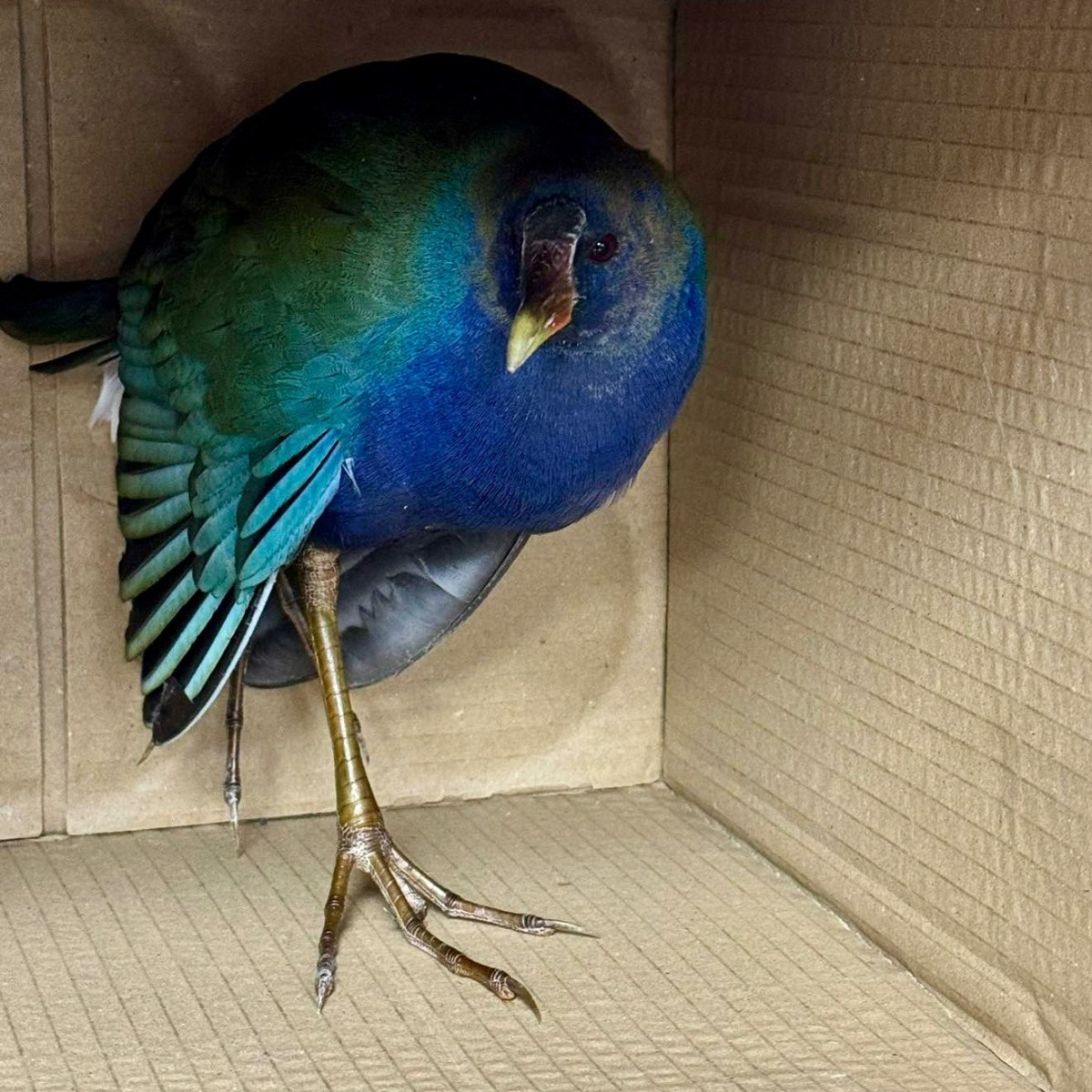
Several off-course tropical birds — what are known as vagrants in the ornithology world — ended up in New England over the holidays.
Three purple gallinules, a species native to the Caribbean, the southern United States and parts of South America, were brought to animal rescues in Massachusetts, Vermont and Maine.
One was found in Houlton and brought to the humane society there before it was transferred to Maine Wildlife Rehabilitation on Dec. 15, and later to Avian Haven in Freedom.
The birds typically do not venture farther north than Florida at this time of year, or past South Carolina in the summer, though a handful have been found in areas as far away as Europe over the last 15 years.
Purple gallinules are excellent fliers, said Doug Hitchcox, staff naturalist at the Maine Audubon Society. Though it’s not entirely clear why some ended up in New England last month, he said the shimmering purple wetland birds were likely trying to make a long-distance flight when unexpected winds got them off-course.
The gallinule discovered in Houlton was initially though to be in decent condition, said Avery Berkowitz, veterinarian and executive director of Maine Wildlife Rehabilitation. However, it became evident within a few days that one of its legs had been badly damaged by the cold, and the bird was euthanized Dec. 20 or 21.
Nina Bellotti-Flaherty, assistant director of the New England Wildlife Center, said the nonprofit has the other two purple gallinules rescued in Massachusetts and Vermont. The birds are healthy and will be flown back to their native habitat as soon as weather allows.
Ornithologists are not sure what drives birds’ vagrancy flights. Climate change and the availability of food are two likely factors, but neither would fully explain why a tropical gallinule would end up in Maine in winter.
“Purple gallinules in particular are … often used as one of the prime examples of just how crazy vagrancy can be, because they show up everywhere — literally everywhere,” Hitchcox said.
The species has been documented in northeastern Canada, the western U.S. and South Georgia Island east of the tip of South America. In 2013 and 2014, purple gallinules were found in Portugal, Ireland and Iceland.
“They’re testing boundaries all the time,” Hitchcox said, noting that vagrant purple gallinules have been documented in Maine as far back as records exist.
Vagrancy can lead to the expansion of a species’ home territory, although the gallinule is probably many thousands of years of climate change away from calling Maine home.
Maine is also no stranger to other kinds of vagrant avians.
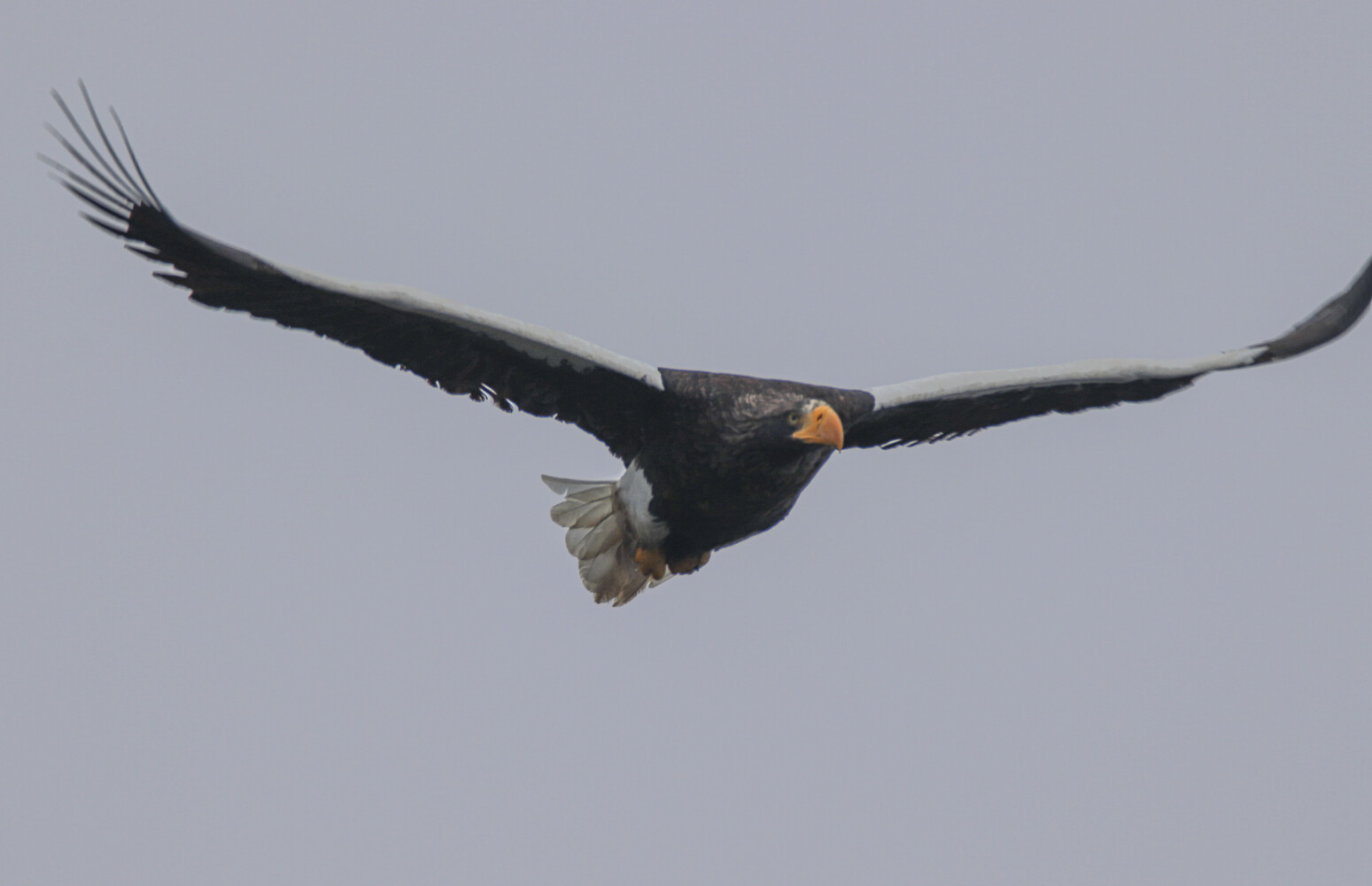
In 2018, birders in southern Maine were thrilled to catch a glimpse of great black hawk, which had only once before been spotted in the U.S., well outside its typical habitat that ranges from Argentina to Mexico. That bird met the same fate as the purple gallinule found in Houlton and was euthanized after its legs became frostbitten.
During the winters of 2021-22 and 2022-23, a rare Steller’s sea eagle was repeatedly seen in the Midcoast, thousands of miles from its typical winter habitat off the coast of Russia and northern Japan.
Reuben M. Schafir is a Report for America corps member who writes about Indigenous communities for the Portland Press Herald.

We invite you to add your comments. We encourage a thoughtful exchange of ideas and information on this website. By joining the conversation, you are agreeing to our commenting policy and terms of use. More information is found on our FAQs. You can modify your screen name here.
Comments are managed by our staff during regular business hours Monday through Friday as well as limited hours on Saturday and Sunday. Comments held for moderation outside of those hours may take longer to approve.
Join the Conversation
Please sign into your CentralMaine.com account to participate in conversations below. If you do not have an account, you can register or subscribe. Questions? Please see our FAQs.