

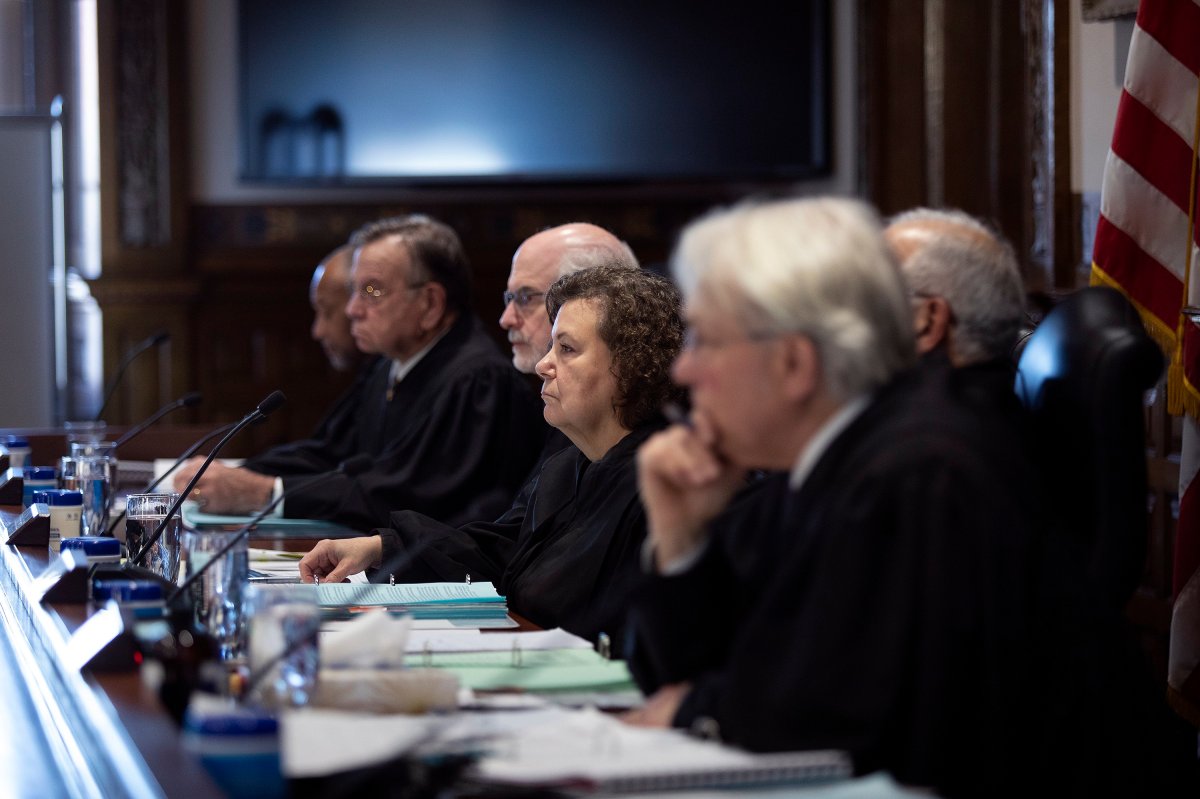
The Maine Supreme Judicial Court is considering whether a civil rights organization suing the state for alleged public defense failures can name the whole state as a defendant.
Attorneys with the American Civil Liberties Union of Maine told the high court on Thursday they want to pursue a declaratory judgement against the state, finding that Maine is required — but has failed — to provide continuous legal representation to criminal defendants who can’t afford their own.
Superior Court Justice Michaela Murphy ruled early last year that hundreds of criminal defendants’ constitutional rights were being violated, because they were not receiving continuous legal representation. Murphy’s order only applied to members of the Maine Commission on Public Defense Services, which the ACLU sued in 2022.
Justices considered the case in October, hearing oral arguments about the legality of Murphy’s plan to release some unrepresented defendants from jail and dismiss charges against others. As of Thursday morning, the high court still hadn’t released its decision.
The ACLU has argued that a declaratory judgment against the state is fair, because the Constitution says it’s the state’s responsibility. The Office of the Maine Attorney General has argued Maine has “sovereign immunity,” a legal doctrine that can protect states from civil action.
Assistant Attorney General Paul Suitter said the case would “raise a hornet’s nest of novel legal issues,” and that it wouldn’t be fair for all three branches of Maine’s government to be bound as one defendant and subject to one of those branch’s rulings.
Suitter also said a declaration against state officials would have the same effect as a declaration against the entire state, which the plaintiffs have disputed. Members of the public defense commission have said that they’re constrained by funding and lack some enforcement authority.
The declaratory judgment would be a legal finding putting the state on notice that it’s in violation, but the plaintiffs said Thursday they are not pursuing any court orders compelling the state to take specific actions.
Suitter and Jordan Bock, an attorney for the plaintiffs from a partnering firm, disagreed on whether a declaratory judgment would open the door to an increase in legal action against the state for constitutional violations. Bock argued the alleged constitutional violation in this case is different because the Sixth Amendment right to counsel is something the state is required to provide.
