

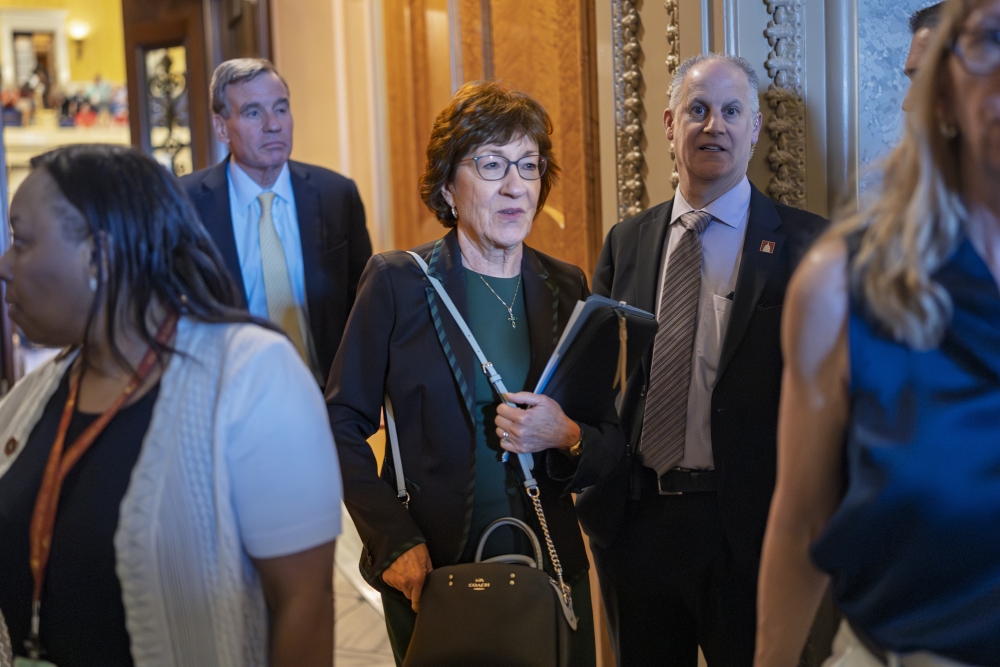
Sen. Susan Collins voted in support of a resolution Thursday reaffirming the need for congressional approval for any future military action in Venezuela.
Collins was one of five Republicans to join Democrats and support advancing the war powers resolution from Sen. Tim Kaine, D-Virginia, on a 52-47 vote and ensure a vote next week on final passage. It was a rare rebuke of President Donald Trump during his second term.
Sen. Angus King, an independent who caucuses with the Democrats, also voted in favor of the measure, which failed to gain the support of a veto-proof two-thirds majority.
Collins’ vote represents a high-profile break with Senate Republicans and with Trump, who told The New York Times in an interview Wednesday that the U.S. could oversee operations and control oil reserves in Venezuela for years.
Trump took to social media to blast Collins and other Republican defectors for their “stupidity,” saying they “should never be elected to office again.”
Collins is seeking her sixth term in November. Her seat is viewed as a prime pick-up opportunity for Democrats because of Collins’ low approval ratings. She’s also the only New England Republican in Congress, and the only Republican senator up for reelection in a state won by Democrat Kamala Harris in the 2024 presidential election.
“Republicans should be ashamed of the senators that just voted with Democrats in attempting to take away our powers to fight and defend the United States of America,” Trump said.
Her vote is also a change in position. Collins voted against a bill last year that would have required Trump to seek congressional approval prior to any military action. A spokesperson said at the time that her opposition stemmed from vague language in the bill.
Collins said in a recent written statement that she supported Saturday’s successful mission to capture Venezuelan President Nicolás Maduro and his wife. She said Maduro is a “narco-terrorist and international drug trafficker” who “held power through stolen elections and horrific violence against the people of Venezuela.”
“With Maduro rightfully captured, the circumstances have now changed,” Collins said. “While I support the operation to seize Nicolás Maduro, which was extraordinary in its precision and complexity, I do not support committing additional U.S. forces or entering into any long-term military involvement in Venezuela or Greenland without specific congressional authorization.”
Collins noted that the resolution doesn’t affect the original removal operation. Instead, it would reaffirm the need for Trump to seek congressional approval for future military action, while leaving enough room for the president to defend the U.S. from an attack or imminent threat.
“I believe invoking the War Powers Act at this moment is necessary, given the president’s comments about the possibility of ‘boots on the ground’ and a sustained engagement ‘running’ Venezuela, with which I do not agree,” Collins said.
“What happens now matters greatly — both in terms of accountability for Maduro and the future of the Venezuelan people. The long-term success of this operation will depend on Venezuelans having the opportunity to run Venezuela, with the support of international and private sector partners.”
King lauded the resolution’s advance in the Senate in an interview with the Press Herald. He said a confidential briefing with Secretary of State Marco Rubio yesterday raised “more questions than answers.” He also questioned Trump’s subsequent comments suggesting a yearslong commitment in Venezuela and possible action against Greenland.
“Clearly that kind of intervention in another country should have some authorization from Congress,” King said. “The resolution today passed, which has not happened in the past. And I think that suggests that the Republicans are starting to also raise concerns.”
King said the shifting rationale and the lack of a clear plan suggest that the Maduro operation was a pretext for taking over the Venezuelan oil industry. He worries the administration raising national security concerns about Greenland would be a similar pretext for natural resource extraction.
“We can have national security assets in place without owning the country,” King said. “This national security argument is nonsense. It’s so clearly meaningless that it makes me think that there is, in fact, some ulterior motive, and it’s perhaps natural resources.”
Gov. Janet Mills, who is running in a Democratic primary to take on Collins this fall, criticized Maine’s senior senator for opposing last year’s bill only to now lend her support to the latest resolution.
“Once again, she is a day late and a dollar short,” Mills said in a written statement. “Susan Collins had the chance to stand up to Donald Trump and reassert congressional authority months ago, but instead she refused, giving him the greenlight to unilaterally move us towards war in Venezuela.”
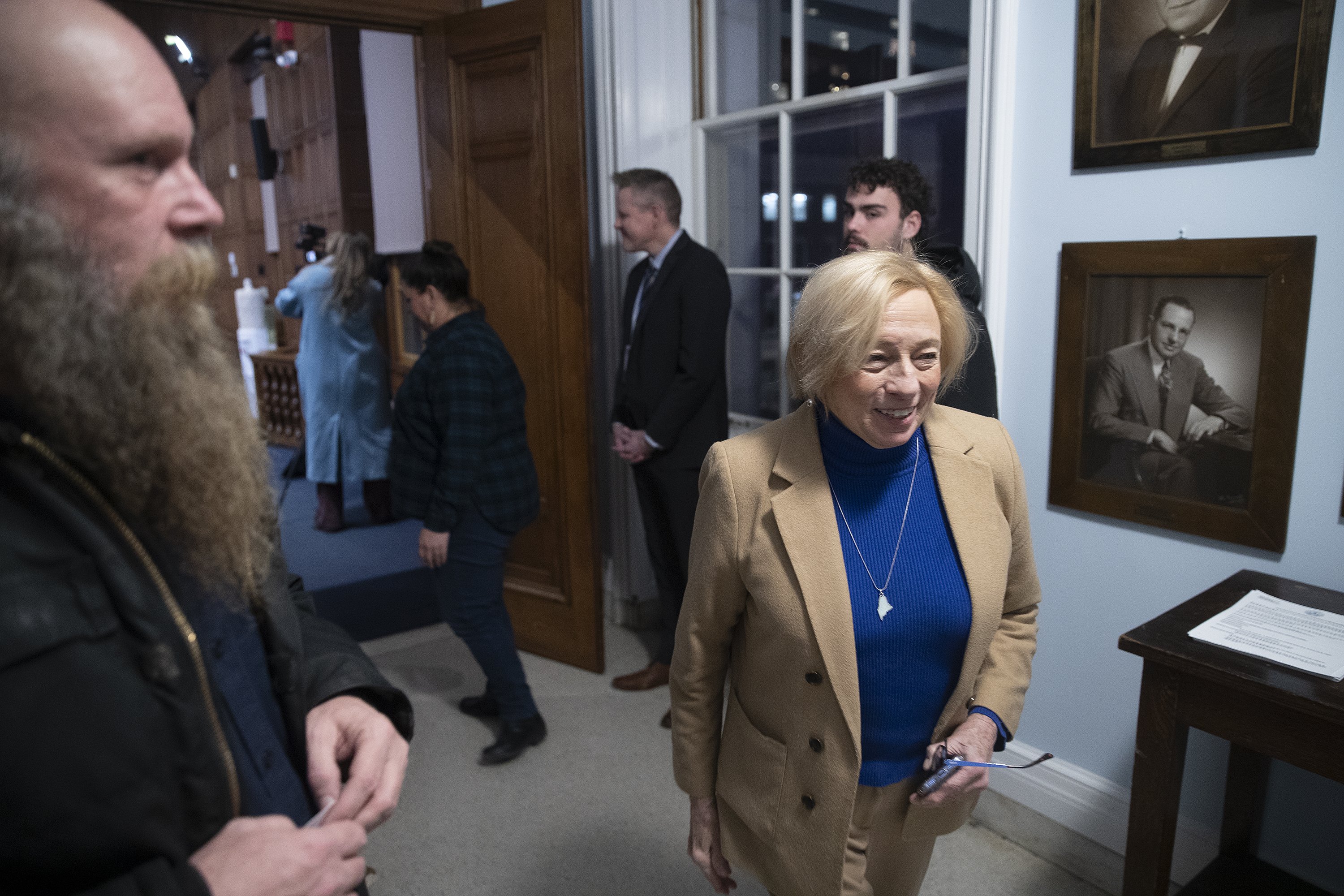
Mills had previously called on Collins to use her power as chair of the Senate Appropriations Committee to hold public hearings to press the administration about its future plans in the region and add language to budget bills to prevent tax dollars from funding operations in Venezuela.
Collins dismissed those ideas, saying senators needed to focus on passing budget bills to avoid another government shutdown at the end of the month.
“My problem with Susan Collins is that she never does the right or hard thing the first time when it’s needed most — only when it serves her politically — and we always pay the price,” Mills said.
Editor’s note: This story was updated Thursday to reflect that the War Powers Act resolution still needs final approval in the Senate next week.

We invite you to add your comments. We encourage a thoughtful exchange of ideas and information on this website. By joining the conversation, you are agreeing to our commenting policy and terms of use. More information is found on our FAQs. You can update your screen name on the member's center.
Comments are managed by our staff during regular business hours Monday through Friday as well as limited hours on Saturday and Sunday. Comments held for moderation outside of those hours may take longer to approve.
Join the Conversation
Please sign into your CentralMaine.com account to participate in conversations below. If you do not have an account, you can register or subscribe. Questions? Please see our FAQs.