


Those opposed to the planned sale of four Kennebec River hydroelectric dams to a conservation group that intends to decommission or remove them are doubling down, as initial steps to facilitate the transaction have begun to play out in regulatory filings.
A slew of businesses, interest groups, elected officials and area residents registered their opposition in recent weeks. Their comments came in response to Brookfield Renewable’s request to transfer federal licenses for three of the four dams to new holding companies in preparation for their sale to The Nature Conservancy.
They joined lawyers for Sappi North America, the paper company that runs the Somerset Mill in Skowhegan, who accused Brookfield and The Nature Conservancy of trying to bypass regulatory measures in an attempt to quickly close their deal.
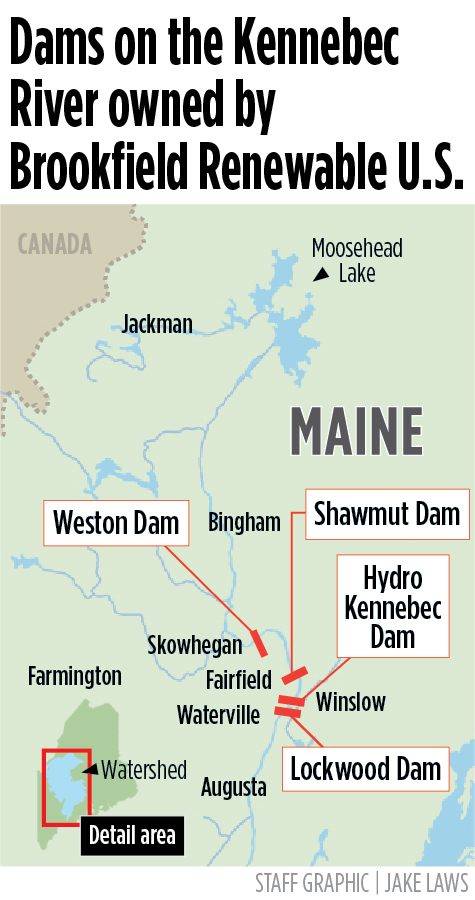
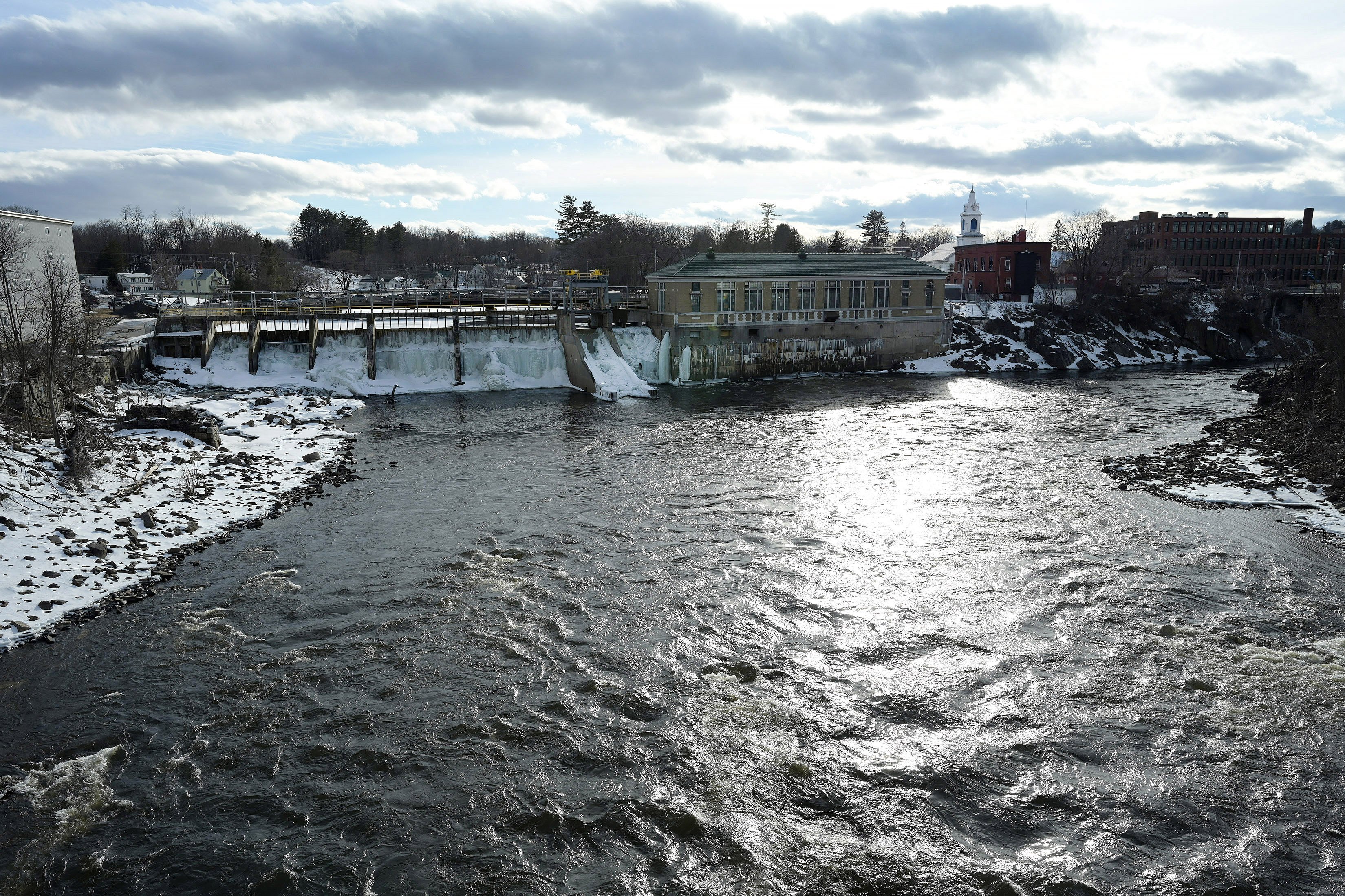
The global conservation group announced in September it had struck a $168 million deal to purchase the Lockwood, Hydro-Kennebec, Shawmut and Weston dams on the lower Kennebec River. The dams create a series of impoundments on a stretch of river from Skowhegan to Waterville.
The Nature Conservancy’s publicly stated goal is to restore a free-flowing river through dam removal, decommissioning and other efforts. A coalition of other environmental organizations known as the Kennebec Coalition praised the sale, saying the dams are barriers to passage of endangered fish species.
Much of the concern from those opposed to the dams’ removal has been on potential impacts to the Somerset Mill, which employs more than 750 people and relies on the Shawmut dam for its operations.
After news of the planned sale became public, the subsidiaries of Brookfield that own the Shawmut, Weston and Lockwood dams asked the Federal Energy Regulatory Commission in October to transfer each dam’s license to newly created Brookfield-owned holding companies. Brookfield is a massive international conglomerate with headquarters in Toronto.
“This is a preliminary, administrative step to facilitate the purchase and sale agreement with TNC,” a Brookfield spokesperson said in a statement Friday. “Our Lockwood, Shawmut, and Weston projects are currently part of larger operating portfolios of hydroelectric projects owned and operated by Brookfield.
“As these larger portfolios are not part of the purchase and sale agreement with TNC, the transfers are an administrative step moving the licenses of the three affected projects to new Brookfield companies in order to simplify a future transaction.”
Brookfield’s filings indicate that a license transfer application before the sale is not expected for the Hydro-Kennebec dam in Waterville. That is because Hydro-Kennebec is not part of any larger portfolio and therefore its license does not need to be transferred before the sale, a Brookfield spokesperson said.
Meanwhile, the Brookfield subsidiaries that currently operate the four Kennebec River dams asked FERC in December to put a hold on their ongoing relicensing applications.
Sappi has also objected to that request, telling FERC it should continue the relicensing process even with the impending sale.
The license transfer applications and the request to put relicensing on hold were all pending before FERC as of Friday.
There is no set timeline for decisions, although Brookfield requested FERC to act by Jan. 6 on the transfer applications and Jan. 14 on the pause in relicensing. Public comment on the license transfer applications closed Jan. 8.
“The Commission will act on these matters when it is ready to do so,” FERC spokesperson Celeste Miller wrote in an email Friday.
LICENSE TRANSFERS
In its applications to transfer the three licenses, the Brookfield subsidiaries argued that the new holding companies would be legally, technically and financially qualified to hold the licenses in the period before the ultimate sale to The Nature Conservancy.
In response, Sappi’s lawyers, from the law firm Pierce Atwood in Portland, questioned that characterization.
The paper company, which focused on the Shawmut dam license transfer as it relates to the mill most directly, also said it would ultimately be affected by the licenses transfers because of the planned sale and removal. Because of that, Sappi said it objects to any FERC action that will lead to dam removal.
“(Brookfield) has made no secret of the ultimate plans for the Project,” Sappi’s lawyers wrote. “With its transfer filing, (Brookfield) is merely facilitating the future transfer of its ownership interests in (the new holding company) in a way that not only absolves (Brookfield) of any future obligations but also frees (Brookfield) and the prospective purchaser, The Nature Conservancy, … from any regulatory oversight of the ultimate disposition of the Project.”
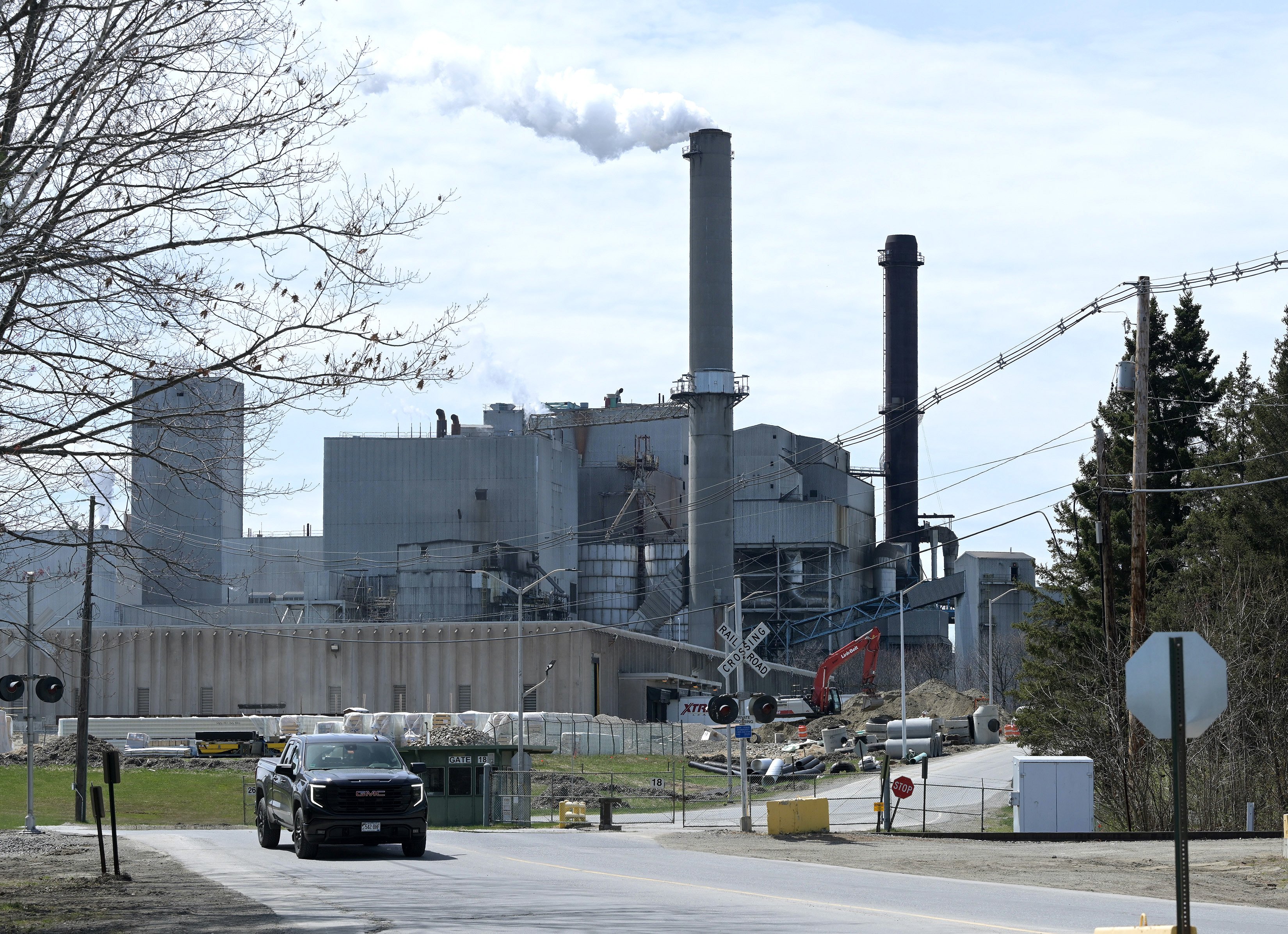
The mill, which recently underwent a $500 million rebuild, relies on the Shawmut dam to ensure a usable water level for its systems. Water from the river is used in pulping, papermaking, generation of on-site power and fire protection, according to Sappi’s filing.
The filing says there is no tested design solution that guarantees its systems would work if the dam were removed. Sappi estimated it would cost $50 million to modify its water supply infrastructure.
The Nature Conservancy has said it is “100% committed” to developing a solution for Sappi.
Public comments submitted in opposition largely echoed concerns about potential threats to Sappi and its workforce, as well as impacts on municipal tax bases, other industries, public drinking water and the availability of renewable energy. The Shawmut license transfer drew the bulk of comments.
Elected officials who submitted comments in opposition were U.S. Sen. Susan Collins, a Republican; U.S. Rep. Jared Golden, D-2nd District; state Sen. Brad Farrin, R-Norridgewock; state Sen. James Libby, R-Standish; state Rep. Jack Ducharme, R-Madison; state Rep. Jennifer Poirier, R-Skowhegan; state Rep. Elizabeth Caruso, R-Caratunk; the five Somerset County commissioners; and Elaine Aloes, chair of the Solon select board.
Joining them in opposition were the Mid-Maine Chamber of Commerce, the Somerset Economic Development Corp., the Maine Forest Products Council, CSX Transportation, the Professional Logging Contractors of the Northeast, and several other individuals and small businesses in the Skowhegan region.
The United Steelworkers, which represents 1,000 workers at the Somerset Mill and Huhtamaki in Waterville, in its comments urged FERC to delay a decision so economic impacts could be studied first.
In support of the license transfers, the Conservation Law Foundation and the Kennebec Coalition — made up of the Atlantic Salmon Federation, the Kennebec Valley Chapter of Trout Unlimited, the Natural Resources Council of Maine and Maine Rivers — wrote in a filing with FERC that the transfer is simply the first step in an ultimate goal of restoring a free-flowing Kennebec.
“Those future steps in the process are not presently before the Commission,” the groups wrote, “and the Commission and the public will have the opportunity in the future to fully consider the significant benefits — to both human and aquatic communities — that such restoration of the Kennebec would bring about.”
PAUSE ON RELICENSING
The Brookfield subsidiaries’ separate but related request to FERC to pause the relicensing of the four dams has also pitted Brookfield and Sappi against each other.
The dam operators argued to FERC that the relicensing is a moot point and waste of resources because the sale to The Nature Conservancy is expected to close this year.
Brookfield is requesting a 24-month suspension of relicensing proceedings once the sale is closed.
That is how long The Nature Conservancy expects it to take to complete license surrender applications that would allow for decommissioning, according to the organization’s filing with FERC.
“Simultaneously proceeding with both the license proceedings and development of license surrender and decommissioning plans would be an inefficient use of the resources of the Commission and other federal and state agencies and stakeholders involved in the relicensing and amendment processes,” Brookfield wrote in its request.
Sappi argued that relicensing can and should continue to provide a degree of certainty while all parties develop a plan that ensures the Somerset Mill can continue to operate.
The company also said the entire process from sale of the dams to their eventual removal would likely take years and has many unknowns.
“Relicensing and license amendment is far from moot — it is necessary to ensure that the Projects will be operated over many years in a manner protective of the environment,” Sappi lawyers wrote.
Brookfield started the relicensing process for the Shawmut dam in 2020. Brookfield has also been seeking modifications for the Weston, Lockwood and Hydro-Kennebec licenses since 2021 to incorporate a species protection plan.
In early 2025, FERC staff recommended relicensing with additional fish passage measures.
That essentially left the fate of licensing up to the Maine Department of Environmental Protection, which has the authority to issue or deny a water quality certification for the hydroelectric projects under the Clean Water Act.
The DEP issued a draft rejection of Brookfield’s initial application in 2021, which led to political uproar. In response, Gov. Janet Mills, a Democrat, said in an open letter to Sappi employees she would not let the mill close.
Brookfield withdrew its application, then tried again, only to be met with another rejection.
That then led to legal wrangling and a federal appeals court decision that backed the DEP’s actions.
Brookfield applied yet again for the certification for the Shawmut project in late 2024, and then for the other projects a few months later.
The DEP was required to act by October 2025, and issued a draft certification at the beginning of that month, which included requirements for extensive fish passage and water quality improvements.
About a week later, Brookfield withdrew its application, saying the regulations were too burdensome and pointing to the sale to The Nature Conservancy that had just been announced.

We invite you to add your comments. We encourage a thoughtful exchange of ideas and information on this website. By joining the conversation, you are agreeing to our commenting policy and terms of use. More information is found on our FAQs. You can update your screen name on the member's center.
Comments are managed by our staff during regular business hours Monday through Friday as well as limited hours on Saturday and Sunday. Comments held for moderation outside of those hours may take longer to approve.
Join the Conversation
Please sign into your CentralMaine.com account to participate in conversations below. If you do not have an account, you can register or subscribe. Questions? Please see our FAQs.