

As Jay Nutting prepares to take his dogs out skijoring, he knows he’s got to pull his weight — literally.
“Skijoring requires you to train yourself physically in order to be able to stay on your feet and take weight off your dog partner,” said Nutting, of Vassalboro. “The dog has a more positive experience when you’re doing your share of the work.”
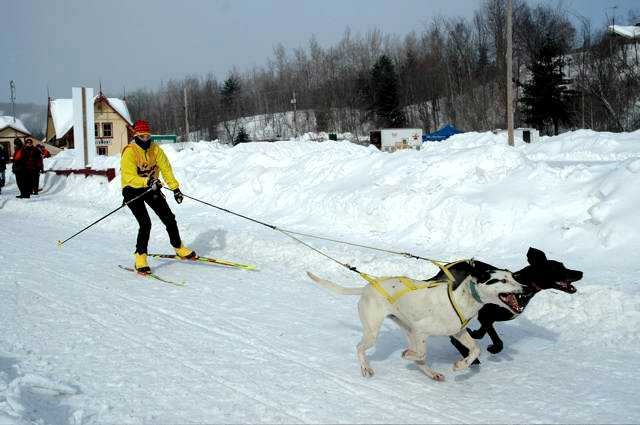
Simply, skijoring is a fast-growing sport in which one person on skis is pulled behind one, or sometimes two, animals.
On the snow, skijoring can look deceptively simple. A skier takes hold of a tow line and lets an animal provide extra pull. But Maine skijorers say the sport is far more deliberate than it appears, whether a dog is leaning into a harness on a groomed Nordic trail or a horse and rider are towing a skier through gates and jumps at a fairground.
Rather than focusing on specific breeds, Nutting emphasized comfort and enjoyment. Dogs that succeed in skijoring, he said, are active, enjoy running, tolerate cold conditions and can learn to stay out front with tension on the line.
“I’ve seen dogs of all shapes and sizes and a number of different breeds out on the trails,” he said. “It’s really what you make it and what you and your dog are comfortable with.”
In Franklin County and surrounding western and central Maine communities, skijoring has developed less as a spectacle and more as a practice-based winter sport, shaped by trail access, snow conditions and the realities of shared land use.
This winter’s organized equestrian skijoring season in Maine is scheduled to include events in Bangor on Jan. 31, Topsham on Feb. 7 and Skowhegan on Feb. 21, according to organizers and posts shared within the Skijor Maine community. While equine events tend to draw the largest crowds, longtime participants say dog skijoring also has a steady presence in the state where trail systems allow dogs.
The word skijoring comes from a Norwegian term meaning “ski driving,” and the practice has roots as both transportation and competition. In modern Maine, it appears primarily behind dogs and horses.
Across those variations, skijorers emphasize a shared principle: the skier is not a passenger, and the animal is not simply providing power. The sport depends on communication, pacing and trust.
BUILDING A TEAM
Nutting came to skijoring with a background that bridged endurance sports and dog-powered racing. A lifelong cross-country skier and competitive runner, he was also working with a dog bred for sprint-style sled racing. Skijoring, he said, offered a way to combine those interests without managing a large team.
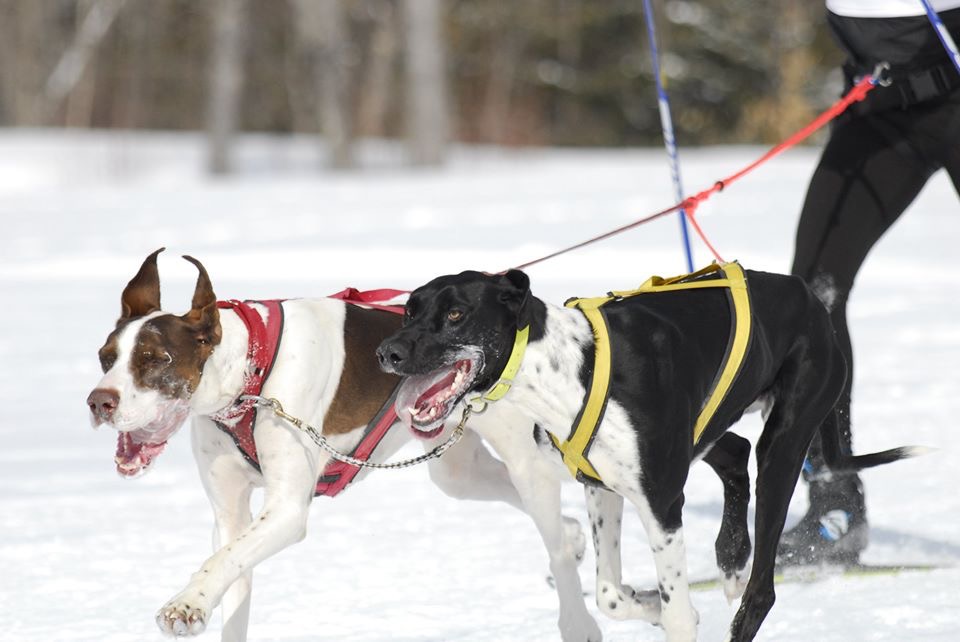
“Individual sports like canicross (running with a dog attached by a leash) and skijoring are great options if you only have one or two dogs,” Nutting said. “Traditional sled dog racing usually requires a team of dogs, four, six or many more. Skijoring is just you and one or two dogs as a team.”
That simplicity, he said, comes with its own demands. The skier must remain upright on narrow Nordic skis, manage speed and terrain, and contribute enough effort to avoid overworking the dog.
Training is typically incremental. Dogs are first introduced to wearing a harness, then to gentle resistance, before progressing to more structured pulling. Many teams use bikejoring — bicycling with a dog attached by a leash — in the fall to build fitness and reinforce commands before snow arrives. Working alongside experienced dogs can also help younger dogs learn what is expected.
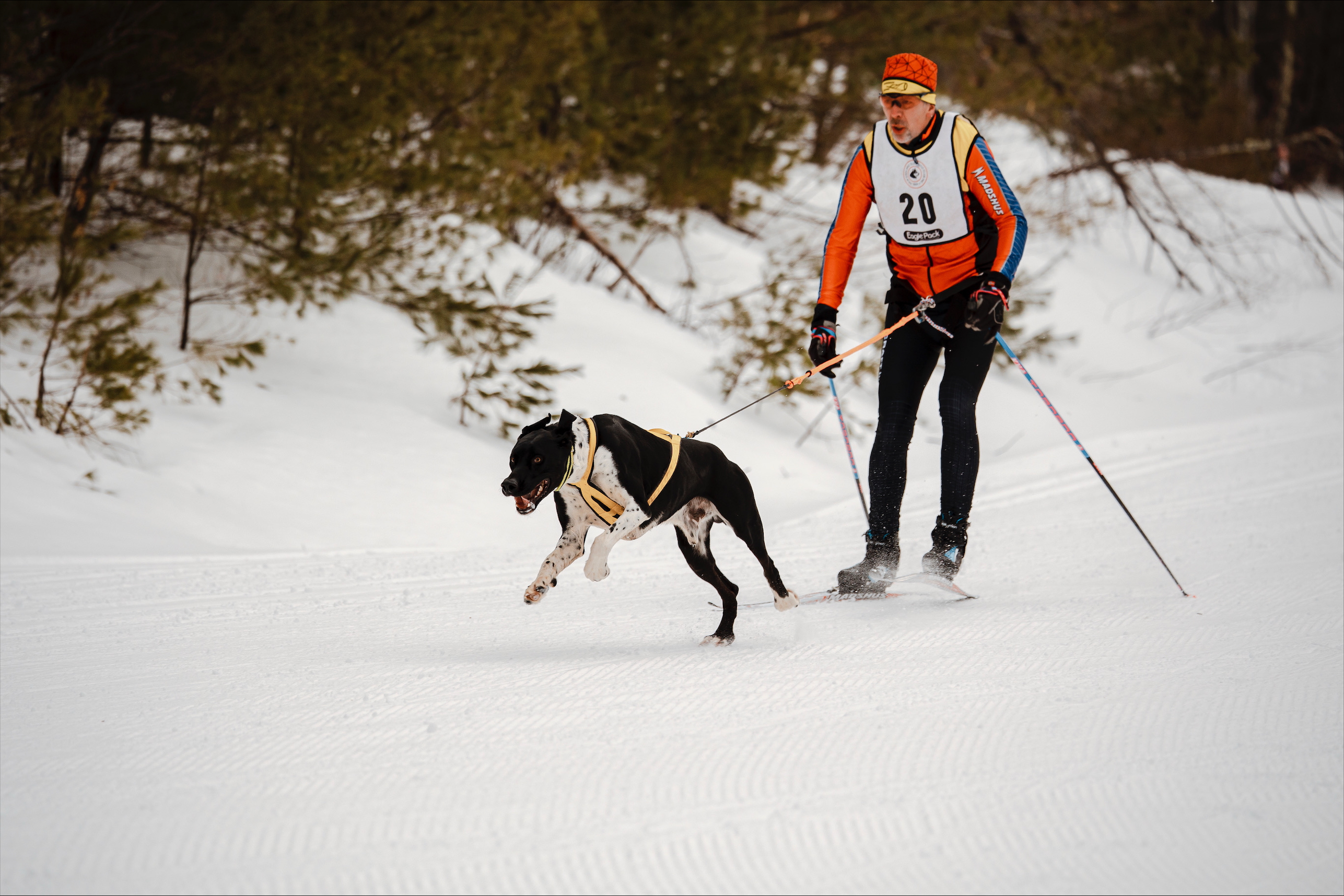
For beginners, Nutting recommended solid ski equipment and cautioned against skis with metal edges, which are discouraged in dog skijoring due to the risk of injury during a fall or tight turn. A properly fitted harness, a bungee-style tow line and a secure waist belt are foundational.
Nutting said the measure of a successful session is not speed, but whether the dog finishes eager to go again. Maine’s winters, he added, can be both ideal and challenging.
“When we get consistent, cold snow, that makes for good skijoring opportunities,” Nutting said. “When it’s warm, it makes it difficult to train.”
When conditions cooperate, he said, the experience can be memorable. One race he recalled crossed frozen lakes toward a city skyline, combining speed and scenery in a way that still stands out.
PRACTICE IN WESTERN MAINE
Outside of race weekends, access to appropriate terrain often determines whether skijoring is possible at all.
In western Maine, Carter’s X-Country Ski Center in Bethel has long allowed dog skijoring with the purchase of a trail pass for both the skier and dog, making it one of the most consistently cited practice locations in the state. In Norway, Roberts Farm Preserve has hosted informal races and beginner-oriented clinics during winters with suitable snow.
Skijoring activity has also surfaced periodically in the Farmington area, including races held in February during years when conditions allowed. Farther north and west, skijorers say Kingfield and Rangeley are sometimes used informally for training when snow cover and land-use rules align, though they are not known for regularly sanctioned events.
Across Franklin County and rural western Maine, participants say informal trail etiquette can matter as much as posted rules, especially on snowmobile corridors and other multiuse routes. Confirming whether dogs are permitted and choosing lower-conflict locations are often the first steps for anyone interested in trying the sport.
Kathy Pickett, who operates Nooksack Racing Supply in Oxford, said Maine has several Nordic centers that allow dog skijoring, usually with trail passes for both the skier and dog.
“Carters X-Country in Bethel has been doing it for years,” Pickett said.
Pickett urged caution on busy multiuse trails, particularly those shared with snowmobiles.
“Most snowmobiles are courteous, but it only takes a few to cause an unpleasant or unsafe environment,” she said. “Trail rules require that the ones with the most control and speed allow for humans and animals to proceed safely.”
She said inconsistent winters and household budgets have slowed the sport’s growth in recent years, even as interest remains steady.
“The equipment, aside from the skis, is fairly affordable,” Pickett said. “We can set a person up with dog and human gear for about $100 for a one-dog outfit.”
CALM BEFORE SPEED
In equestrian skijoring, a horse and rider tow a skier through a short course that can include gates, jumps and rings. While the skier navigates obstacles, the rider’s role is to keep the horse steady and match speed to the skier’s ability. In some settings, skijoring is also practiced behind smaller equines, such as ponies or miniature horses, particularly for controlled training, youth events or introductory sessions.
That balance is central to how Hannah LeClair, a student in the Augusta area, is preparing for her first competitive season with her horse, Woody, and her mother’s horse, Timber.
“My goal will be to focus my horse’s safety and having fun and not winning,” LeClair said.
Early preparation began with rope training to help the horses adjust to the sensation of something behind them. Her mother, Melinda Hutchings, said that approach reflects how horses experience unfamiliar stimuli.
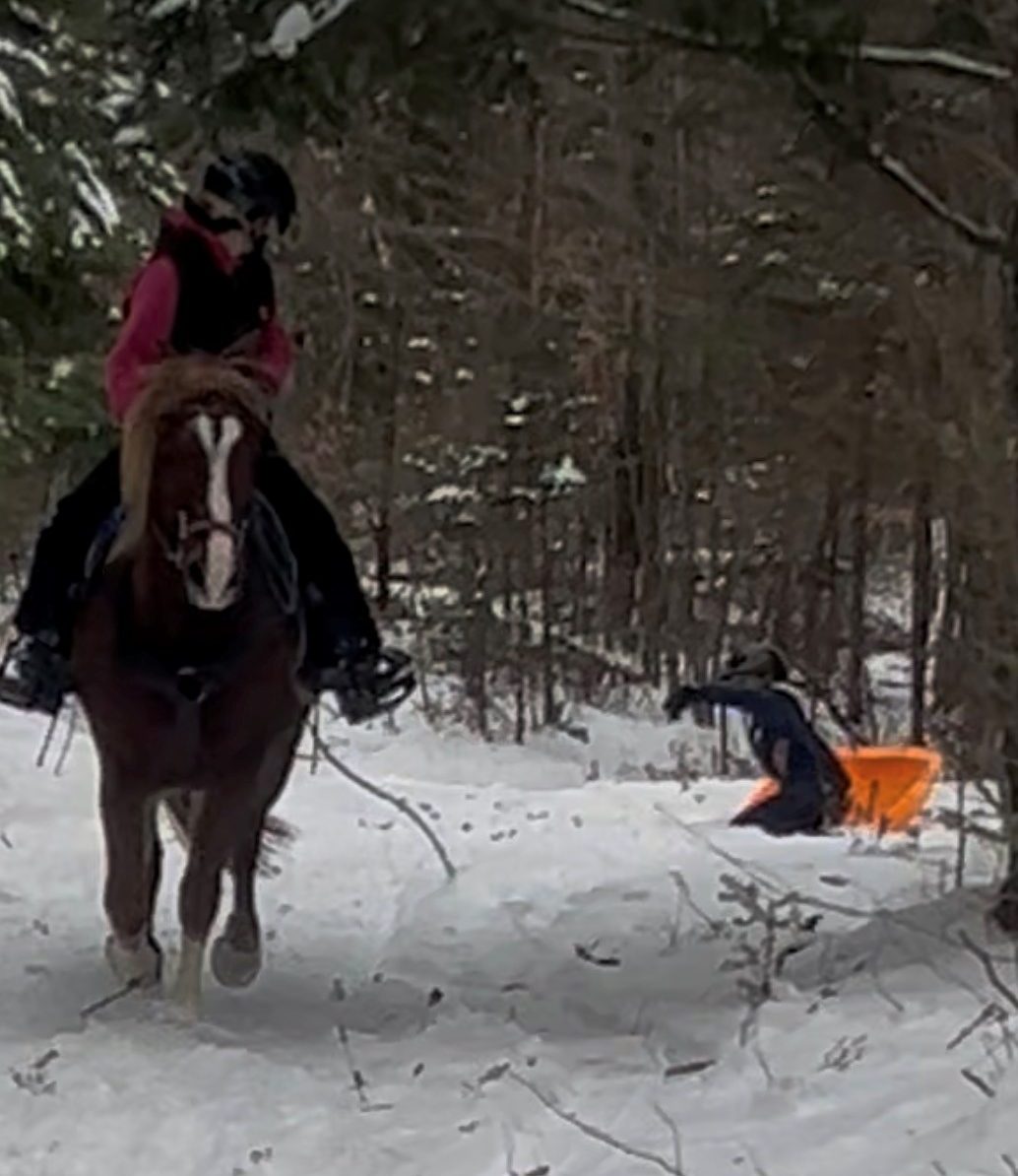
“Horses are prey animals and as such spook easily, so if you are going to expose them to something new it is important to go slow so they can react with curiosity instead of fear,” Hutchings said.
She described the elements that can trigger a spook response, including the feeling of something chasing the horse, the added weight and jerks of towing a skier, the unusual appearance of a bundled skier, and the sights and sounds of crowds.
Helmets for both rider and skier, snug tack, and studded hoof boots or shoes are part of their standard safety approach.
LeClair said she is seeking local amateur skiers to practice with and believes beginners pair best with partners who are confident, calm and comfortable around horses.
Experienced skijorers consistently offer similar guidance to newcomers. Start slowly and keep early sessions short and positive for both skier and animal. Confirm trail rules in advance and choose locations that allow dogs or horses. Invest in proper gear, especially a well-fitted harness and a quick-release system.
“You don’t want it to be stressful for your dog partner,” Nutting said. “It needs to stay fun.”

We invite you to add your comments. We encourage a thoughtful exchange of ideas and information on this website. By joining the conversation, you are agreeing to our commenting policy and terms of use. More information is found on our FAQs. You can modify your screen name here.
Comments are managed by our staff during regular business hours Monday through Friday as well as limited hours on Saturday and Sunday. Comments held for moderation outside of those hours may take longer to approve.
Join the Conversation
Please sign into your CentralMaine.com account to participate in conversations below. If you do not have an account, you can register or subscribe. Questions? Please see our FAQs.