


AUGUSTA — Sgt. Dylan Gagne delivered his regular briefing — on what, and who, to watch out for — to the evening shift staff recently at the Kennebec County Jail and signed out for the day.
It was a regular eight-hour shift. He’s worked much longer shifts in his six years at the correctional facility.
During the COVID-19 pandemic, Gagne, a supervisor, regularly worked two extra eight-hour shifts a week, sometimes, three. It’s good overtime pay but those extra hours can weigh heavily.
“You usually sleep your first day off away,” he said. “Get everything done on your second day, just to come back. That, or you’d get ordered back in on your day off.”
Sometimes, Gagne’s 30-minute drive home is a debriefing call with his friend and assistant supervisor, Cpl. Blakely Brewer. Other times, it’s silent.
“You have a candlewick each day, and you burn through the whole thing while you’re at work,” Brewer said.
For corrections officers in Maine, whose wages are often comparable to those paid at fast food-restaurants and big-box stores, the extra pay can be a boon. Combined, Maine’s jails spend between $7 million and $8 million every year on overtime pay for jail officers like Gagne and Brewer.
The work is hard and leads to burnout and high turnover rates at county jails, which are the most expensive operations run by Maine’s counties, with some making up more than half of the annual county budget.
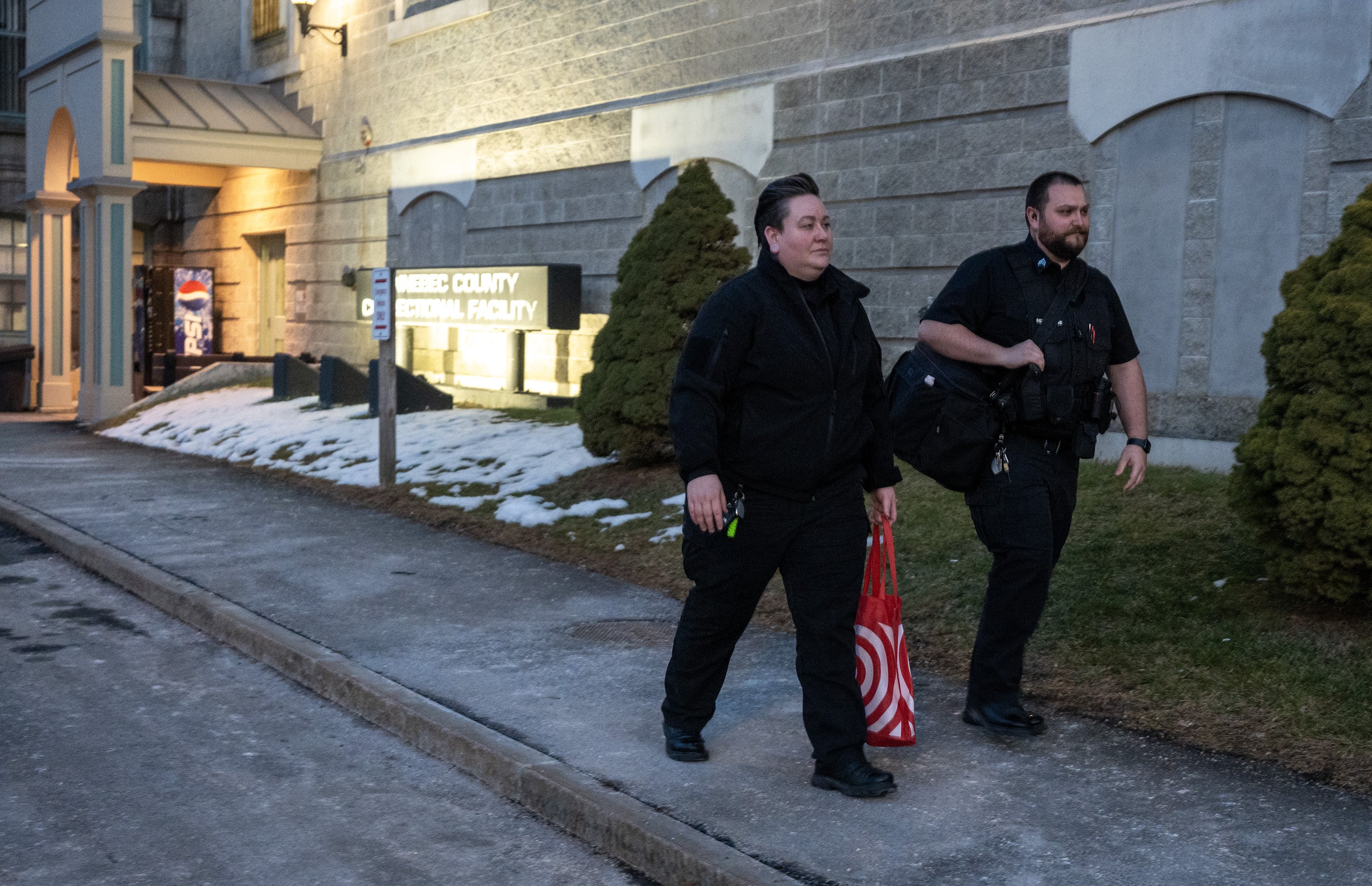
Overtime spending — a systemic and cyclical problem to ensure jails are adequately staffed as required, county and jail leaders said —has a direct impact on the taxes paid by every property owner in Maine.
RECRUITING IS TOUGH
Kennebec County Jail Administrator Capt. Bryan Slaney began as a correctional officer in the Augusta facility at 19 years old.
He stuck it out through extensive, monthslong training and a sharp learning curve. He took to mind-clearing hobbies outside work and learned to flip his correctional officer mind-set on and off.
“You come here, you get ready to work, you’re a different person,” he said. “You gotta turn that switch on, and you have to be a certain way. And then when you leave, it’s being able to turn that off so you don’t take it home.”
Many new recruits don’t — or can’t — learn to make that switch, he said.
A majority of the newer recruits, Brewer said, are much younger: 18- and 19-year-old high school graduates with little life experience.
Giovanna Peruzzi, a former correctional officer, said it’s one of the only jobs where you can realistically expect to be physically assaulted at some point in your career.
“I think people don’t really know what they’re signing up for when they first arrive,” Brewer said. “We try to tell them, but until you live it, you don’t really know.”
Somerset County Administrator Tim Curtis has struggled to recruit correctional officers, who often can earn similar wages at a local fast-food restaurant and work more predictable hours than they would in the jail.
Somerset County Jail saw nearly a third of its correctional officers leave their jobs over the course of a year when he first joined the county in 2023, he said.
Peruzzi, a labor representative for the National Correctional Employees Union that covers Kennebec County Jail and four others in Maine, said increasing wages has been one of the main tools for improving recruitment across jails in New England.
A starting wage increase in Kennebec County to $23.17 per hour in 2024 helped to fill long-vacant positions at the jail. That wage is still in the middle of the pack in Maine.
Peruzzi has often pitched wage increases to county leaders as cost-saving measures, too — a full staff cuts the need for overtime, and having a full staff is possible only with competitive, living wages, she said.
“Obviously, no one wants to do this incredibly intense, demanding job for free, which leads to burnout, and that leads to more staff leaving as they get burnt out and physically sick from the amount of work that they’re doing, and that just creates more overtime,” Peruzzi said.
MANDATORY OVERTIME
For both safety and operational purposes, jails must staff a certain number of correctional officers at all times. That number varies by jail and situation, including whether court is in session or the jail is hosting recreation time.
And correctional officers are mandatory employees, meaning they cannot leave their station until someone comes to relieve them. Eight-hour shifts extend to 16 and overtime when an officer calls in sick or no-shows, or quits, or takes vacation time, or is called up by the Maine National Guard.
Slaney said about half of Kennebec County’s overtime hours are forced. It’s a normal part of jail operation.
“The turnover is extremely high, and that’s just because of the job that we do, the things that you’re subjected to, the things that we see,” Slaney said. “Lots of overtime — you’re missing family functions, you’re working nights and weekends, long hours.”
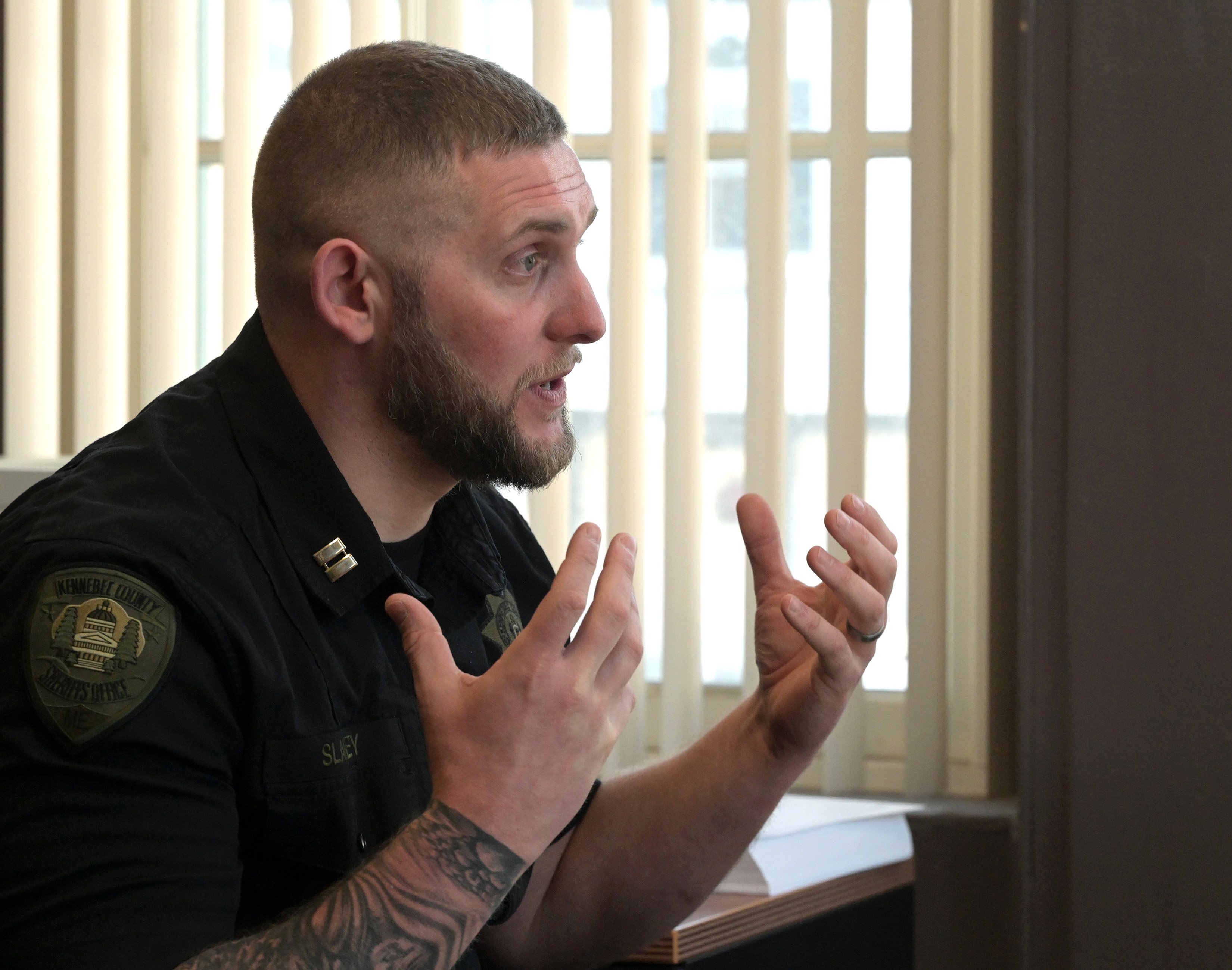
Minimum staffing levels can change quickly. Depending on jail conditions and the number of inmates, officers may be forced to stay beyond their scheduled shift.
Often, overtime covers new officers who are in their extensive training period. A half-dozen new recruits are in the pipeline to fill Kennebec County’s vacant correctional officer positions, but well over a third of a new correctional officer’s first year on the job is spent off-site in training.
“Realistically, you don’t have an option to not staff those facilities,” Peruzzi said.
While correctional officers oversee inmates who are already inside, they must, by law, also accept any new arrival, including an extensive and administratively cumbersome booking process.
The check-in process now includes medical and drug screening — a process mandated by a 2022 state law. Correctional officers are also responsible for continual, evidence-based medication-assisted treatment under that law.
“It’s that first 72 hours that a person is brought in — they go through the intake process, they go through the assessment of their medical needs, and substance abuse needs — definitely can be the most stressful,” Curtis, the Somerset County administrator, said. “A corrections officer that wants to make a go of this is going to find out: ‘How quickly can I move from dealing with intake to moving up to become a shift supervisor or some other administrative function?’ That puts pressure on it.”
Inmates who need medical care off-site require at least one correctional officer to accompany them. Often, those stints are longer than the standard eight-hour shift, and sometimes require travel to Portland’s Maine Medical Center, Slaney said.
“Correctional officers are not only expected to be security — they are expected to be counselors, they are expected to be case managers,” Peruzzi said.
CHRONIC OVERSPENDING
Every jail in Maine for which totals were available has exceeded its budget for correctional officer overtime at least three of the past six fiscal years, data compiled by the Kennebec Journal showed.
No data was available for Oxford County, which does not budget for overtime in its jail in South Paris.
Jails in Kennebec, Aroostook, Hancock and Knox counties have exceeded their overtime budget in each fiscal year since 2020.
Many used more than double their budgeted overtime. The Somerset County Jail did so from 2020–22.
The largest single-year of overspending was in the Cumberland County Jail in Portland in fiscal year 2020, when the understaffed facility logged $1.18 million in overtime.
The 60-bed Knox County Jail in Rockland was one of two Maine correctional facilities to use triple its budgeted overtime in fiscal years 2022 and 2023. The Waldo County Jail in Belfast used more than triple its $40,000 overtime budget in 2022.
Most jails pay more than $2,000 in overtime each year per bed in the facility. Knox County Jail, which will be repurposed to a short-term holding facility this year, was the only facility to reach $10,000 in paid overtime per bed, in fiscal year 2023.
Jails both large and small struggle to stay within their budgets. Cumberland and York counties, the two largest in Maine, used an average of 135% and 139% of their jail overtime budgets, respectively, over the past six fiscal years. The state’s smallest jails, in Piscataquis and Waldo counties, have similarly exceeded their overtime budgets in recent years.
BUDGETING FOR OVERTIME IS UNRELIABLE
County leaders — often through a budget committee made up of town officials — approve a budget before the start of their fiscal year, and calculate what share of municipal property taxes will pay that cost.
But, on average over the past six years, every Maine county for which data was available underestimated overtime spending in jails.
“When you’re putting these budgets together, you have no clue what might happen,” Piscataquis County Manager Michael Williams said.
During the height of the COVID-19 pandemic, Kennebec County operated its jail with about half its capacity of correctional officers, Scott Ferguson, the county administrator, said, causing the county to rely heavily on overtime.
Then, in spring 2023, the Kennebec County Budget Committee froze six correctional officer positions, hoping to save property tax dollars in a tight budget year.
The following fiscal year, Kennebec County hit a new high for overtime pay, going $306,000 over budget.
Now, Ferguson said the Augusta jail averages about six vacancies per week. That number can change on a dime, and new hires don’t have the same skills or availability as experienced officers.
“Going back to October, we had eight vacancies, then 10, and it came down to five and six, and then it jumped up to nine again and down to five,” he said. “A good percentage of the staff is constant turnover.”
Ferguson said counties sometimes take money that would’ve been paid to vacant correctional officer positions to fund overtime wages, once that line item is exceeded. In especially dire financial circumstances, extra money can come from the existing fund balance or leftover money usually intended for emergency, one-time use.
But the numbers don’t add up — overtime pay is, by definition and by contract, 150% of normal pay.
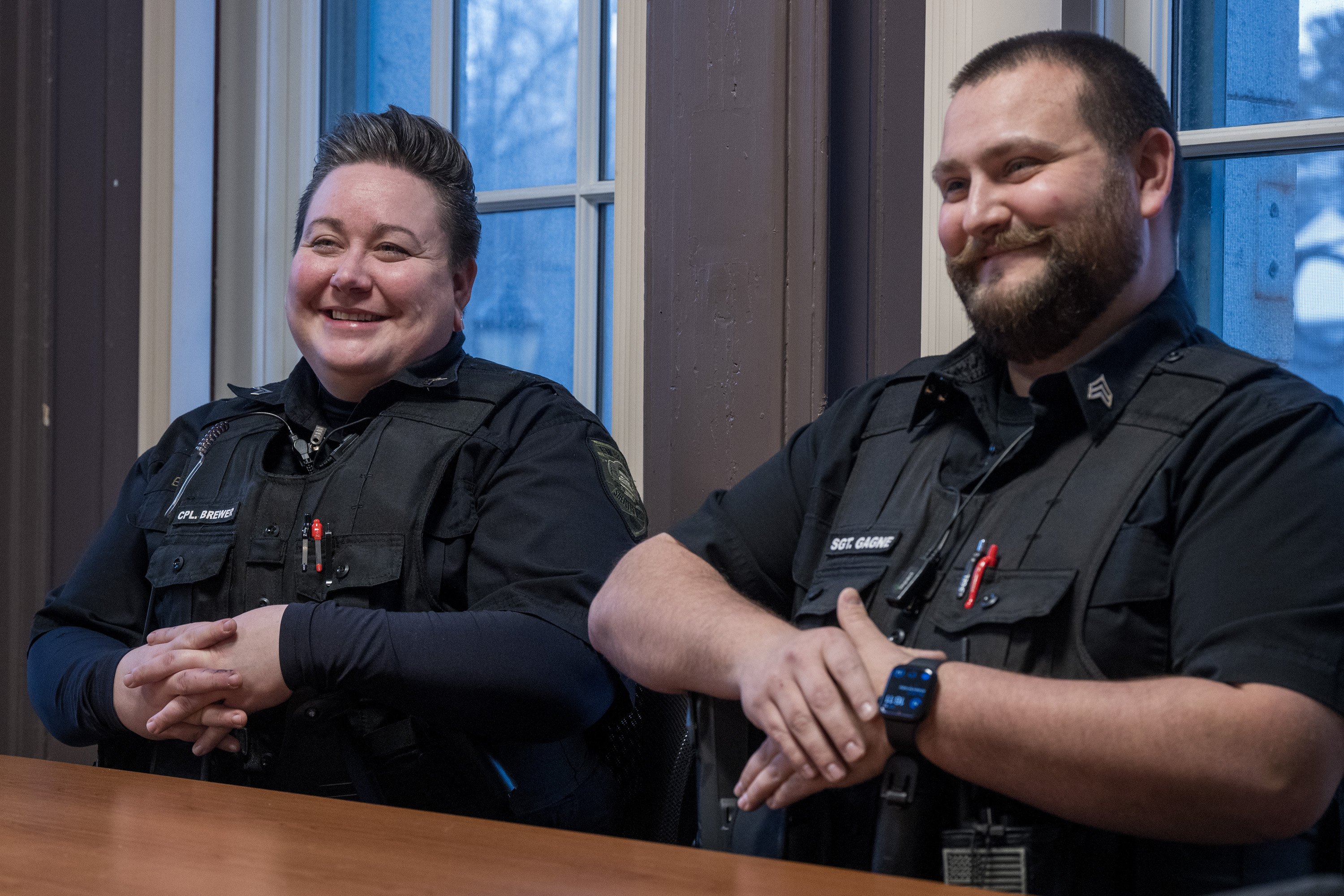
Even regular personnel budgets are skyrocketing.
Curtis, the Somerset County administrator, said personnel costs have jumped 36% for Maine jails in just the past two years.
It’s a cycle that leads to increasing budget numbers for jails, which are already the most expensive departments counties run, thanks in large part to unfunded state mandates, like medication-assisted treatment.
Property taxpayers across Maine see those pressures in their semiannual bills.
“The counties cannot do a county sales tax, the counties can’t do a county income tax,” Curtis said. “We can only raise property taxes.”
Those increases are often unpopular, both among municipal officials, who pass along tax income to the county, and among residents. Washington County voters rejected a bond referendum in November after financial mismanagement — in the interest of saving tax dollars — left the government with an $11 million shortfall, which must be remedied with property taxes.
Without more state funding, counties are likely to continue to struggle, and correctional officers like Brewer, the assistant supervisor at the Kennebec County jail, will continue to work overtime regularly.
For now, Brewer signs up for the same extra shift every week, hoping she isn’t forced onto another one.
“I mean, as human beings, the most precious thing we have is time,” Brewer said. “And this job takes some of that away.”

We invite you to add your comments. We encourage a thoughtful exchange of ideas and information on this website. By joining the conversation, you are agreeing to our commenting policy and terms of use. More information is found on our FAQs. You can update your screen name on the member's center.
Comments are managed by our staff during regular business hours Monday through Friday as well as limited hours on Saturday and Sunday. Comments held for moderation outside of those hours may take longer to approve.
Join the Conversation
Please sign into your CentralMaine.com account to participate in conversations below. If you do not have an account, you can register or subscribe. Questions? Please see our FAQs.