
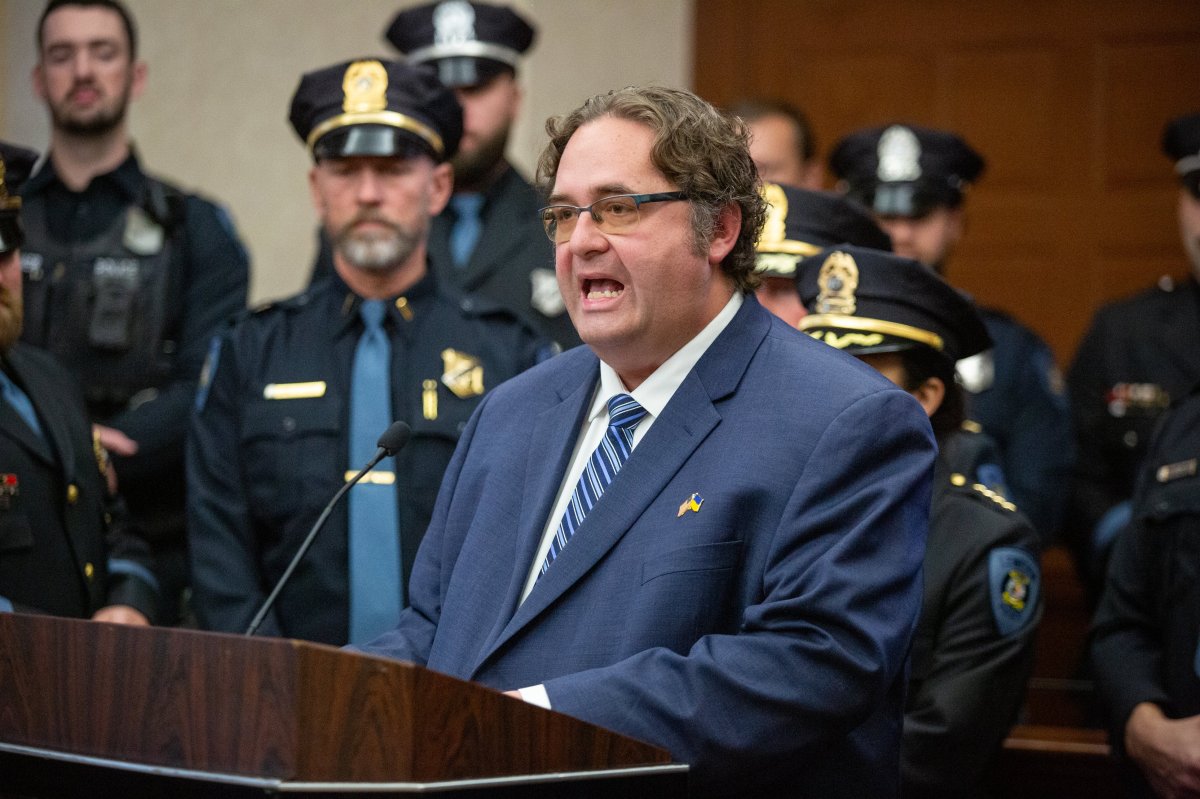
LEWISTON — Mayor Carl Sheline released a statement Tuesday confirming that the city has seen an increase in immigration enforcement, calling for calm and asking residents to “check in on one another.”
The statement comes as reports of an increased presence of U.S. Immigration and Customs Enforcement agents in Maine began intensifying Tuesday, especially in greater Portland, days after officials began to warn of a potential surge of federal immigration enforcement.
Local officials in Portland, Lewiston and Biddeford, home to many of the state’s immigrant residents, have spoke of an anticipated spike in ICE activity — even as the Department of Homeland Security refuses to confirm any such plans.
Below is Sheline’s complete statement:
As of today, January 20, 2026, there is an increased presence of Immigration and Customs Enforcement (ICE) agents in Lewiston.
I know, given the national news, this may cause anxiety, fear or uncertainty for some in our community. In moments like this, what matters most is how we show up for one another and that we remember who we are and what we stand for as Mainers: the rule of law, the right to peacefully protest, and compassion for our neighbors.
I ask everyone to remain calm and peaceful, act lawfully and rely on verified information. I urge you to know your constitutional rights. If you encounter an ICE agent, it is very important to remain calm.
Lewiston is a city shaped by people from many places and many stories. Our differences are not a fault line. They are the strong foundation of who we are. Every person deserves to feel safe, respected, and treated with dignity.
I encourage neighbors to check in on one another, to lead with care and humanity, and to remember that unity is our strength.
More information here on your rights: https://www.aclumaine.org/preparingforice/
Comments are not available on this story. Read more about why we allow commenting on some stories and not on others.
We believe it's important to offer commenting on certain stories as a benefit to our readers. At its best, our comments sections can be a productive platform for readers to engage with our journalism, offer thoughts on coverage and issues, and drive conversation in a respectful, solutions-based way. It's a form of open discourse that can be useful to our community, public officials, journalists and others.
We do not enable comments on everything — exceptions include most crime stories, and coverage involving personal tragedy or sensitive issues that invite personal attacks instead of thoughtful discussion.
You can read more here about our commenting policy and terms of use. More information is also found on our FAQs.
Show less