

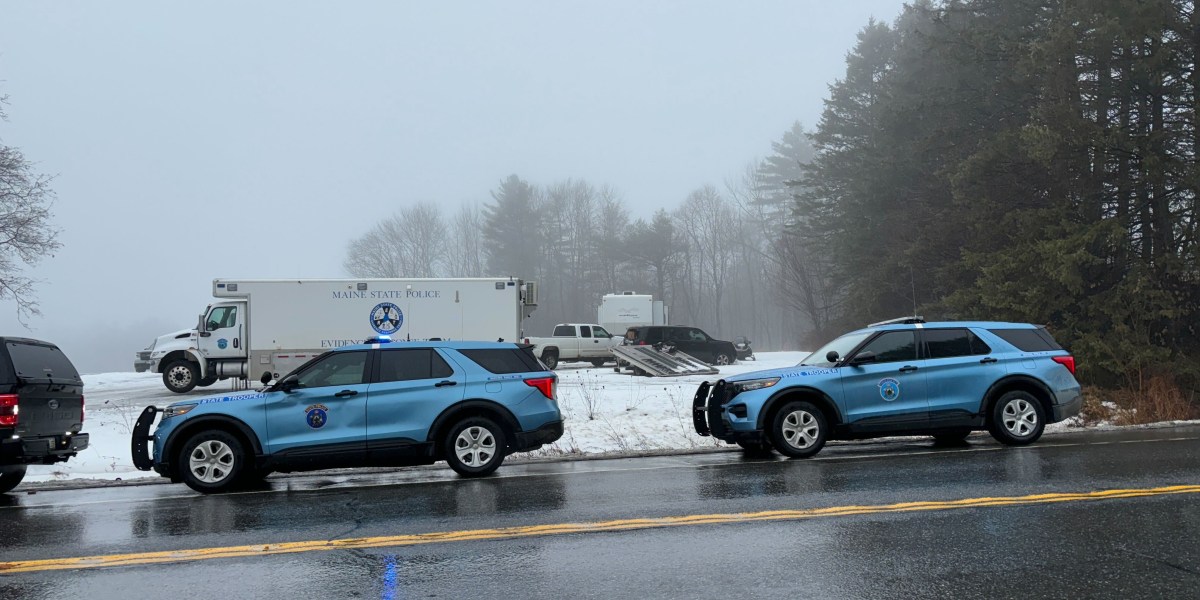
Maine State Police are already following the policies outlined in a new law limiting the ability of local law enforcement to collaborate with federal immigration authorities — even though the law is not scheduled to take effect until this summer.
Gov. Janet Mills announced last month she would allow LD 1971, one of the most controversial bills of last year’s legislative session, to become law without her signature. The measure will prohibit state, county and local law enforcement officers from investigating, detaining, arresting or searching a person solely for immigration enforcement purposes.
LD 1971 is not scheduled to take effect until 90 days after the current legislative session ends, meaning its effective date is expected to come in mid-July. However, Maine Department of Public Safety Commissioner Mike Sauschuck has already issued a directive to his agency implementing the underlying policies of the law, a spokesperson for the department said Wednesday.
“Directives are a regular part of the first responder world, and this one was made internally by the Commissioner and was not prompted by any specific event or federal activity,” spokesperson Shannon Moss said in an email.
She said the directive was announced on Dec. 22 — one week after Mills announced she would be allowing LD 1971 to become law.
Public awareness of the new directive comes as federal authorities have launched an immigration enforcement effort in Maine that has so far led to the arrest of nearly 50 people this week and has been the subject of considerable pushback in several communities.
Supporters of LD 1971, which was sponsored by Rep. Deqa Dhalac, D-South Portland, said last spring that the legislation ensures Maine law enforcement are using their resources to focus on criminal activity rather than civil immigration enforcement. The measure will help officers maintain trust with members of the immigrant community, they said.
Officers will still be able to work with federal agents on criminal investigations and task forces, so long as the primary purpose is not immigration enforcement.
However, the law would not allow local officers to be placed under the supervision of federal authorities for the purpose of working on immigration enforcement, or allow police to use federal immigration officers as interpreters. Local police also won’t be allowed to transfer a person to immigration authorities without a court order or criminal warrant.
In a Dec. 22 email to staff announcing the directive, Sauschuck said LD 1971 “has no impact on the overwhelming majority of the valuable work our DPS law enforcement officers do daily.”
Over more than nine months in 2025, Maine State Police responded to 56,857 calls for service plus tens of thousands more traffic stops, Sauschuck said in his email. Troopers contacted U.S. Immigration and Customs Enforcement or U.S. Customs and Border Protection for assistance identifying subjects 63 times.
“Simple math tells me that the MSP contacted ICE/CBP approximately 0.1% of the time over that 9.5-month period,” Sauschuck wrote. “Some will look at that number as evidence that DPS is complicit in the federal government’s immigration enforcement policies while others will see these small numbers as evidence of a non-existing problem.”
The department’s directive has no bearing on how other law enforcement agencies around Maine are responding to the new law, Moss said.
“They can deal with this issue as appropriate for their community until LD 1971 formally goes into effect in July,” she said.
