

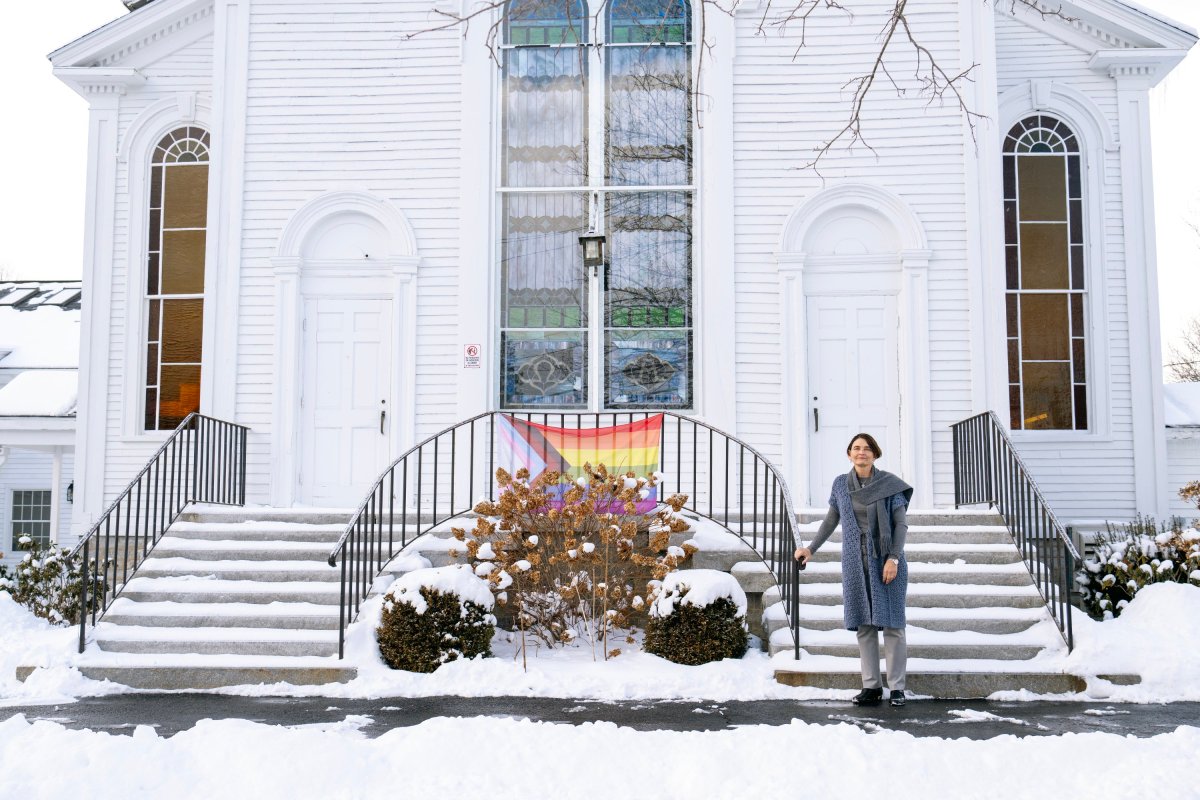
Every Sunday, two people watch the front doors at Congregational Church in Cumberland UCC anticipating that agents with U.S. Immigration and Customs Enforcement could show up.
Other church members have delivered groceries to immigrants who are scared to go to work and school.
And volunteers have been providing rides to church because, the Rev. Allison Smith said, “the harsh reality is that, right now, if you are a Black or brown person it is safer to have somebody with white skin drive you places.”
As ICE increases enforcement efforts in Maine, this church and others across Greater Portland have boosted security and taken steps to protect and advocate for immigrants who they worry could be targeted.
Smith said it’s painful to watch church members who have rebuilt their lives in Maine now live in fear.
“They took these harrowing journeys to get here because they believed our country was a democracy, that it was a place where they could finally be safe and their families could be safe,” she said. “They’re working, they’re building their lives here. To have them be so afraid, it just makes me so upset.”
Last January, the Trump administration rescinded a Biden-era policy that had protected certain sensitive areas, including churches, schools and hospitals, from immigration enforcement. That policy was replaced with a directive that gives ICE agents the power to take enforcement actions in those spaces using “common sense,” according to the National Immigration Law Center.
Jane Field, executive director of the Maine Council of Churches, said local clergy and church members have been trained by immigrant-led groups to verify tips called into an ICE hotline and have been protesting the enforcement surge.
“There’s an enormous amount of heartbreak and worry and righteous anger amongst many people of faith in Maine right now,” she said.
One of the most important things faith leaders can do now, Field said, is remind people to stay calm, not spread rumors and to be careful not to “whip people into a panic and fuel anxiety that doesn’t need to be fueled.”
The Maine Council of Churches over the last year has offered training for faith leaders about ICE enforcement and the federal policy change that allows agents to enter places of worship.
Since the change, some local churches, including Congregational Church in Cumberland UCC, have marked areas — often offices or similar spaces — as private so ICE agents should not enter without a judicial warrant, Field said.
At Westbrook-Warren Congregational Church, the Rev. Dr. Leslie Foley has hung up a “know your rights” checklist and reviewed it with deacons. The church already had security measures and an emergency plan in place, but people are now paying closer attention to who is coming into the building, she said.
Foley believes it’s “incumbent upon all people to stand in the gap and protect our neighbors however we can.”
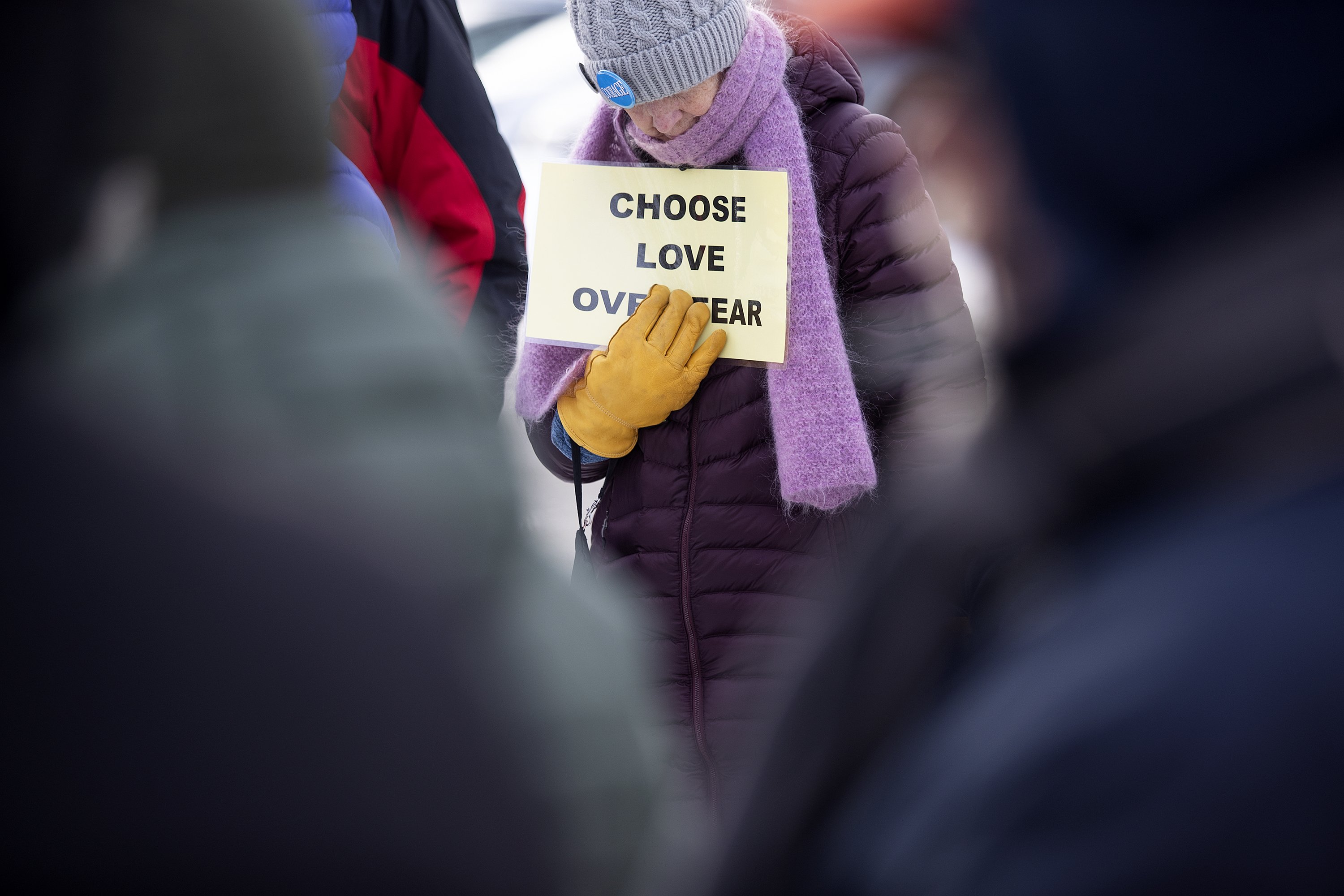
A group of local faith leaders, including Smith and Field, have spent most Wednesday afternoons since October praying and singing outside the Cumberland County Jail, where ICE detainees have been held.
Through the jail chaplain, they exchanged letters with some of the women from other states who are being held there and have prayed for them by name. Some people detained by immigration authorities in Maine have been sent to other states, away from their families and communities, Field said.
“It is our prayer that just as we are doing it for the people here, somebody is doing it for our people wherever they are,” Field said.
Field said her mind keeps going to a recent statement from Bishop A. Robert Hirschfeld of the Episcopal Church of New Hampshire after the death of Renee Good, the Minnesota woman shot and killed by an ICE agent.
“I’ve asked (the clergy) to get their affairs in order — to make sure they have their wills written,” Hirschfeld said, “because it may be that now is no longer the time for statements, but for us with our bodies to stand between the powers of this world and the most vulnerable.”

Comments are not available on this story. Read more about why we allow commenting on some stories and not on others.
We believe it's important to offer commenting on certain stories as a benefit to our readers. At its best, our comments sections can be a productive platform for readers to engage with our journalism, offer thoughts on coverage and issues, and drive conversation in a respectful, solutions-based way. It's a form of open discourse that can be useful to our community, public officials, journalists and others.
We do not enable comments on everything — exceptions include most crime stories, and coverage involving personal tragedy or sensitive issues that invite personal attacks instead of thoughtful discussion.
You can read more here about our commenting policy and terms of use. More information is also found on our FAQs.
Show less