

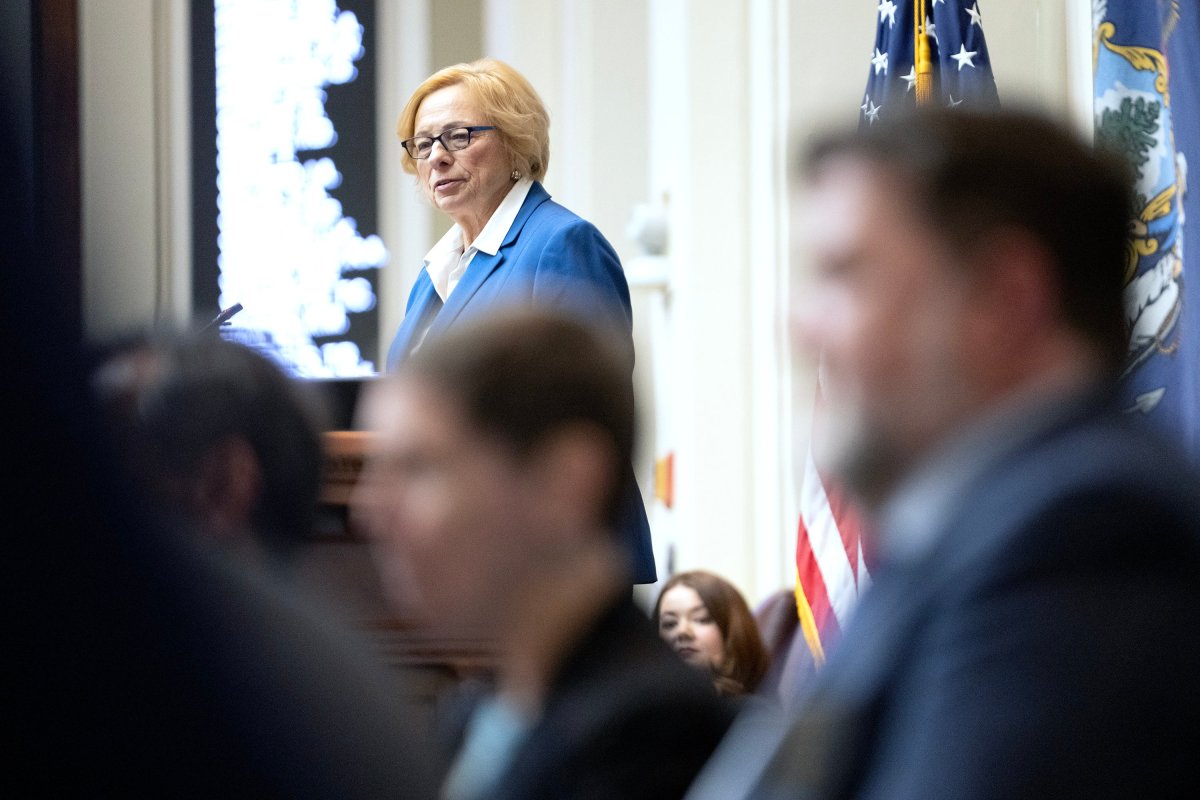
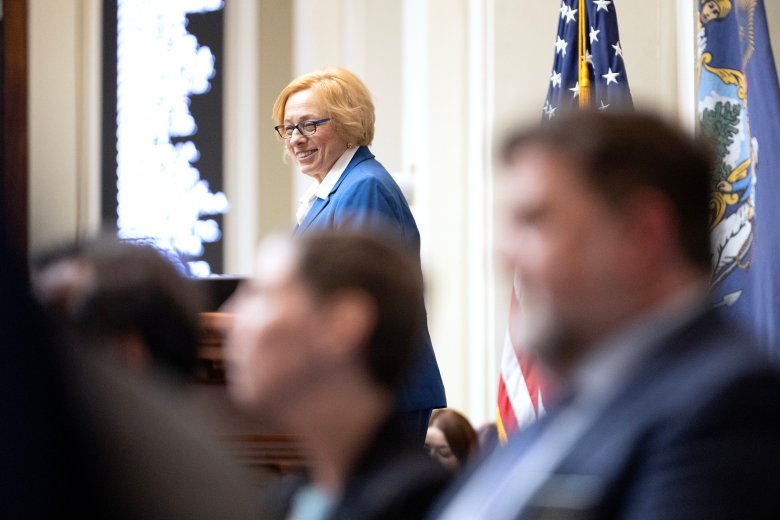
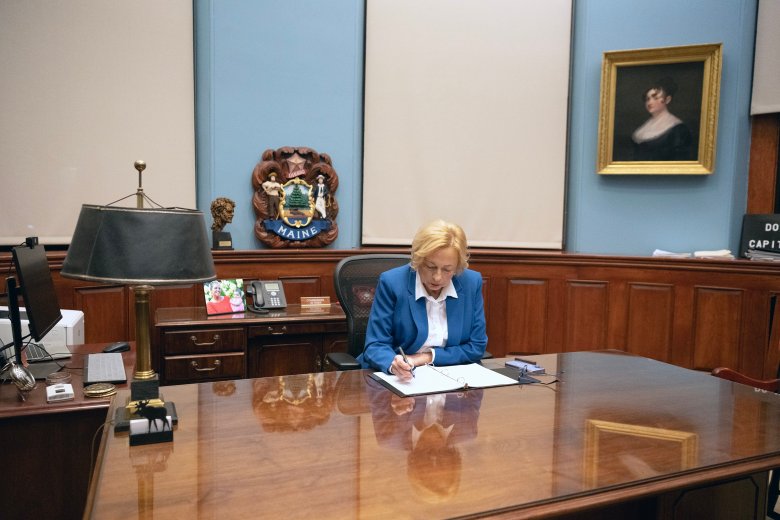
AUGUSTA — Gov. Janet Mills used her final State of the State address Tuesday night to unveil a package of proposals aimed at addressing affordability, including $300 relief checks.
Mills, a Democrat nearing the end of her second term, announced that her supplemental budget proposal includes the “affordability checks” for approximately 725,000 Maine people, funded with state reserves. The governor is also proposing making permanent the state’s free community college program and spending $70 million for housing construction and costs.
Mills, who is running in the Democratic primary to challenge U.S. Sen. Susan Collins for her seat in November, addressed lawmakers gathered at the State House on Tuesday night.
“From health care, housing and utilities to the price of a pickup truck, groceries and life-saving medications, costs are too high — and Maine people, like millions of people across the country, are feeling it,” Mills said. “Tonight, I propose that we do something about it.”
Mills calls out Trump administration over ICE
Mills’ speech came as Maine is experiencing an uptick in activity by federal immigration authorities that has prompted protests and pushback. Officials with the U.S. Department of Homeland Security said Monday that they had arrested more than 200 people over the course of five days in Maine.
Mills, who has been critical of the federal actions and called for the withdrawal of U.S. Immigration and Customs Enforcement agents from Maine, criticized the Trump administration in her remarks, not only for its immigration actions but other policies including health care and tariffs.
She noted that ICE’s activities have stoked fear in many communities and said federal agents are “arresting people, not on public safety grounds but based on quotas, on skin color, on accents, on religion, on ethnic origin.”
“For those who may be unconcerned by the federal government’s abuses of today, I only ask you to consider this — what happens when the federal government finds you to be the problem tomorrow?” Mills said.
Affordability package includes $300 checks
The Mills’ administration has put forth relief checks in the past, most recently in 2023 when 880,000 people received energy relief checks of $450.
The governor said Tuesday that she and her team found themselves thinking about how they could help people in a quick and meaningful way as they put together the budget proposal.
“And we thought: why reinvent the wheel, why create a new process, new forms and new hoops to jump through?” she said.
An estimated 725,000 people will be eligible for the checks, which will be funded with $218.5 million from Maine’s Budget Stabilization Fund, commonly known as the “rainy day fund,” which is currently at its statutory maximum of $1 billion.
Those eligible for a check include full-year Maine residents filing a 2025 Maine tax return, making up to $75,000 for a single filer or married filing separately; $112,500 for head of household; and $150,000 for a married couple filing jointly.
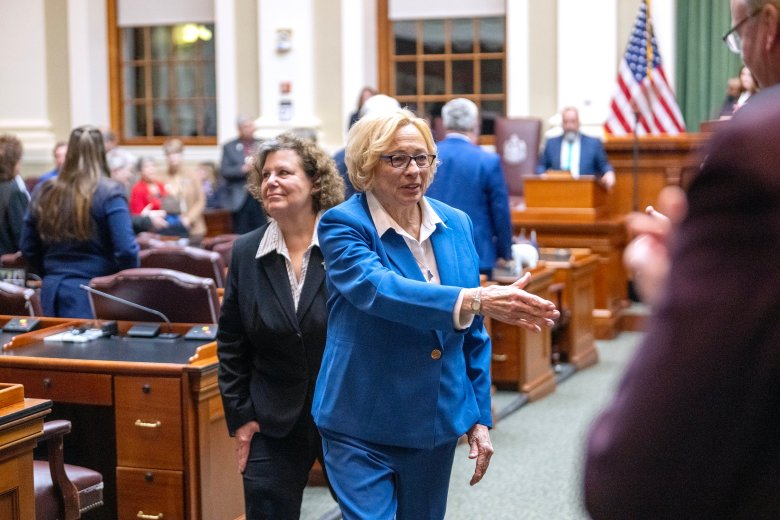
The other proposals in the governor’s affordability package include $2.5 million that, on top of funding approved last year, will provide free community college for students who graduated high school in 2025. The governor is also proposing making the program permanent — a step she also called for last year, though it was not approved by lawmakers.
Another $70 million from the rainy day fund is being proposed for housing, with $55 million to be dedicated to new housing production via a mix of new and existing programs, and $15 million for housing programs largely aimed at helping the elderly and people at risk of homelessness.
Mills said the investment should trigger at least $15 million in matching federal funds and is expected to result in 825 new housing units across Maine.
Republicans criticize checks as election ploy
The governor is also proposing a statewide ban on cellphones in schools and called on the federal government to enact universal health care. And she highlighted $2.25 million announced earlier Tuesday that she is proposing for reproductive health care providers that have been impacted by federal Medicaid cuts.
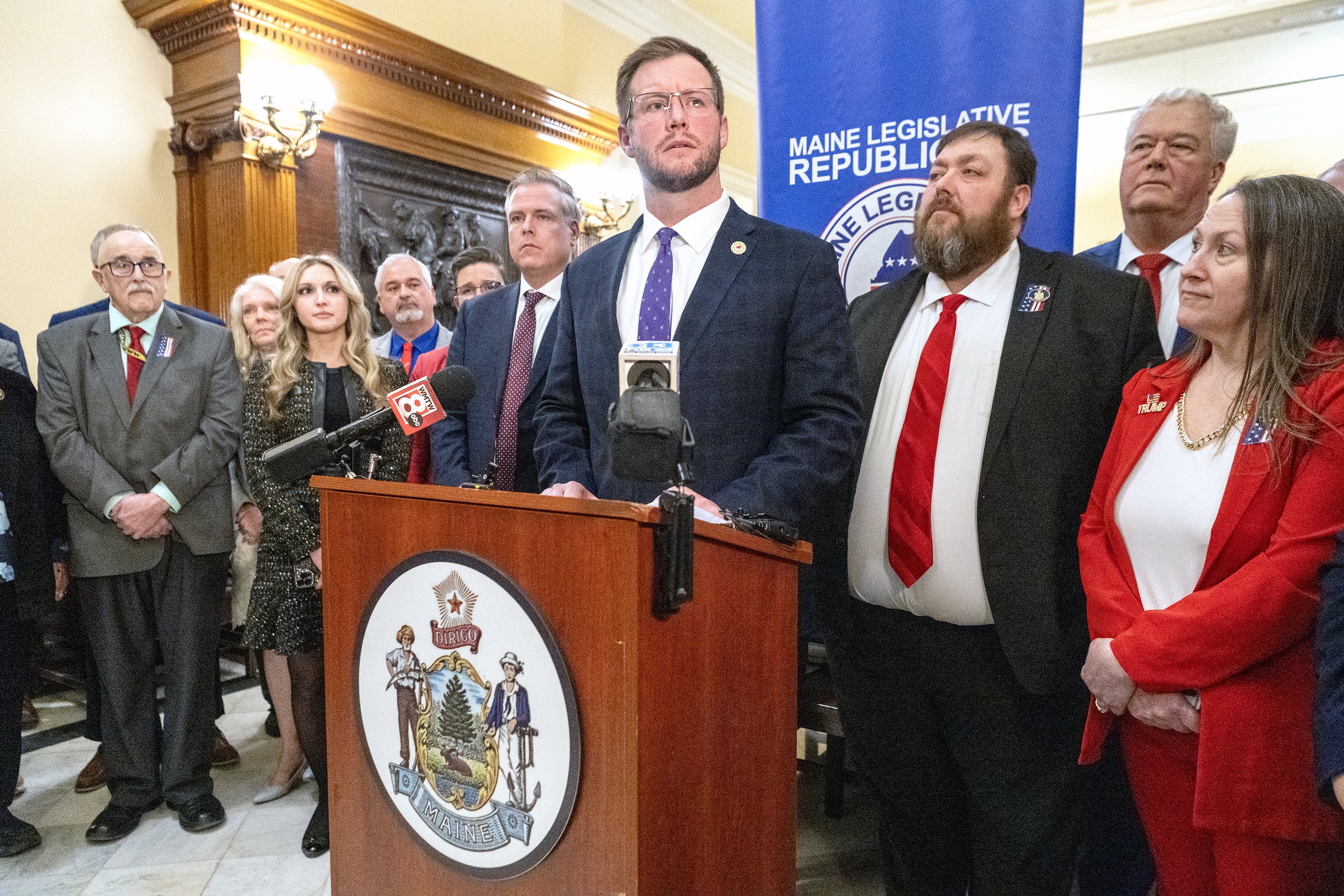
Republicans — some of whom walked out of Mills’ speech when she brought up abortion access — offered scathing criticism afterwards, saying the $300 checks are a ploy to buy votes in an election year and that Mills has done little to help affordability.
“She said the state of the state is strong, expecting Mainers to deny what they see with their own eyes and pocketbooks,” said House Minority Leader Billy Bob Faulkingham, R-Winter Harbor. “I know because I’m one of those Mainers, and we’re struggling. We’re struggling with the cost of electric bills and affordability in this state.”
Democratic leaders, meanwhile, did not promise the $300 checks, but said they were interested to learn more about the governor’s proposal.
“I’m not convinced the $300 check is the way to do it, but I think there is certainly an appetite to figure out how do we provide relief for property tax, for utility bills, for housing costs,” said House Speaker Ryan Fecteau, D-Biddeford.
Fecteau and Senate President Mattie Daughtry, D-Brunswick, were cautious about drawing from the rainy day fund. “It’s going to be a conversation that is going to be really robust, and I’m curious to dig in more,” Daughtry said.
Both leaders support a ban on cellphones in schools.
Fecteau said he was apprehensive about the idea for a long time, but now backs it after having researched it and talked to people who support it, including those in states that have bans.
“I think students recognize it is something that prevents them from connecting with their peers and it has been a hindrance to their learning,” he said.




We invite you to add your comments. We encourage a thoughtful exchange of ideas and information on this website. By joining the conversation, you are agreeing to our commenting policy and terms of use. More information is found on our FAQs. You can update your screen name on the member's center.
Comments are managed by our staff during regular business hours Monday through Friday as well as limited hours on Saturday and Sunday. Comments held for moderation outside of those hours may take longer to approve.
Join the Conversation
Please sign into your CentralMaine.com account to participate in conversations below. If you do not have an account, you can register or subscribe. Questions? Please see our FAQs.