

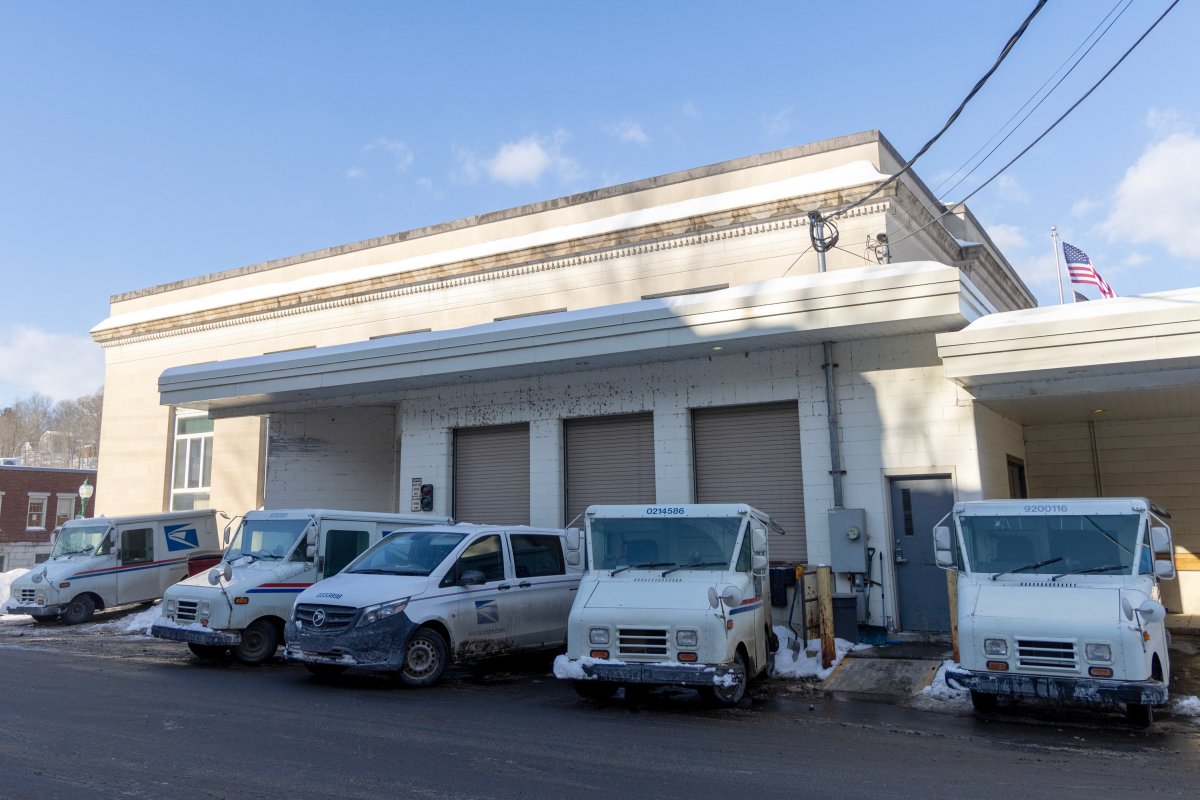
HALLOWELL—Janet Butterfield appreciated her rural mail carrier.
When he’d deliver packages and mail down her dirt driveway on the outskirts of Hallowell for the U.S. Postal Service, he’d tell Butterfield about his long hours — up to 70 hours a week, often in tough weather.
That was a year ago. Since he was pulled onto another route last winter, Butterfield said she hasn’t received mail on a regular basis. Sometimes, her house receives mail only once a week.
That can be a real problem for her husband, Steven, who gets some of his medication through the Postal Service. Recently, his prescription was delivered four days late.
“Luckily, he’s very organized, he orders ahead enough knowing this could happen,” Butterfield said. “But he’s a diabetic, he has high blood pressure — these are important medications. It’s not just fly-by-night stuff here.”
Hundreds across rural Maine have struggled with mail delivery in the past year, as the Postal Service struggles to recruit and retain workers and as working conditions deteriorate. Many have taken to social media or to calling their elected representatives for answers.
In fiscal year 2023, almost 80% of rural carrier associate job postings in Maine, New Hampshire and Vermont went unanswered, a 2024 report from the USPS Office of the Inspector General showed — the fourth-highest rate in the country.
Nationwide, 255,140 rural carrier associate job postings that year drew no applicants.
The Postal Service designates starting carrier jobs, processing clerks and handlers as “pre-career” employees. Those workers are not eligible for the employee benefits career employees receive, often have changing schedules and many times are required to use their personal vehicle to deliver the mail.
Most new USPS workers are hired at around $20 per hour as a pre-career employee, and a third of those hires leave by their 90th day, the report found.
Selena Garside, the president of the American Postal Workers Union of Maine, said rural carrier associates, who are considered pre-career, are meant to fill in when primary rural carriers are unavailable. When the primary position is vacant, associate rural carriers take on multiple routes.
“You never really understand how many little side roads there are in a town until you start delivering the mail,” Garside said. “These routes span a lot of miles, often in very remote areas. Rural carriers, especially new ones, face a lot of challenges out there. Many places lack cellphone service, making it very difficult for new employees to look up roads or addresses. Many customers or towns do not have their houses, businesses or roads labeled well either, making it challenging for employees to ensure they are delivering mail to the proper locations.”
Butterfield and hundreds of others are experiencing the fallout from that crunch. When mail isn’t delivered on time, Garside said it’s often because of understaffed offices, which can’t deal with the ever-increasing workload.
“We have employees working 12-plus hours a day seven days a week and doing the work of multiple people while they are there,” she said. “One person can only accomplish so much in a day.”
Heather Young, who lives on Winthrop Street in Hallowell, said she also only gets her mail once or twice per week. She’s missing checks and other important mail — even though she’s signed up for USPS Informed Delivery, a program designed to help people know what mail they should expect on a given day.
Often, Young said she’ll receive mail four or five days after she was notified by Informed Delivery.
Kaylee Wilson lives in downtown Gardiner. Even on a city route, she hasn’t received mail in more than two weeks. Her neighbors have experienced similar mail droughts, she said.
Notably, her missing mail includes a new Social Security card; Wilson recently changed her name after being married for three years. She visited the Gardiner post office Tuesday to see if she could get her mail, but the line was long and the mail was disorganized. Some of it was even sitting in an unused mail truck, she said.
Wilson said she will also need a new passport soon, but she said she’s wary of starting that process.

“They keep your old (passport), and then they mail your new one and your birth certificate back to you. Those are really, really important documents that are going through the mail,” Wilson said. “I just am a little bit hesitant because I don’t know when I’m going to get those documents back. I don’t know how long it’s going to take. I’m kind of putting my life on hold because of the mail situation. That should not be the case.”
The issue, to state Rep. Katrina Smith, R-Palermo, has “reached a crisis level.”
In an open letter to Postmaster General David Steiner published earlier this month in the Town Line, a weekly community newspaper, Smith said she believes the problems begin with chronic understaffing. Carriers, especially in rural areas, are crushed under the weight of on-demand online shopping orders, extended routes and long hours, she wrote.
Butterfield has seen the understaffing for herself.
She visited an Augusta post office recently to inquire about mail she knew was in Augusta but hadn’t been delivered yet.
“(The man at the counter) could not have been any more polite, apologetic,” she said. “I’m sure he gets the brunt of all of the people. And he said, ‘I get people coming in hourly to complain about lack of mail delivery. I don’t know what to tell you.’ I said, ‘You can’t just go and get our mail and give it to me?’ He goes, ‘Nothing is sorted. I can’t give it to you because I can’t find it.'”
A spokesperson for the Augusta-based American Postal Workers Union Local 461, which represents postal clerks, declined to comment, citing USPS policy.
Xavier Hernandez, a spokesperson for USPS based in New York, said the Postal Service uses overtime, expands mail deliveries to earlier and later times and uses carriers from nearby post offices when some areas experience delays.
“The Postal Service makes every effort to advance mail and packages for customers and recognizes that consistency is paramount,” Hernandez said in an emailed statement. “We are aware select locations have experienced sporadic delivery occasionally, generally caused by employee availability issues.”
But pushing more responsibilities onto USPS employees can be unsustainable, Garside said.
Short-staffed offices still must deliver the mail, and many workers in those offices choose to transfer or resign altogether, she said. It can be a vicious spiral.
Butterfield remains frustrated. She often jokes wryly with her neighbors, texting back and forth about whether they received packages or bills or tax return documents. She still gets her paycheck through the mail from a company in Bangor, too.
“I’m about ready to say: ‘Don’t mail it to me. Let me know when my check is ready and I’ll drive to Bangor and pick it up,'” Butterfield said. “Because this is crazy.”

We invite you to add your comments. We encourage a thoughtful exchange of ideas and information on this website. By joining the conversation, you are agreeing to our commenting policy and terms of use. More information is found on our FAQs. You can update your screen name on the member's center.
Comments are managed by our staff during regular business hours Monday through Friday as well as limited hours on Saturday and Sunday. Comments held for moderation outside of those hours may take longer to approve.
Join the Conversation
Please sign into your CentralMaine.com account to participate in conversations below. If you do not have an account, you can register or subscribe. Questions? Please see our FAQs.