

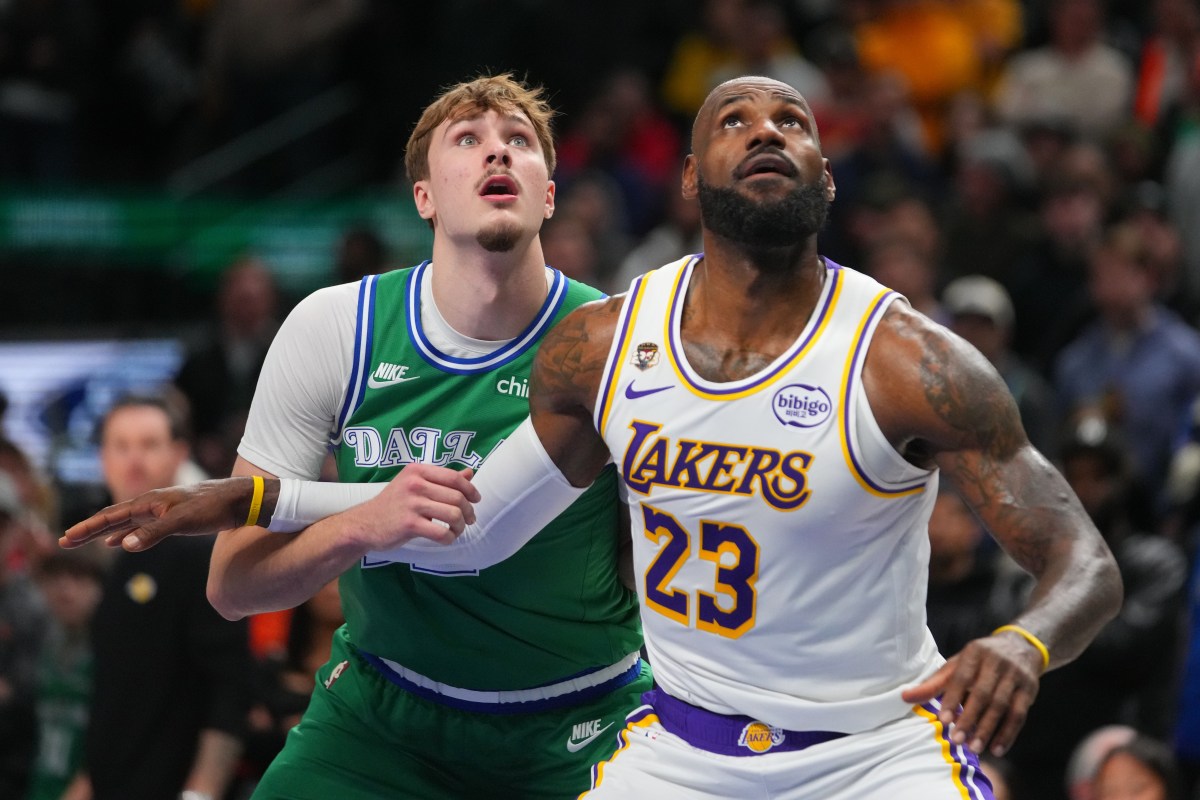
Brian Scalabrine wanted to give basketball’s rising star a pep talk.
Cooper Flagg’s NBA career was less than a month old, and Scalabrine, who played for 12 seasons and is now an analyst for NBC Sports Boston, was seeing and hearing commentary about a slower-than-expected start for the Newport native and Dallas Mavericks rookie.
Scalabrine picked up his phone and texted Flagg.
“Your stats are not that far off from LeBron James’s through 13 games in,” he wrote. “Possession by possession. I think you’re doing fine. You will 100% figure this league out.”
His phone dinged with Flagg’s reply.
“He hit me back real quick. ‘Yes sir, I’m ready to go,'” Scalabrine said. “People were starting to doubt him. … Like I’ve always said, it’s just going to take time.”
Just past the midway point of his rookie season — Dallas has played 47 games through Wednesday, with 35 more to go in the regular season — it’s clear that Flagg has figured some things out. He’s the betting favorite to win the NBA Rookie of the Year award, according to DraftKings, and his averages of 18.8 points, 6.4 rebounds and 1.3 steals per game going into Thursday rank first, third and second among the league’s first-year players.
Flagg has worked through some adversity to start his career, both in terms of occasional criticism and critiques of his play to start the season, and handling the injuries and fatigue that come with the grind of an 82-game NBA season.
With the All-Star break approaching, though, it’s clear he’s found his place at the sport’s highest level. No rookie has averaged more points, rebounds and steals since Glenn Robinson and Grant Hill in the 1994-95 season.
“Talking to people around the league, the expectations for this kid were sky-high coming in, and pretty much the universal consensus … is that he’s exceeded them,” said Tim MacMahon, a reporter for ESPN who covers the Mavericks. “I’ve yet to talk to a single person who has said ‘Yeah, we thought there would be more from Cooper.'”
‘Winning basketball’
Early on, there were some doubts. Flagg scored 10 points on 4-of-13 shooting in his first game against San Antonio, and three games later he was 1 for 9 and scored two points in a loss to Oklahoma City while battling a sore shoulder.
Flagg’s play remained under scrutiny in late November, when esteemed basketball writer and former NBA executive John Hollinger criticized his production in a 102-96 loss to Memphis on Nov. 22.
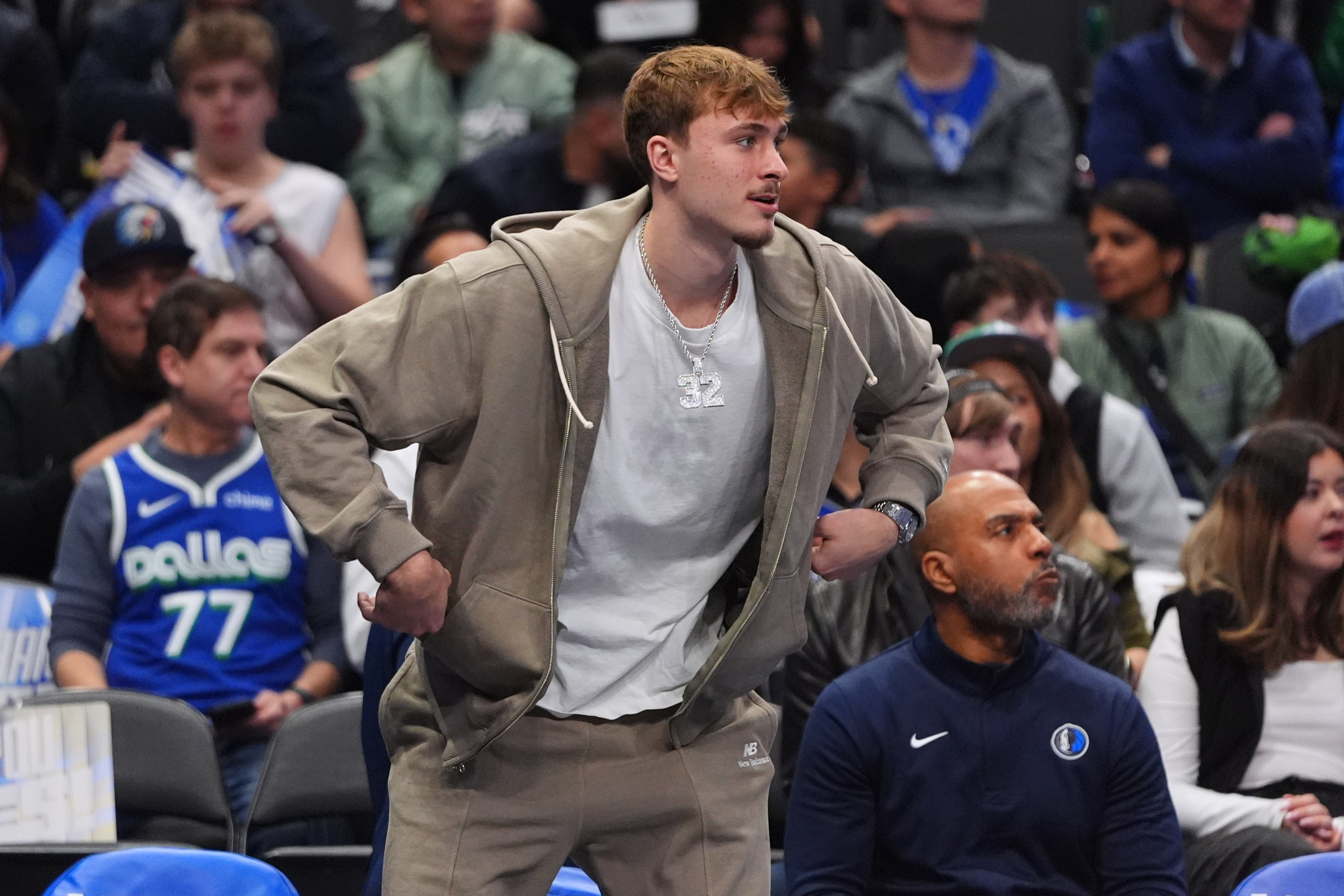
“Overall, Flagg’s rookie season has been slightly less than expected,” Hollinger wrote in The Athletic.
Watching in Boston, Scalabrine had a different take on Flagg, whom he called a “top-10 processer.”
“I watch him play winning basketball,” he said. “If you watch Cooper get off the ball early, I can already see what he’s thinking. Look at the defense, it’s shifted. Get the ball up the floor, there’s an attack gap. That weak-side shooter on the right side, as I kick it up the left side, he’s going to be open.
“I just saw all the backlash of people saying ‘Oh, he might not be that good.’ I’m like, ‘You guys are crazy.'”
Shortly after that point of the season, Flagg’s production took off. Three games after the Memphis loss, he scored 35 points in a win over the Los Angeles Clippers. Six games later, he scored 42 in a loss to Utah, becoming the first 18-year-old in league history to top 40 in a game.
For December, he averaged 23.5 points, 6.2 rebounds and 4.8 assists while shooting over 50% from the field. His increased production came after rookie point guard Ryan Nembhard was moved into the starting lineup, helping to reduce Flagg’s ball-handling responsibilities.
“You do have to grade this kid on the teenager curve, and if you look at his numbers and his age, the only real comparison has been LeBron James at 18. At 19, one of the comps is Luka Doncic,” MacMahon said. “The kid is unbelievably competitive, extremely focused. … You don’t see teenagers having the ball in their hands down the stretch of games, making plays to close out games. And he’s done that.”
Flagg made a quick adjustment to an element of the NBA. At first, he struggled in the second game of back-to-backs (games on consecutive nights), scoring 15 points or fewer in his first four while shooting 35% from the floor.
In two of the next three such occasions, however, he topped 30 points.
“It’s something that we took a close look at,” said his trainer, Matt MacKenzie, who said he travels to see Flagg roughly every other week and talks with him daily. “His routines have to adapt with those demands. We took a close look at the amount of sleep that he’s getting, what are his game-day routines on the second night of a back-to-back, how can he make sure his legs are feeling the best they possibly can?”
The rookie wall
Flagg still has to continue acclimating to the physical demands that can take any new NBA player by surprise. He played 39 games in 151 days at Duke last season. Entering Thursday, he had played 43 games in 95 days with the Mavericks. Injuries can mount in the NBA, and there often isn’t time to nurse them.
When Flagg sat out Wednesday’s game against the Timberwolves, because of what the team termed left ankle injury management, it was just his fourth missed game of the season. He ranks third among rookies in minutes played, taking the court through a sprained thumb, a sprained ankle and a sore shoulder.
“(With) the rapid-fire games in the NBA, you’ve got to manage these things right. Because if you don’t, they linger,” Scalabrine said. “You are expected to get nicked up a little bit and miss some games. … It’s really not feasible for anyone to play 82 anymore.”
This month has also seen talk of the “rookie wall,” the point in the season for a first-year player when fatigue adds up and game-day energy drops.
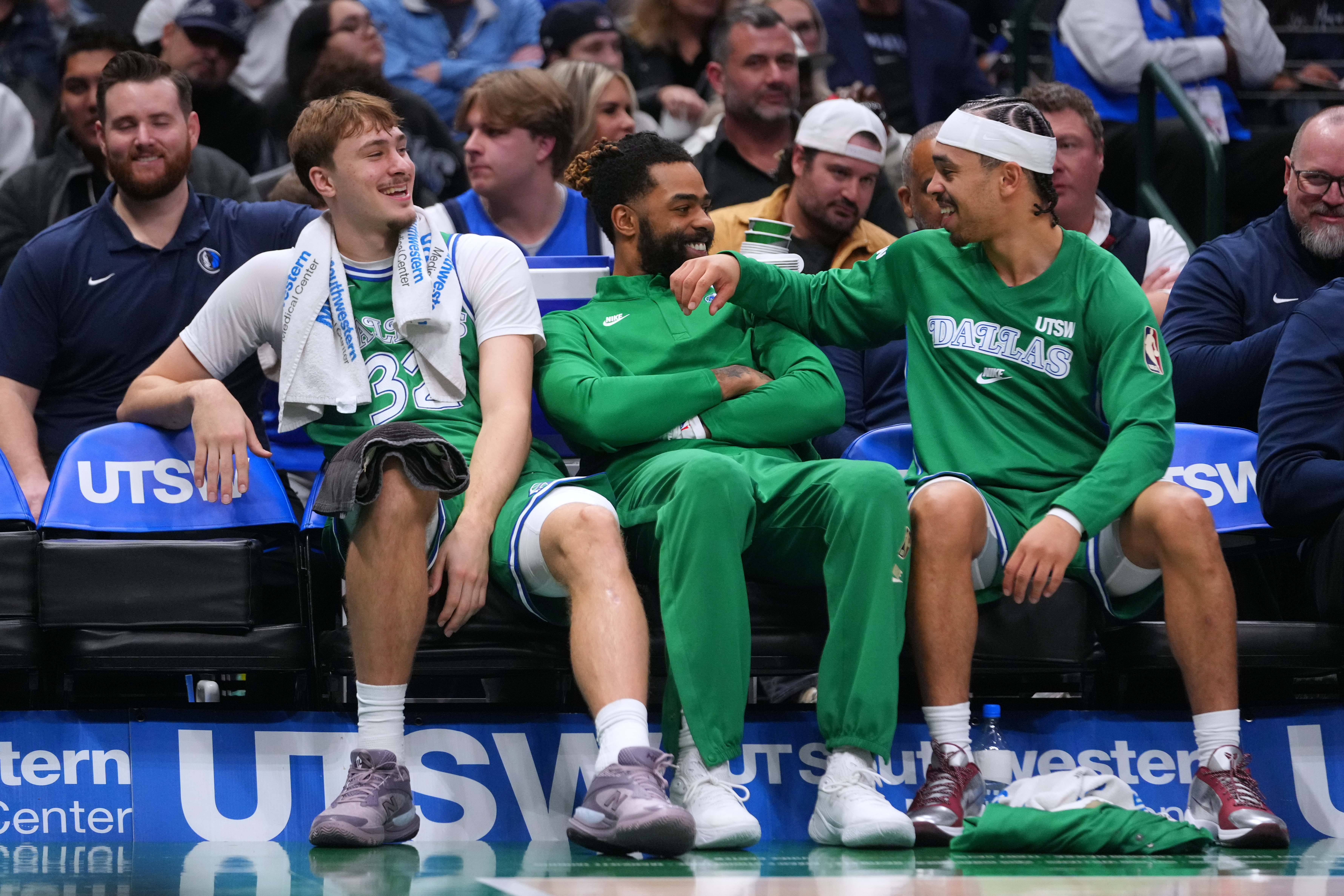
“Let’s just say the (energy) percentage ranges between 95 and 98 … and (then) it drops down to 91,” Scalabrine said. “In the NBA, you lose by 20. That’s the problem. When you exhale, just for a second, you lose by 20 points. And you’re like ‘How did that happen?’ You downshifted just a bit.”
After averaging 23.5 points and 51.6% shooting in 13 December games, Flagg entered Wednesday at 16.7 points and 43% in 10 January contests.
“Obviously there’s days you feel tired. Days you don’t feel fully 100%,” he told the Dallas Morning News. “But you figure out a way to play through it and be tough.”
His head coach, Jason Kidd, said the rookie wall is something Flagg will have to face, if he hasn’t encountered it already.
“You’ve got to touch it,” Kidd told the Morning News. “For the great ones, they touch it. They don’t run from it. They find a way to go over it or through it or around it. Because it’s not going to move.”
Scalabrine, though, said that the rookie wall affects role players more than starters, and that what Flagg is facing because of the nightly demands of being the team’s go-to player.
“It’s just a lot. It’s a lot for any young player. Being ‘the guy’ on your team as a rookie, it’s a lot for every player,” he said. “I don’t consider that a rookie wall. … Any time you’re dealing with a primary ballhandler, where teams are geared up to try to stop him, that’s just normal basketball adjustments. He’s not a normal rookie.”
MacMahon watches Flagg every game. He said he doesn’t see fatigue creeping into his play.
“I’ve never looked out there and thought ‘Man, Cooper looks lifeless.’ He plays with a consistent energy,” he said. “The shooting numbers are going to ebb and flow. … This is not easy. It is a hard league. There’s a reason most rookies don’t play a lot.”
On Thursday, Flagg got over the wall, just like his coach said. He scored 49 points, an NBA record for a teenager, in a game against the Charlotte Hornets.
According to MacKenzie, that’s what Flagg has been about: Identifying a challenge, and finding a way through it.
“He’s communicated certain days where maybe he’s feeling heavy in the legs or he’s feeling a little bit sore, but it’s never a complaint,” he said. “It’s always ‘What can we do to combat this?’ He’s somebody who wants to always make sure he’s the best version of himself.”

We invite you to add your comments. We encourage a thoughtful exchange of ideas and information on this website. By joining the conversation, you are agreeing to our commenting policy and terms of use. More information is found on our FAQs. You can update your screen name on the member's center.
Comments are managed by our staff during regular business hours Monday through Friday as well as limited hours on Saturday and Sunday. Comments held for moderation outside of those hours may take longer to approve.
Join the Conversation
Please sign into your CentralMaine.com account to participate in conversations below. If you do not have an account, you can register or subscribe. Questions? Please see our FAQs.