

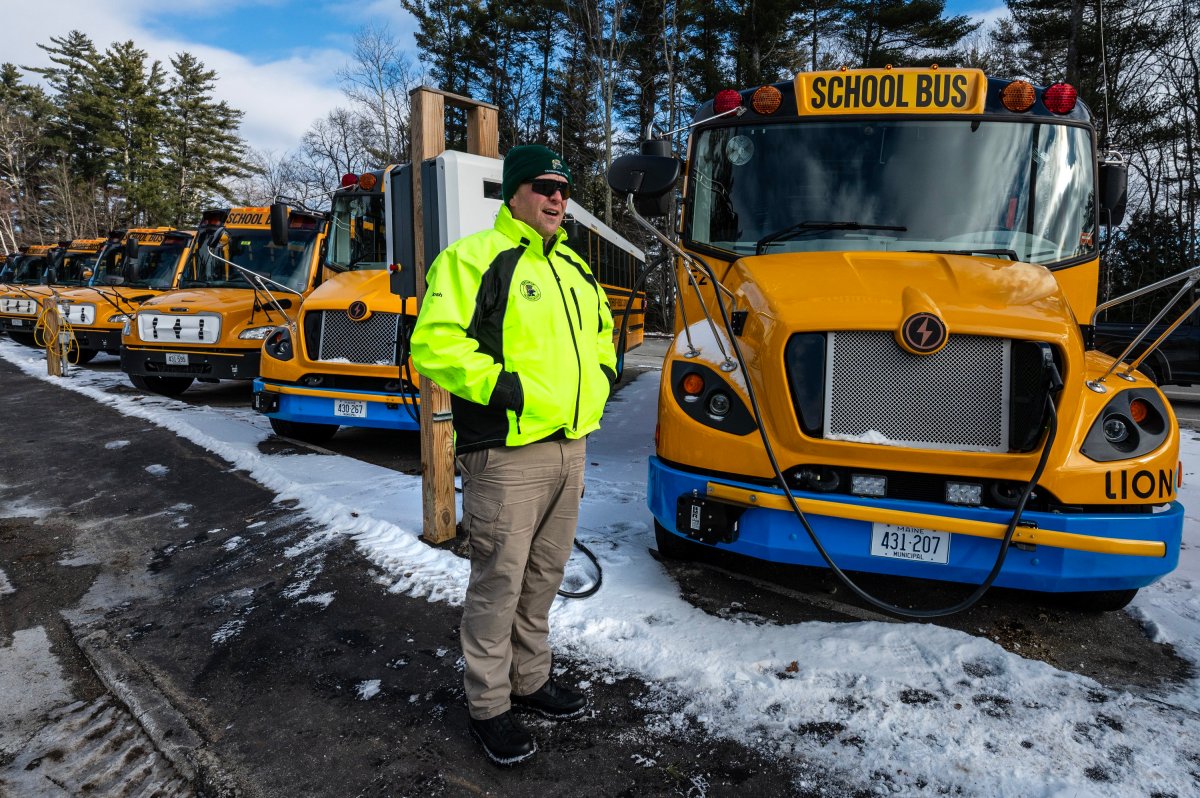
For three years, some school districts across Maine have been grappling with a costly problem — what to do with flawed electric school buses that were made available via a federal clean school bus program.
Under the Clean School Bus Program, the districts agreed to use the buses or reimburse the federal government for their cost — which appeared to leave them on the hook for about $400,000 per bus.
However, because most of the districts technically bought the buses through a state program, they won’t have to repay the money after all, allowing them to move on from the troubled program.
For many districts, including the Sheepscot Valley-area school district in Lincoln and Kennebec counties, the electric buses were a success.
But other districts that received buses manufactured by Lion Electric Co. faced problems that surfaced immediately, including brake failures, high voltage warnings and other issues. Some never worked at all. Districts were stuck with vehicles they couldn’t or didn’t want to operate. Unclear communication from state and federal officials left school districts with more questions than answers.
It was thought that districts would have to pay the U.S. Environmental Protect Agency, which administers the clean bus program, the cost of the Lion Electric buses for not using them.
The situation has been complicated by a bankruptcy filing by Lion Electric.
But because most school districts bought the buses through the Maine School Bus Purchasing Program, including Yarmouth, Vinalhaven and Winthrop, they no longer need to.
“In some places, school administrative units paid for their own Lion Electric buses outside of the EPA grant program and, therefore, would not have an obligation to the EPA,” said Chloe Teboe, spokesperson for the Maine Department of Education.
In Yarmouth, which received the Lion Electric buses, school officials are considering their options.
“While we are deciding our next steps with the buses, which is likely a disposal plan, we have no financial obligations to the state or federal entities,” said Andrew Dolloff, Yarmouth School Department’s superintendent.
The state education department has hired VEIC, an environmental consulting company in Vermont, to work with affected school districts.
The company will provide one-on-one support to school districts. If the problems cannot be resolved, VEIC will document them and recommend mitigation strategies, Mike Haberman, the company’s spokesperson, said.
“This support may include individual meetings, completing forms on behalf of the district, addressing district-specific questions, researching specific Lion Electric issues on behalf of individual districts (or Maine DOE), and outreach to national resources on behalf of individual districts or Maine DOE (such as the World Resources Institute ESB Initiative, the Electric School Bus Network, and private companies willing to service Lion buses),” said Haberman.
Teboe said the state education department has not had further contact from affected school districts.
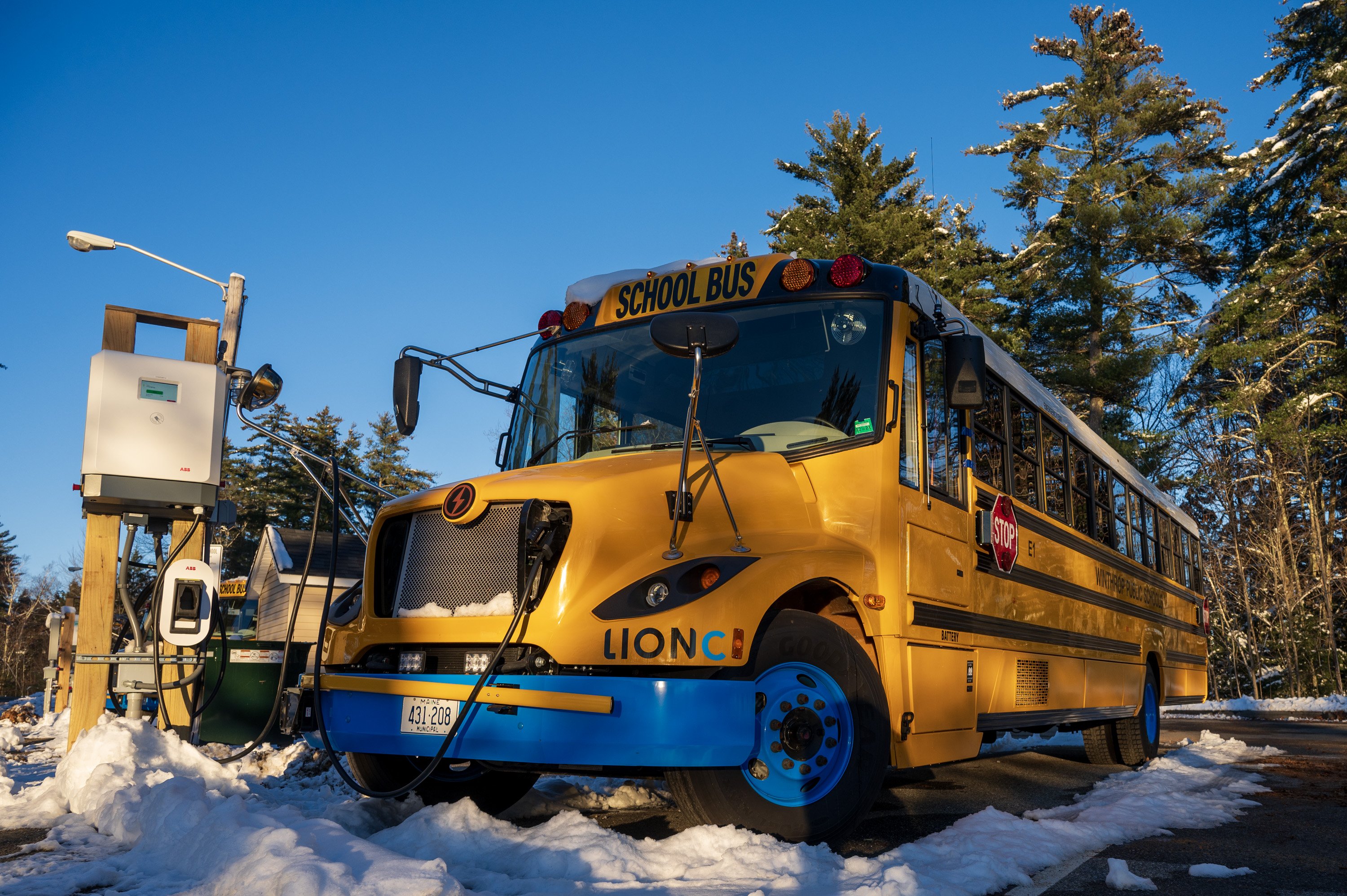
Like Yarmouth, the Winthrop school district is waiting to see if it can sell the buses.
“We have moved on for the most part,” said Becky Foley, Winthrop’s superintendent.
WIDESPREAD PROBLEMS
The problems have not been limited to Maine. A request for information to the EPA under the Freedom of Information Act shows the scope of problems encountered by school districts across the country that received Lion Electric Co. buses.
A school district in Los Angeles was slated to receive 20 buses from Lion Electric Co., but two years after ordering the buses, the district was still waiting on the delivery.
In Kansas, a rural school district’s two Lion Electric buses could not handle the terrain in the rural area. Every bump over the rocky roads would rattle the buses’ parts.
“Getting service was an incredible mess,” Troy Pitsch, superintendent of the Kansas district, said. “Parts were an issue. It was constant, having the guys come out to make a tweak. It was very frustrating, but I could tolerate it knowing it was not costing the district anything in finances.”
“Right now, the buses are paper weights in the lot.”
Troy Pitsch, school superintendent in Kansas
Like the Maine schools, Pitsch waited months, even years, for answers on what to do with the buses. He said he had no choice but to contact his state legislators. Eventually, after going back and forth with officials at the EPA and Lion Electric Co., he received a letter in July from Deloitte, the company that assisted Lion with its Chapter 15 restructuring.
“All warranties and purchase orders that you could have with the Lion Group are therefore not being legally assumed by the company post transaction,” the note said, adding that the contracts schools have with Lion are no longer enforceable.
Pitsch has placed the buses on an auction website, but he’s unsure if they will sell. He said he’ll take any opportunity to put money back into the school district, which has around 450 students.
“Right now, the buses are paper weights in the lot,” he said.
REBRANDING
A recent statement from the U.S. Environmental Protection Agency suggests that the department will release additional information about the “revamped” and “modernized” Clean School Bus Program in accordance with an executive order from President Donald Trump.
The program’s revamp is expected to “ensure hard-earned American tax dollars are being put to the best possible use and not frivolously wasted as was often the case under the previous administration.”
The Clean School Bus Program was created under President Joe Biden’s administration to reduce the use of diesel buses. It intentionally picked school districts in rural areas.
Since the rollout of the buses across the country in 2023, Lion Electric Co. has declared bankruptcy and is named in several lawsuits in both Quebec and the United States for its inability to repair the buses under warranty, and for over-promising the company’s performance to investors.
Lion Electric Co. was bought in 2025 by a group of Quebec investors and now goes by Lion.
Other companies that supplied buses through the program did not struggle like Lion Electric.
School Transportation News, which reports on student transportation across the country, reported in July that 1,039 awards through the Clean School Bus Program have been issued to 1,344 school districts across the country. Nearly $2.8 billion of the total $5 billion grant has been awarded, replacing 8,936 buses.
In the meantime, the EPA continues its oversight.
“EPA is actively monitoring the bankruptcy proceedings and evaluating all options to support impacted school districts,” the federal environmental agency said in a statement, acknowledging the situation has put school districts in a difficult position.

We invite you to add your comments. We encourage a thoughtful exchange of ideas and information on this website. By joining the conversation, you are agreeing to our commenting policy and terms of use. More information is found on our FAQs. You can update your screen name on the member's center.
Comments are managed by our staff during regular business hours Monday through Friday as well as limited hours on Saturday and Sunday. Comments held for moderation outside of those hours may take longer to approve.
Join the Conversation
Please sign into your CentralMaine.com account to participate in conversations below. If you do not have an account, you can register or subscribe. Questions? Please see our FAQs.