
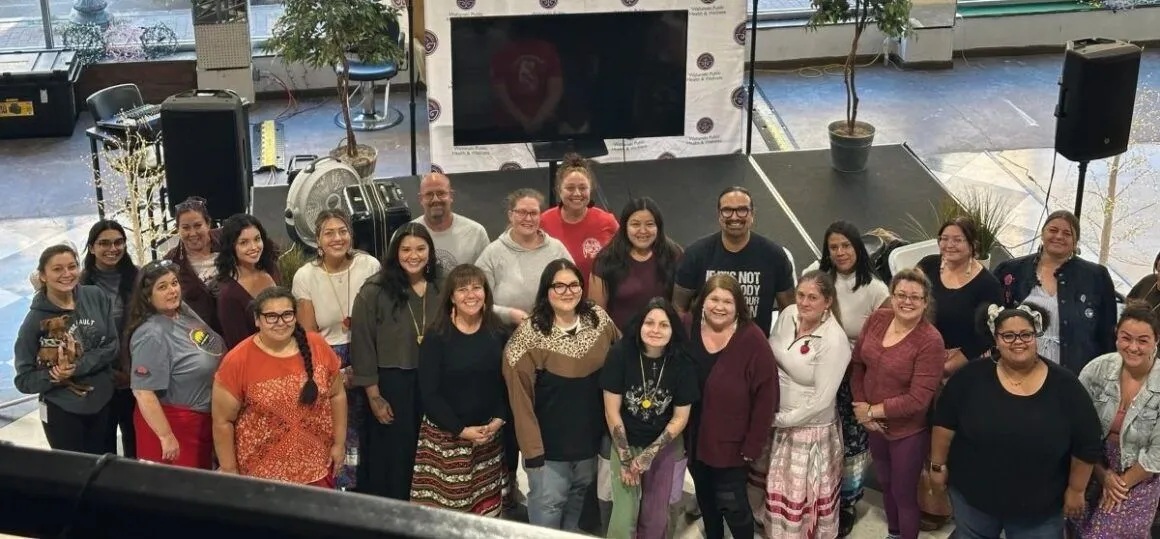
Wabanaki Public Health and Wellness for the first time has trained about 30 doulas to help families leading up to and during birth as other birthing services across the state have ceased.
Lisa Sockabasin, co-CEO of the health organization based in Bangor, said she heard from concerned community members about the crisis of closing birthing centers across Maine, so Wabanaki Public Health and Wellness decided to help fill in the gaps.
Most of the participants in the late-September training were Indigenous, though some were not, she said. A tribal chief participated, as well as other community members. The trainers were Indigenous doulas from Canada.
Sockabasin said it is important to have Indigenous doulas in particular because they can incorporate cultural aspects into their work.
“It’s about that time being honored, being sacred. It’s a very spiritual time,” she said. “That birth is a ceremony.”
Doulas are nonmedical care workers who provide educational, physical and emotional support to pregnant, birthing and postpartum people and their families. A 2023 survey of 45 doulas, conducted by the Maine Doula Coalition, found they were overwhelmingly female and white, and highly concentrated in southern Maine.
Sockabasin said doulas with her organization will also be able to connect families with other services for challenges related to substance use disorder, poverty and mental health.
Wabanaki Public Health and Wellness serves the Houlton Band of Maliseet Indians, the Aroostook Band of Micmacs, the Passamaquoddy Tribe at Indian Township, the Passamaquoddy Tribe at Pleasant Point and the Penobscot Nation.
“When you wrap love and support around an individual, they thrive,” Sockabasin said. “If they have a baby inside them, that baby is going to thrive, too.”
Wabanaki Public Health and Wellness had hoped to start up a doula program soon, but the current federal funding landscape has made that more difficult, Sockabasin said. It is now likely the organization will have to wait for additional funding or until doulas can be reimbursable by MaineCare, the state’s version of Medicaid.
Sockabasin said conversations with the state around reimbursement are ongoing, but any change likely wouldn’t take effect until 2027.
Sockabasin said her broader goal would be to have an Indigenous birthing center in Maine. Minnesota recently opened one, with support from the state’s Legislature. She’d like to see the same thing happen here.
Eleven birthing units in Maine have closed in the last decade, four of which closed in the last year. The closures leave 17 hospitals with delivery wards remaining across the state.
The training was funded by part of a $385,000 grant Wabanaki Public Health and Wellness received from the state, Sockabasin said.
This story was originally published by The Maine Monitor, a nonprofit and nonpartisan news organization. To get regular coverage from The Monitor, sign up for a free Monitor newsletter here.
We invite you to add your comments. We encourage a thoughtful exchange of ideas and information on this website. By joining the conversation, you are agreeing to our commenting policy and terms of use. More information is found on our FAQs. You can update your screen name on the member's center.
Comments are managed by our staff during regular business hours Monday through Friday as well as limited hours on Saturday and Sunday. Comments held for moderation outside of those hours may take longer to approve.
Join the Conversation
Please sign into your CentralMaine.com account to participate in conversations below. If you do not have an account, you can register or subscribe. Questions? Please see our FAQs.