



It was quiet at the Grace African & Caribbean Food Mart on Main Street in Westbrook Tuesday afternoon. The store had not seen any customers all day, and only one person came in the day before.
Owner Solange Kolala said that’s down from the 30 or so customers she would expect on a normal day. She saw a decline in foot traffic as immigration enforcement ramped up in Maine in late January and has not seen any recovery yet.
Several groups tracking immigration enforcement in Maine and offering services to families say that the U.S. Immigration and Customs Enforcement operation that started last month appears to have subsided, but arrests are still happening and the effects of the surge are lasting, including at businesses like Kolala’s.
ICE’s large-scale enforcement action, dubbed “Operation Catch of the Day,” began Jan. 20 and lasted about a week before it was slowed by a large snowstorm. Three days later, Sen. Susan Collins said Secretary of Homeland Security Kristi Noem had confirmed that ICE was ending enhanced immigration enforcement in Maine — though the agency did not confirm an end to the operation.

During the surge, the statewide Immigrant Legal Advocacy Project got requests for emergency legal help from 73 people. The pace of those requests has slowed, but, “It’s important for people to remember that ICE and Border Patrol are still in Maine. The campaign of mass deportation continues,” said ILAP attorney Lisa Parisio.
“The operation is still here just like it always has been,” said Portland City Councilor Pious Ali, who immigrated to the U.S. from Ghana in 2000. “The fear is going to be here for a long time.”
Presente! Maine, which has been dispatching volunteers to verify tips from the public about ICE’s presence in the state, also sees evidence that enforcement has waned, but the hotline is still getting calls from residents.
“Some of the vehicles that were identified in operations two weeks ago have been cited again this week,” said Crystal Cron, Presente!’s founding director. She said these reports are coming from the Portland and Lewiston areas.
Cron said an effort Presente! is part of to raise money for legal and bond fees received about two to five requests a day starting last fall. When the enforcement surge began a few weeks ago, requests went up to about 20 a day. Now it is down to 10-20 requests per day.
ICE said in a press release that it arrested 206 people during its intensified operation in Maine. But it has not released names or demographics of those arrested to make it possible to verify that figure, and it has now removed the press release announcing that number from the agency’s website, though the public can still access it through the Internet Archive.
ICE has not released any information about people it detained in Maine since Jan. 25. The agency did not respond Tuesday to an emailed list of questions.
WHAT ENFORCEMENT WILL LOOK LIKE NOW
ICE officials said in a written statement last week the agency “will continue to enforce the law across the country, as we do every day.”
Collins, in her statement announcing the end of “Operation Catch of the Day,” said the same.
Enforcement has looked markedly different since President Trump took office in January 2025, compared to previous years. Apprehensions increased more than 37%, and before last month’s surge, ICE had arrested about one person a day in Maine on average during Trump’s presidency, according to data collected by UC Berkeley’s Deportation Data Project and analyzed by the Maine Immigrants’ Rights Coalition.
The detentions in 2025 and early 2026 largely included working-age men between the ages of 20 and 50, according to MIRC’s analysis. A little over a third of people detained had no criminal records whatsoever, including no pending criminal charges.
MIRC’s Ruben Torres said he doesn’t know whether DHS will ramp up its focus on Maine again, or what the next phase of enforcement will be like. But the data gives a clue about what ICE’s operations looked like before Maine became a focal point in President Trump’s immigration crackdown, Torres said.
“This moment encapsulates the fear and confusion that’s been going on in these communities for years. Immigration pathways and protections have been cut left and right,” he said.
Trump’s campaign of mass deportation has also led to a rise in people apprehended in Maine filing court memos saying they have been detained unconstitutionally, according to an analysis by the Portland Press Herald of petitions filed in Maine, Massachusetts and New Hampshire.
Kolala, who owns the Grace market, said she is still delivering food to people who will not leave home. On Monday she delivered to a mother of two in Portland’s East End whose husband was detained by immigration authorities in December. A couple weeks ago she was delivering to an average of about 15 people a day, and she saw cars she suspected belonged to ICE agents parked outside her store at least three times.
“This is not the America we know,” said Kolala, who came to the U.S. as a refugee from the Democratic Republic of the Congo amid a civil war in the DRC. “We left everything behind to start life here. We cannot keep running forever.”
LASTING EFFECTS OF THE SURGE
Parisio said ILAP recently won the release of the first person who was in the organization’s legal triage. She did not provide his name to protect his safety, but said it is a young man who is disabled, an asylum-seeker, and does not have a criminal record.
“We hope we’ll be able to get many more people home to their families in the days and weeks ahead,” she said.
In a separate case, Maine’s top federal judge ordered ICE to release a woman arrested on Jan. 23 without a warrant.
“The long-term impact of the surge will be felt for weeks or months, years maybe,” Cron said, referring to people who were detained, their families, and people who stayed home from work or school to avoid coming into contact with federal authorities.
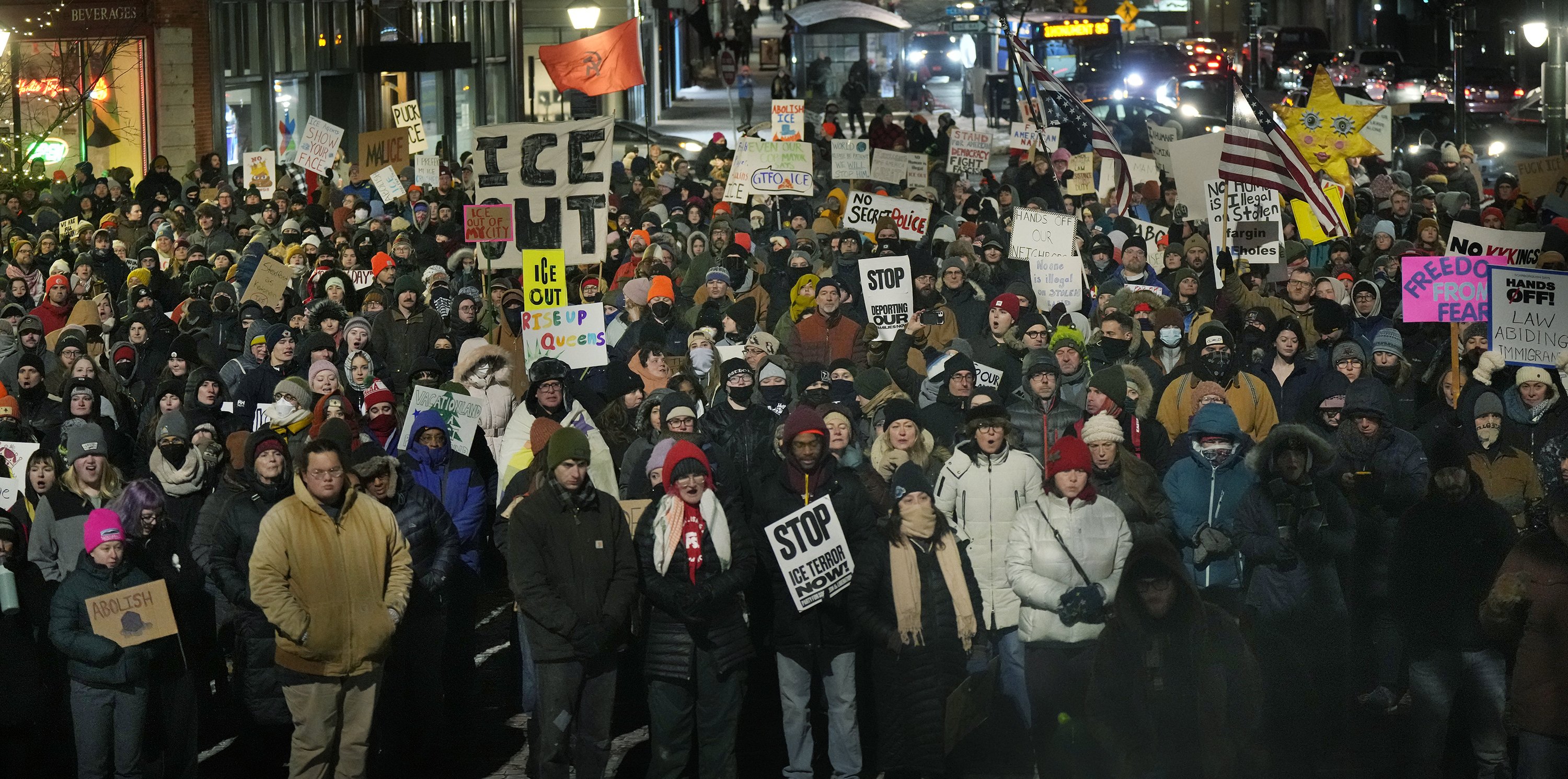
The Portland City Council worries people who stayed home or who are still detained won’t be able to pay rent, so the council is advocating for the state to suspend evictions for 60 days. Cron said she believes some are still staying home, despite the financial hit, because “we have no idea when an escalation can happen again.”
More than 21% of Portland students were out of school at the height of absences during the immigration enforcement surge. The attendance rate rebounded late last week with Sen. Collins’ announcement that the surge was ending, but 12.5% of students were still absent.
“Can’t they just get criminals instead of scaring everybody?” Kolala wondered. “We are hardworking people, we thought we’d be safe here.”
And at MaineHealth, the state’s largest health care provider, patients and staff were affected by the enforcement surge. Spokesman John Porter said while the provider is still maintaining timely care, a larger number of employees than usual called out of work, and “some patients chose to postpone in-person visits or utilize established telehealth options.”
He said there is “incremental improvement” this week, though “the effects of this period may continue for some time.”
Riley Board contributed to this report

