

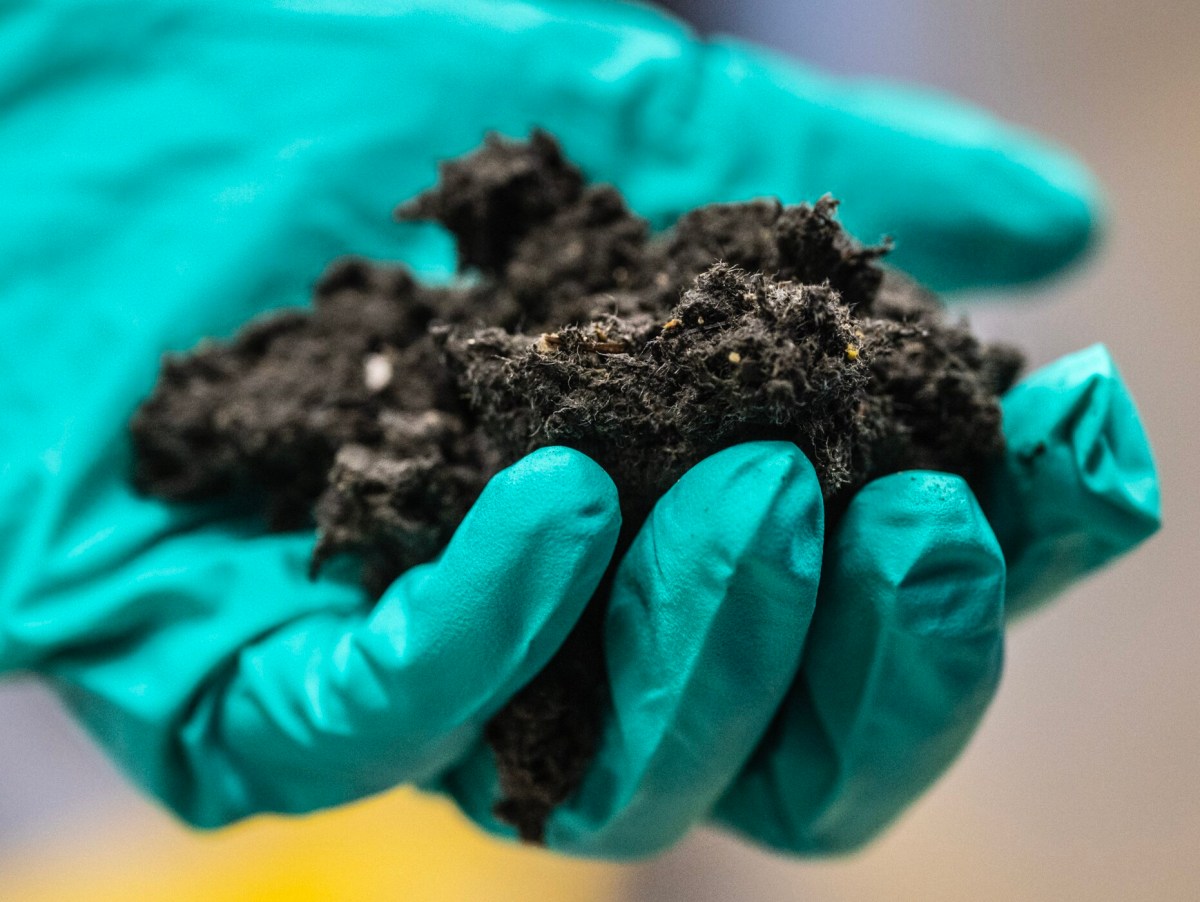
A Tennessee company wants to build a $65 million waste-to-energy plant in Sanford that it said can neutralize the harmful forever chemicals in municipal sludge that have made disposal of the sewage byproduct such a challenge in Maine.
Aries Clean Technologies claims that it can destroy almost all the forever chemicals, or PFAS, in dried sludge through gasification and oxidization, a process that uses high heat to create gas that will be burned to power the facility and a harmless charcoal-like powder.
Think of it like a self-powering pressure cooker. Instead of burning the sludge and sending it up a smokestack, Aries would bake it. That would pull out energy that will be used to keep the oven running, and leave behind ash that can be safely landfilled.
Aries decided to build a commercial sludge gasification facility in Maine because the state has become “Ground Zero” for PFAS contamination and needs more disposal options for PFAS-laden municipal sludge, a company executive told business leaders in Hallowell last month.
“Our technology is more expensive than landfilling or incineration, but that’s because our plants use emerging technology to destroy PFAS, which makes them expensive to build and to operate,” said Aries’ Mark Lyons at the Maine State Chamber of Commerce’s environmental policy forum.
The Sanford proposal arrives as Maine grapples with a deepening sludge crisis. Since passing its first-in-the-nation ban on sludge-based fertilizers in 2022, treatment plants have been forced to haul waste to overburdened landfills or ship it out of state at soaring costs.
The Aries proposal is one of several emerging technologies being explored in Maine to solve the statewide sludge disposal crisis, from an industrial drying facility in Norridgewock to using both foam and tiny plastic beads to suck PFAS out of sludge in Madison.
But such technologies are expensive, which prompted the Maine Department of Environmental Protection to introduce a bill to adopt a $50 million bond to jumpstart a handful of local projects; and largely experimental, with the state waiting to see which ones work.
The Sanford facility, proposed for Cyro Drive, would accept sludge from Maine, southern New Hampshire and eastern Massachusetts. Aries told Maine state regulators that its plant could handle 400 tons of sludge a day, far surpassing Maine’s 237-ton daily average.
Before it can open, however, Aries needs state solid waste processing and air emissions licenses.
Aries has sent data from its New Jersey plant to the DEP to support its claim that gasification can destroy many forever chemicals, but the agency hasn’t evaluated it, according to DEP spokesman David Madore. But such proof isn’t needed to get a solid waste processing facility license, he said.
According to business development director Mark Lyons, Aries will tap private investment funds to build the plant, which makes it fully taxable. The project would create hundreds of temporary construction jobs and 30 full-time operational jobs once opened, Lyons said.
In addition to the local tax benefits and jobs, the project builds upon the green technology image that Sanford has been cultivating through the development of a clean energy sector, according to Keith McBride, executive director of Sanford Regional Economic Growth Council.
“It very much fits in with what we’re trying to do here,” said McBride, who visited Aries’ first gasification plant in Linden, New Jersey, a year ago. “We want to be that community, the place people think of when they think green energy, green development, green jobs.”
Building a sludge plant in Sanford would help the local sewer district curb the skyrocketing costs of hauling sludge to central Maine or Canada for landfilling and composting, according to Andre Brousseau, sewer district superintendent. Those costs are paid by ratepayers, he said.
Aries says the process would also save sewer districts money by reducing the volume of sewage sludge that would be landfilled by 95%.
In other states where Aries wanted to build, including New Jersey and Massachusetts, opponents questioned Aries’ claims of near-total PFAS destruction and worried the high heat treatment was turning dirty water into dirty air, and using too much energy to maintain such high temperatures.
Once a common farm fertilizer, all Maine sewage sludge is now landfilled. In 2022, Maine became the first state to ban the land application of sludge because it contains harmful forever chemicals, or PFAS, that are known to pose a public health risk in even trace amounts.
In February 2023, the operator of the state-owned Juniper Ridge Landfill in Old Town stopped accepting municipal sludge shipments, saying the walls were in danger of collapse because of all the sludge being landfilled instead of composted or used as farm fertilizer.
The closure left sewer operators stuck with overflow tanks and tractor trailers filled with excess sludge. The operator began charging sewer districts high fees to haul it to New Brunswick until state lawmakers allowed out-of-state trash to be used to bulk up the sludge so it can be safely landfilled.

We invite you to add your comments. We encourage a thoughtful exchange of ideas and information on this website. By joining the conversation, you are agreeing to our commenting policy and terms of use. More information is found on our FAQs. You can update your screen name on the member's center.
Comments are managed by our staff during regular business hours Monday through Friday as well as limited hours on Saturday and Sunday. Comments held for moderation outside of those hours may take longer to approve.
Join the Conversation
Please sign into your CentralMaine.com account to participate in conversations below. If you do not have an account, you can register or subscribe. Questions? Please see our FAQs.