

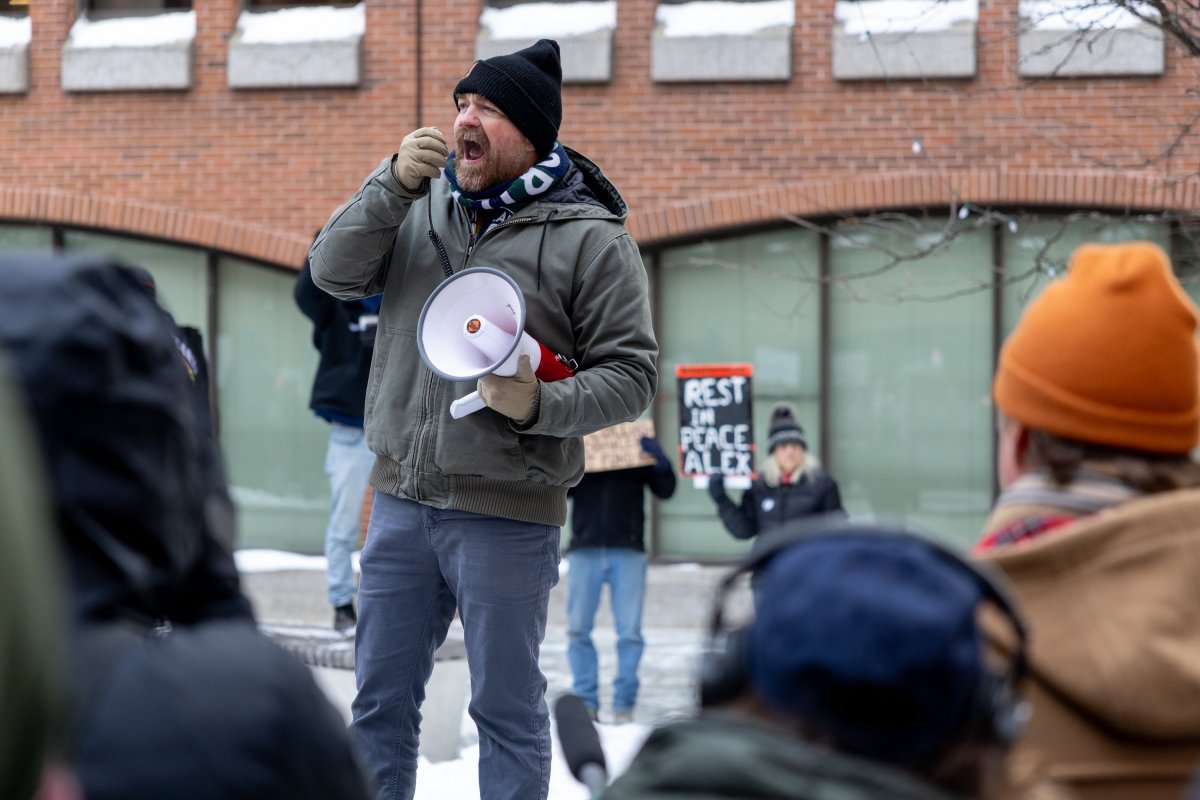
Campaign finance reports filed over the weekend solidified the narrative taking hold in the Democratic U.S. Senate primary: Two-term Gov. Janet Mills is the choice of the political establishment, and political newcomer Graham Platner is a progressive insurgent supported by unions and activists.
But the reports also showed the perils of the Democrats’ ongoing competitive primary. A Press Herald analysis of campaign finance reports filed on Saturday shows that the Democratic front-runners have each spent more than half of what they’ve raised.
Their Republican opponent, U.S. Sen. Susan Collins, is not burning through cash at nearly that rate. Collins awaits either Platner or Mills in the general election, and she’s got more cash on hand than either of them.
Platner, a 41-year-old combat veteran and oyster farmer endorsed by Sen. Bernie Sanders of Vermont, has a significant cash advantage over Mills, 78. He enters the year with more than $3.7 million in cash to Mills’ $1.3 million.
Collins has more than $8 million in cash, including money she’s rolled over from previous cycles. Collins, 73, also has the support of establishment Republicans, and likely won’t face a competitive primary opponent — even though President Donald Trump posted on social media that she should “never be elected to office again.” Democrats, meanwhile, will have to keep burning through money in their primary.
The candidate totals don’t tell the full story. Maine’s seat is viewed as a prime pickup opportunity for Democrats. That means a slew of outside groups are planning to spend big to sway voters between now and Election Day, likely surpassing the more then $200 million spent when Collins won reelection six years ago.
Platner, whose only political experience is serving as an unelected planning board member and harbormaster in the small Hancock County town of Sullivan, has already spent more than half of the nearly $7.9 million he’s raised since jumping into the race in late August.
Of the nearly $4.2 million spent, more than $2.4 million has gone to out-of-state consultants. Nearly all of that went to Helix Campaigns, a Washington, D.C., firm providing digital consulting. Another $300,000 was spent on salaries and wages for workers from seven states. Platner’s wife, Amy Gertner, was among the staffers.
Platner’s campaign has also spent nearly $43,500 on two polls, including one by Workbench Strategies in December that showed him up by 15 points over Mills.
Lobo PAC, a leadership committee affiliated with Democratic U.S. Sen. Martin Heinrich of New Mexico, donated $5,000 to Platner’s campaign. (Platner attended a D.C. fundraiser with Heinrich in December.) And Leaders We Deserve, a PAC affiliated with former Democratic National Committee co-chair David Hogg, donated $5,000 on the same day news broke about Platner’s controversial tattoo.
Platner is also getting support from unions, which have collectively donated $27,500.
Only 6% of Platner’s itemized contributions have come from Maine, but that does not include the $3 million he raised through ActBlue, an online fundraising platform for small dollar Democratic donors. Platner continues to draw large crowds at campaign events around the state.
Mills, meanwhile, is getting support from Democratic senators and governors.
Leadership PACs affiliated with U.S. Sens. Chuck Schumer and Kirsten Gillibrand, both of New York; Maggie Hassan of New Hampshire; Raphael Warnock of Georgia; Catherine Cortez Masto of Nevada; Ron Wyden of Oregon and Adam Schiff of California have donated a total of $60,000.
Leadership PACs for Michigan Gov. Gretchen Whitmer and Kentucky Gov. Andy Beshear gave $15,000 combined. Illinois Gov. JB Pritzker and his wife chipped in with individual donations of $7,000 each, while New Jersey Gov. Phil Murphy gave $3,500.
Maine Senate Victory 2026, the joint fundraising committee Mills’ campaign formed with the Democratic Senate Campaign Committee, gave $112,000. And Sara Gideon, the former Maine House speaker who lost to Collins in 2020, donated $4,000. She still has more than $3.7 million in cash from her 2020 race.
Mills has spent just over half of the nearly $2.7 million raised since she entered the race in October. About 25% of her itemized contributions came from in-state, not including the nearly $2 million raised through ActBlue.
Her campaign has only paid $6,600 for one consultant, Blue Summit Solutions of Colorado, and more than $219,000 on wages and salaries for workers from two states.
Mills’ campaign spent more than $811,000 on digital ads through Liftoff Campaigns in Washington, D.C, records show.
About 5% of Collins’ itemized contributions came from Maine sources, not including the $2.3 million raised through the Republican’s WinRed fundraising platform.
Of Collins’ nearly $7.4 million in receipts in 2025, about $4.6 million came from individuals and party committees, while another $2.7 million was transferred from authorized campaign committees.

We invite you to add your comments. We encourage a thoughtful exchange of ideas and information on this website. By joining the conversation, you are agreeing to our commenting policy and terms of use. More information is found on our FAQs. You can modify your screen name here.
Comments are managed by our staff during regular business hours Monday through Friday as well as limited hours on Saturday and Sunday. Comments held for moderation outside of those hours may take longer to approve.
Join the Conversation
Please sign into your CentralMaine.com account to participate in conversations below. If you do not have an account, you can register or subscribe. Questions? Please see our FAQs.