

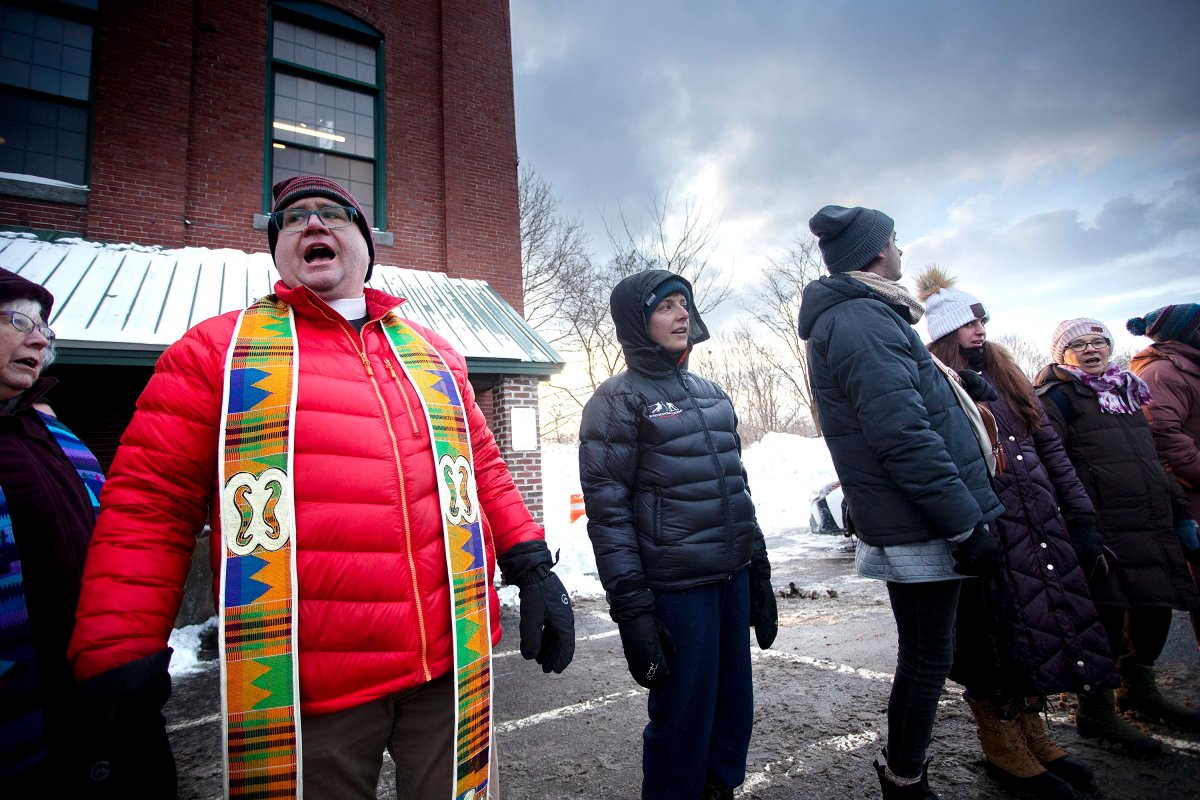
As rumors swirled that an immigration enforcement operation was about to launch in Maine, volunteers signed up by the dozens to screen hotline tips.
Parents walked children from immigrant families to school and watched bus stops.
Mainers delivered food and diapers to their neighbors. They offered rides and donated money. They prayed and protested.
When U.S. Immigrations and Customs Enforcement agents arrived in the state last month and reports of detainments surged, Maine residents stepped in to help members of the immigrant community in ways both big and small.
“They’re doing all this so families have a semblance of their normal life throughout this,” said Victoria Morales, executive director of Project Home, which provides eviction prevention services. “It reflects who we are here in Maine.”
Just over a week after federal officials launched their large-scale operation, U.S. Sen. Susan Collins announced it had ended. But advocates and community members say they have remained vigilant — and haven’t stopped helping.
Tens of thousands of dollars in donations have poured in to organizations that provide legal aid, financial assistance and housing support to impacted families. Other groups continue to welcome new volunteers, collect financial donations and sort through donated food, clothing and household necessities.
“It’s a story of incredible beauty in the midst of all this horror,” said S., a Portland woman who has been helping immigrants in her neighborhood. She didn’t want her full name used because she’s concerned about drawing attention to friends who fear they’ll be targeted.
FEEDING NEIGHBORS

When the Rt. Rev. Thomas Brown, the Episcopal bishop of Maine, heard members of the immigrant community didn’t feel safe leaving their homes, he said he knew one of their greatest needs would be food.
The church first focused on delivering groceries, but soon heard from African parishioners who were working from home that prepared meals would be helpful. Brown asked if they had a recipe that people across the diocese could make for them.
They shared a recipe for muamba chicken — a flavorful stew that is the national dish of Angola. Some parishioners made it in their own homes, others gathered in groups in church kitchens to pray and cook together.
Churches as far away as Calais made the stew, then drove it to Bangor so others could bring it to southern Maine. Nearly 500 batches were delivered to families in the Portland and Lewiston areas, Brown said.
“They were delighted to do something because what they saw was their neighbor in need,” he said.
In the Portland area, dozens of volunteers showed up each day at a local food pantry to pack boxes of groceries to be delivered across the region. In late January, Charlotte Nolan, of Scarborough, helped assemble meal boxes with sweet potatoes, onions and cooking oil.
Nolan, who had been to three protests against the increased ICE presence, said she wanted to “help instead of watch.”
Food For All Services, a nonprofit in Greater Portland that provides culturally accessible food to immigrant and low-income communities, said it was delivering about 200 boxes of groceries each day at the peak of the surge.
More than 1,400 people had signed up to help — so many that the group paused accepting new people so it could vet volunteers.
“Everyone, please stay safe, warm and careful,” Food For All Services posted on Instagram on Jan. 22. “Us Mainers are going to show exactly why we are proud to call the pine tree state home, and the way life should be.”
MARCHING IN THE STREETS

As reports of detainments increased, Mainers opposed to the enforcement raised their voices in protest. They turned out by the thousands at large demonstrations in Portland and Lewiston, marching through the streets, demanding ICE leave the state. Portland’s protest last Friday continued, even after Collins said the enhanced operation had ended.
In Westbrook, volunteers and religious leaders stood at the door of American Roots every day, creating a wall with their bodies as employees came and went from work. People who some believed could be federal agents had been seen near the factory, where most of the workers are new Mainers, according to the company.
“One woman in a house down the street saw us one day and came right over,” said the Rev. Jane Field, who helped organize the human wall. “She asked us how she could join, and we welcomed her with open arms.”
Members of the Congregational Church in Cumberland UCC delivered groceries to immigrants scared to go out and watched the doors during services, anticipating federal agents could show up. Volunteers also began providing rides to church because “if you are Black or brown it is safer to have somebody with white skin drive you places,” the Rev. Allison Smith said.

People also helped their neighbors in smaller, quieter ways.
After a winter storm dropped more than a foot of snow, neighbors shoveled out access to Haneen Beauty Salon and Tres Leches Cake’s Flor, a Mexican restaurant in South Portland that said it closed temporarily so it didn’t put employees or customers at risk.
At a high school track meet, a Portland father recorded his daughter’s teammate running a sprint event because the athlete’s mother, who is an immigrant, didn’t feel safe being there.
“I was happy to film a race for my friend, who was too scared to come see her daughter compete, even though their family is here legally,” Andy Schmidt said during the meet.
MEETING NEEDS
When Maine Needs — a Portland nonprofit that distributes donated clothing, hygiene products and household items — put out a call for cleaning kits and diapers to help immigrant families sheltering at home, the response was immediate.
Photos shared by Maine Needs on social media show so many cases of diapers were delivered that shelves were packed full and stacks of hundreds of boxes lined the walls. People also dropped off dozens of bags stuffed with cleaning supplies.
“When we recognize ourselves in others, we can’t be divided,” Maine Needs organizers said in a social media post in late January. “When we stay connected to our humanity, we are unstoppable.”
Morales, the executive director of Project Home, said when employees started thinking about how the communities they serve would be impacted by immigration enforcement, they knew people would have trouble paying rent if a household member was detained or didn’t feel safe to leave home to go to work.
In less than two weeks, Project Home’s Emergency Housing Fund collected more than $334,000 from nearly 750 donors. That money will help 100 families facing an immediate housing crisis, Morales said.
Martha Stein, executive director of Hope Acts, which offers asylum seekers access to housing and basic needs as they transition to a new life in Maine, said half of the organization’s employees and all of its clients are immigrants.
Like many organizations, Hope Acts focused on meeting the immediate needs of dozens of families. The group also started arranging rides to immigration appointments so people would not be alone during check-ins after some people had been detained during those meetings.
That work will continue, along with trying to meet the next wave of needs, Stein said.
“We are doing a lot of work with people in detention and the families whose lives have been shattered by having a loved one taken,” she said. “The feel-good part of the story is all of these people stepping up, stepping out and speaking up.”
Staff Writers Joe Lawlor, Dana Richie and Salomé Cloteaux contributed to this story.

Comments are not available on this story. Read more about why we allow commenting on some stories and not on others.
We believe it's important to offer commenting on certain stories as a benefit to our readers. At its best, our comments sections can be a productive platform for readers to engage with our journalism, offer thoughts on coverage and issues, and drive conversation in a respectful, solutions-based way. It's a form of open discourse that can be useful to our community, public officials, journalists and others.
We do not enable comments on everything — exceptions include most crime stories, and coverage involving personal tragedy or sensitive issues that invite personal attacks instead of thoughtful discussion.
You can read more here about our commenting policy and terms of use. More information is also found on our FAQs.
Show less