
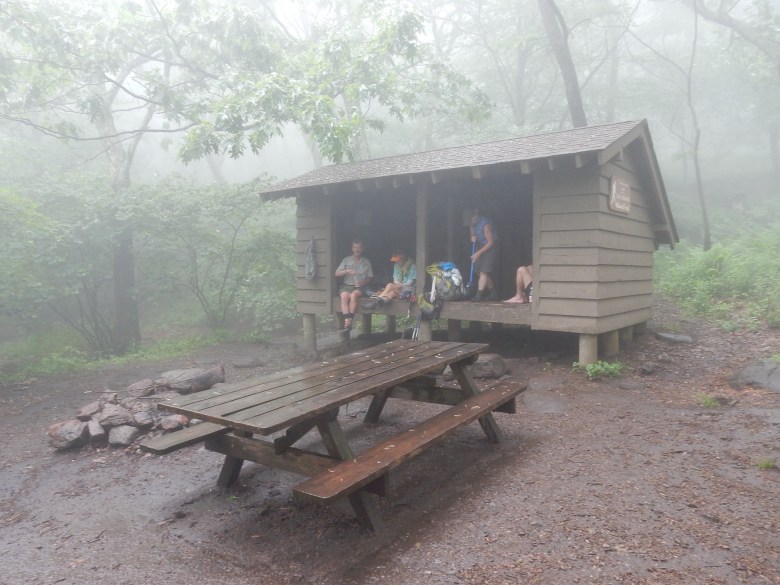
The rain has been falling steadily all afternoon. Your waterproof jacket and pants have finally soaked through, dampening your base layers. Uncomfortable but not chilly yet, you’re buoyed by the thought of the dry shelter just a mile ahead. You carry on, sloshing through the puddles amid the sopping wet forest. You follow one white blaze after another, and the shelter sign comes into view. With a smile of relief, you trudge down the side trail.
As you approach the shelter, you hear voices. You turn the corner and peer in to see five hikers and their gear completely spread out across the interior. They don’t appear to be happy to see you and make no immediate effort to make room for you. Your heart sinks as you stand there getting cold. It takes several minutes of serious cajoling to convince the occupants that you, too, are welcome in this space designed to accommodate eight people.
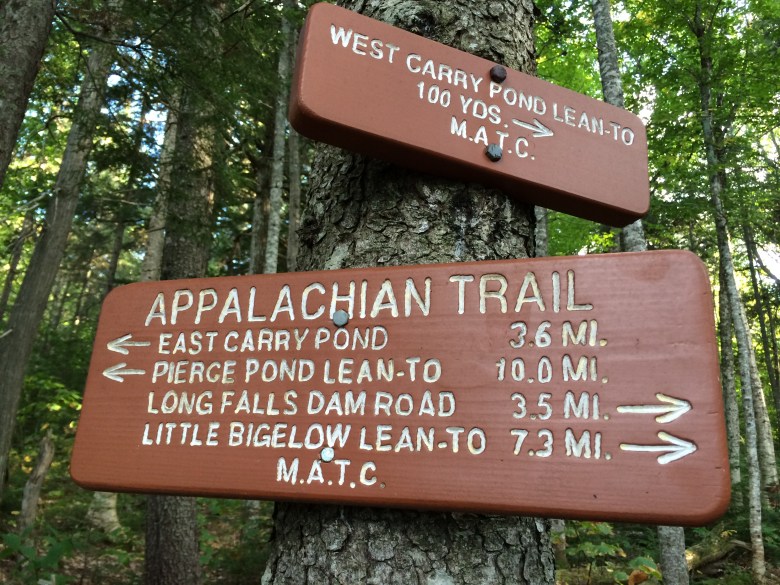
This scenario plays out all too often at the hundreds of shelters along the Appalachian Trail and elsewhere in the Northeast, where three-sided lean-tos have been a traditional part of the backcountry camping scene for more than a century. Sure, you carry a tent, but when the weather is bad, as it often is in these parts, there’s nothing quite so cozy as tucking into a warm and dry space beneath a sturdy roof when it is available.
After thousands of miles on the trails over the years, I can tell you that the No. 1 rule of shelter etiquette still applies: “There’s always room for one more.” I remember once during a huge storm on the AT in Tennessee when we squeezed 13 hikers into a six-person space. It wasn’t very comfortable, but we got everyone inside and made do until morning. Despite the cramped quarters, it was a memorable night marked by lots of laughter and shared food.
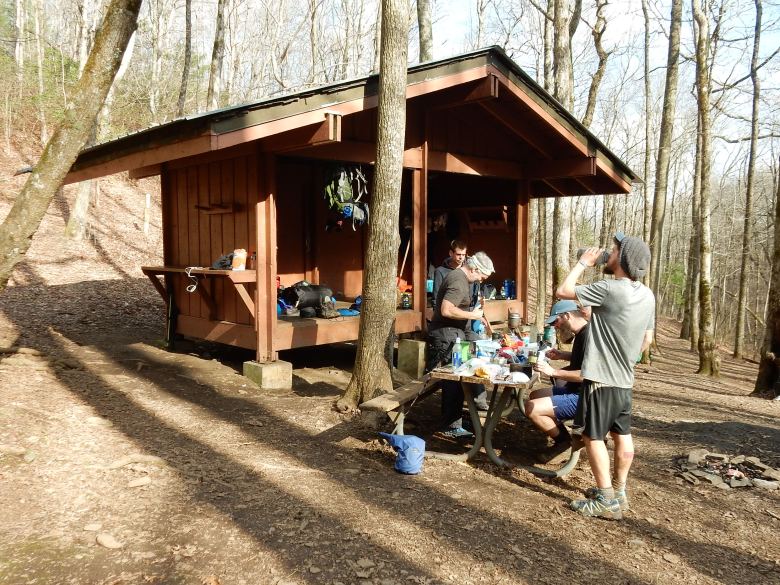
Trailside shelters are shared community spaces that work on a first-come basis. Early arrivals need to figure that the shelter will fill up, and operate accordingly. Keep your gear confined to your personal space, defined as the length and width of your sleeping bag and mattress. Hang your stuff on the wall pegs and over the clotheslines, but leave room for others. As other hikers arrive, greet them and welcome them inside.
Spending the night in a shelter is an acquired taste, so to speak. If you know, you know. The interior can be dark, damp and dirty. There’s almost always a brush or broom, so sprucing up some before settling in is a good idea. There will likely be scampering mice and other chewy critters in the night. And when packed with a bevy of sweaty hikers, you will experience a plethora of odors and a good measure of noise. Be prepared.
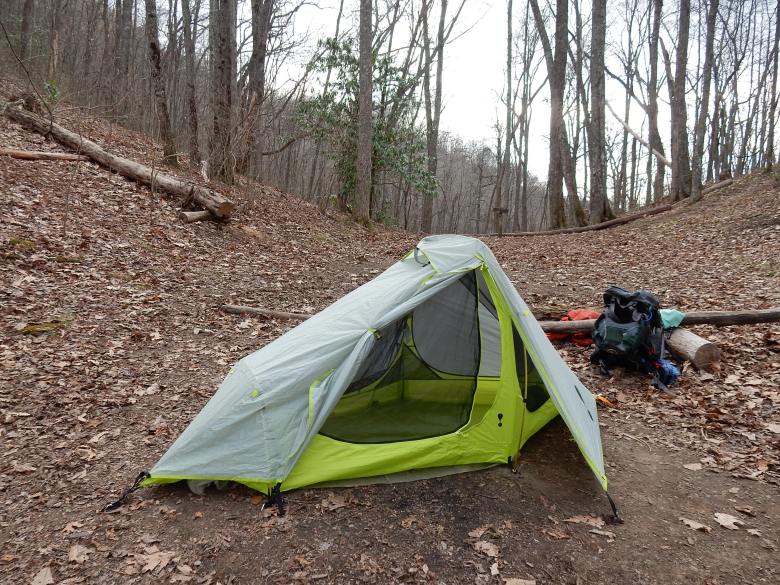
You can expect there will be snoring. Light sleepers should use earplugs, and known snorers should carry extra earplugs and offer them. Tenting is an option for both. Be respectful of others’ gear and space. Don’t move anything that’s not yours without asking. Keep your personal stuff together. Be helpful, and see that others are comfortable.
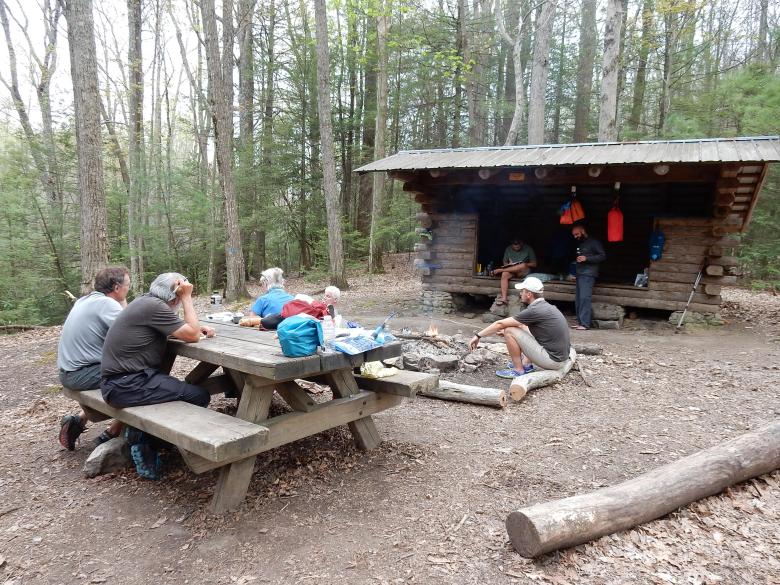
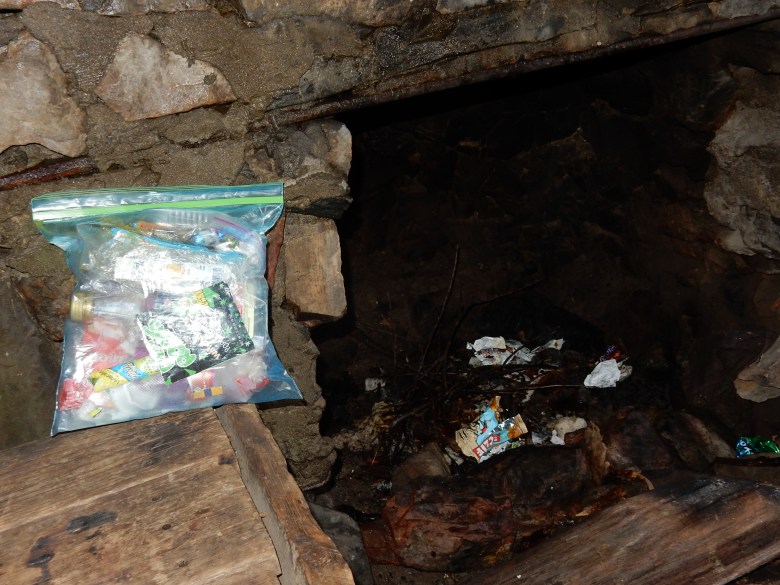
Don’t cook inside the shelter unless it’s really necessary. Instead, use the picnic table outside. If you must, cook on the deacon seat at the front of the shelter. Be careful with hot pots of water and food. Be sure to clean up any messes, and pack out all your trash and any food waste. If there’s a privy, use it and keep it clean. Gents, carry a pee bottle for nighttime use.
Converse in a reasonably low voice. If you listen to music, use earbuds. Make phone calls short and sweet; for longer calls, walk away from the shelter. When folks start to retire to their sleeping bags at “hiker midnight,” be as quiet as possible. Use the red light on your headlamp to avoid disturbing your bunkmates.
If there’s a bear box, cable or pole, use it to store your food bag. If not, find a good tree branch for your hang, or, if others are agreeable, attach your food sack to the paracord lines often found beneath the shelter eave.
There’s plenty more to good shelter etiquette, but you get the point. Be considerate and use common sense. Help make the experience as pleasant as possible for everybody.
Carey Kish of Mount Desert Island is a Triple Crown hiker, freelance writer and author of three hiking guides. Connect with Carey on Facebook and Instagram and at [email protected].





We invite you to add your comments. We encourage a thoughtful exchange of ideas and information on this website. By joining the conversation, you are agreeing to our commenting policy and terms of use. More information is found on our FAQs. You can update your screen name on the member's center.
Comments are managed by our staff during regular business hours Monday through Friday as well as limited hours on Saturday and Sunday. Comments held for moderation outside of those hours may take longer to approve.
Join the Conversation
Please sign into your CentralMaine.com account to participate in conversations below. If you do not have an account, you can register or subscribe. Questions? Please see our FAQs.