

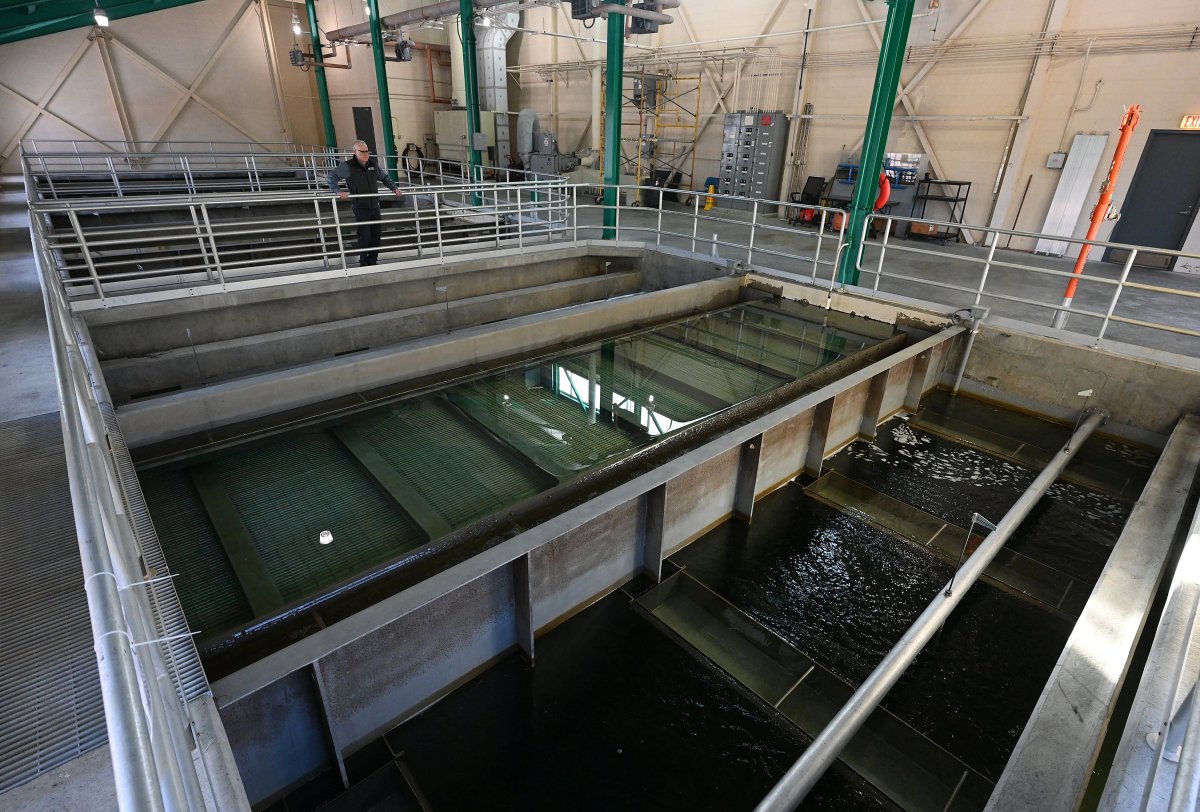
WATERVILLE — The Kennebec Water District is working on an $8.6 million project to upgrade its treatment plant system with the goal of eliminating PFAS in the water.
The improved system is expected to go online in 2028, according to Roger Crouse, KWD’s general manager.
“The design will take most of this year, so we’d start construction of the improvements sometime in the first half of 2027,” Crouse said. “We anticipate we’d finish construction in the first half of 2028.”
PFAS, or per-and poly-fluoroalkyl substances, is a group of man-made chemicals that have been linked to a number of negative health impacts in people. They are often called “forever chemicals” because they don’t break down easily in the environment or in the body. Created in the 1940s, they have been and are still used in a wide variety of consumer products such as carpet, clothing, cookware, cosmetics and paper packaging for food. PFAS get into drinking water via a variety of ways, including from the spreading of wastewater or industrial sludge on land, discharge from septic systems and firefighting foam.
Lindsay Hammes, spokeswoman for the Maine Department of Health and Human Services, said the department’s CDC Drinking Water Program is working to ensure all of Maine’s public water systems meet stringent new federal and state guidelines for PFAS in drinking water by the April 2029 regulatory deadline.
“The Maine CDC’s (Drinking Water Program) has committed $8.6 million from state and federal loan and grant programs to help the Kennebec Water District undertake a project that will prioritize public health for their customers by treating PFAS at their Vassalboro plant,” Hammes said.
That the Water District is working to eliminate PFAS from its system gives Fairfield residents some hope, Fairfield Town Manager Michelle Flewelling said.
Fairfield is one of the communities KWD serves, but more than 150 homes in Fairfield have private wells contaminated with high levels of PFAS, she said. Those homes have filtration systems funded by the state, but when the state money runs out, it could cost the homeowners some $5,000 annually to maintain filtration systems on their own and have the water tested, she said.
“They (KWD) will be in compliance with federal standards, and hopefully they’ll be able to expand public drinking water in Fairfield,” Flewelling said Thursday.
Likewise, Winslow Town Manager Marc Amaral said he met with Crouse recently and learned about the improvement project, which comes as good news.
PFAS is not just in Maine, but everywhere, Amaral noted. KWD’s work to eliminate PFAS from its system is “absolutely massively positive,” he said.
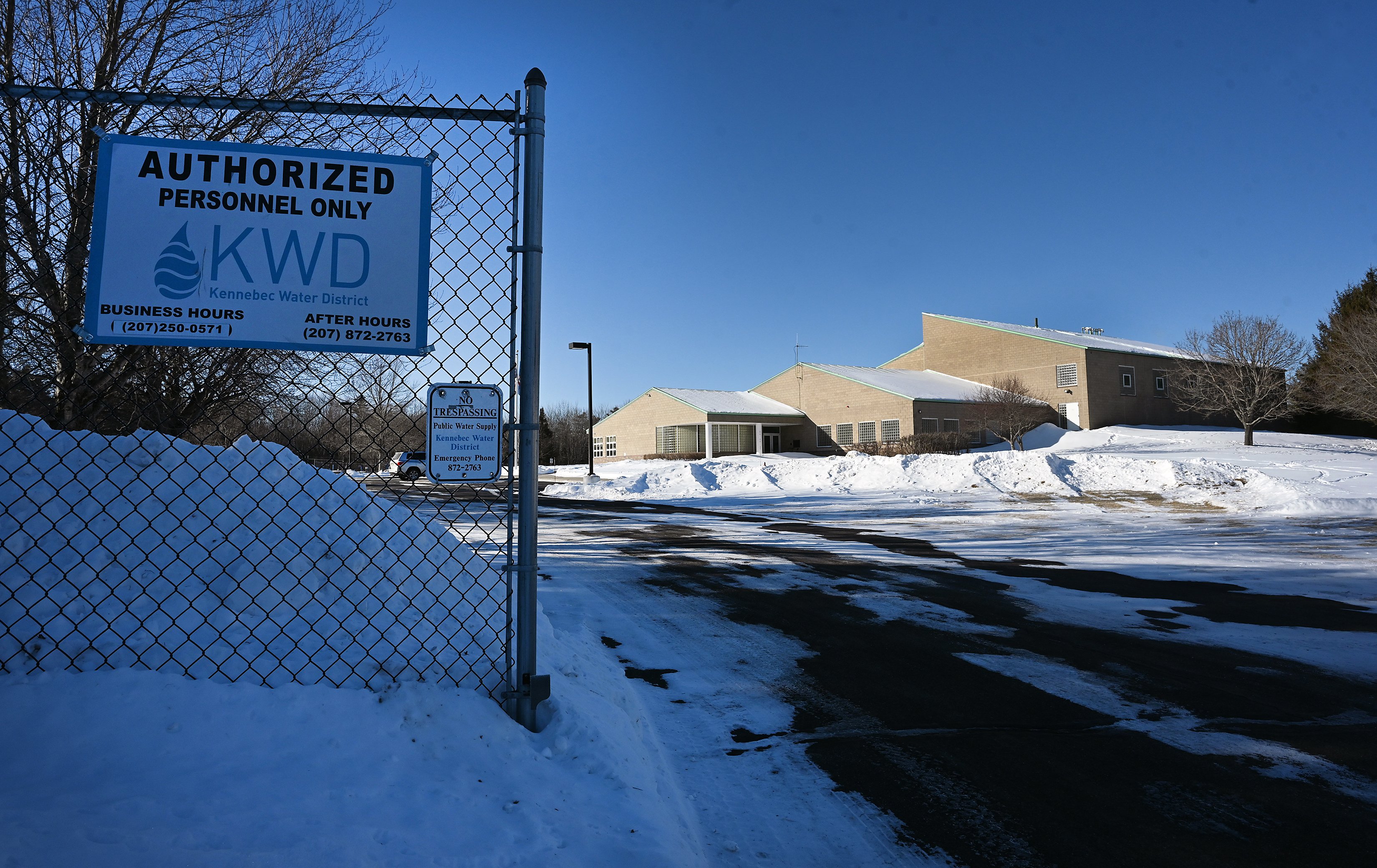
The Kennebec Water District’s main offices are in Waterville. It serves customers in Waterville, Winslow, Fairfield, Benton and Vassalboro. It also sells water to Maine Water Co., which serves Oakland, a town that doesn’t have its own system.
The district’s water comes from China Lake and is piped to the treatment plant in Vassalboro and then to its pumping station in Waterville before being distributed.
The U.S. Environmental Protection Agency set a standard of 4 parts of PFAS per trillion (1 part per trillion is the equivalent of one drop of water in 20 Olympic-sized swimming pools). KWD averages slightly above the legal limit of 4 parts per trillion, hovering between 3 and 5 parts per trillion in raw water, according to Crouse.
The water district started investigating the PFAS issue in 2022 and hired a global engineering consultant, CDM Smith, to evaluate and help design upgrades to its treatment plant. So far, the district has spent about $600,000 funded through federal grants passed through to the Maine Drinking Water Program. The district received two other grants for $4 million each, which come with a 10% match requirement, Crouse said.
“So, in order to access all $8 million, we have to spend $800,000 of local money, or some other bucket of money,” he said. “The other piece of this is, we hired a law firm (SL Environmental) to file suit against manufacturers of PFAS products, so we went down that path in 2022.”
The largest lawsuits, mostly settled, were against DuPont and 3M; lawsuits against BASF and Tyco were for smaller amounts and are not yet settled, according to Crouse.
Billions of dollars have been paid out nationwide as part of lawsuits, with that money targeted for water system improvements. Disbursements of $1.3 million were received from 3M, and $250,000 from DuPont should be received within the next month. Crouse said he is not sure when KWD will receive its settlement money from BASF and Tyco.
“We’re going to get $2million to $2.5 million in settlement money,” he said.
That money is available to offset some of the cost for PFAS treatment and operational costs, as well as for increased costs KWD will incur, Crouse said.
While the treatment plant in Vassalboro is great, he said, it wasn’t designed to remove PFAS. Improvements will enable the plant to enhance its ability to remove PFAS.
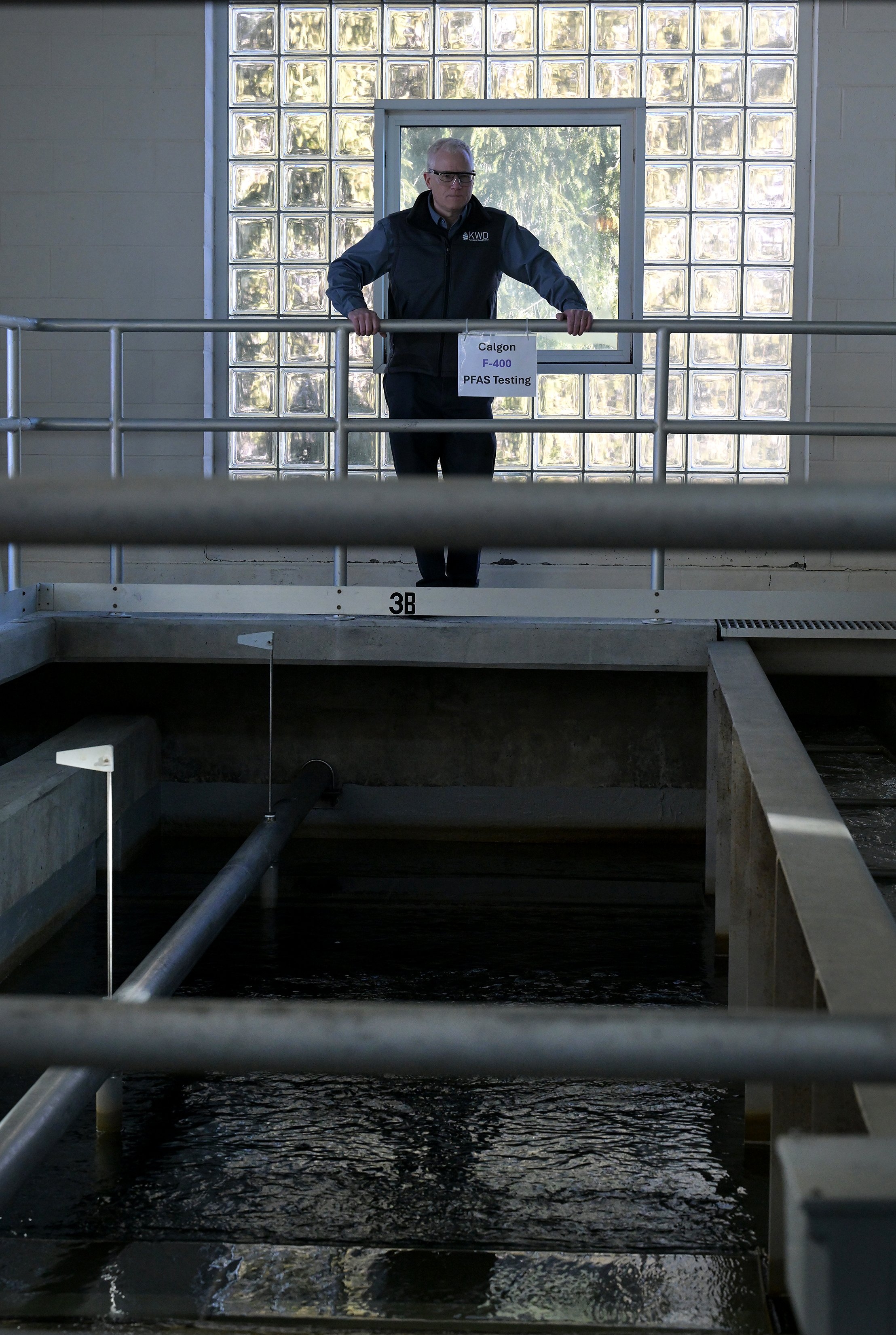
It has used carbon filters in the treatment process since 1993. They cost $125,000 each and are replaced every 10 or 15 years. But with the upgrades intended to remove PFAS, the six filterswill have to be replaced more frequently — every two years, according to Crouse.
“The life of the carbon is shorter if we want to maintain PFAS below the acceptable levels,” he said. “Improvements to the treatment plant will make it easier for us to change out the carbon and help us increase the life of the carbon. We can reduce our operational costs and we’ll get the most life out of the carbon.”
The plant has a lot of flexibility in terms of operation, he said. It was designed to produce 12 million gallons of water a day but produces only 3 million to 4 million gallons, so two or more filters can be taken offline and the system will still meet water customer demands, he said.
“We are going to basically use the carbon as best we can so we can minimize the frequency of carbon changeout,” he said.
Customer rates will not immediately increase because of PFAS, he said. About $1.5 million of the settlement money will be used to offset the cost of carbon replacement for several cycles.
“So we don’t anticipate an actual financial impact to ratepayers until the mid 2030s,” he said.
The project so far has represented a lot of work, Crouse said.
“This is a challenge that we didn’t anticipate and we didn’t create it, but we’ve been really proactive. We’ve come up with a really elegant solution to minimize the financial impact on ratepayers while achieving water quality that is below the regulatory standard.”

We invite you to add your comments. We encourage a thoughtful exchange of ideas and information on this website. By joining the conversation, you are agreeing to our commenting policy and terms of use. More information is found on our FAQs. You can update your screen name on the member's center.
Comments are managed by our staff during regular business hours Monday through Friday as well as limited hours on Saturday and Sunday. Comments held for moderation outside of those hours may take longer to approve.
Join the Conversation
Please sign into your CentralMaine.com account to participate in conversations below. If you do not have an account, you can register or subscribe. Questions? Please see our FAQs.