

The names and stories piled up during the week U.S. Immigration and Customs Enforcement launched a targeted enforcement operation in Maine.
Yanick Joao Carniero showed up for a routine immigration appointment and wasn’t allowed to leave. Fátima Lucas Henrique, a nursing assistant, was detained on her way to work and taken away screaming. Delfino Nsuka was stopped on his commute just minutes from the home he shares with his U.S. citizen wife. A corrections officer in the York County Sheriff’s Office was taken into custody while he was in the asylum process.
They’re all Angolan nationals who came to Maine to work, gain long-term legal status and try to build better lives. Advocates for this community and people from the neighboring Democratic Republic of Congo tried to raise the alarm that it’s dangerous in their home countries and they should qualify for protection under U.S. law.
Of the people ICE took into custody in its weeklong operation and identified so far by the Press Herald, Angolans were detained in the highest numbers. Even before the recent enforcement surge, Angolans and Congolese people have been detained by ICE in Maine in the highest and third-highest numbers, respectively, according to data assembled by the Maine Immigrants’ Rights Coalition, a nonprofit of member organizations in the state.
Fifty-seven people from Angola were arrested by ICE in 2025 in Maine, MIRC’s analysis shows, using data obtained from calls to its hotline and through the Freedom of Information Act by the Deportation Data Project led by U.C. Berkeley, which was created to provide transparency into ICE’s operations. ICE has not responded to requests for a full list of the people it detained in Maine. The next highest group is Ecuadorans, at 31, followed by people from the DRC at 26.
It is difficult to know if the enforcement is proportional to the population, because there is no firm data available about the number of Central African immigrants in Maine broken down by nationality. There is significant evidence, though, that more people have come to Maine from Angola and the DRC than any other country over the past eight years, beginning with a wave of people who arrived in 2018 and found shelter in Portland.
For example, researchers with the Migration Policy Institute, a nonpartisan think tank based in Washington, D.C., found evidence in court records that since 2019, Angolans likely represent the largest group of new immigrants to the state. They also surveyed local service providers who noted the increase in migration from the country and from the DRC.
People who arrived in the U.S. most recently and are seeking asylum would have less time to get permanent legal status, since there are years-long backlogs to hear asylum claims. That has made them vulnerable to President Donald Trump’s deportation operation, even if they have valid work permits and no criminal records.
“They are still in the process of getting their papers,” said Pious Ali, a Portland at-large city councilor who is a key ally for immigrant communities and came to the U.S. from Ghana himself in 2000. He became a U.S. citizen in 2008. Ali said he has noticed that Angolans and citizens of the DRC represent the newest wave of African migrants to the Portland area.
The detention of large numbers of people from these countries is a reminder that advocates tried — and failed — at the end of the Biden administration to secure legal status for people fleeing violence in the DRC and Angola. Community leaders had pushed to prevent exactly the kind of large-scale immigration arrests that have unfolded over the past year in Maine.
THE WAKE OF DETENTIONS
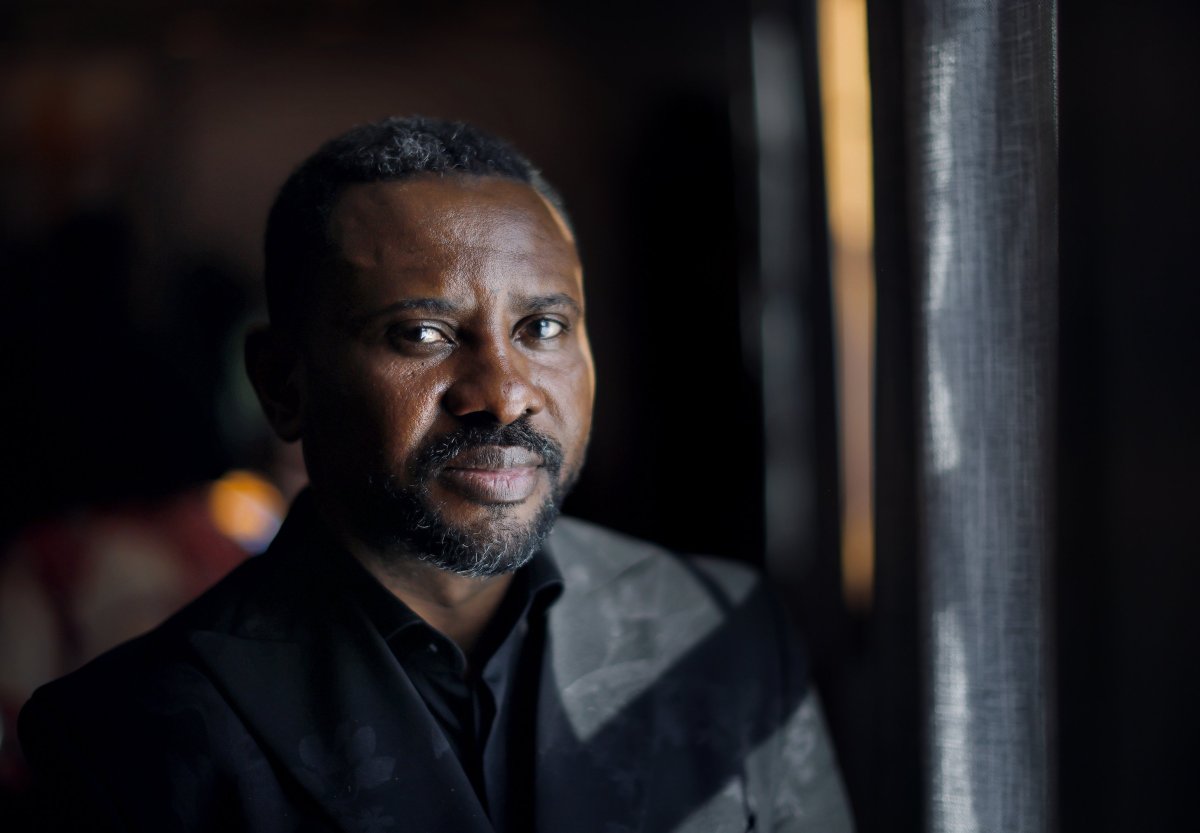
As people have come from Angola and the DRC in recent years, they have often connected with a local church like Rehoboth Christian Church in Westbrook where Carlos Nzolameso is the pastor.
Churches help immigrants orient to their new home, learn the norms of life in the U.S., and solve problems. Lately, that last task has become a lot more consuming. Nzolameso said he hasn’t been sleeping much – just two to three hours a night.
“I lie awake at night thinking about how to fix this situation,” he said.
He lists off three members of his congregation who have been detained recently, including Evaristo Kalonji, the man who used to set up for church services and prepare the music on Sundays. Kalonji is Angolan and is seeking asylum. Nzolameso does Kalonji’s jobs at church now, in addition to all of his usual work.
Others call and message him, asking for help getting in touch with lawyers or raising money for legal fees. He has contacted congressional offices to figure out what advice he can give to people asking whether they will be safe leaving their homes.
Sitting in the empty reception area of his church on a recent morning, Nzolameso’s phone lit up. It was a member of his church who was detained in December calling from an immigration facility in Rhode Island. The man is Angolan, but his attorney, Rory Fleming, said the government is trying to deport him to Uganda, which Trump asked to take deportees of African nationalities.
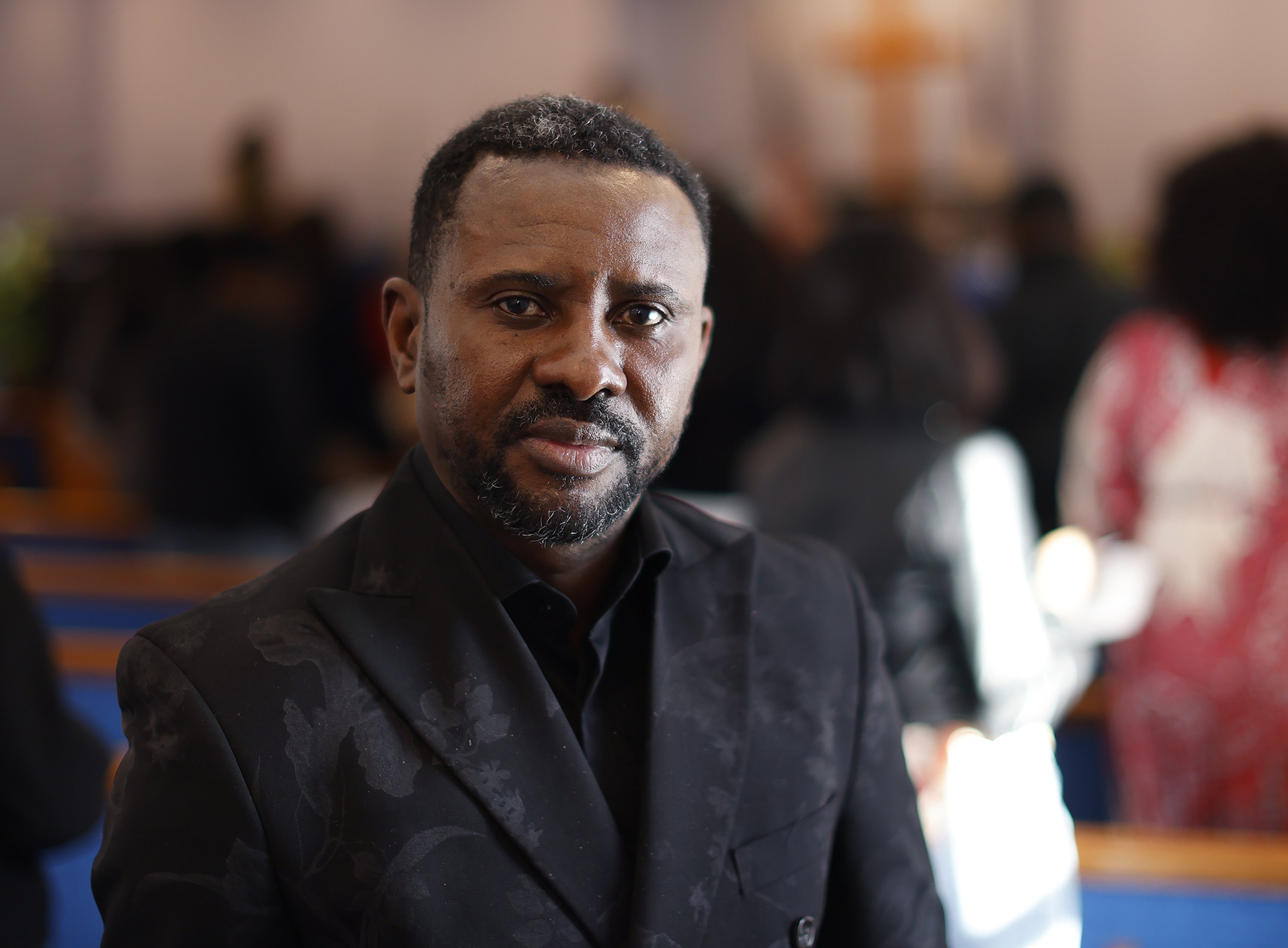
Nzolameso is helping coordinate with Fleming to try to prevent the man’s deportation. The Press Herald is not naming the man because he has not given his approval.
Nzolameso spoke with the man for about a minute when the call cut off abruptly mid-question.
Then Nzolameso opened up WhatsApp on his phone, and showed a group chat with more than 300 people in it. He scrolled through more than a dozen messages with photos and GoFundMe links for people detained last month, most as they were headed to or coming home from work.
“They go to work, they pay taxes, the taxes help the state,” Nzolameso said, adding that he knows people in his congregation working in health care and engineering.
They’re also caregivers, like Francoise Makuiza, who works at an assisted living facility, and Micheline Ntumba, who has four kids and was detained while bringing one of them to school, where she works for the district. Both are originally from the DRC.
“Many people left Africa to find a place they can be safe,” Nzolameso said.
That includes him. The pastor came to the U.S. from Angola more than a decade ago and settled in Maine on a mission from a man he calls his “spiritual father.”
The situation in his former home country and the neighboring DRC are volatile. Six million people have died in the DRC during one of the deadliest conflicts in world history. Many people have fled to Angola, a smaller and wealthier country, but one where the government arbitrarily and unlawfully kills people; uses sexual violence and excessive force against protesters; and denies due process to political prisoners, according to the United Nations and Human Rights Watch, among others.
While he sat in the reception hall in the church, Nzolameso called three other pastors in the Portland and Lewiston area — each one with congregants in similar situations.
CAMPAIGN FOR LEGAL STATUS
Nzolameso said he didn’t expect this kind of broad deportation operation to take place in his new home, sweeping up everyday people in his life, but some leaders in the Central African community in Maine and nationally say it’s no surprise.
In 2023 and 2024 they advocated for a couple of changes to try to protect people already living here. One was an update to immigration law to allow longtime residents with a clean record to get legal status, similar to what Ronald Reagan did in 1986. Another was to get President Joe Biden’s administration to designate Temporary Protected Status for people from Angola and the DRC.
TPS is meant to provide a safe space for people when conditions in their home countries prevent them from returning safely. Despite the ongoing war in the DRC, the country has never been granted TPS status. Angolans used to be eligible, but that ended in 2003.
The two countries are closely linked, said Nils Kinuani, policy manager for the advocacy and empowerment group African Communities Together, who said he works with people in Maine and elsewhere in the U.S. who have acquired Angolan citizenship after fleeing war from the DRC.
TPS does not provide a pathway to citizenship, but it may provide more time for people to apply for a green card, and while Trump has tried to end TPS for people from several countries over the past year, arguing that conditions there have improved, courts have blocked some of those efforts and allowed protected status holders to remain in the country.
The advocacy during the Biden administration included putting pressure on Maine’s congressional delegation both in Washington and in their home districts in Maine. It also included rallies in downtown Portland and in front of the U.S. Department of State in Washington.
Church leaders from around the country sent a formal letter to the Biden administration calling out mass sexual violence and malnutrition in the DRC. Community members from Maine and elsewhere shared their stories online.
“The conditions are not safe, whether in Angola or Congo. Conditions have deteriorated. So TPS was warranted, and still is,” said Kinuani, who was a leader of the advocacy effort.
He is originally from the DRC and said he can’t visit his hometown because it’s occupied by a militia group. “I’d never want anyone sent back to those conditions,” he said. He called TPS a “lifesaving program,” and pointed out in 2023 that the DRC was the only country in the top five for U.S. refugee admissions without a TPS designation.
In 2024, U.S. Rep. Chellie Pingree, D-1st District, signed a letter written by congressional colleagues in support of the campaign for TPS for Congolese people.
“DRC cannot currently protect its own nationals, and it is therefore clear that the country meets the extraordinary and temporary conditions established by Congress,” they wrote. Just days before Biden left office, Pingree sent another letter to Biden asking for the TPS designation for Angola and the DRC.
But the Biden administration did not act, preventing citizens of these countries from getting a potential layer of protection in the current deportation operation.
Nzolameso said if he could ask the government for something now for his congregation and his community, it’s to change the immigration system and make careful decisions about asylum more quickly, perhaps within a year of an immigrant’s arrival.
“I know people who came here in 2012, 2013, 2014 and are still waiting and have never had an (asylum) interview,” he said.
“If you wait eight years, and then you come and arrest someone and put them in jail when they’re just waiting for their day with a judge, it’s not their fault.”
