

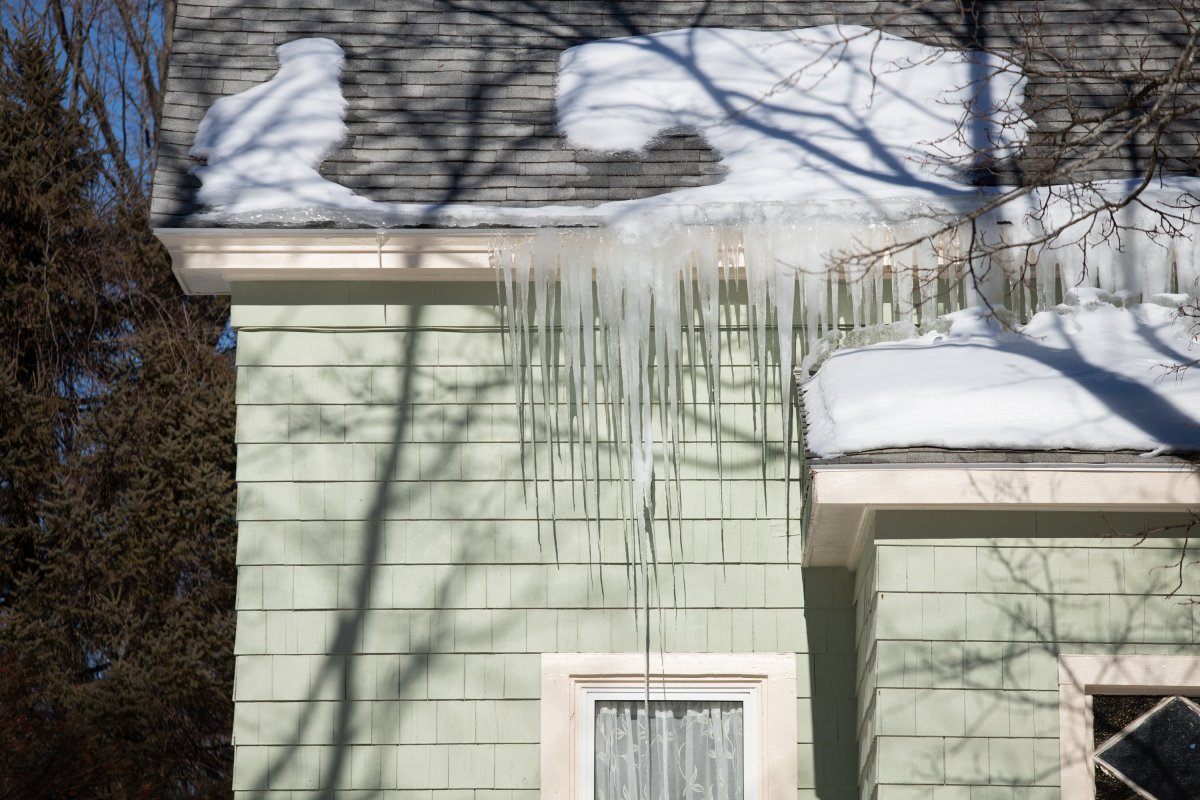
Maine homeowners are facing an elevated risk this winter from ice dams, a destructive buildup of rooftop water that can cause thousands of dollars of damage to a home’s shingles and gutters, electrical wiring, insulation, ceilings and walls.
The pretty icicles dripping from Maine rooftops right now? Nature’s warning signs, experts say.
“I started getting calls right after Christmas,” said Jesus Malan, owner of Double J. Construction in Windham. “It’s Maine, so we always have a lot of snow and ice work, but this year we’ve had a lot more than usual.”
Ice dams form when heat escaping from an attic melt the bottom layer of rooftop snow. Melting water runs down to the colder eaves and refreezes. That barrier prevents further meltwater from draining, forcing it upward and under shingles or through undetected rooftop leaks.
Malan and his two-man crew use plastic shovels to manually remove snow and ice buildup from the bottom 6 feet of a shingled roof, clearing the path for the snow at the warm peak to roll off the roof. It is dangerous work, requiring ropes, harnesses and experience, he said.
The risk increases in a winter like the one that Maine is having, marked by a lot of snowfall, a series of subfreezing temps followed by sudden sunshine-laden thaws, according to companies that specialize in ice dam removal and roof repairs.
To minimize risk, homeowners should try to keep a roof the same temperature as the outside air. With winter already underway, that means using a long-handled roof rake to clear snow from the first 3 to 4 feet of the roof’s edge the morning after a storm.
Keeping gutters clear of debris also helps, allowing meltwater to pass through without damming.
According to Efficiency Maine, the best way to prevent future rooftop damming is by sealing any attic leaks, installing insulation with a high resistance to heat flow and making sure vents remain unobstructed to allow cold air to circulate beneath the roof deck.
If a dam has already formed, however, roof repair companies warn against homeowners trying to “do it yourself” by chipping the ice with hammers or shovels, which can damage shingles, gutters and joints. Such repairs must often be done atop the roof, which can be slippery.
Unlike carpentry or electrical work, rooftop ice and snow removal is a largely unregulated field in Maine. Removal methods vary from company to company, from plastic shovels like the Double J. to snowblowers. Others use specialized heat cables or steam removal.
Professional removal can cost between $400 and $1,200 per hour, depending on the amount of buildup and the size, type and style of the rooftop. But companies warn removal is almost always cheaper than what it can cost to repair the damage caused by a single leak.
Three Little Birds, a Limerick-based ice removal, power washing and bathroom repair company, charges $800 an hour to steam away ice and snow buildup. Owner James Engle said most of his roof work is being done on newer million-dollar homes in Falmouth, Yarmouth or Scarborough.
Engle, a carpenter by trade, said no amount of roof raking can prevent winter water damage in a home with leaky attic vents, poorly sealed skylights or improperly flashed joints, which is far too common in some of Maine’s newly built subdivisions in even the best neighborhoods.
“I can remove the snow and the ice buildup and the leak might stop, but will come back next year, or even the next snowstorm, if we don’t find the source of the leak and repair it,” Engle said. “The quick fix can wind up costing a lot more money in the long run.”

We invite you to add your comments. We encourage a thoughtful exchange of ideas and information on this website. By joining the conversation, you are agreeing to our commenting policy and terms of use. More information is found on our FAQs. You can update your screen name on the member's center.
Comments are managed by our staff during regular business hours Monday through Friday as well as limited hours on Saturday and Sunday. Comments held for moderation outside of those hours may take longer to approve.
Join the Conversation
Please sign into your CentralMaine.com account to participate in conversations below. If you do not have an account, you can register or subscribe. Questions? Please see our FAQs.